Let's cut through the noise. When most people hear 'aero metals investment casting', they picture flawless turbine blades fresh off a glossy brochure. The reality is messier, more nuanced, and infinitely more interesting. It's not just about achieving complex geometries; it's a constant negotiation between material science, process control, and the brutal economics of aerospace tolerances. Many get seduced by the 'investment' part, thinking it's all about precision, and completely overlook the 'metals' half of the battle—that's where projects live or die.
The Core Misconception: It's All About the Mold
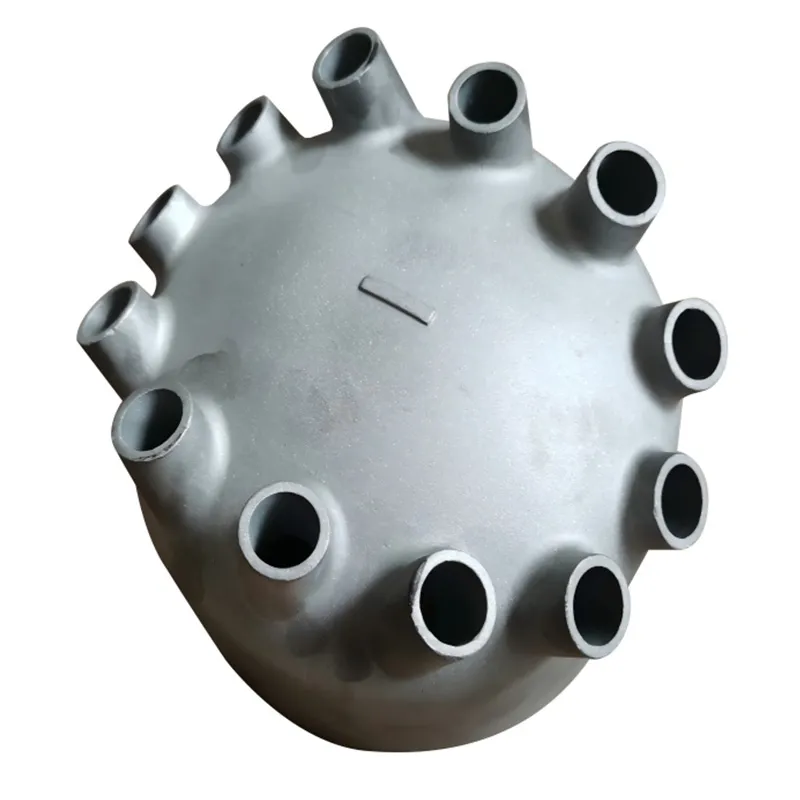
Too often, the focus is laser-armed on the ceramic shell process. Sure, a perfect shell is non-negotiable. But in my experience, the prelude—the wax pattern assembly and gating design—is where 70% of casting integrity is decided. I've seen shops pour incredible resources into shell slurry formulations only to fight porosity issues that originated from poorly vented wax clusters. The gate isn't just a channel for metal; it's a thermal manager and a slag trap. Getting that right for a thin-walled turbine shroud, for instance, requires an almost intuitive feel for how the specific alloy will flow and solidify, something you don't get from software alone.
This leads to the metal itself. Aerospace isn't a single material spec. You're jumping from 17-4PH stainless for structural brackets to Inconel 718 for hot sections, and maybe even to cobalt-based alloys for extreme wear parts. Each behaves like a different animal during the pour. Investment casting of a nickel-based superalloy isn't just a hotter version of casting steel. The segregation tendencies, the heat treatment response post-casting—it's a dedicated discipline. A shop that claims to do it all equally well? I'd be skeptical.
I recall a project years back for a sensor housing. The print called for 316 stainless, which we'd done a thousand times. But the part had a peculiar intersecting thin wall. We ran it standard, and it passed QA. It failed in field testing due to vibration-induced fatigue at that junction. The lesson? The aero metals designation means the part's duty cycle dictates the process, not just the material on the spec sheet. We had to go back, adjust the grain structure by modifying the pour temperature and the mold pre-heat, essentially tailoring the solidification for dynamic loads, not just static strength.
The Machining Handshake: Where Casting Truly Proves Itself
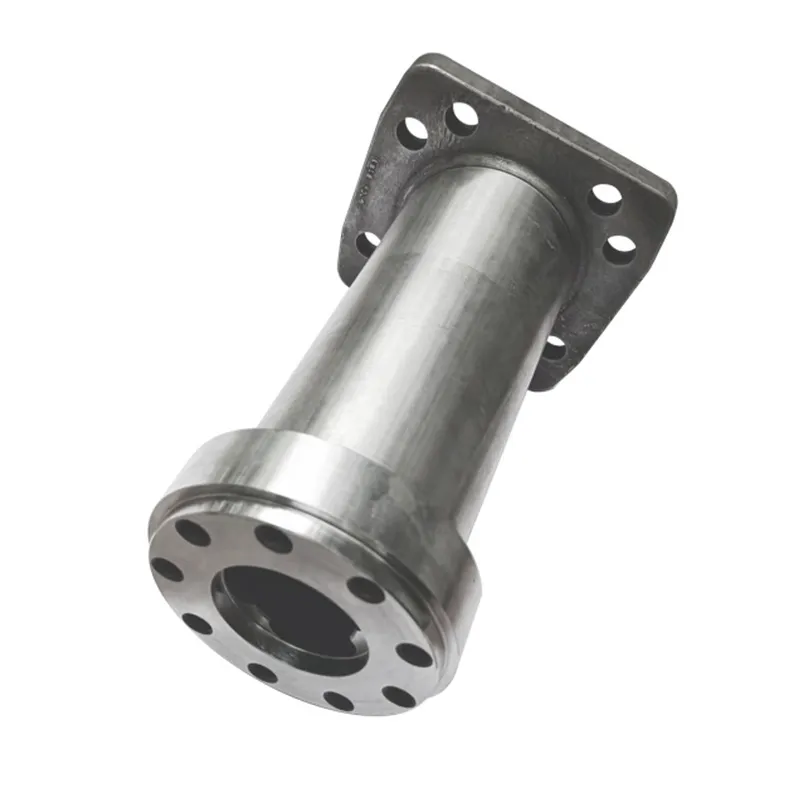
This is the real litmus test. You can produce a beautiful, dimensionally accurate casting, but if it destroys three carbide end mills during the first machining op, you've failed. The consistency of the surface hardness, the absence of subsurface shrinkage or inclusions—that's what separates a prototype shop from a production partner. The casting process must be designed with the machining in mind. Do you leave extra stock in areas prone to distortion? How does the gating affect the grain orientation in a flange that will later be drilled and tapped?
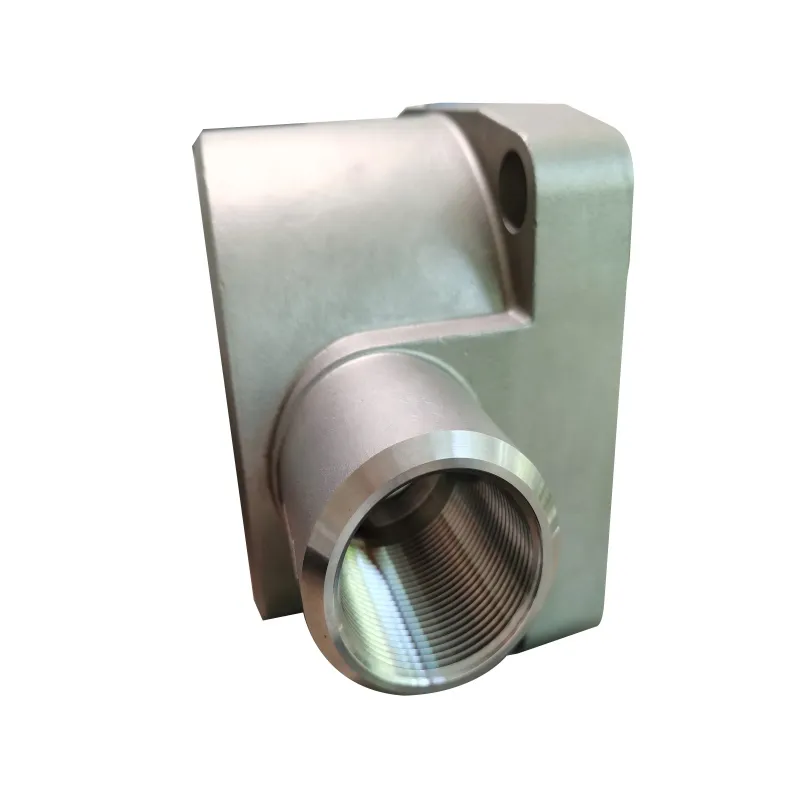
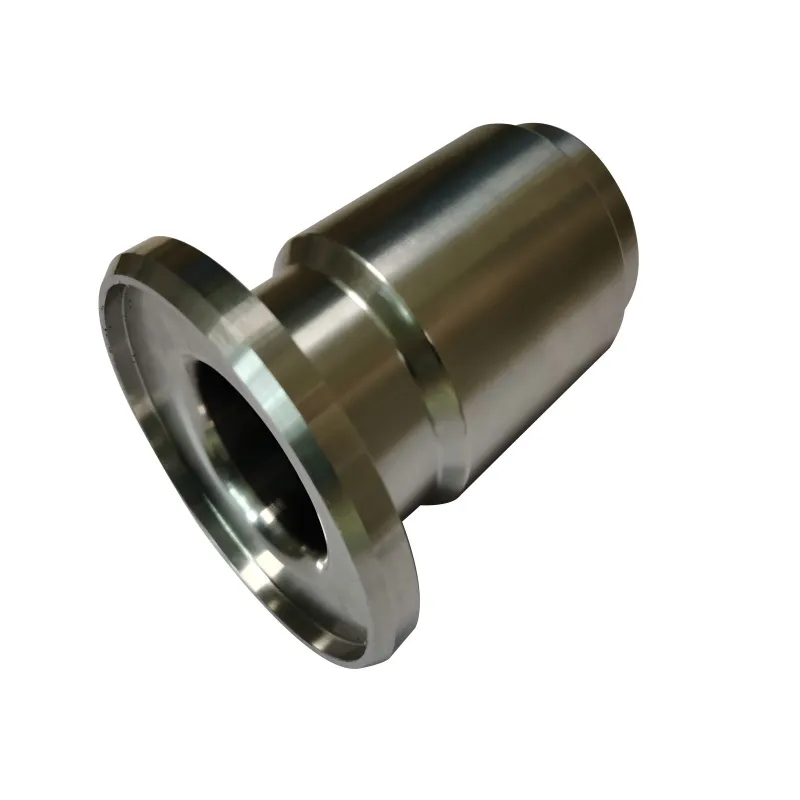
This integration is where companies with true vertical capability stand out. Take a firm like Qingdao Qiangsenyuan Technology Co., Ltd. (QSY). Their model, spanning over three decades, explicitly links shell mold casting and investment casting with in-house CNC machining. It's a logical, almost necessary, evolution. When the same entity controls the entire journey from wax to finished machined part, the feedback loop is immediate. The machinists can tell the foundry guys, This batch is running tough in the pocket, and the next pour can be adjusted. It eliminates the classic blame game between the casting supplier and the machine shop.
Looking at their scope—from cast iron to special alloys like cobalt and nickel-based—it signals an understanding of the full spectrum. It’s one thing to cast a decorative bronze part; it’s another to deliver a machinable Inconel casting that will be certified for flight. The latter demands that process symbiosis. Their long tenure, hinted at by the 30+ years, suggests they've likely navigated these iterative cycles between casting and machining more than once, which is where real, hard-won process knowledge resides.
Material Gambles: When Special Alloys Get Real
Special alloys is a term thrown around loosely. In practice, it means venturing into territory with expensive material, unforgiving parameters, and steep learning curves. Cobalt-based alloys, for example, are fantastic for wear resistance but can be notoriously brittle in cast form if the cooling rate isn't meticulously controlled. You're not just pouring metal; you're managing a thermal drama from the moment it leaves the ladle.
I remember a failure on a valve component for an auxiliary power unit. We used a proprietary cobalt alloy. The chemistry was perfect, the shell was sound, but we saw micro-cracking in a thick-to-thin transition zone. The issue? We'd treated the mold pre-heat like we would for a similar-weight stainless part. The alloy's thermal conductivity and shrinkage factors were different. We had to develop a staged cooling protocol, almost like a post-weld heat treatment but happening inside the cooling drum. It was a costly, schedule-blowing lesson. Now, when I see a shop's material list include these alloys, I don't just see capability; I see the implied history of solving those specific, gritty problems.
This is where the investment casting process for aero metals separates from the pack. It becomes a metallurgical tool, not just a shaping tool. The ability to directionally solidify a part, or to control grain structure through the mold's thermal mass design, turns the process into an alloy-performance enhancer. It's a subtle but critical point. You're not just making a shape; you're engineering a microstructure that the forging or machining route might not achieve as economically.
The On-the-Ground Reality: Tolerances and Trade-offs
Everyone wants aerospace tolerances. But what does that mean on the floor? For a typical structural bracket, it might be +/- 0.005 on critical mating surfaces. Achievable? Yes, with well-designed tooling and process control. But the cost curve is exponential. The real skill is in guiding the design engineer. Can that tolerance be relaxed to +/- 0.015 if we shift the gate location and guarantee a more uniform surface for machining? Often, the answer is yes, and you save 20% on the part cost without compromising function.
This is the practical, unglamorous side of aero metals investment casting. It's consultancy. It's looking at a drawing and knowing which battles to fight. I've sat through design reviews pointing out that a beautiful, weight-saving organic shape will require impossible-to-remove ceramic cores and suggest a slight simplification that makes it castable and machinable without hurting performance. That value-add doesn't show up in a basic capability brochure.
It also means managing expectations. Surface finish as-cast is never a machined finish. There will be a light orange peel texture. The challenge is making it consistent and predictable so the CNC program's tool paths can account for it. A shop like QSY, with its integrated CNC machining, would inherently understand this. Their casting process is likely tuned to deliver not just a dimension, but a machinable condition, which is a higher-order deliverable.
Looking Ahead: The Unsung Role of Legacy
In an era obsessed with additive manufacturing, why does this traditional process persist? Because for medium-to-high volume production of high-strength, high-reliability metal components, it's often unbeatable on a cost-per-part, performance basis. AM has its place for prototyping and insane complexities, but for the thousands of brackets, housings, and blades in an aircraft, investment casting is the workhorse.
The real edge for a supplier now isn't just in having the equipment. It's in the tribal knowledge. It's the veteran pattern maker who knows that a certain draft angle causes shell stress during dewaxing. It's the furnace operator who can hear a difference in the melt's sound and know the degassing isn't complete. This tacit knowledge, built over decades, is what a 30-year operation like the one mentioned accumulates. You can't buy it or code it into a new machine.
So, when evaluating aero metals investment casting, don't just look at the vacuum induction furnaces or the CMM machines. Ask about their oldest piece of tooling still in production. Ask how they solved a recurring shrinkage problem in a specific alloy five years ago. The answers to those questions will tell you far more about their capability than any polished marketing claim ever could. It's in those accumulated, sometimes painful, lessons where true expertise in transforming metal into flight-worthy components is forged.