Let's cut through the noise. When most people hear 'agricultural machinery casting,' they picture a simple, bulky iron part. That's the first mistake. The reality is a high-stakes game of material science, precision, and surviving brutal field conditions. It's where a tiny flaw in a gearbox housing or a ploughshare tip can shut down a harvest. I've seen too many designs fail because engineers treated castings as commodity items, not as engineered components. The difference is everything.
The Core Misconception: Strength vs. Fatigue Life
Everyone specs for tensile strength. It's the easy number to ask for. But in ag machinery, that's almost secondary. What kills a part is fatigue life. Think about a tractor linkage or a combine harvester's chopper blade mount. It's not one big load; it's ten million small shocks, vibrations, and impacts over rocky soil. A high-tensile cast iron can still crack prematurely if its microstructure isn't right for fatigue.
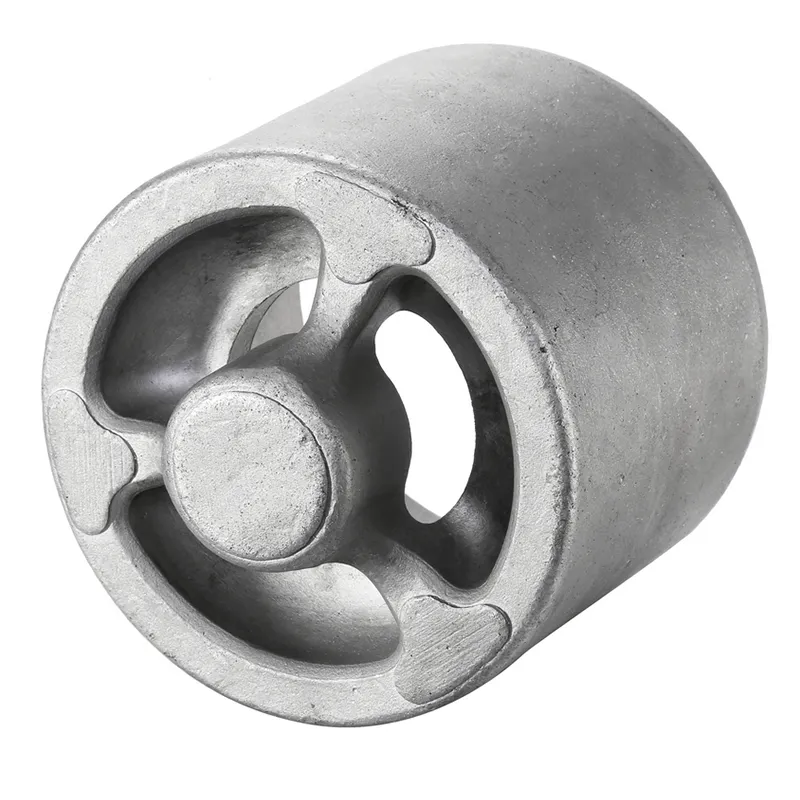
We learned this the hard way years back with a client's prototype for a heavy-duty disc harrow bearing hub. The initial casting in a standard ductile iron passed all the static load tests. Beautiful finish, dimensions perfect. Six months into field trials in the Midwest, we got the call: catastrophic fractures at the mounting flange. The failure analysis showed classic fatigue origins. The issue wasn't strength; it was the graphite nodule shape and distribution in the iron matrix. We had to switch to a specially treated ferritic ductile iron with tighter process controls on inoculation. That hub design is still running today.
This is where a foundry's experience shows. A shop like Qingdao Qiangsenyuan Technology (QSY) gets it. With their 30 years, they've seen these failures. They don't just pour to a spec sheet; they ask about the application, the load cycles, the attachment points. That conversation is more valuable than any certificate.
Why Process Choice Isn't Optional
Shell mold casting versus investment casting versus greensand—it's not a cost-down menu. It's a functional decision. For complex, thin-walled components like hydraulic valve bodies or intricate transmission cases, shell mold casting is often the unsung hero. It gives you a better surface finish and dimensional accuracy than traditional sand casting, which means less machining time on a CNC later. That saves money, but more importantly, it preserves the integrity of the casting skin, which is often the hardest part.
I recall a project for a sugarcane harvester's cutter head component. The part had internal channels and needed to be relatively light but stiff. Greensand was too rough, and full investment was too expensive for the volume. The shell mold process from QSY was the perfect middle ground. The draft angles they recommended allowed for a cleaner draw, and the as-cast surface was so good we could reduce the machining allowance, saving a lot of material and cycle time on their CNC beds.
But you can't be dogmatic. For small, ultra-complex parts like nozzle tips for sprayers or small worn gears, investment casting is the only way to go. The precision is unmatched. The trade-off is cost and size limitation. You have to know when to use which tool.
The Material Maze: Beyond Cast Iron
Cast iron is a useless term here. Are we talking gray iron (good for vibration damping, terrible in tension)? Ductile iron (tough, but watch the section sensitivity)? Or maybe a compacted graphite iron for that sweet spot between thermal fatigue and machinability? For wear parts like tillage points, we're often moving into special alloys. This is where QSY's mention of cobalt or nickel-based alloys comes into play.
We had a case with a fertilizer spreader's fan blade that kept wearing out at the leading edge from abrasive corrosion. Standard martensitic stainless wasn't cutting it. We prototyped with a nickel-based alloy with high chromium carbide content. The casting was more difficult—higher pouring temp, more risk of hot tearing. The foundry had to adjust the gating system and use special exothermic sleeves. The part cost tripled, but its service life increased by a factor of eight. For the customer, the total cost of ownership plummeted. That's the kind of value engineering real casting expertise enables.
The Machining Handshake: Where Casting Really Proves Itself
A perfect casting can be ruined in the first machining op. The relationship between the foundry and the machine shop is critical. Ideally, they're under one roof. Internal stresses from cooling, hard spots, slight variations in hardness—if the machinist doesn't know they're there, they can wreck a tool or induce cracks.
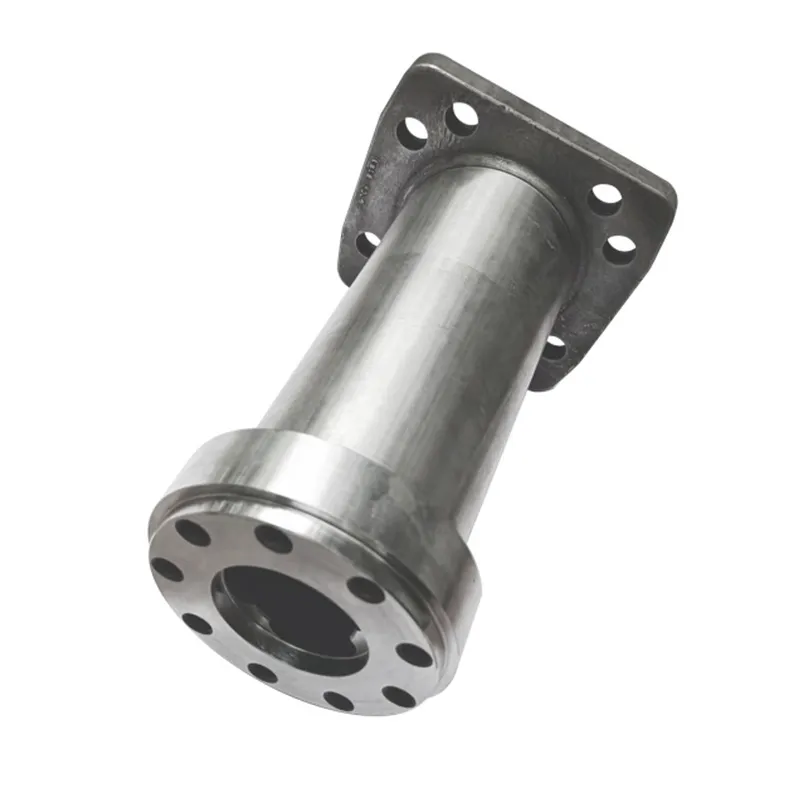
This is the huge advantage of a vertically integrated provider. When the same company that pours the casting, like QSY, also runs the CNC machining centers, they have the process knowledge baked in. They know how a particular batch of steel alloy behaves under a cutter. They can adjust feeds and speeds from experience, not just from a manual. They also design the casting with machining in mind: adding datum features, ensuring consistent wall thickness to minimize vibration during milling.
I've been in plants where the casting and machining are separate. The blame game starts the moment a drill bit breaks. Your material is inconsistent. Your fixture is wrong. When it's integrated, the problem is just a problem to solve. They'll go back to the pouring logs, check the cooling rate data, and tweak the process for the next run. That continuity is gold.
Failure as a Teacher (The Ones You Don't Forget)
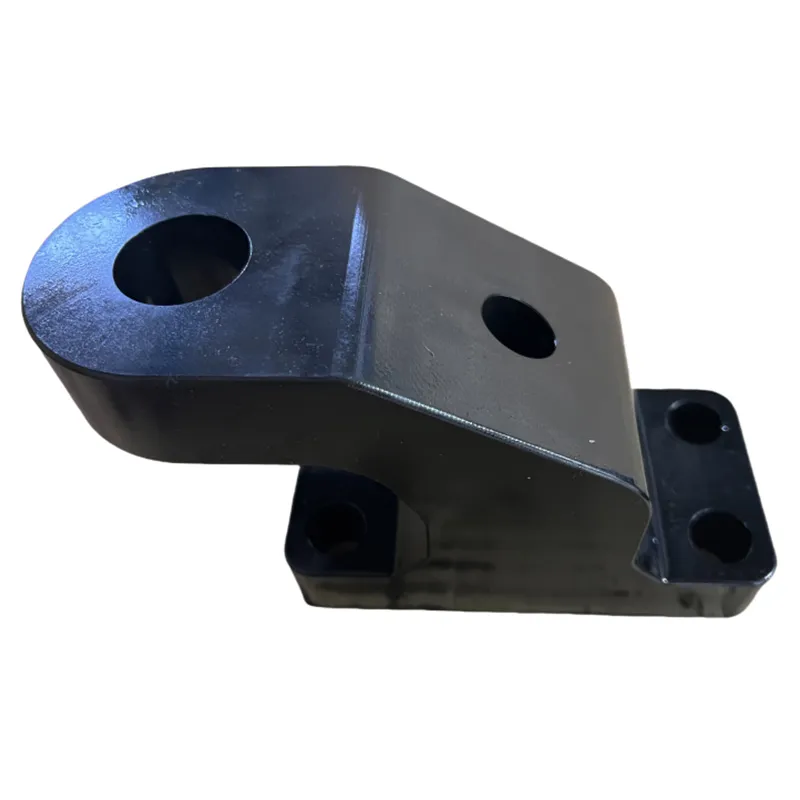
You learn more from a scrapped batch than a thousand perfect parts. Early in my time dealing with ag castings, we had an order for several hundred tractor counterweight brackets. Simple part, or so we thought. They were cracking in storage, before ever being bolted on. Embarrassing and expensive.
The root cause? Stress corrosion cracking. The brackets were stored in a humid warehouse. The residual stresses from the casting process, combined with a specific chemistry in the steel (a little too much of something, I forget the exact element now), created a perfect storm. The solution wasn't just a chemistry change; it was implementing a stress-relief annealing process right after shakeout. A simple, low-temperature oven cycle. Now it's standard procedure for that part family. That lesson on post-casting thermal treatment never left me. It's the kind of tacit knowledge a long-running foundry accumulates in its bones.
Looking Ahead: The Quiet Evolution
The future isn't about some magical new alloy. It's about predictability and integration. Simulation software for mold filling and solidification is getting better, but it still needs the validation of decades of practical data—the kind QSY has. The goal is zero prototyping, where the first casting out of the production mold is service-ready.
The other trend is traceability. With larger farms and tighter logistics, a failure needs to be traced back to the melt, the heat, even the shift. More foundries are adopting systems for this. It adds cost, but for critical driveline or safety-related castings in agricultural machinery, it's becoming non-negotiable. The casting isn't just a part; it's a data point in the machine's life cycle.
So, when you think about agricultural machinery casting, don't think of a lump of metal. Think of a fatigue-resistant, process-optimized, machinable component born from a mix of metallurgy, physics, and hard-won experience. It's the difference between a part that survives a season and one that survives a generation. That's the real cast.