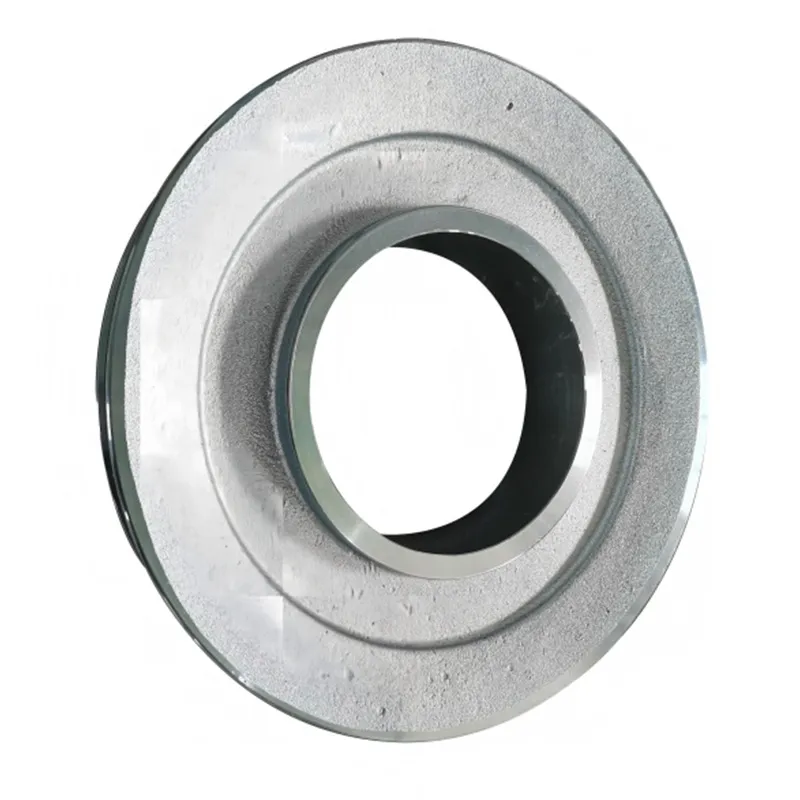
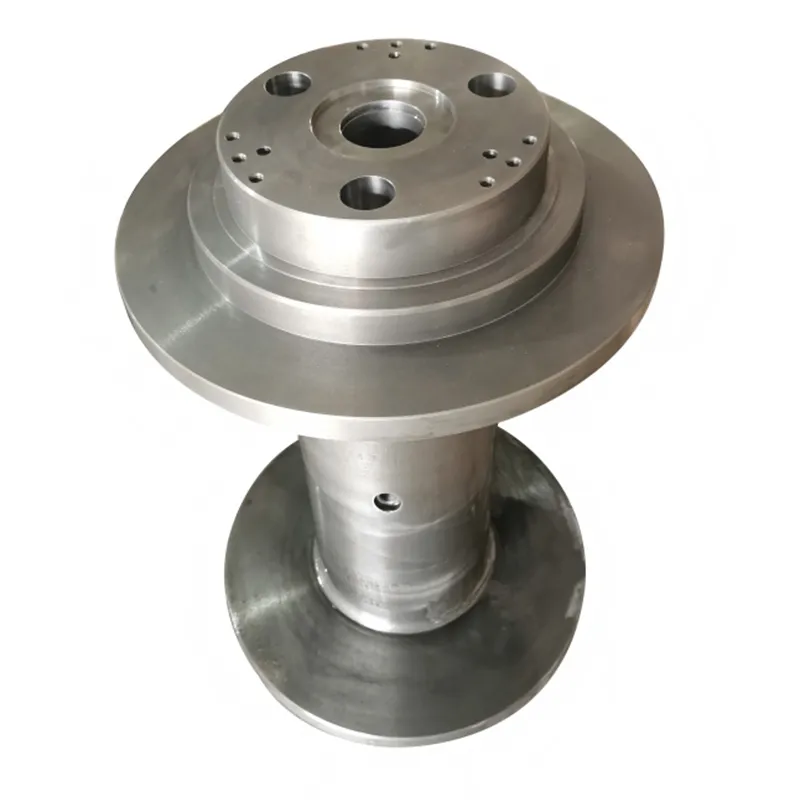
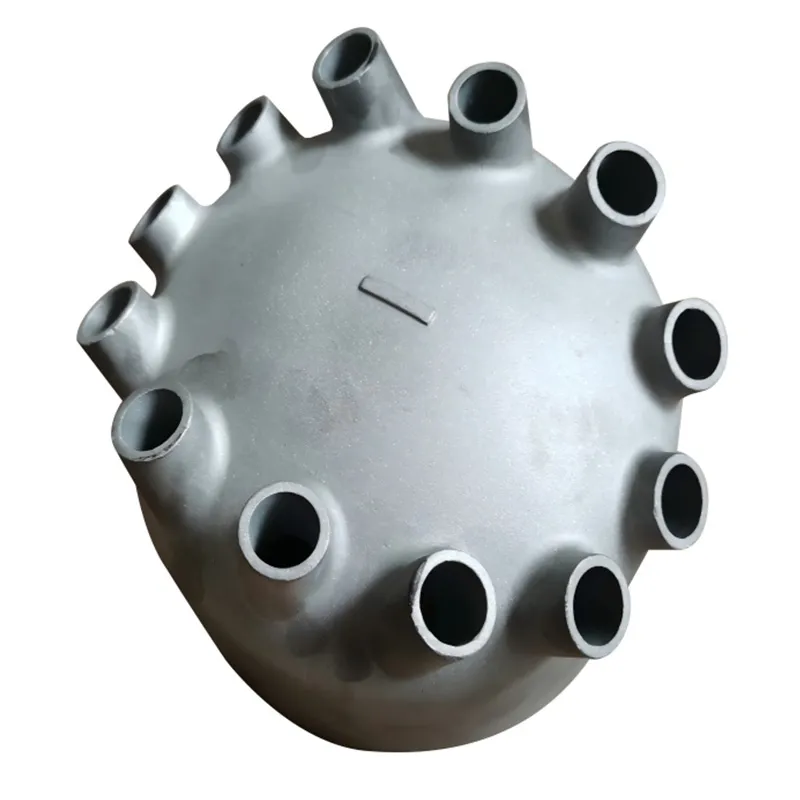
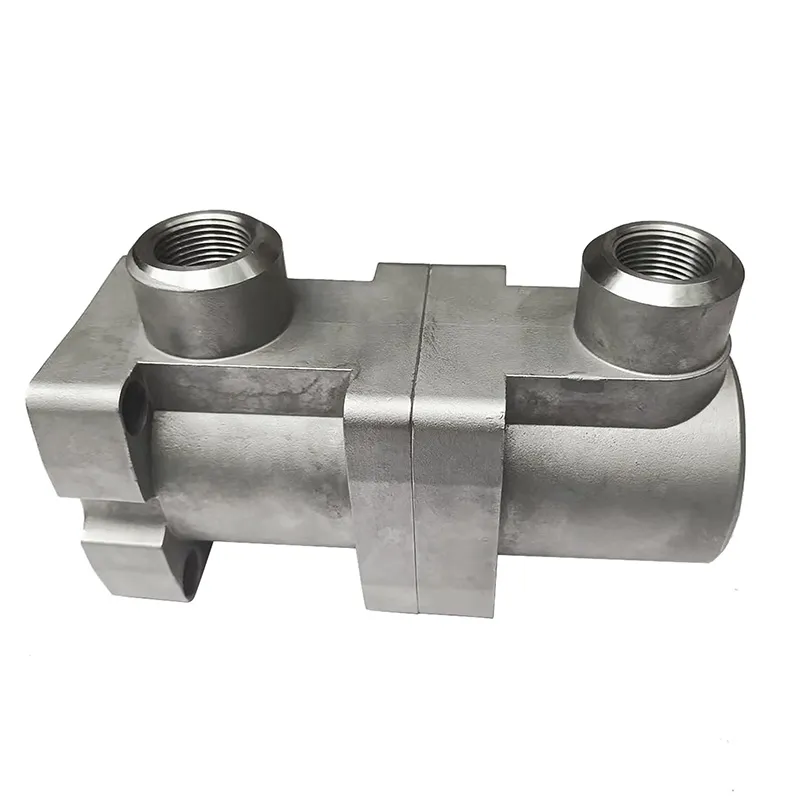
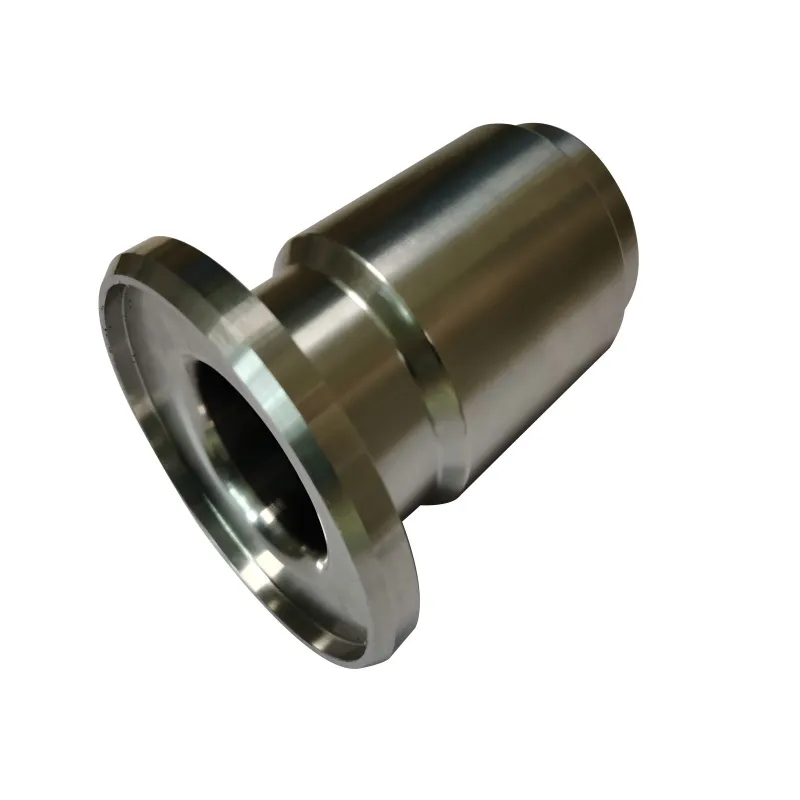
When someone throws out a request for AMS 5387 material parts, my first instinct isn't to just pull a spec sheet. It's to wonder if they truly understand what they're asking for. This spec covers a cobalt-chromium-nickel alloy, often referred to as Stellite 6 or similar grades, designed for extreme wear and high-temperature service. The common pitfall? Buyers often conflate it with generic stellite or think any foundry can whip it up. The reality is that AMS 5387 isn't just about chemistry; it's about the entire journey from melt to final machined dimension, with heat treatment and integrity checks that can make or break a part meant for, say, a turbine engine seal or a severe-duty valve seat. I've seen too many projects stall because the focus was solely on the material certificate, not the process capability behind it.
The Core Challenge: It's More Than Just an Alloy
Working with AMS 5387 isn't like machining mild steel. The high cobalt and chromium content give it phenomenal wear resistance, but that same property turns cutting tools into consumables. You can't just throw it on any CNC machine. The process requires rigid setups, specific tool geometries (we lean heavily on ceramic or CBN inserts for finishing), and a very deliberate approach to speeds and feeds. Even the casting process is critical. To avoid issues like micro-porosity or carbide segregation, the pouring temperature and mold pre-heat need tight control. A company like Qingdao Qiangsenyuan Technology Co., Ltd. (QSY), with their three decades in shell and investment casting for special alloys, has the furnace logs and process sheets to prove they've dialed this in. It's that institutional memory that matters.
Where things get interesting is post-casting. The spec often calls for a solution heat treatment. This isn't a simple annealing cycle. The temperature window is narrow, and the cooling rate—usually rapid air or forced air cooling—is crucial to achieve the desired microstructure. I recall a batch of valve components a few years back where the furnace load was too dense, leading to uneven cooling. The parts passed a basic hardness check but failed spectacularly in a subsequent hot hardness test, deforming under simulated service conditions. The root cause? The heat treat process wasn't treated as the critical operation it is.
This leads to a practical point about sourcing. You don't just buy AMS 5387 material parts; you partner with a supplier who controls the vertical process. QSY's model, combining their own casting with in-house CNC machining, is a significant advantage. It eliminates the finger-pointing when a flaw is found. Was it a casting defect revealed by machining, or a machining stress that induced a crack? When one team handles both, the feedback loop is immediate. For a high-integrity part, that traceability is worth more than a slight per-unit cost saving from a fragmented supply chain.
Precision Machining: Where Theory Meets the Vise
Let's talk about getting from a rough casting to a finished part. The machinability rating for these alloys is, frankly, poor. It work-hardens rapidly. If your tool dwells or your feed rate is too conservative, you're essentially hardening the surface you're trying to cut, leading to tool fracture. The strategy is high surface speed, consistent feed, and never letting the tool rub. Interrupted cuts, like on a valve seat with cross-holes, are a particular nightmare. We often use trochoidal milling paths to manage tool engagement.
Fixture design is another unsung hero. Because the material is so tough, cutting forces are high. A flimsy fixture will allow vibration, killing tool life and ruining surface finish. We've moved to dedicated, hardened steel fixtures with hydraulic clamping for critical production runs of AMS 5387 components. It's a capital expense, but it pays back in consistency and reduced scrap. I remember a prototype run where we tried to save time by using modular fixturing. The result was a +/- 0.001 inch tolerance on a bore that we couldn't hold—the part was literally shifting during the cut. Lesson learned the hard way.
Quality verification here goes beyond a CMM report. For parts facing high-temperature wear, we often specify and perform metallographic cross-sectioning on sample coupons from the same heat lot. You're looking for carbide distribution and the absence of deleterious phases. This is where a supplier's commitment shows. A shop just selling material will balk at this. A partner like QSY, embedded in this niche, usually has the lab relationships and understands this is part of delivering a functional component, not just a machined shape.
The Investment Casting Advantage for Complex Geometries
For many AMS 5387 material parts, especially those with intricate internal passages or complex aerofoils, investment casting is the only viable starting point. The near-net-shape capability drastically reduces the amount of this expensive, difficult-to-machine material you need to remove. However, the wax pattern process introduces its own variables. Dimensional accuracy of the final metal part is directly tied to the precision of the wax tree and the ceramic shell's behavior during dewaxing and sintering.
Shell mold casting, another of QSY's specialties, offers a different balance. It's often more economical for slightly less complex shapes and can yield excellent surface finish and dimensional stability. The choice between the two methods isn't arbitrary. It comes down to part geometry, required surface finish, lot size, and ultimately, cost. For a simple bushing, shell mold might be perfect. For a fuel nozzle with internal lattices, investment casting is non-negotiable. The key is having a supplier that can objectively advise on the best route, not just the one they have available.
A real-world hiccup we encountered involved core shift in an investment-cast turbine seal. The part looked perfect externally, but an ultrasonic inspection revealed a thin section where a thick one was designed. The core had floated slightly during pour. The fix wasn't just remelting; it involved redesigning the core anchors and adjusting the gating system to ensure more uniform metal flow. This is the kind of problem-solving that happens off the spec sheet but defines project success.
Material Sourcing and Traceability: The Paper Trail
AMS 5387 starts with the right master alloy ingots. Reputable mills provide material certs, but the chain of custody matters. For aerospace or power generation applications, you often need full traceability back to the melt. This means your supplier must have a rigorous material identification and segregation system. We've audited shops where 321 stainless and cobalt alloy chips were in adjacent bins—an instant disqualifier for critical work.
The certification package is the final deliverable. It should include not just the chemical analysis and mechanical properties from test coupons, but also heat treat records (with furnace charts), non-destructive testing reports (like dye penetrant or radiographic), and full first-article inspection data. I view a light cert package with suspicion. A robust one, like what we've consistently received from partners with integrated processes, tells a story of control at every step.
It's worth noting that while AMS 5387 is a common call-out, equivalent proprietary grades like Stellite 6, Deloro 6, or Tribaloy T-800 exist. Sometimes, a part designed for AMS 5387 can be made from an equivalent with minor approval, which might offer better availability or a slight performance tweak. This is a conversation to have with your engineering team and a knowledgeable supplier. Blind substitution is a cardinal sin, but informed material engineering is part of the value-add.
Concluding Thoughts: The Pragmatic Approach
So, what's the takeaway when you need a component made from AMS 5387 material parts? Look beyond the chemistry. Evaluate the supplier's total process control—from their alloy sourcing and melting practice, through their casting and heat treatment, and finally, their machining strategy and metrology. The shops that succeed long-term in this space, like QSY, are those that respect the material's challenges and have built their systems around them, not just added it to a materials list.
It's also about managing expectations. These parts will never be as cheap or fast as carbon steel ones. The value is in their performance in the most demanding environments. A failed seal in a high-temperature pump can cause days of downtime, costing far more than the premium paid for a properly manufactured part. The real cost is always total cost of ownership.
Finally, engage early. If you're designing a part you think needs AMS 5387, talk to your foundry and machinist during the design phase. They can advise on draft angles, section transitions, and tolerance callouts that are manufacturable. That collaboration is the difference between a smooth production run and a protracted struggle against physics and metallurgy. It turns a procurement exercise into a partnership that delivers a component that actually works.