You see ASTM A747 come up on a drawing or a spec sheet, and a lot of folks immediately lump it in with the other precipitation-hardening stainless grades. That's the first mistake. It's not simply a '17-4PH alternative' or a generic 'stainless casting' callout. The nuance is in the 'CB' and 'CX' designations—CB7Cu-1 and CB7Cu-2. The 'Cu' is the giveaway. That copper addition is what makes it behave differently during heat treatment, and frankly, it's where a lot of foundries and machine shops get tripped up if they're not dialed in. I've seen parts come out with great tensile numbers but terrible impact resistance because the aging cycle was just slightly off for that particular heat's chemistry. It's a material that demands respect for its process, not just its final properties.
The Foundry Floor Reality with A747
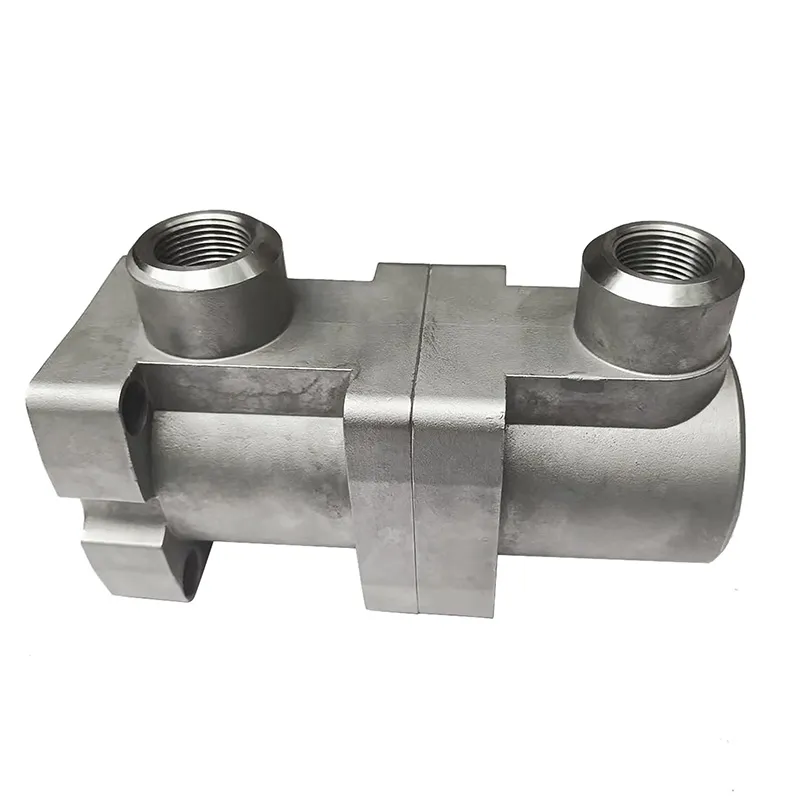
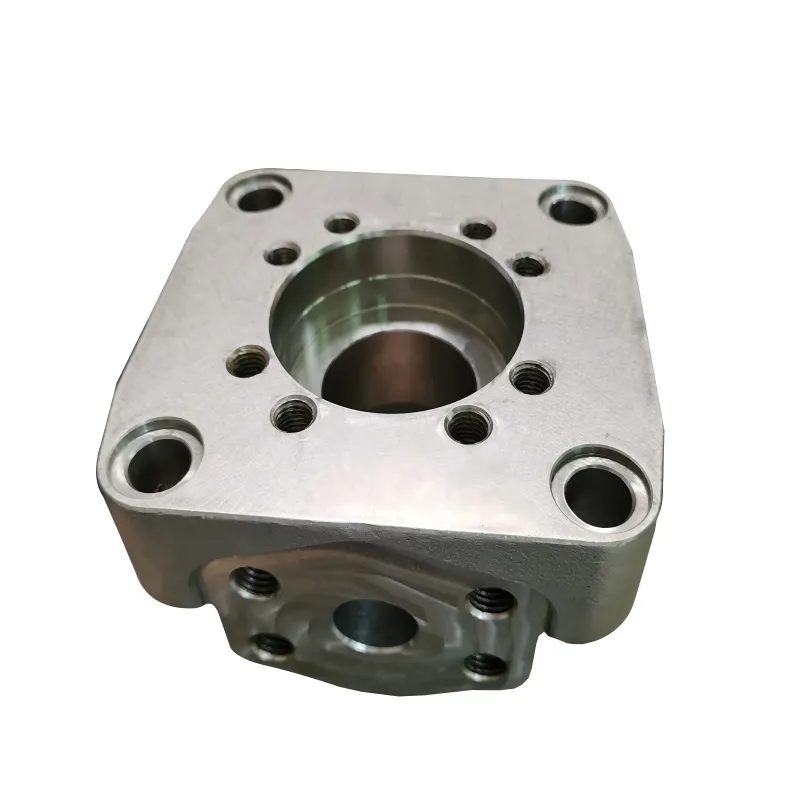
Casting CB7Cu grades isn't like pouring 304 or even 17-4. The fluidity is different, the shrinkage characteristics are more pronounced. You have to be meticulous with your gating and risering. Early on, we had a batch of investment cast valve bodies—complex, thin-section stuff—that kept showing micro-porosity in critical areas on X-ray. We were using a standard feeding approach that worked for 316. It failed miserably here. The issue wasn't cleanliness; it was solidification control. We had to redesign the entire feeding system, adding more, but smaller, risers in specific locations to promote directional solidification more aggressively. That solved it, but it added cost and complexity. That's the trade-off with ASTM A747.
The other reality is the heat treatment interplay. You can't separate the casting process from the subsequent solution annealing and aging. The as-cast condition is essentially solution treated if you cool it fast enough from the mold, but you still need that formal solution anneal to dissolve everything back in. The trick is knowing what your as-cast condition actually is. If your cooling rates in the shell or mold are inconsistent, you might have precipitates already forming unevenly. Then, your subsequent solution anneal might not fully homogenize the structure. We learned to track cooling rates on prototype castings with thermocouples. It felt like overkill at the time, but it gave us the data to standardize our shake-out times and cooling procedures, which made the final heat treatment far more predictable.
And machining? It's a bear in the solution-annealed condition—gummy, stringy, and it work-hardens like crazy. You absolutely want to machine it in the final aged condition. But you have to account for the dimensional shift from aging. It's not huge, but on parts with tight tolerances across multiple planes, it's enough to scrap a part. We build in a pre-aging rough machining step, leave about 0.5mm per side, then age, then finish machine. Trying to hit a ±0.025mm bore tolerance by machining pre-age and hoping it doesn't move is a fool's errand. I've been that fool. The data sheets give you a coefficient, but the actual movement depends on part geometry—thick sections vs. thin webs. It's experiential knowledge.
CX vs. CB: The Corrosion Trade-Off
The spec covers both CB7Cu-1 and CB7Cu-2. The common wisdom is that CX (CB7Cu-2) has better corrosion resistance due to higher chromium. That's true, broadly. But better is relative. If you need truly outstanding corrosion resistance, you probably shouldn't be looking at precipitation-hardening stainless in the first place. The value of ASTM A747 is its combination of decent corrosion resistance with very high strength from a simple, low-distortion heat treatment.
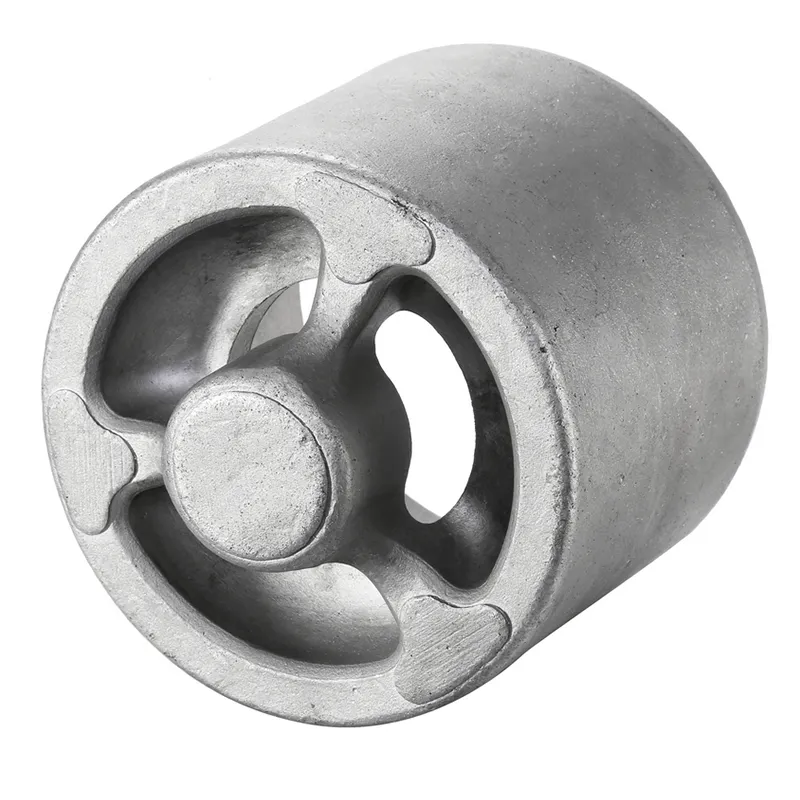
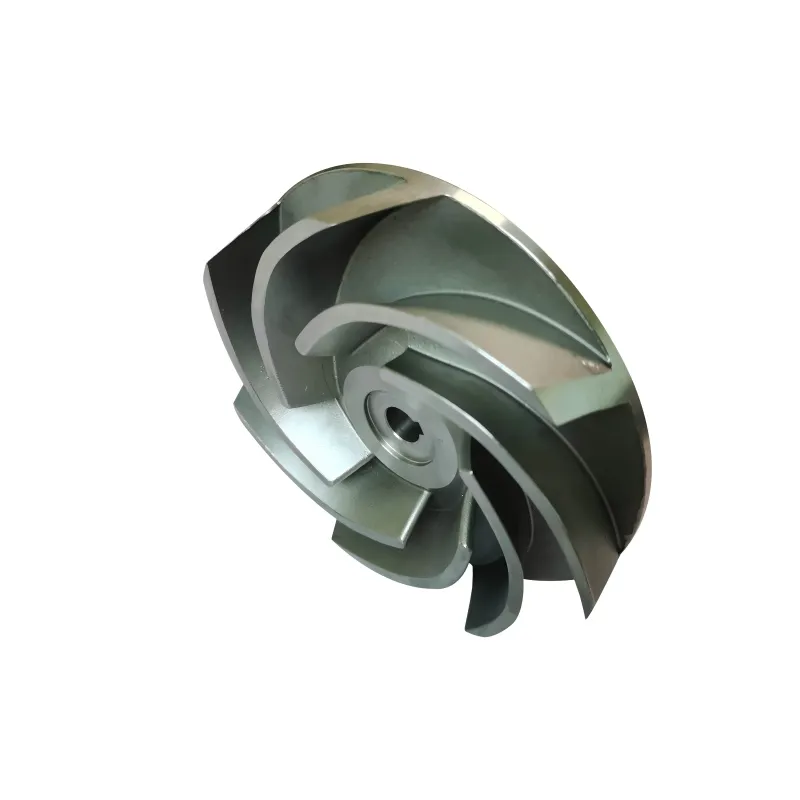
We supplied a series of CB7Cu-1 (the more common, lower-corrosion version) pump impellers for a brackish water application. The client initially insisted on CX grade, quoting the spec's corrosion tables. After reviewing the actual service environment—intermittent flow, occasional stagnation, chlorides around 1000 ppm—we argued for CB. The reasoning was strength. The impellers were subject to high centrifugal stress and cavitation erosion. The marginally better corrosion resistance of CX wasn't the limiting factor; the mechanical strength and resistance to fatigue from cavitation bubbles were. CB7Cu-1, aged to H900 condition, gave a higher yield strength. We ran corrosion coupons in a simulated environment for 30 days. The CB parts showed slight, uniform surface etching, no pitting. It passed. The client saved on material cost, and we avoided a potential fatigue failure. It's about matching the property to the actual failure mode, not just picking the highest number on the data sheet.
This is where a partner with deep material experience matters. A shop that just cuts metal might see the two grades as interchangeable aside from chemistry. They're not. The heat treatment response differs slightly, the machinability changes, and the final performance envelope is distinct. At Qingdao Qiangsenyuan Technology Co., Ltd. (QSY), with their three decades in casting and machining special alloys, this is the kind of judgment call that happens daily. It's not about having the spec sheet; it's about having the historical data from similar parts to inform the choice between CB and CX.
Failure Analysis: When Good Castings Go Bad
The most instructive lessons come from failures. We had a batch of structural brackets, cast in CB7Cu-1, that passed all NDT and mechanical testing but failed in service after about six months with a brittle fracture. Classic fatigue crack initiation and propagation. The culprit? Surface finish in a radius. The drawing called for a 3mm fillet, but the as-cast surface in that fillet was rough—maybe Ra 12.5 microns or more. In a high-strength, high-hardness material like aged ASTM A747, surface imperfections are potent stress concentrators. The part met the print dimensionally, but the functional requirement for a smooth stress-flow path wasn't met.
We changed our practice after that. Now, for any A747 part subject to cyclic loading, we specify a machined surface finish (Ra 3.2 or better) on all critical radii and transitions, even if the print doesn't explicitly call it out. We'll quote it as a necessary secondary operation. Sometimes the engineer pushes back on cost, and we show them the macro photos of the fracture origin. That usually ends the discussion. The high strength of the material works against you if you leave stress risers.
Another failure mode is hydrogen embrittlement. This isn't unique to A747, but because it's often used in high-strength applications, the risk is elevated. We encountered this on a part that required plating for wear resistance. The plating process introduced hydrogen, and the subsequent low-temperature bake for hydrogen relief was insufficient for the specific hardness (HRC 45) we had. The parts passed QC but failed under load in assembly. The fix was a longer, hotter bake cycle, validated by sustained load testing on sample parts. It added a step, but it was non-negotiable. The spec might not detail this for every possible post-processing step, so you have to know the interactions.
Machining and Finishing Nuances
Let's talk about getting from a raw casting to a finished part. As I mentioned, machining post-aging is the only sane path. Use ceramic or CBN inserts for finishing; carbide works but wears faster due to the abrasiveness of the hardened structure. Coolant is critical—flood it. You need to carry heat away, not just lubricate. We've had success with high-pressure coolant systems for deep-hole drilling in these grades, preventing chip welding and work hardening in the bore.
Grinding and EDM are common secondary ops. Grinding requires soft wheels and light passes to avoid burning. A burn on an A747 part can create a localized overtempered zone that's a weak spot. For EDM, the recast layer is a concern. It's hard, brittle, and often micro-cracked. It must be removed, usually by a light abrasive flow or hand polishing, especially in fatigue-critical areas. You can't just EDM and call it done. I've seen parts where the EDM recast layer wasn't removed, and it acted as the initiation site for stress corrosion cracking in a chloride environment. The part looked perfect but was fundamentally compromised.
This integrated capability—from shell or investment casting through precise CNC machining and informed post-processing—is what separates a parts supplier from a solutions provider. A company like QSY, which handles everything from the melt pour to the final deburring under one roof, has a major advantage with a material like this. They can control the variables and trace the process steps, understanding how a change in the casting cooling rate might affect the machinability two operations down the line. You lose that thread when you ship a raw casting to three different vendors.
Why It Endures in the Spec Sheets
So with all these complexities, why does ASTM A747 persist? Because when you need a casting that can be heat treated to 1300 MPa yield strength with minimal distortion, has decent corrosion resistance for many industrial environments, and can be produced in complex geometries, the alternatives are limited. You could go to a maraging steel, but then corrosion resistance plummets. You could use a duplex stainless, but you won't get that strength level. You could fabricate from bar stock, but you lose design freedom and often incur more cost from machining waste.
It's a niche, but a vital one. Think aerospace actuators, high-performance valve components, pump parts in the energy sector, and specialized tooling. It's not a bulk commodity material. Its value is in its tailored properties. The key for anyone working with it is to stop thinking of it as just a stainless steel. Think of it as a system: a specific chemistry, a tightly controlled casting process, a non-negotiable heat treatment protocol, and a machining & finishing strategy designed for high-strength alloys. Miss one link, and the chain fails.
In the end, success with A747 comes down to respect for the process. It's not a material you can wing. You need data, you need historical reference, and you need partners who have been through the iterations—the good casts and the bad—to know where the hidden pitfalls are. That's the real cost of the material: not the per-kilogram price of the alloy, but the investment in process knowledge to make it perform as advertised.