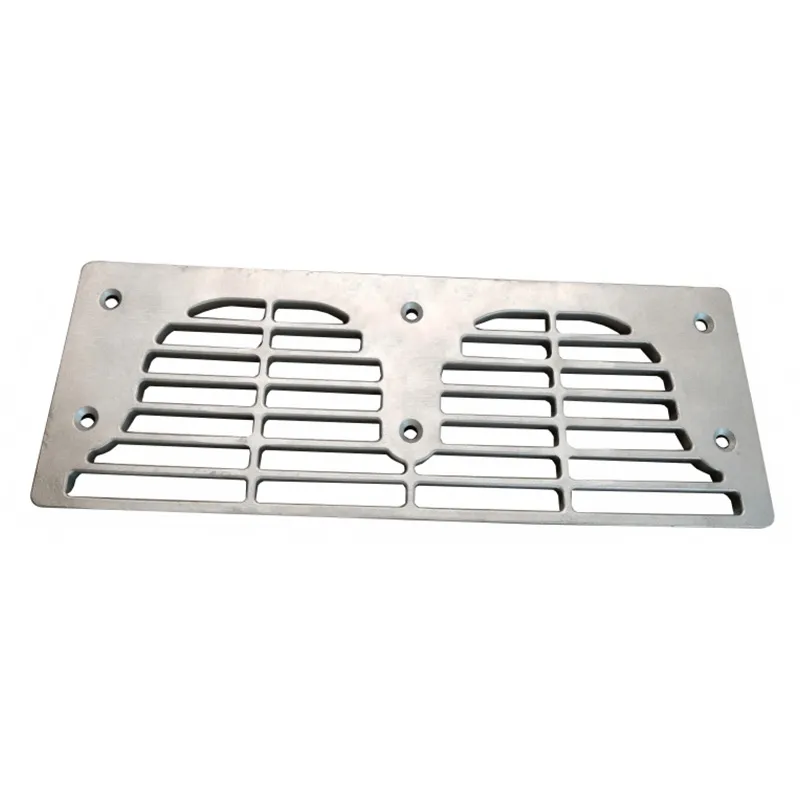
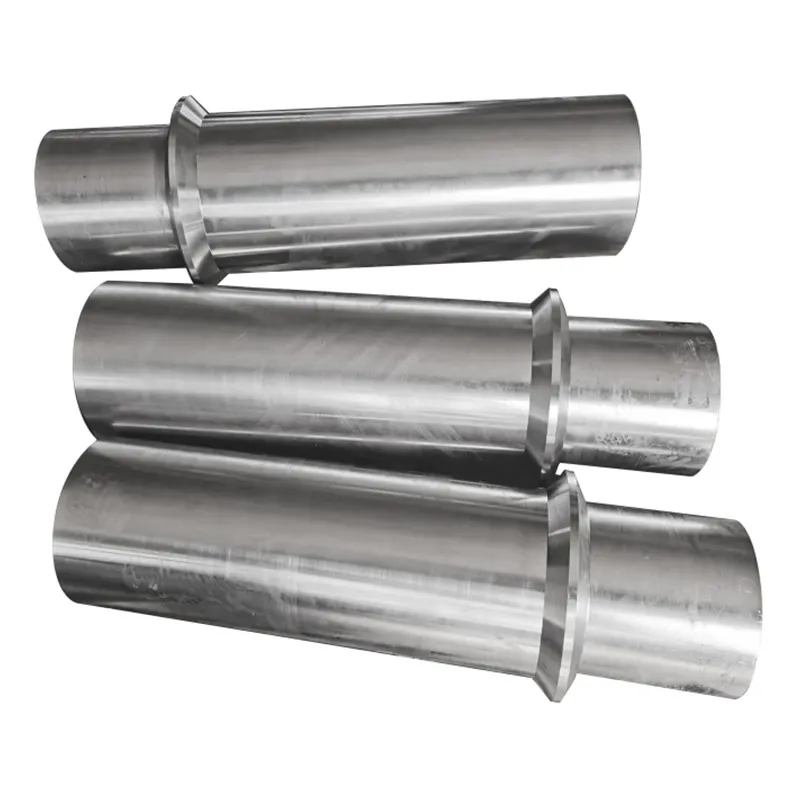
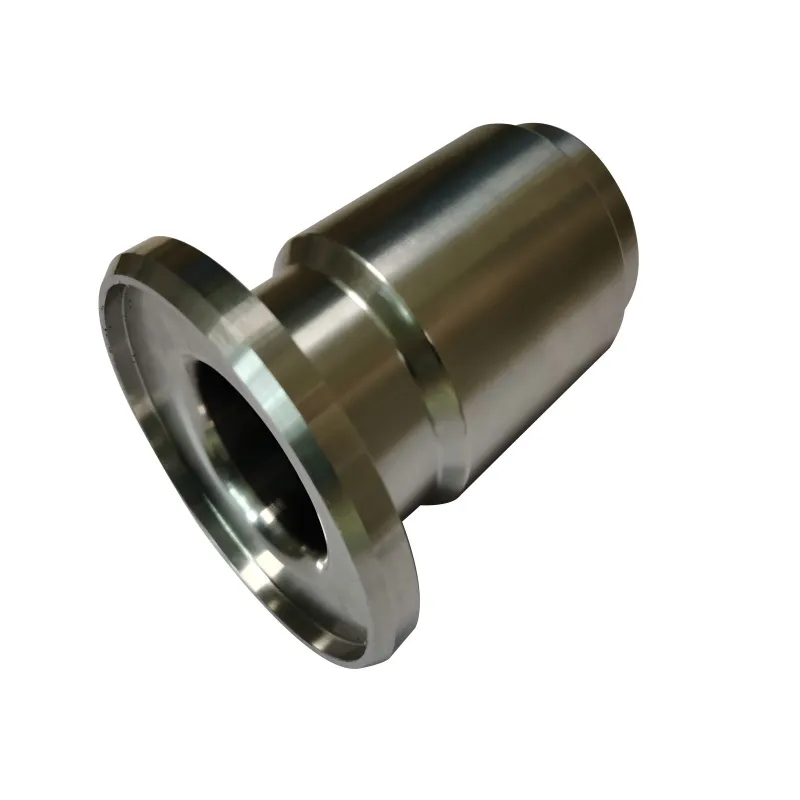
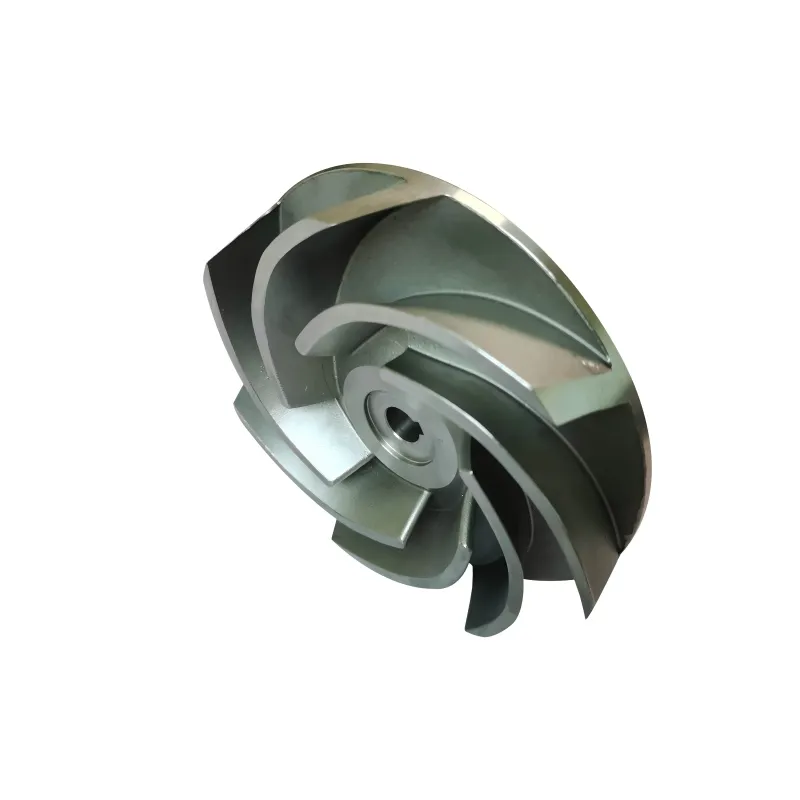
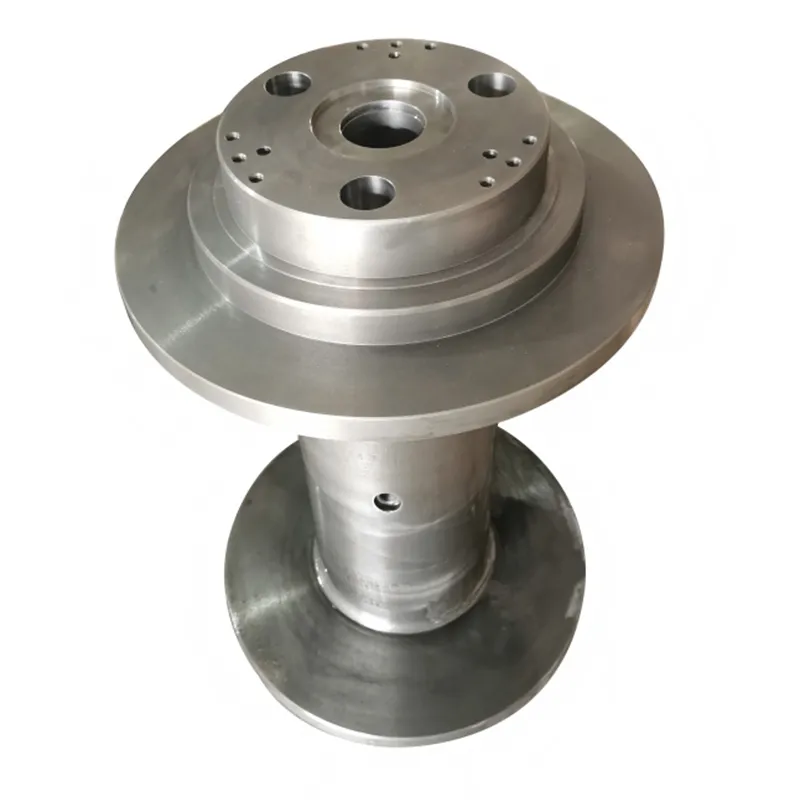
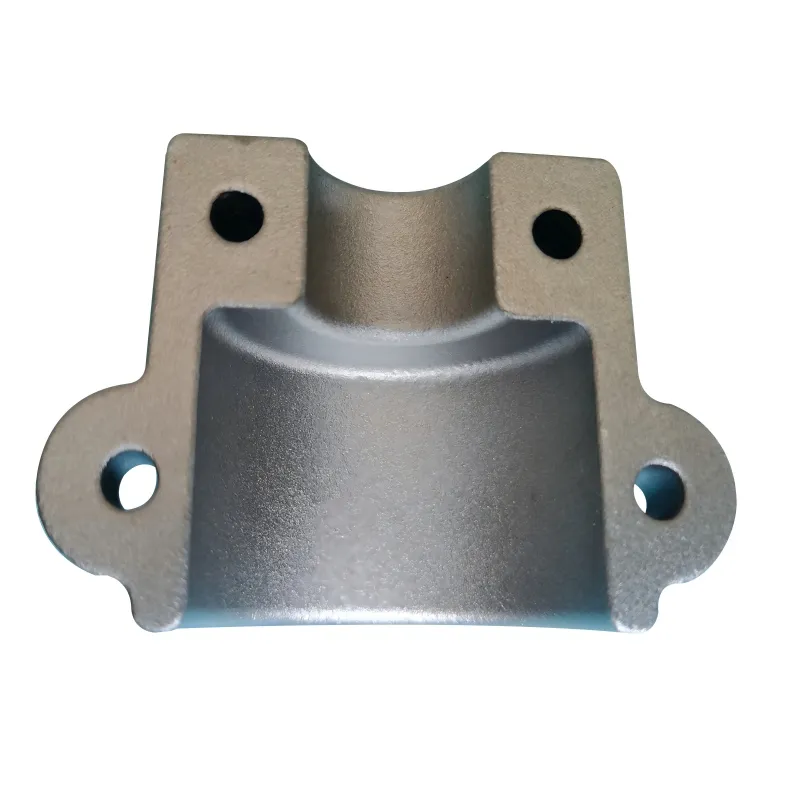
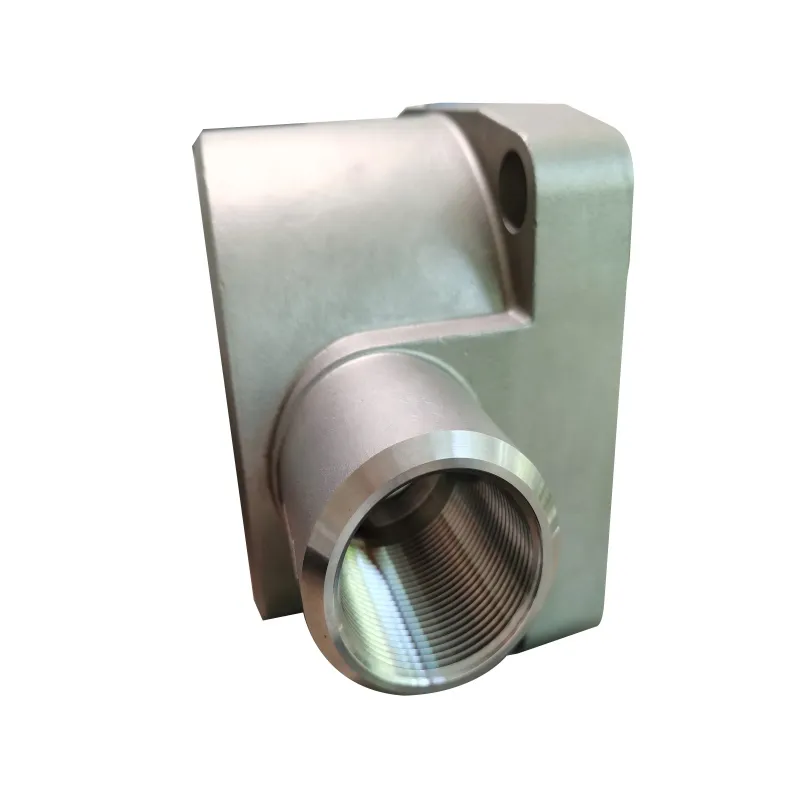
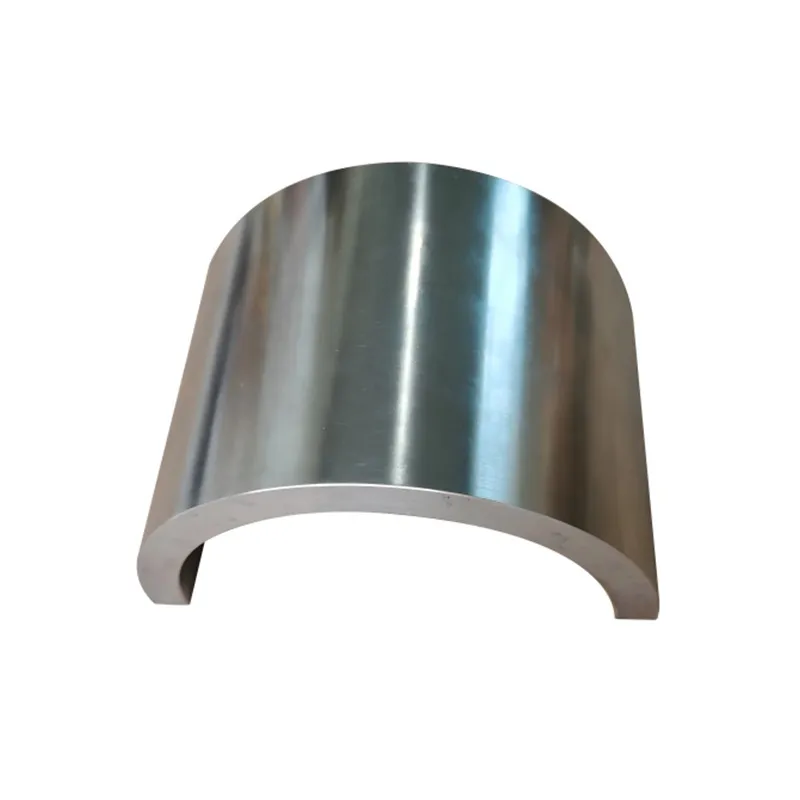
When most people hear 'carbon steel investment casting', they immediately think of precision and smooth surfaces. That's true, but it's also where the first big misconception lies. The real challenge isn't just achieving a good as-cast finish; it's managing the inherent variables in the material itself—the shrink rates, the heat treatment response, the potential for casting defects that are unique to carbon steels compared to, say, stainless. It's a process where the theoretical ideal on paper often meets the gritty reality of the foundry floor.
The Core Challenge: It's All About Control
Let's talk about the shell. For carbon steel, especially the low to medium grades, the shell system's permeability and hot strength become critical. You need a shell that can withstand the higher pouring temperatures of steel without buckling, but also one that allows gases to escape. I've seen projects fail because the shell was too dense, leading to gas porosity trapped just beneath the surface of what looked like a perfect casting. It's a balancing act. A company that gets this right, like Qingdao Qiangsenyuan Technology Co., Ltd.(QSY), leverages decades of that specific material experience. You can see their approach to integrated shell mold casting and investment casting on their platform at https://www.tsingtaocnc.com. It's not just about having the equipment; it's about knowing which shell recipe works for a 1020 steel versus a 1045.
The other half of the equation is the metal itself. Deoxidation practice is something rarely discussed outside the melt shop. With carbon steel, how you kill the steel in the ladle—aluminum, silicon, calcium?—directly impacts fluidity and final soundness. Too little, you risk pinholes. Too much, you create non-metallic inclusions that can wreck machinability later. This is where the 30-year background QSY mentions isn't just a marketing line; it's a logbook of melt recipes and outcomes for different sections and weights.
And then there's the pattern. For complex carbon steel parts, the wax pattern design's shrink allowance isn't a single number. It changes with the section thickness. A thick hub and a thin flange on the same part will shrink at different rates. We learned this the hard way on an early gear housing project. The print called for a uniform shrink factor. The result was a dimensionally out-of-spec part that required massive, costly rework. Now, we use modulated shrink rules based on historical data from similar geometries, which is exactly the kind of tacit knowledge a long-standing operation accumulates.
Where the Process Really Proves Its Worth
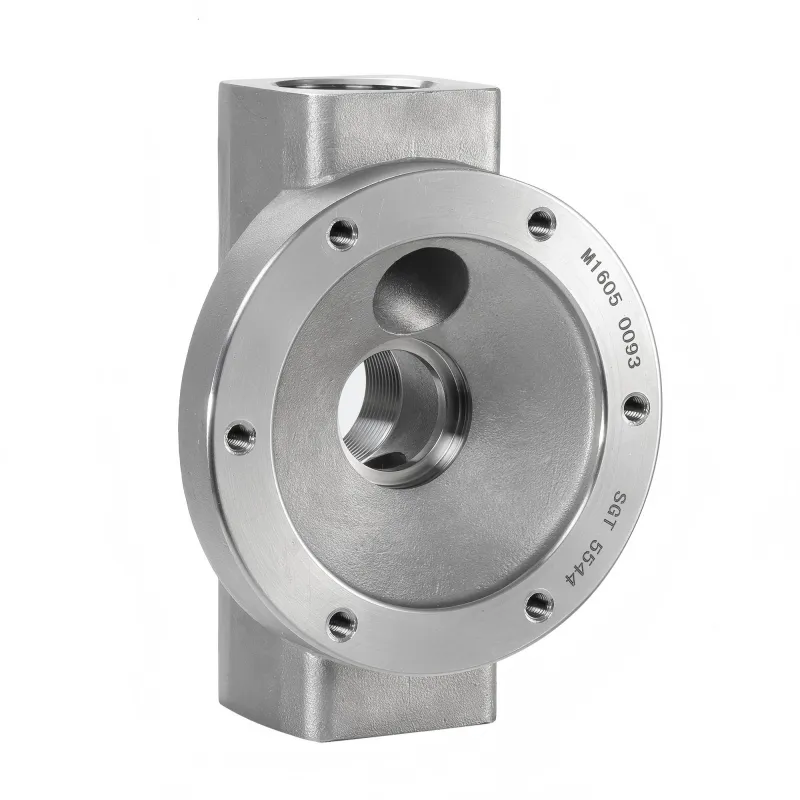
So where does carbon steel investment casting make undeniable sense? Look at components that need to be strong, relatively wear-resistant, but also complex in shape and where machining from bar stock would be prohibitively wasteful. Think of hydraulic valve bodies, small gear blanks, or certain agricultural tool components. The near-net-shape capability saves a huge amount of raw material and subsequent machining time. For instance, producing a lever arm with multiple angled features and internal passages as a casting might leave only the bearing journals and threads to be machined.
But the investment in the name is also a cost warning. For simple, chunky carbon steel parts, sand casting is almost always more economical. The sweet spot is complexity. I recall a project for a custom clamping assembly used in heavy machinery. The part had several intersecting cylindrical forms and non-standard angles. Machining it from a solid block was quoted at an astronomical figure due to the material waste and setup time. Through investment casting, we produced the main form with minimal machining stock on the critical faces. The per-part cost was higher than a simple casting, but the total landed cost, including machining, was about 40% lower. That's the real calculation.
A critical, often overlooked, phase is the first article inspection. For a new carbon steel casting, you must validate not just dimensions but also the internal integrity. We always pair a first-article dimensional report with a cut-up test. You sacrifice one casting, section it at the critical areas (usually the thickest sections and junction points), and etch it. This reveals the grain structure and any hidden shrinkage or porosity. It's the only way to be sure your gating and risering system is working before you greenlight production. Skipping this step is a gamble with high odds of failure.
The Machining Handoff: A Make-or-Break Interface
This is where an integrated supplier shows its value. Casting is one thing; delivering a part ready for assembly is another. Carbon steels for investment casting are often chosen for their machinability. But the as-cast condition matters. A surface that's too hard from rapid cooling can prematurely wear cutting tools. This is why the relationship between the foundry and the machine shop needs to be tight. When both are under one roof, like at QSY where they combine casting with CNC machining, the feedback loop is immediate. The machining team can tell the foundry, This batch is running hotter on the tools, and the foundry can adjust the heat treatment normalize cycle or the cooling rate for the next pour.
Speaking of heat treatment, it's rarely optional. For most carbon steel investment castings, you're looking at a normalization or annealing cycle to homogenize the grain structure and relieve stresses. This step is crucial for dimensional stability during machining. If you skip it, the part can move unpredictably as you cut it, scrapping an expensive casting after you've already invested machining time into it. The key is consistency. The furnace profile, the soak time, the cooling rate—they must be repeatable batch to batch.
One practical headache is gate and riser removal. For carbon steel, you often use abrasive cutting or sawing. The location of these removal points needs forethought. You don't want a gate stub left in a area that becomes a critical sealing surface or a stress concentration point. A good practice is to design the gating so that the removal points land on non-critical areas or surfaces that will be fully machined away. This requires upfront collaboration between the design engineer and the foundry process engineer, something that's far smoother when dealing with a technically proficient partner.
Material Nuances: Not All Carbon Steels Are Equal
Within the carbon steel family, the choice matters. AISI 1020 is common, offering good weldability and ductility but lower strength. For parts needing more strength and better wear resistance without going to alloy steels, 1045 or even 1055 might be specified. But with higher carbon content comes greater sensitivity to cracking during cooling and more critical heat treatment controls. You can't just swap a 1045 pattern into a process designed for 1020 and expect it to work. The feeding requirements are different.
We once had a request to use a high-carbon steel for a wear plate. The initial trials resulted in hot tears—cracks that form while the casting is still semi-solid. The solution wasn't just changing the metal; it involved redesigning the mold to have more uniform cooling and modifying the shell composition around certain corners to be less restrictive during contraction. It was a process fix, not just a material substitution. This aligns with the expertise you'd expect from a supplier like QSY, whose material list includes various steel and special alloys, implying they've had to solve these exact metallurgical puzzles.
Another nuance is surface decarburization. During heat treatment, carbon can migrate out of the surface layer of the steel, leaving a soft skin. For many applications, this isn't an issue as it's machined off. But for parts where the as-cast surface is functional (like certain wear surfaces), it's a problem. Controlling the atmosphere in the heat treat furnace or using protective coatings becomes part of the process spec. It's a detail that only comes from hands-on experience with the full production chain.
Concluding Thoughts: It's a Specialist's Game
At the end of the day, successful carbon steel investment casting isn't about having a fancy brochure. It's about controlled, repeatable chemistry, a deep understanding of thermal dynamics in the mold, and a seamless integration with post-casting processes. The companies that do it well, the ones you can rely on for critical components, are those that treat it as a specialized craft built on accumulated data from both successes and, more importantly, failures.
The market is full of foundries. But finding one that truly masters the specific marriage of carbon steel to the investment process is different. You want to see evidence of that mastery in their process controls, their material certifications, and their willingness to engage in the nitty-gritty of your part's function. It's the difference between getting a part that simply matches a drawing and getting a component that performs reliably in the field.
So, when evaluating a source, look beyond the equipment list. Ask about their standard practices for gating similar geometries. Inquire about their melt control and how they handle heat treatment for your specific grade. Their answers—or the lack thereof—will tell you everything you need to know. It's a demanding process, but when executed with expertise, it delivers a combination of design freedom, material performance, and cost-effectiveness that is very hard to beat.