You hear 'cast iron' and most minds jump straight to skillets. That's fine, but in the industrial world, that association is almost a distraction. The real story is about a material that's deceptively simple, often misunderstood, and absolutely irreplaceable for certain jobs—if you know how to handle it. The common mistake? Treating all cast iron like it's one uniform thing. It's not. Gray iron, ductile iron, malleable iron... each behaves like a different animal during machining and casting. I've seen too many projects run into trouble because someone specified the wrong grade, thinking 'iron is iron'. It never is.
The Grades and the Grit
Let's talk gray iron, the workhorse. Good damping capacity, machines well, but brittle. You can't just weld it up if you mess up a cut. Ductile iron, with that nodular graphite, is a different beast—tougher, some give to it. Choosing between them isn't just a material spec on a drawing; it's the first major decision that dictates everything that comes after: tooling strategy, cutting speeds, even the clamping force you use on the CNC bed. Get it wrong early, and you'll pay for it later in scrapped parts or hours of rework.
I recall a batch of pump housings a few years back. The print called for a cast iron with good machinability and pressure tightness. The foundry supplied a standard Class 30 gray iron. It machined beautifully, surface finish was like glass. But during the hydrostatic test? Seepage. Tiny micro-porosity that wasn't visible. We had to switch to a denser, finer-grain gray iron, almost a semi-ductile, and adjust the entire shell molding process to achieve higher mold rigidity. The cost per unit went up, but it held pressure. That's the kind of practical, gritty detail you only learn by burning through a deadline.
This is where long-term foundry partnerships matter. A shop like Qingdao Qiangsenyuan Technology (QSY), with their three decades in shell and investment casting, has seen these failures. They've built the pattern library and process knowledge to ask the right questions upfront: What's the part's function? Impact loading? Thermal cycling? Their experience across cast iron, steels, and those tricky special alloys means they're not just pouring metal; they're anticipating how it will behave in your hands, in the CNC machine, and in the field.
Machining: Feel and Sound
Machining cast iron is as much about feel and sound as it is about G-code. You listen to the cut. A steady, gritty hiss is good. A high-pitched squeal or chatter means something's off—maybe the tool is going dull, or your feeds and speeds are fighting the material's structure. It's not like aluminum, where you can be more aggressive. With iron, especially the flakier gray irons, you're dealing with that free graphite. It acts as a lubricant in a way, but it's also abrasive as hell on your tooling.
We learned to use ceramic or CBN inserts for high-volume jobs on harder irons, but the initial cost gives everyone pause. Sometimes, a well-honed carbide grade with a specific chipbreaker geometry for short, brittle chips works just as well for a job lot. It's a judgment call. Coolant? Generally, you go dry. The graphite provides lubrication, and introducing coolant can make a messy, abrasive slurry that does more harm than good. But with ductile iron, a bit of coolant for heat control might be necessary. There's no universal manual.
I remember setting up for a face milling operation on a large ductile iron gear blank. The theoretical parameters from the tooling catalog suggested a certain speed. It sounded wrong from the first pass—too aggressive, too much vibration. We dialed it back by 15%, increased the feed slightly to get into a better chip load, and the sound smoothed out. The finish improved, and tool life probably doubled. That 15% isn't in any book; it's in the guy who's been listening to machines for twenty years.
Casting Method Matters: Shell vs. Investment
How you cast it defines what you can machine. For complex, near-net-shape parts in cast iron, shell mold casting is often the go-to. The sand-resin shell gives you a decent surface finish and dimensional accuracy, which minimizes the amount of metal you have to remove later. It's efficient. But for parts with internal passages, intricate details, or those that require a superior as-cast surface? That's where you look at investment casting, even for iron. It's more involved, costlier, but for the right component, it saves countless machining hours.
QSY's dual capability here is a significant advantage. They can assess a part geometry and recommend the most cost-effective route from molten metal to finished part. I've seen them suggest switching a design from a fabricated steel assembly to a single, complex ductile iron investment casting. The upfront tooling was higher, but it eliminated welding distortion, multiple set-ups, and actually reduced total part cost by about 30% at volume. That kind of cross-process thinking comes from doing both for decades.
The challenge with iron in investment casting is the temperature and the mold material. Iron pours hot, and you have to prevent reactions with the ceramic shell. It requires precise slurry formulations and controlled dewaxing and firing cycles. A misstep can lead to surface defects that ruin the casting's integrity. It's a delicate dance with a very heavy partner.
The Alloy Neighbors: When Iron Isn't Enough
This is a crucial point: knowing when cast iron isn't the answer. You have a part needing high temperature strength or severe corrosion resistance? You step over to the nickel-based or cobalt-based alloys. But that decision has massive cost and manufacturability implications. Those alloys are beasts to machine and cast.
Having a supplier that handles the full spectrum, from common irons and steels to these exotic alloys, is invaluable. It means their advice is material-agnostic. They're not trying to sell you iron because that's all they do. They might look at a high-wear application and suggest a high-chromium white iron instead of a more expensive stainless. Or, for a valve component facing both corrosion and abrasion, they might propose a duplex stainless over a standard ductile iron. Their portfolio, as seen on their site tsingtaocnc.com, allows for honest comparative advice. That builds trust.
I worked on a project for a mining component that initially spec'd a very hard nickel alloy. The casting was possible, but the machining was a nightmare, eating tools. QSY's engineers reviewed it and proposed a modified high-strength ductile iron with a specific heat treatment (austempering, to be precise). It met the wear spec, survived the impact tests, and reduced the finished part cost by over 50%. That's the power of practical, cross-material expertise.
The Unsexy Details: Cleaning, Stress, and Inspection
Nobody gets excited about shot blasting or stress relieving, but this is where parts live or die. Cast iron, particularly in thick sections, retains residual stress from cooling. If you machine it in that state, it can move, warp, and ruin your tolerances after it's off the machine. A proper thermal stress relief cycle before final machining is non-negotiable for precision parts. It's time and money on the schedule, but skipping it is false economy.
Cleaning is another one. Removing all the sand, scale, and sprues without damaging thin walls or features requires the right media and pressure. It sounds trivial until you have a batch of parts where the cleaning process etched into a critical sealing surface. Visual and dimensional inspection post-casting, before it ever hits the CNC, catches these issues. A good foundry does this as a matter of course, not as an add-on.
This backend process discipline is what separates a parts vendor from a manufacturing partner. When you get parts from a shop that understands this, they arrive ready to run. The surfaces are clean, the datums are identifiable, and the stock allowance is consistent. It makes the machinist's job predictable. From what I've seen, the operational history of a company like QSY suggests they've baked these unsexy steps into their standard workflow, which is why their name comes up in discussions about reliable cast iron components for heavy industry.
Wrapping It Up: The Material's Staying Power
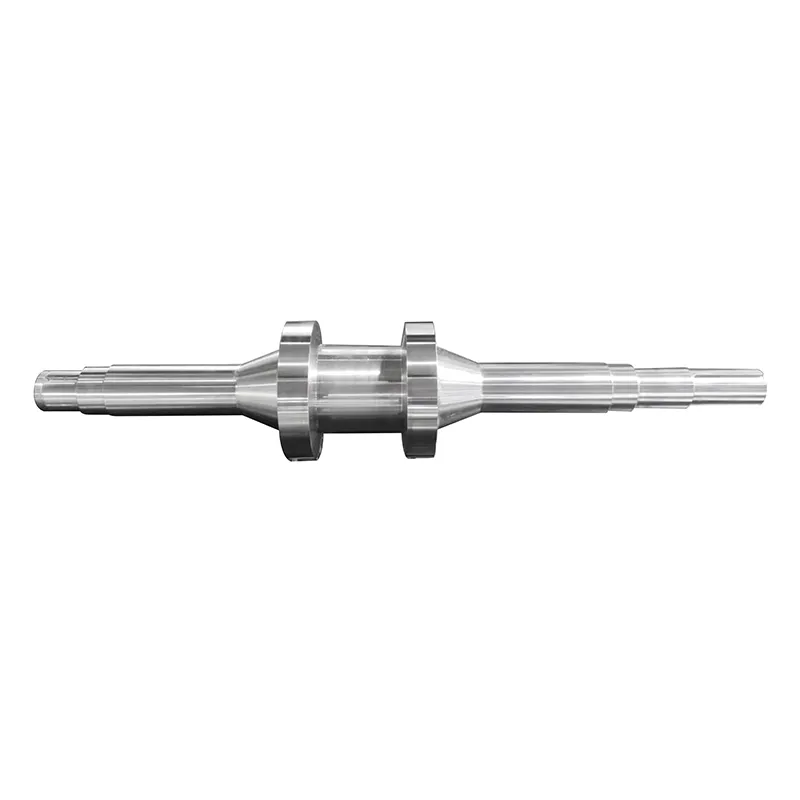
So, why does cast iron persist? With all the advanced composites and polymers, it's easy to think it's a legacy material. It's not. It's a fundamental one. Its combination of compressive strength, wear resistance, damping, and relative affordability is still unmatched for countless applications—from hydraulic valve bodies and machine tool bases to compressor crankshafts. It's not glamorous, but it's utterly dependable when processed with respect for its quirks.
The key takeaway, from my perspective, is to engage with it holistically. Don't just order cast iron. Specify the grade with intent, understand the implications of the casting method, and partner with fabricators who see the entire journey from melt to mill. The material will teach you lessons either way; the goal is to make them less expensive ones.
In the end, working with iron keeps you humble. It's a reminder that in manufacturing, theoretical perfection often bows to practical experience. The sound of the cut, the look of the chip, the feel of a properly cleaned casting—these are the real metrics that often don't make it to the spreadsheet, but they absolutely determine if a part succeeds or fails. And that's something no AI spec sheet can yet replicate.