When most people hear 'casting iron', they picture a heavy skillet or a Victorian-era radiator. That's the public face of it. In the trade, especially after decades like we've had at QSY, you learn it's less about the material itself and more about the marriage between the iron's inherent properties and the casting process chosen to harness them. The biggest misconception? That it's a single, uniform material. It's not. The gap between a ductile iron valve body that needs to withstand high pressure and a gray iron counterweight that just needs mass and damping is vast, and bridging that gap is where the real work happens.
The Family Tree of Iron Castings
You can't talk shop about casting iron without immediately breaking it down. Gray iron, ductile (nodular) iron, malleable iron, compacted graphite... each has its own personality. Gray iron, with its graphite flakes, is great for damping vibrations—think machine tool bases. But try to put it under significant tensile stress and those flakes act like built-in crack starters. That's where ductile iron comes in. The magnesium treatment that spheroidizes the graphite changes everything. The tensile strength jumps, you get some elongation. It's a game-changer for parts seeing dynamic loads.
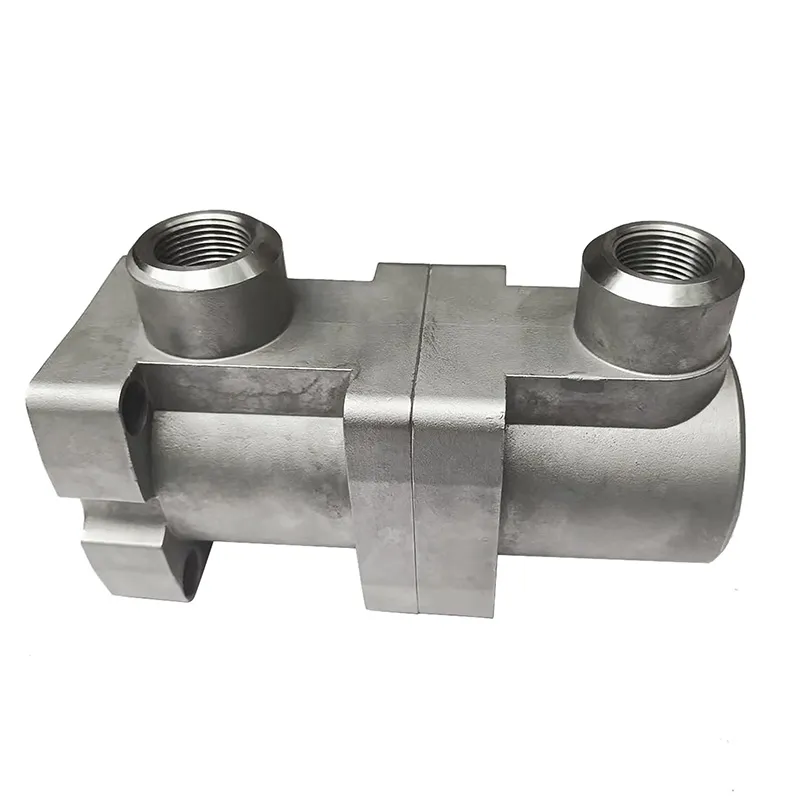
I remember a project early on, a customer wanted a complex hydraulic manifold in what they simply called cast iron. The prints specified a generic grade. We pushed back, asked about pressure cycles and potential impact. They hadn't considered it. We prototyped in gray iron—it machined beautifully, felt solid. But pressure testing revealed micro-porosity leaks along the flake paths. We switched to a ferritic ductile iron, adjusted the gating design to ensure proper magnesium recovery. The second round held. The lesson? The specification cast iron is almost useless without the prefix.
Then there's alloyed irons. Nickel, chromium, molybdenum additions. These aren't just for corrosion resistance. They stabilize the pearlite, increase strength and wear resistance at elevated temperatures. We've done pump housings for abrasive slurries with a 15-20% nickel-chrome alloyed white iron. The as-cast hardness was brutal, near impossible to machine except with grinding. You have to design for that, plan the process around it. It's a different beast altogether from the common grades.
Process Dictates Performance: Shell vs. Investment
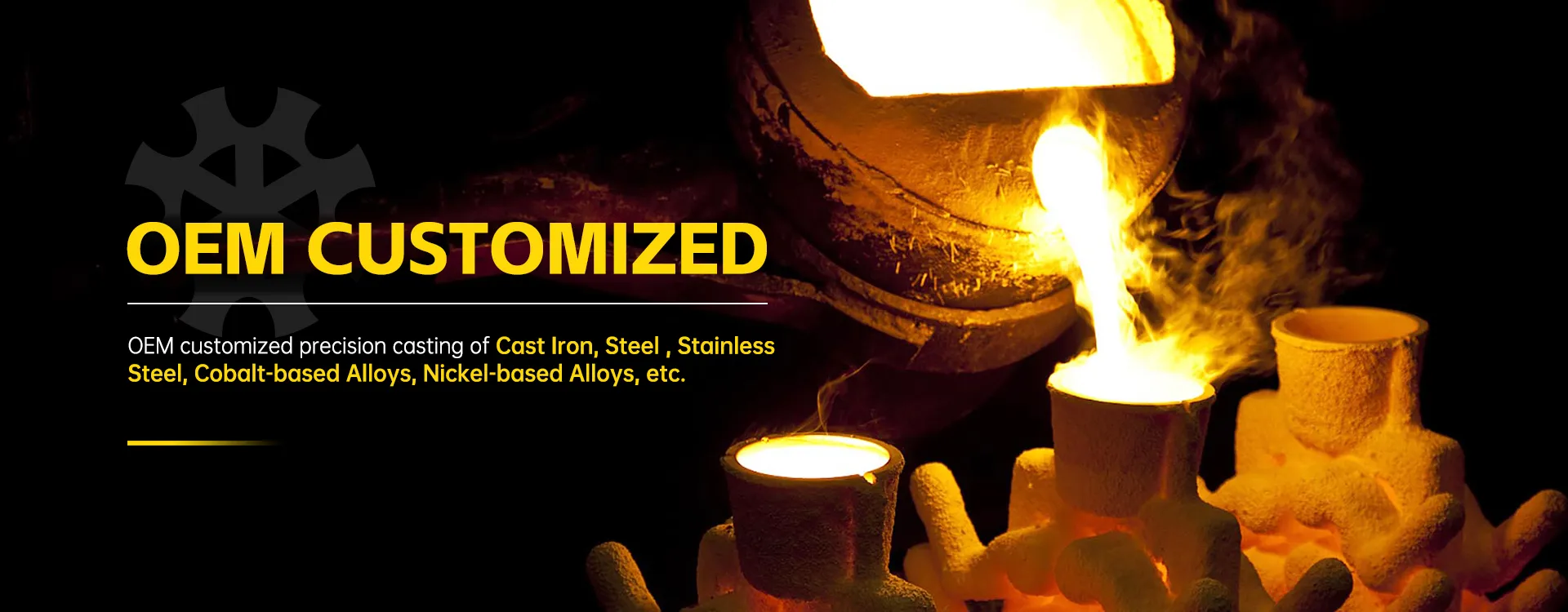
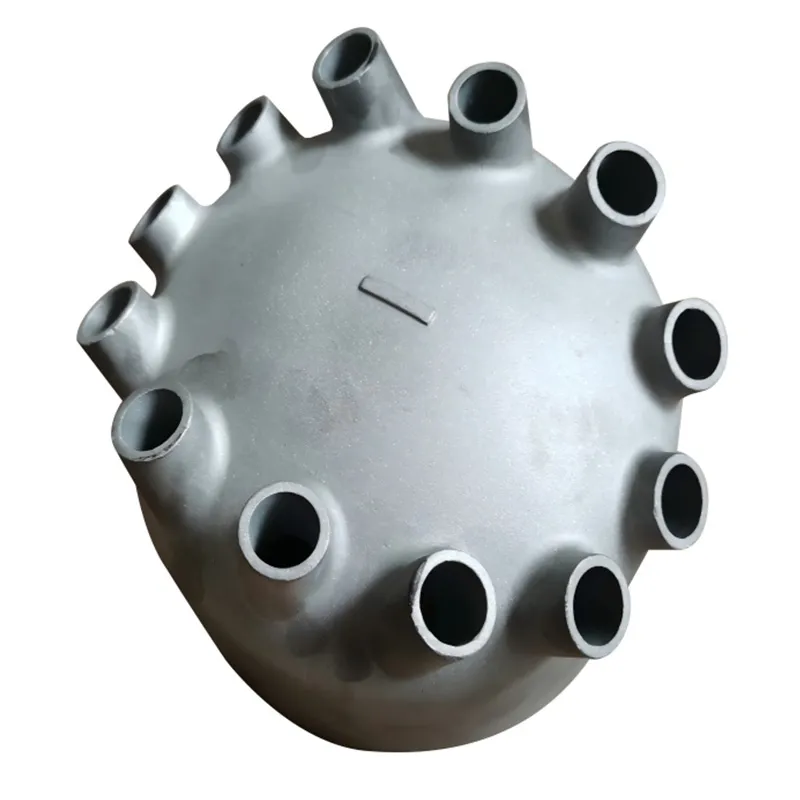
At our shop, Qingdao Qiangsenyuan Technology Co., Ltd. (QSY), we run both shell mold and investment casting lines. The choice between them for an iron component isn't just about volume or cost; it's about geometry and integrity. Shell molding, using resin-coated sand, gives you a superb surface finish and dimensional accuracy compared to traditional green sand. It's excellent for medium-complexity parts like engine brackets or compressor housings. The draft angles can be minimal, and you maintain good consistency.
But when you have internal passages, undercuts, or truly intricate geometries that would require impossible core assemblies in sand, that's where investment casting steps in. The wax pattern process captures every detail. We've produced impellers and turbine housings in ductile iron this way. The catch with iron in investment casting? It's all about the pour. Iron's higher pouring temperature compared to steel or superalloys stresses the ceramic shell differently. You get more risk of metal-shell reaction, potential for surface defects if the shell isn't baked out perfectly. It requires a tight control over the dewax and sintering cycles that you might get away with being sloppier on for a stainless part.
A failure that sticks with me was a run of small ductile iron sensor housings via investment casting. The parts looked perfect, passed visual. But during a customer's pressure test, a few leaked. We sectioned them, found microscopic hot tears near a junction. The problem was the gating. We'd used a design optimized for steel's solidification range. Iron, with its different shrinkage and carbon behavior, needed a more gradual thermal gradient in that specific area. We modified the sprue and runner layout, added a small chill in the wax tree. Solved it. It's those subtle process-specific adjustments that separate a usable casting from a reliable one.
The Machining Handshake: Casting for the CNC
This is where our integrated model at QSY pays off. You can't divorce the casting process from the machining that follows. A casting might be dimensionally sound, but if it has inconsistent hardness spots or hidden shrinkage, it'll destroy tools and scrap parts on the CNC floor. We design the casting process with the machining fixtures and first touch points in mind.
With casting iron, particularly gray iron, the free graphite acts as a lubricant. It's generally machinable. But variations in cooling rate across a part can lead to areas of chilled iron (white iron) at thin sections or near chills. That material is extremely hard and abrasive. We once had a batch of valve bodies where the flange, cooled too quickly, developed a chilled layer. It was chewing through carbide inserts in one pass. The fix was process-side: we adjusted the pouring temperature slightly and repositioned the molding chills to promote more uniform cooling. The machining yield went back up.
For ductile iron, the machinability is excellent, but the chip is different. It tends to break into small, manageable 6's and 9's rather than long strings. But you need the right tool geometry and coatings. We standardized on specific grades for roughing and finishing cast irons across our CNC departments. The consistency in the incoming casting material—thanks to controlled melting and inoculation—is what allows us to lock down stable machining parameters. If the chemistry or microstructure varies batch to batch, your CNC programs become a constant battle of adjustment.
Material Nuances: The Alloying Question
While plain cast irons cover 80% of needs, the special alloy territory is fascinating. We're talking about nickel-based or cobalt-based alloys poured into iron-dominated matrices for extreme service. But sometimes, you just need a simple iron with a tweak. Silicon molybdenum irons for elevated temperature stability, like for exhaust manifolds, are a good example.
The challenge with alloying iron is controlling segregation. The alloying elements have different affinities for carbon, and they can push the graphite formation in unexpected ways during solidification. You can't just throw the elements into the furnace. It's a sequenced addition, with careful temperature control. We maintain detailed logs for these heats—time, temperature, order of addition, inoculant type and amount. It's as much a recipe as a metallurgical process.
I recall developing a high-silicon ductile iron for a corrosive chemical pump application. The silicon improved corrosion resistance but made the iron more brittle and prone to casting stresses. We had to balance it with a higher nickel content to maintain some toughness, and we moved to an extended annealing cycle post-casting to relieve the stresses. The development took three iterations. The final material wasn't off any standard sheet; it was a proprietary grade born from a specific problem. That's where casting iron moves from a commodity to an engineered solution.
Quality is a Process, Not an Inspection
You can't inspect quality into a casting. This is the core belief. For iron, it starts with the charge materials—the returns, pig iron, scrap steel. Contaminants like lead or tin, even in trace amounts, can wreck the graphite structure in ductile iron. We source and segregate meticulously.
Then there's process control. Pouring temperature is critical, but so is the time between treatment and pour. For ductile iron, the magnesium fade is real. If you wait too long after the nodularizing treatment, the magnesium vapor loss increases, the nodule count drops, and you risk getting degenerate graphite. We have a strict window from treatment to the last mold poured. It's monitored for every heat.
Non-destructive testing is your friend. We use ultrasonic testing on critical structural parts to look for shrinkage or inclusions. But the most telling test is often a simple one: cut-up and microstructure analysis. We do this regularly on first-article parts and random audits. Looking at the graphite nodule shape, size, and distribution under the microscope tells you more about the health of the process than any single dimensional check. It's the fingerprint of that particular melt and pour. After 30 years, you get a feel for it. You can look at a microstructure and almost guess the pouring temperature and inoculation practice. That's the intangible, the experience part that no spec sheet can fully capture. It's what turns the act of casting iron from a manufacturing step into a craft.