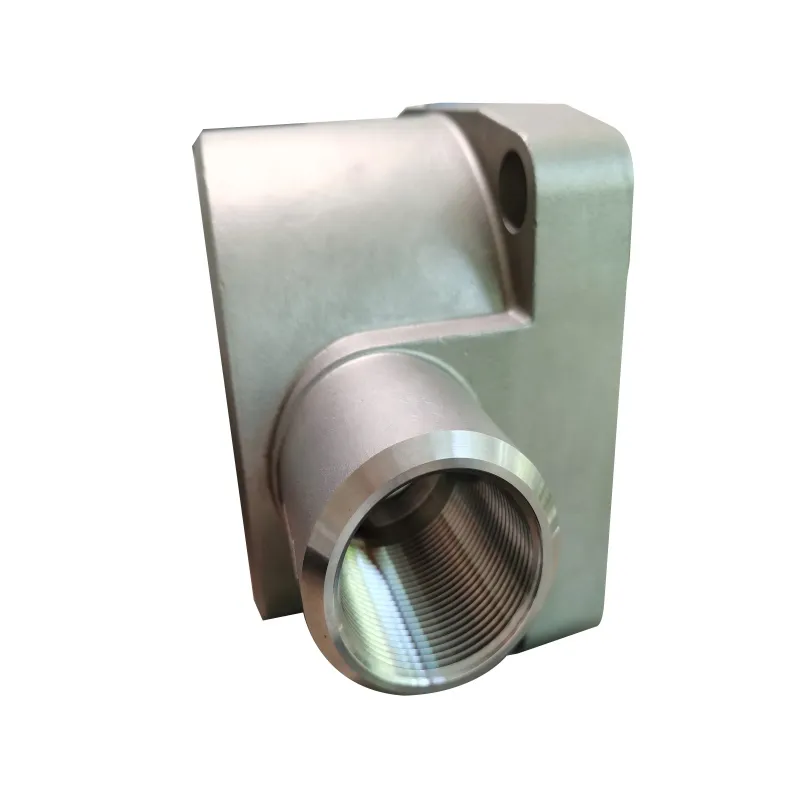
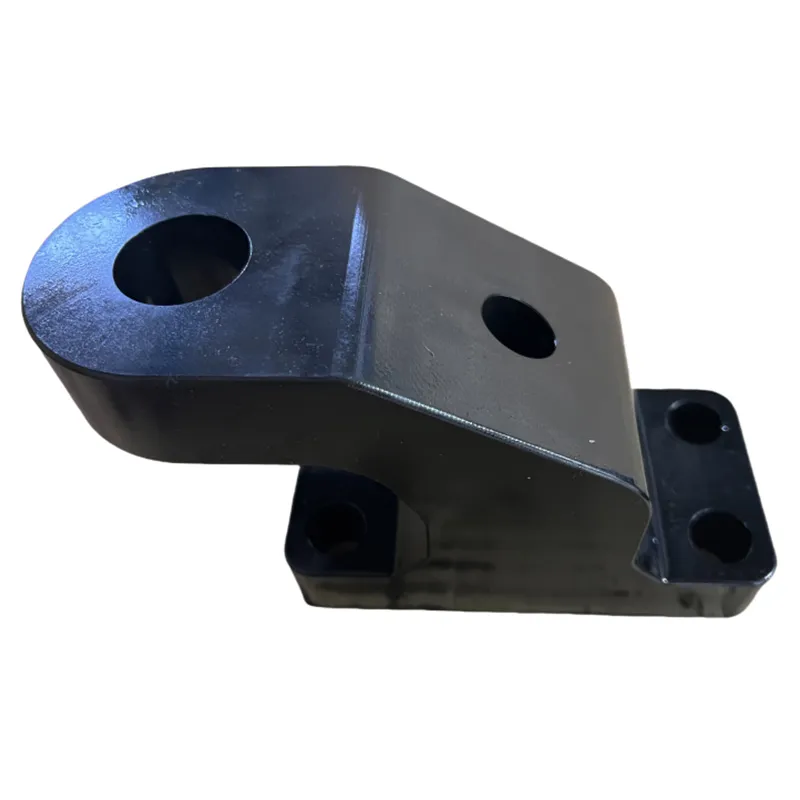
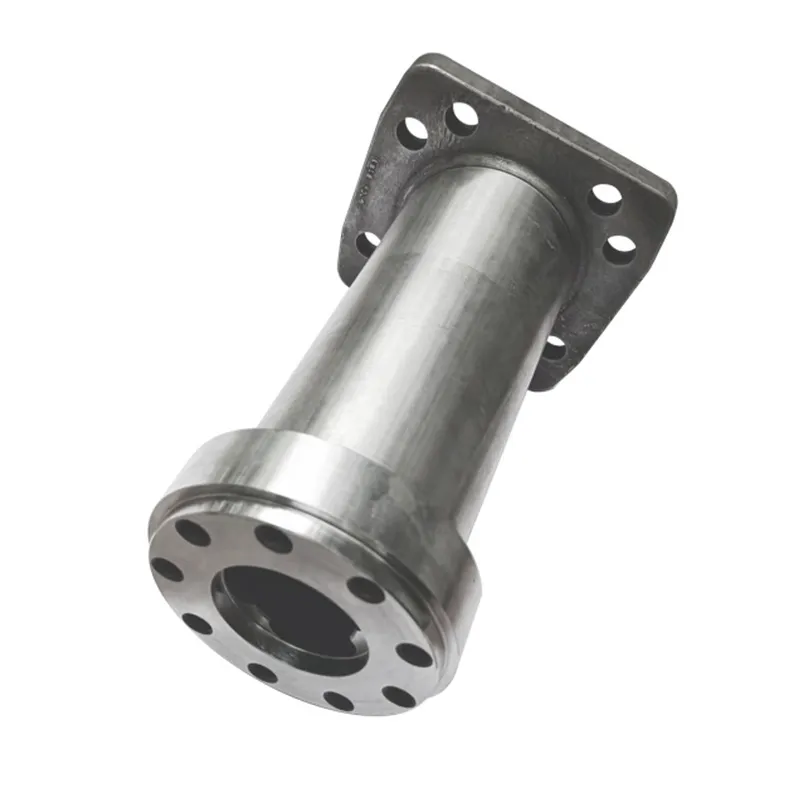
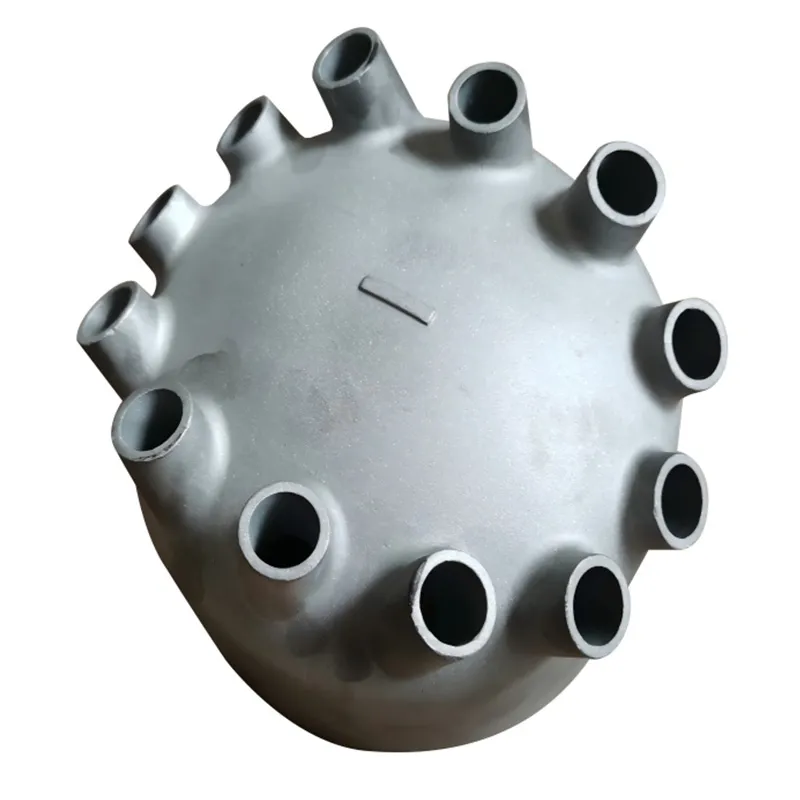
When people talk about casting precision, the first thing that usually comes to mind is a tolerance on a drawing, maybe something like ±0.5mm. That's part of it, sure, but if you've spent any real time on the foundry floor, you know that's just the surface. True precision in casting is this messy, holistic thing—it's about dimensional stability, sure, but also about surface integrity, internal soundness, and how the part behaves after it's been shaken out and cooled. A lot of clients, especially those new to sourcing castings, fixate on that single number. They'll demand impossibly tight as-cast tolerances without realizing the cost driver isn't just the mold, but everything from the alloy's shrinkage behavior to how you plan the gating system. I've seen projects go sideways because of that disconnect. The real conversation should start with function: what does this part do, where does the precision actually matter, and where can we allow for some process variation to keep it economical? That's where the experience comes in.
The Shell Mold Balancing Act
At our shop, shell mold casting is a core process, and it's where a lot of the precision battle is fought. The beauty of it is the excellent surface finish and decent dimensional accuracy you can get straight out of the mold. But decent isn't always enough. The precision here is a direct function of the pattern. If your master pattern isn't perfect, accounting for shrinkage rates down to the fraction of a percent, you're just replicating error. We use high-grade epoxy or metal patterns, and their maintenance is critical. A tiny chip or a buildup of release agent residue gets copied onto every shell you make.
Then there's the shell itself. Its thickness and uniformity are huge. A thin spot can lead to a burn-in or a bulge, killing your dimensional accuracy. We control this through dipping and stuccoing parameters—the slurry viscosity, the sand grain size, the drying time between coats. It sounds procedural, but in a non-climate-controlled space (which many foundries aren't), a humid day can throw off your drying cycle, leading to a weaker, less dimensionally stable shell. You learn to read the air, not just the manual. The goal is a shell that's strong enough to handle the molten metal's static pressure without distorting, but not so thick that it causes excessive chilling or creates its own stress points. It's a constant calibration.
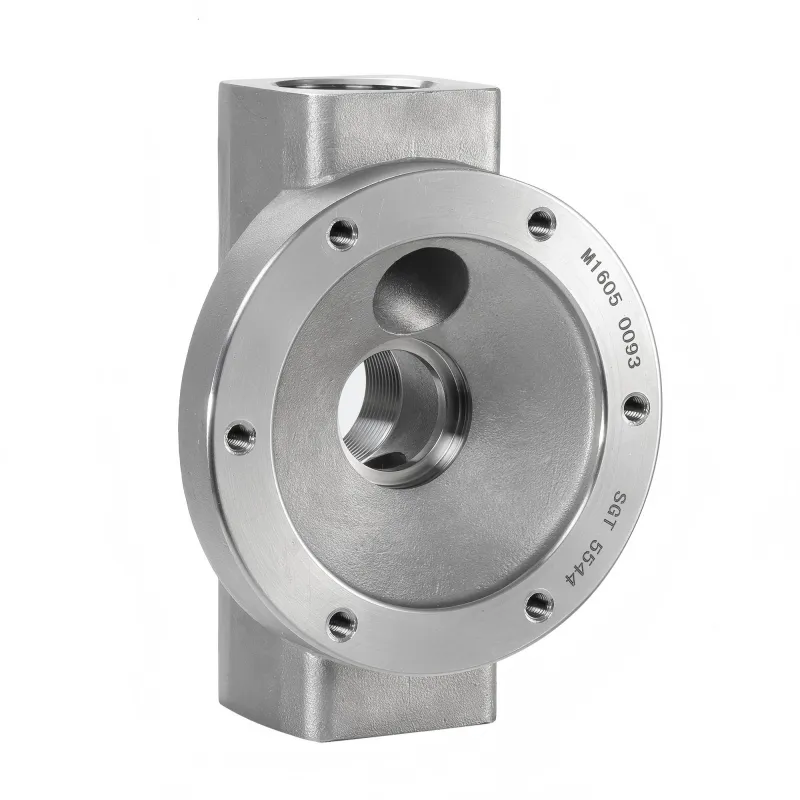
I remember a batch of valve bodies in duplex stainless steel a few years back. The prints called for a tight bore tolerance. The shells were perfect, the alloy was to spec, but the as-cast bores were consistently at the lower limit. The issue? We'd recently switched to a new zircon sand blend for the primary coats. It had a slightly different thermal conductivity, which altered the solidification front just enough to affect the shrinkage in that critical section. The fix wasn't to machine more—it was to adjust the pattern's core print dimensions by a few tenths to compensate for the new shell behavior. That's casting precision: managing a chain of variables, not just one.
Investment Casting: Chasing the Myth of Net-Shape
Investment casting gets the precision label thrown around a lot, often marketed as a net-shape process. And it can be, for certain geometries. But net-shape is a bit of a siren song. The wax injection process introduces its own variables—injection pressure, temperature, and cooling time all affect the wax pattern's size. A 0.1% variation in wax shrinkage gets magnified through the ceramic shell build and the final metal pour. For most commercial-grade investment casting, you're still looking at a machining allowance, just a much smaller one.
Where it truly shines for precision is with internal features and complex contours that are prohibitively expensive to machine. Think of impellers or turbine blades with internal cooling channels. The casting precision here is about capturing that geometry faithfully. The challenge is preventing ceramic core shift or distortion during dewaxing and firing. We'll often design the wax assembly tree and the gating specifically to anchor and support delicate cores. It's a puzzle. A failed puzzle means a casting where the internal passage is off-center, rendering the part useless despite a perfect exterior.
We worked on a project for a medical device component, a cobalt-chrome alloy part with a lattice structure. Machining it was out of the question. The precision requirement was less about a specific linear dimension and more about the consistency of the lattice strut diameters and surface porosity. We went through dozens of wax and shell recipes. The breakthrough came from adjusting the pre-heat temperature of the mold before pouring. Too hot, and the metal would erode the fine ceramic details; too cold, and the metal wouldn't fill the thin sections completely. The precision was defined by repeatability across hundreds of parts, not just hitting a number on one.
The Material is the Message
You can't talk about precision without talking about the metal itself. This is where a lot of generic foundries hit a wall. At QSY, working with everything from common cast iron to nickel-based alloys means you have to reset your expectations for each job. Gray iron has good fluidity and a predictable shrinkage, around 1%. It's relatively forgiving. But switch to a precipitation-hardening stainless steel or a high-nickel alloy, and the whole game changes.
These special alloys have different thermal contraction characteristics. Some are prone to hot tearing if the mold is too rigid, which forces you to use a less dimensionally stable mold material—an instant trade-off. Others, like some aluminum bronzes, have a long solidification range, making them susceptible to micro-porosity, which might only show up in an X-ray but can affect the part's performance under pressure. Your gating and risering design becomes hyper-critical for precision, not just to avoid shrinkage cavities, but to ensure directional solidification that minimizes internal stress and distortion. A part that warps after heat treatment isn't a precise part, even if it measured perfectly in the green state.
We learned this the hard way with a series of large pump housings in a nickel-chromium alloy. The first articles passed dimensional checks. But after the solution heat treatment, they warped like bananas. The issue was residual stress locked into the casting from uneven cooling. We had to go back and redesign the risers and add strategic cooling fins to the mold to promote more uniform solidification. The precision had to be engineered into the thermal management of the process, not just the mold cavity.
Where CNC Machining Fits In (It's Not a Crutch)
A lot of folks think of CNC machining as the clean-up step to achieve final precision, and to an extent, that's true. But if you're using it as a crutch for poor casting practice, your margins evaporate. The goal is to provide a casting that is precise enough for efficient machining. That means consistent wall thickness, predictable stock allowance, and minimal hidden defects that could break a tool.
Our in-house machining at QSY creates a tight feedback loop. The machinists tell us exactly where the stock is varying, where hard spots are, or if a casting is springing during clamping. That intel goes straight back to the foundry. For instance, if we're consistently seeing an extra 0.3mm of stock on one flange face, we can adjust the pattern or the molding process to bring it back. This synergy is what allows us to promise reliable casting precision. It's not magic; it's communication.
I recall a high-volume job for an automotive bracket. The as-cast tolerance on some bolt boss heights was borderline for the client's automated machining line. They needed extreme consistency. By analyzing the first few hundred machined parts, we identified a correlation between pouring temperature and the final boss height after machining. A slightly higher pour temp led to less shrinkage in that isolated, heavy section. We tightened our pour temp control window, and the problem vanished. The precision was achieved by controlling a process variable we hadn't initially considered critical for that dimension.
The Real-World Compromise and Delivering Value
So, after all this, what is casting precision? In practice, it's often the art of the possible within economic reality. It's knowing when to specify a CT scan for a critical aerospace part versus when a standard UT and dimensional check is sufficient for a hydraulic manifold. It's understanding that a 0.25mm surface roughness (Ra) might be achievable as-cast with investment casting, but for a large shell mold part, specifying 1.6mm Ra and planning for a quick machining pass is smarter and cheaper.
The value we provide at a company like Qingdao Qiangsenyuan Technology isn't just in making a shape. It's in guiding the client through these trade-offs. You can find our approach and capabilities detailed at https://www.tsingtaocnc.com. With over three decades in casting and machining, the real expertise is in pre-empting problems. It's in looking at a drawing and saying, That radius is too sharp for the alloy you've chosen—it'll create a stress riser and might not fill. Let's relax it by 1mm, and you'll get a more reliable part. That's precision thinking—it happens long before the metal is ever melted.
Ultimately, chasing absolute, perfect, as-cast precision on every surface is a fool's errand. The cost curve goes vertical. The real skill is in identifying the critical control features—the sealing surfaces, the bearing journals, the mating interfaces—and pouring all your process control into making those areas perfect. The rest can be managed. That's how you deliver a precise component, not just a precise casting. It's never just about the number on the page. It's about the part that works, lasts, and makes economic sense. That's the finish line.