When you hear 'ceramic core for investment casting', most think it's just a placeholder, a sacrificial shape. That's the first misconception. In reality, it's the architect of internal complexity. A poorly designed core can collapse, shift, or fail to leach out, scrapping an entire turbine blade or medical implant. I've seen shops blame the alloy or the shell, only to find the root cause was a core that couldn't withstand the thermal shock of a superalloy pour. It's not a component; it's a commitment to precision from the very beginning of the design cycle.
The Material Isn't Just Ceramic
Calling it a ceramic core is like calling steel 'metal'. The composition is everything. Silica-based cores are common, but for high-nickel alloys poured above 1500°C, you're looking at alumina or zirconia-based systems. The difference isn't just temperature rating. The coefficient of thermal expansion (CTE) must be engineered to match the surrounding shell mold. A mismatch, even a slight one, creates stress cracks during cooling. I recall a project for a cobalt-based alloy manifold where we used an off-the-shelf alumina core. It looked perfect post-dewax, but after pouring, micro-cracks in the core translated into surface fissures on the casting's internal channels. The core material was 'good', but it wasn't 'right'.
Then there's the binder system. It's not just about holding the ceramic grains together during green state. It's about controlled collapse during firing to set the final strength and, crucially, controlled dissolution in the caustic bath later. Some proprietary silica-based cores use a binder that leaves a fragile, glassy phase, making them prone to handling damage. The real skill is formulating a material that is strong enough to survive shell building and pouring, yet becomes chemically weak enough to be removed without aggressive mechanical means that could damage the thin cast walls.
This is where experience with specific alloys pays off. Working with nickel-based alloys, for instance, you learn they have a long solidification range and high melt fluidity. The core needs exceptional hot strength to resist metal penetration and erosion for longer. A general-purpose core might wash out, leaving a rough internal surface that kills airflow in a turbine component. It's a silent failure—you only see it during X-ray or flow testing.
Design: Where Theory Meets the Foundry Floor
CAD models are perfect. Cores are not. The biggest gap is in draft angles and support. Designers often want zero draft on internal features to maximize aerodynamic or hydraulic efficiency. But a core is a physical object that must be ejected from a die or pressed in a tool. We fought this for years. The compromise is often a minimal draft, say 0.5 to 1 degree, coupled with strategic use of core prints—those extensions that locate and anchor the core in the wax pattern and later the shell.
I remember a complex fuel nozzle design for aerospace. The ceramic core had several thin, cantilevered arms. In simulation, it was stable. In practice, during the injection of the wax pattern around it, the pressure caused deflection. The result? Wall thickness variation beyond spec. The fix wasn't a better core; it was redesigning the wax injection gates and adding temporary ceramic supports (later removed in grinding) to brace the core during that process. It added cost and a step, but it saved the part. This is the kind of investment casting nuance you don't find in textbooks.
Another practical headache is core venting. As molten metal fills the cavity, air trapped inside the core must escape. If it can't, back-pressure prevents complete filling, or gas gets trapped in the casting. We drill tiny vent holes in non-critical areas of the core, but their placement is an art. Too many weaken the core; too few cause defects. It's a judgment call based on the core's volume and geometry, often refined through trial pours.
The Partnership with a Specialist Maker
This isn't a commodity you order from a catalog. It's a co-development process. Over the years, we've leaned heavily on specialists. A company like Qingdao Qiangsenyuan Technology Co., Ltd. (QSY) brings a specific value here. With their 30 years in shell mold casting and investment casting, they understand the entire process chain. When you discuss a core design with them, they're not just thinking about the core in isolation. They're thinking about how it interacts with their shell system, their dewaxing autoclave, their pouring practice for stainless steel versus a special alloy.
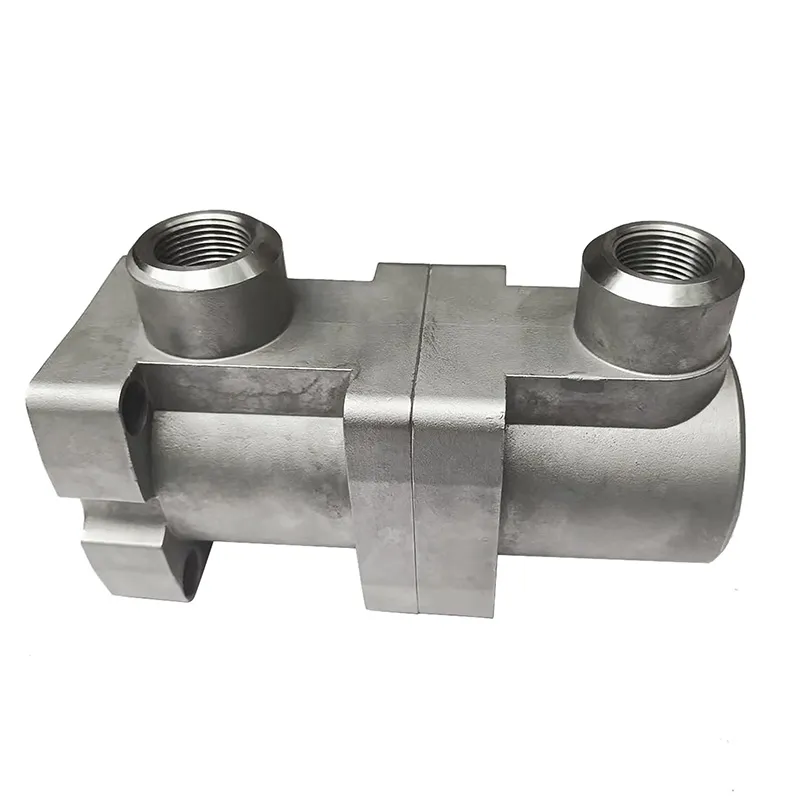
I visited their facility once, reviewing a project for a valve body in duplex stainless steel. The core had a deep, narrow pocket. Their engineer immediately pointed out a potential leach-out issue. Their suggestion was to slightly alter the pocket's aspect ratio and specify a more porous core formulation in that specific zone to accelerate chemical dissolution. That's integrated thinking. It comes from having the CNC machining capability in-house as well—they can quickly modify the tooling for the wax core dies based on feedback from initial trials, shortening the development loop. You can see their approach on their site at https://www.tsingtaocnc.com.
The relationship is key because after the core is made, the responsibility doesn't end. There's first article inspection, often using CT scanning to compare the fired ceramic core to the CAD model, checking for distortion. Then there's the process of fixing the core into the wax injection die. A specialist maker will often provide fixtures or detailed protocols. A generic core supplier just ships a box of fragile parts.
Failure is a Data Point
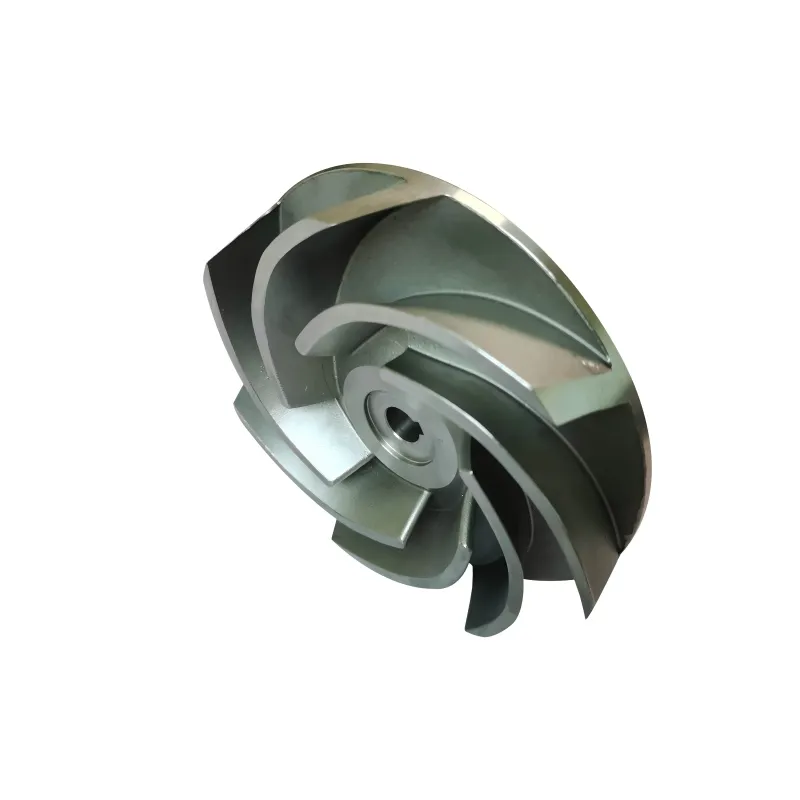
You haven't worked with ceramic cores until you've had a spectacular failure. One that sticks with me was for a large industrial pump impeller. The cores were massive and intricate. They fired beautifully and survived shell building. The pour of cast iron went smoothly. The problem emerged during shakeout. The core simply wouldn't come out. We tried extended leaching, thermal shock, even ultrasonic baths. Fragments remained fused in the internal passages. The post-mortem revealed the issue: the core binder had interacted with a specific impurity in the clay used in the primary slurry coat of the shell, creating a fused ceramic interface at high temperature. The core material was fine. The shell material was fine. But their combination, under those specific conditions, was catastrophic.
That failure taught us to always run a compatibility test—firing a small piece of the core against the actual shell slurry system we plan to use, then checking for adhesion. It's a simple step that's now standard in our procedure. It also taught me that in investment casting, every element is part of a system. You can't optimize one in a vacuum.
Another common, quieter failure is dimensional drift. A core might be perfect for the first 100 pieces, then you start seeing a trend toward the upper tolerance limit. It's often the tooling—the die used to form the wax core—wearing down. Or it could be a subtle change in the firing furnace atmosphere. Catching this requires rigorous statistical process control, measuring not just the final casting, but the ceramic core at multiple stages. It's tedious, but it prevents a slow-motion disaster.
The Unsung Payoff
When it all comes together, the ceramic core is what enables the impossible casting. Think of a hollow turbine blade with intricate cooling channels that follow the airfoil contour. No other method can achieve that as-cast internal geometry. The value isn't just in creating a hollow space; it's in creating a precisely engineered flow path that allows the engine to run hotter, more efficiently. That's where the high cost of developing and producing these cores is justified.
For a company like QSY, whose work spans from industrial cast iron components to high-performance cobalt-based alloys, the core technology is a bridge between these markets. The principles are the same, but the execution scales in precision and material science. The ability to manage that spectrum under one roof is what separates a job shop from a true engineering partner.
So next time you look at a complex investment casting, remember the unseen backbone inside. That ceramic core started as a paste, was shaped, fired, handled, surrounded by wax, coated, fired again, drowned in molten metal, and finally dissolved away. Its entire existence is a transient act of precision, leaving only a perfect cavity behind. Getting that right is half the battle in making a casting that isn't just good, but flight-worthy, implant-grade, or mission-critical. It's never just a placeholder.