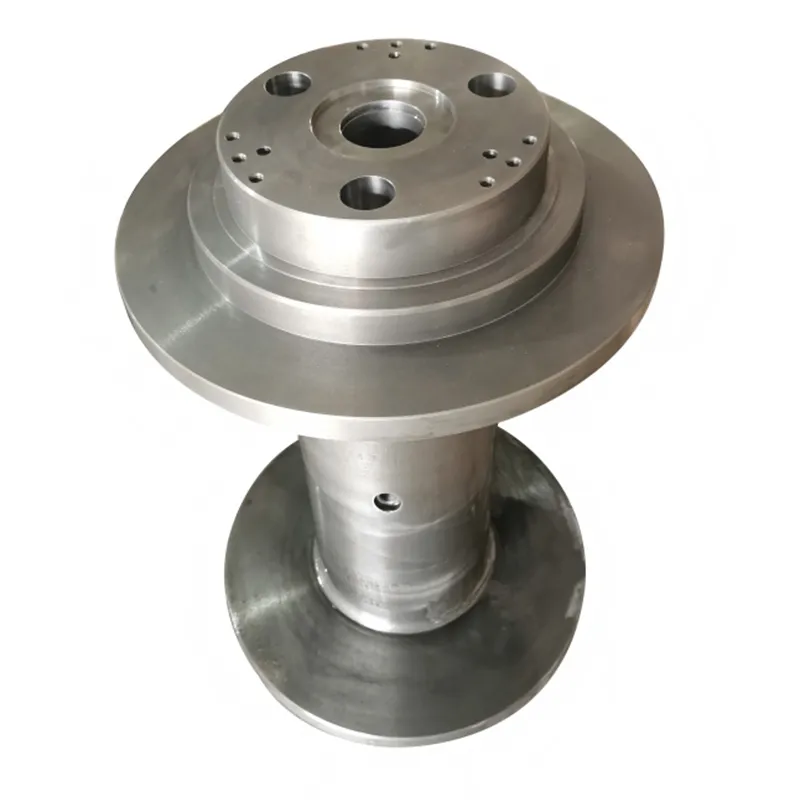
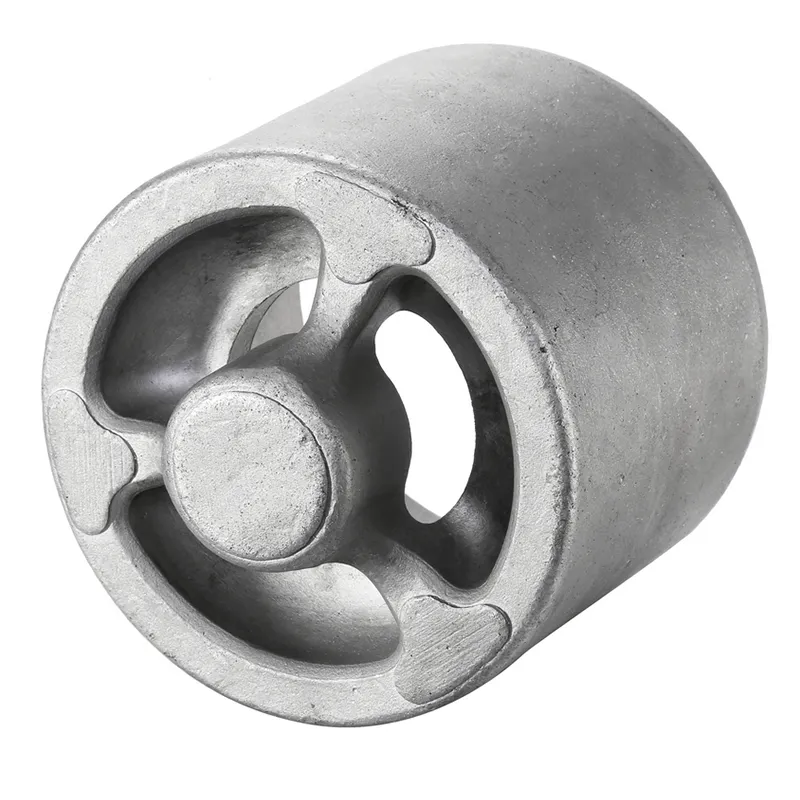
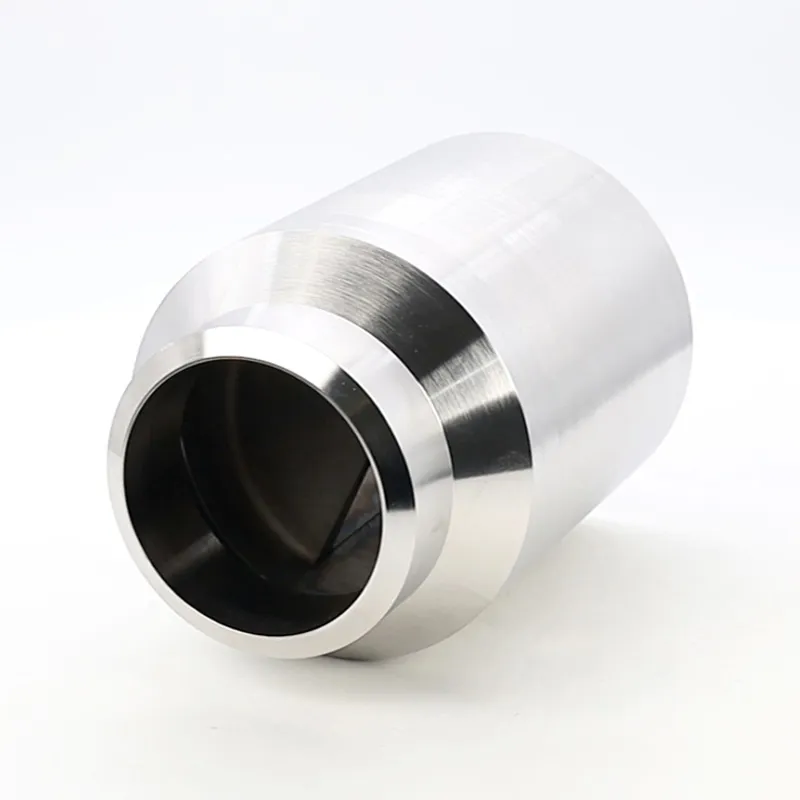
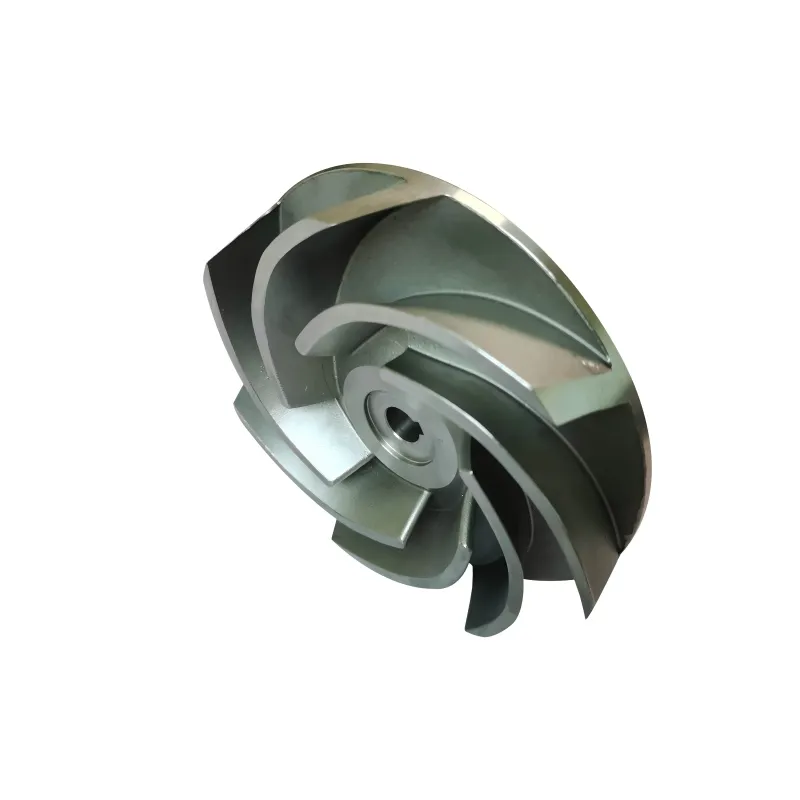
When you hear 'CNC precision machining', most minds jump straight to micron-level tolerances and flawless surface finishes. That's the marketing pitch, anyway. The reality on the shop floor is a constant negotiation between the ideal on the drawing and the physical behavior of metal under a cutting tool. I've seen too many designs come in with tolerances specified to three decimal places where two would have been perfectly functional, just because it 'looks' more precise. That unnecessary chase for perfection drives cost through the roof and introduces its own set of problems. True precision isn't just about hitting a number; it's about repeatability, stability, and understanding what the part actually needs to do. It's the difference between a part that measures perfectly in a climate-controlled lab and one that performs flawlessly for years inside a grimy, vibrating machine.
The Foundation: It Starts Before the Machine
You can't talk about CNC precision machining without first talking about what you're putting into the machine. This is where a lot of projects, especially in prototyping, go sideways. A beautifully programmed toolpath is worthless if the raw material has inconsistent hardness or internal stress. I learned this the hard way early on, machining a batch of stainless steel brackets. The first ten came out perfect. By part fifteen, we started seeing dimensional drift—nothing we changed in the program could fix it. The culprit? The raw stock had residual stress from the initial bar rolling process. As we machined away material, that stress redistributed and the part literally moved in the vise. The solution wasn't a fancier machine; it was specifying stress-relieved material or adding a roughing and thermal stabilization step before the finish pass. This is why companies with deep material expertise, like Qingdao Qiangsenyuan Technology Co., Ltd. (QSY), have a distinct edge. With 30 years in casting and machining, they inherently understand that the journey of a precision machined part begins at the metallurgical level, whether it's from a shell mold casting blank or a wrought alloy bar. You can find their approach detailed on their site at tsingtaocnc.com.
This leads to another common oversight: fixturing. I've spent countless hours tweaking feeds and speeds, only to realize the real gain was in redesigning a custom fixture that increased the part's rigidity by 40%. For a thin-walled aluminum housing, we once used a low-melting-point fusible alloy to fill the cavity during machining. It provided internal support we couldn't get any other way, allowing us to take more aggressive cuts without chatter. That kind of trick isn't in any standard CNC manual; it comes from wrestling with real-world failure.
Then there's thermal management. Every machinist knows coolant is for cooling, but the precision game is about managing thermal equilibrium. Running a high-speed spindle hard for eight hours will warm up the entire machine structure, maybe only a few degrees, but enough to shift your zero point. For truly tight work, we'd let the machine run a warm-up cycle, cutting air for 20 minutes to let everything stabilize. It sounds simple, but skipping that step is an easy way to scrap the first part of the day.
The Precision in CNC Machining is a System
So you've got good stock and a solid setup. Now the CNC machining center takes over. But here's the thing: the machine's stated positioning accuracy is just one variable. Tool deflection is a massive, often underestimated factor. Using a long, slender end mill to reach a deep pocket? Even a few microns of bend at the tip will ruin your wall straightness and finish. We combat this with toolpath strategy—climb milling versus conventional, trochoidal milling for pockets to keep engagement constant and loads low. Software simulation helps, but it's never perfect. You still need to listen to the cut. A change in sound often precedes a change in dimension.
Tool wear compensation is another silent killer of consistency. For a long run of parts in a tough material like a nickel-based alloy, the tool might wear 0.02mm over its life. If you're not proactively compensating for that in the program or with in-process probing, your last hundred parts will be out of spec. This is where the integration of casting and machining under one roof, as practiced by QSY, shows its value. When you machine a part you also cast, you have intimate knowledge of the material's specific cuttability, its hard spots, its preferred chip breakage. That knowledge translates directly into more stable tool life and predictable outcomes.
And let's not forget the human element. The best CAM program needs a machinist who knows when to override a feed rate because the sound is 'off,' or who notices a slight buildup on the insert's edge before it fails. This tactile, auditory feedback loop is something no fully lights-out factory has perfectly replicated yet. The machine does the moving, but the machinist provides the judgment.
When Precision Meets Real-World Function
This is the crux of it all. I recall a component for a hydraulic valve block. The drawing called for a mirror finish on a sealing surface. We achieved it, beautifully. Yet the part failed pressure testing. Why? The sealing surface was too smooth. It needed a specific cross-hatch pattern to allow the sealant to key in properly. We had to go back and intentionally add a controlled texture. That was a lesson: precision must be defined by function, not just an arbitrary Ra value. A precision machining process must be adaptable to the end-use, whether that part is going into a food-grade stainless pump or a high-temperature aerospace turbine.
Another scenario involves assemblies. You can machine two parts to incredibly tight individual tolerances, but if you don't account for the stack-up of tolerances in the assembly, or the different thermal expansion coefficients of the materials, they won't fit or work together under operating conditions. Sometimes, the precision move is to intentionally machine one part at the high end of the tolerance band to match its mating part. This systems-level thinking is critical.
This functional perspective is why the combination of services matters. A company that only does machining might receive a casting with subtle flaws that make consistent precision impossible. A foundry that doesn't machine might not design for manufacturability. An integrated provider like QSY, handling everything from shell mold and investment casting to final CNC precision machining, can optimize the entire process chain. They can design the casting with datums and stock allowance that make the machining phase stable and efficient, a huge advantage for complex parts in those special alloys they mention, like cobalt or nickel-based ones.
The Cost of Chasing the Last Micron
Economics is the final, inescapable filter. The relationship between cost and tolerance is not linear; it's exponential. Taking a tolerance from ±0.05mm to ±0.025mm might double the machining time and require specialized inspection. Taking it from ±0.025mm to ±0.01mm could quadruple it. You need air-conditioned rooms, slower feeds, more frequent tool changes, and possibly post-process grinding or lapping. A good engineer or a savvy buyer working with a shop like QSY will ask: What tolerance does this interface functionally require? Often, relaxing a non-critical dimension by a hair can slash the part cost by 30% with zero impact on performance.
Inspection cost is part of this, too. Measuring to 0.001 requires different equipment (and calibration) than measuring to 0.0001. That CMM time isn't free. A robust process aims for capability (Cp/Cpk) where the natural spread of the machining process is well within the tolerance band, so you don't have to measure every single dimension on every single part. You control the process, not just inspect the product.
This is where long-term partnerships with a capable machine shop pay off. They learn your standards, you learn their capabilities, and you can collaboratively design for both function and manufacturability. It's less about sending out a rigid RFQ and more about a conversation that starts with, Here's what this needs to do. How can we best make it?
Wrapping It Up: Precision as a Philosophy
So, after all this, what is CNC precision machining? It's a system. It starts with material science, flows through intelligent process design and stable fixturing, is executed on a well-maintained machine by a skilled operator, and is constantly verified with the end-use function as the ultimate benchmark. It's a balance between technical ambition and practical economics.
You can't buy it off the shelf by just specifying a fancy machine. It's built on experience—the kind of experience that comes from decades of solving problems across the manufacturing chain, like the team at Qingdao Qiangsenyuan has likely accumulated. It's knowing that sometimes the path to a more precise part is to use a softer cutting strategy, or to specify a different grade of aluminum, or to add a five-minute stress relief cycle.
In the end, the most precise component is the one that works perfectly, for its intended lifespan, at a viable cost. Everything else is just numbers on paper. The real craft is knowing which numbers matter, and how to hit them day after day, in the real, imperfect, vibrating world of a machine shop. That's the unglamorous, essential truth of it.