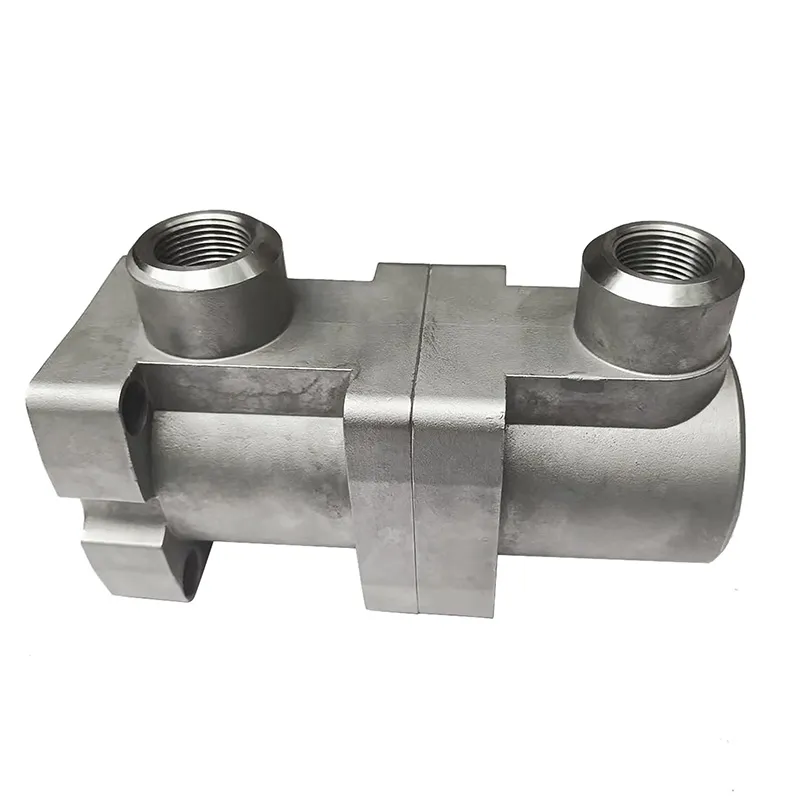
When you hear 'Co 21', if your mind jumps straight to a single, rigidly defined alloy formula, you're already off track. In the trenches of investment casting and CNC machining, that designation often sparks more debate than clarity. It's not like calling out for 304 stainless; it's shorthand, a starting point for a conversation that involves heat lots, trace elements, and ultimately, performance under the torch or tool. I've seen too many RFQs where someone just slaps 'Co 21' on a drawing and expects magic, forgetting that the magic—or the massive headache—is in the spec details and the foundry's ability to interpret them.
The Spec is a Starting Line, Not a Finish Line
Let's get concrete. In our work at Qingdao Qiangsenyuan Technology Co., Ltd. (QSY), a request for a Co 21 component usually lands with a reference to something like Haynes 21 or a similar cobalt-chromium-molybdenum-tungsten nickel alloy. The first thing we do isn't to quote; it's to dissect. What's the operating environment? Is it for a gas turbine seal, a prosthetic knee joint, or a high-wear valve component in chemical processing? The base chemistry might be ballpark, but the devil—the difference between a part that lasts six months and one that lasts six years—is in the secondary processing and the machining strategy.
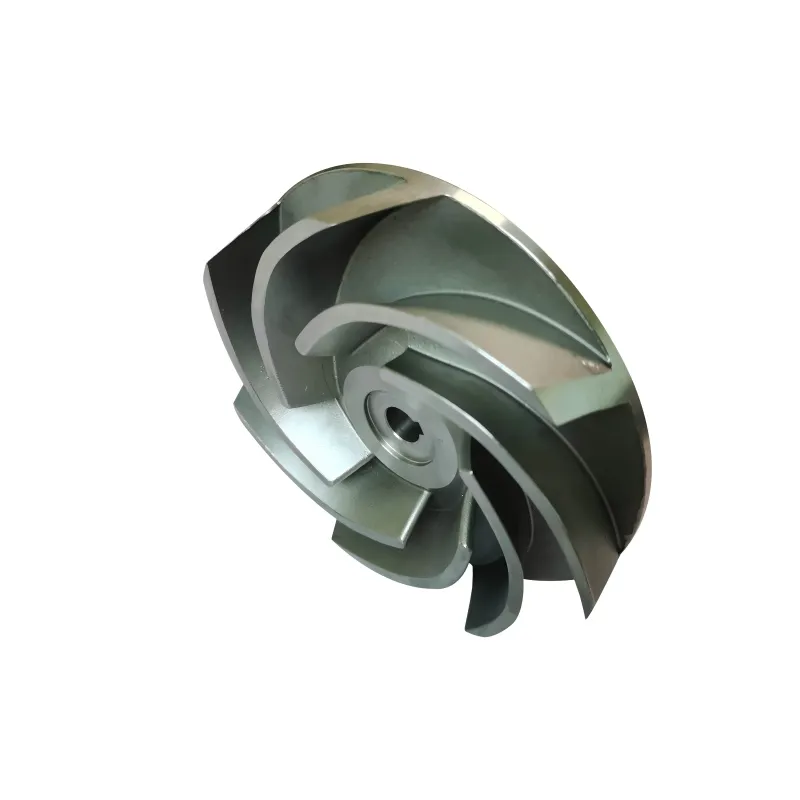
I recall a project a few years back for a aerospace MRO client. They needed a replacement stator vane shroud, specifying Co 21 equivalent. We sourced a heat-resistant cobalt alloy fitting the broad description. The shell mold casting went fine, the dimensional accuracy was on point. But post-casting, during the solution heat treatment, we hit a snag. The stress relief cycle we used, based on a standard protocol for similar alloys, didn't quite achieve the optimal carbide distribution for their specific high-cycle fatigue conditions. The part passed QA, but in their bench testing, the fatigue life was about 15% below their target. Was it a failure? Not quite. It was a lesson. The material was technically Co 21, but the application demanded a Co 21 plus a hyper-specific thermal history. We re-ran the batch with a modified, longer stabilization anneal, and it hit the mark. The spec sheet didn't change; our process did.
This is where a shop's experience counts. Anyone can buy alloy ingots. Not everyone has the 30-odd years of pattern making, mold engineering, and post-casting heat treatment that a foundry like QSY accumulates. You learn that with these superalloys, the machining parameters you'd use for steel will just burn up inserts and work-harden the surface into oblivion. You need low cutting speeds, high feed rates, rigid setups, and coolant that's more about precise temperature control than just flood lubrication. It's a different dance altogether.
Material Sourcing and the Equivalent Trap
Another practical headache is the raw material itself. Saying Co 21 doesn't guarantee you're getting material from the same mill, with the same impurity controls, as the OEM part. We work with special alloys including cobalt-based ones, and we've built relationships with mills we trust. But sometimes a client's budget drives them to seek equivalent material from alternative sources. This is a major risk point.
We had a situation with a pump manufacturer. They sent us their own sourced Co 21 bar stock for CNC machining of some severe-service wear plates. The certs looked okay on paper. But during machining, our operators noticed the chips were behaving differently—more stringy, less brittle than expected. Tool wear was also abnormal. We paused and ran our own spectrometry check. The chromium and molybdenum were within range, but the trace silicon and manganese were off. It wasn't a bad alloy, but it wasn't the precise variant their pump design was validated for. Using it could have led to unpredictable galling or corrosion in the field. We flagged it, discussed the performance trade-offs, and they opted to have us supply the material from our regular channel. It cost more upfront but saved a potential field failure.
This is why on our site, tsingtaocnc.com, we emphasize the integration of casting and machining. When we control the process from the molten metal to the finished machined part, we eliminate a huge variable. The Co 21 (or whatever alloy) is melted, cast, heat-treated, and machined under one roof, with one continuous thread of process control and accountability. The data from the casting furnace informs the heat treatment schedule, which in turn dictates the machining strategy. You can't get that from a job shop that just machines purchased blanks.
CNC Machining: Where Theory Meets the Toolpath
Machining these alloys is where the rubber meets the road. It's not for the faint of heart. You can't just throw a standard end mill at it. We're talking about solid carbide tools, specific geometries for high-temperature alloys, and sometimes even CBN (cubic boron nitride) for finishing. The setup rigidity is paramount; any chatter will ruin the surface integrity that's critical for fatigue resistance.
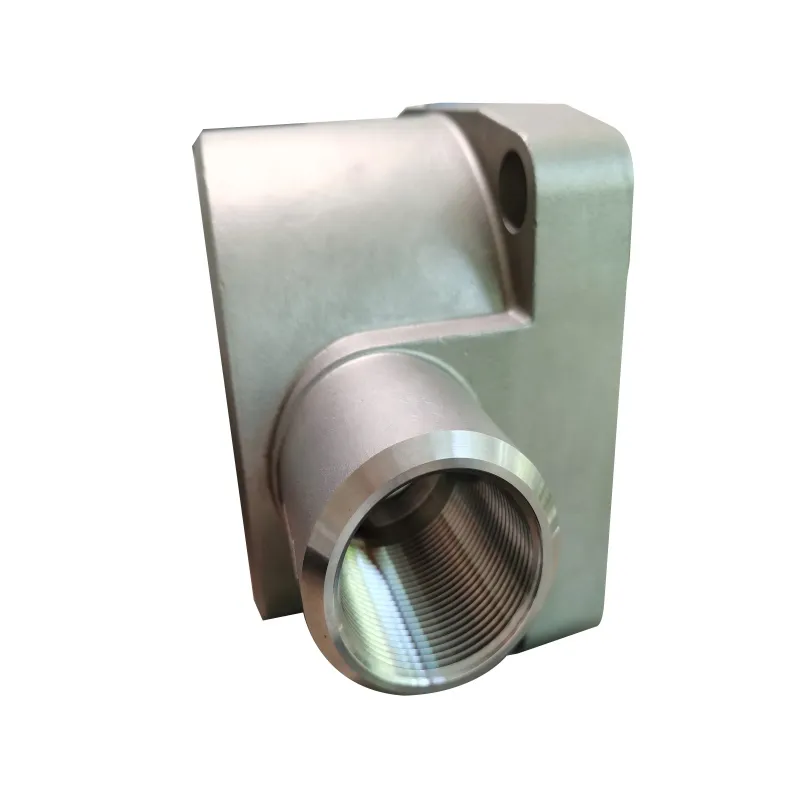
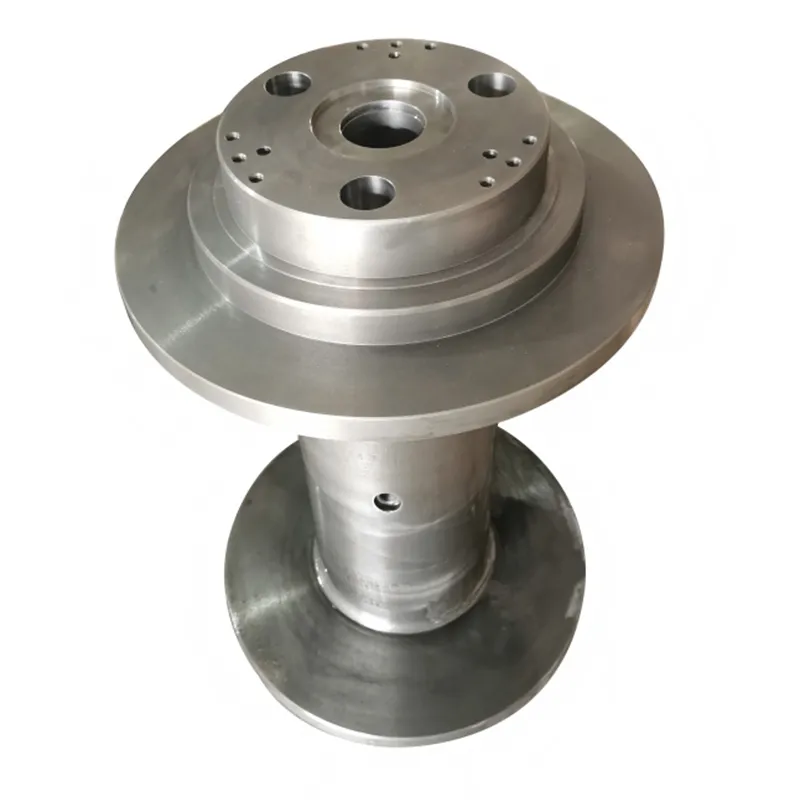
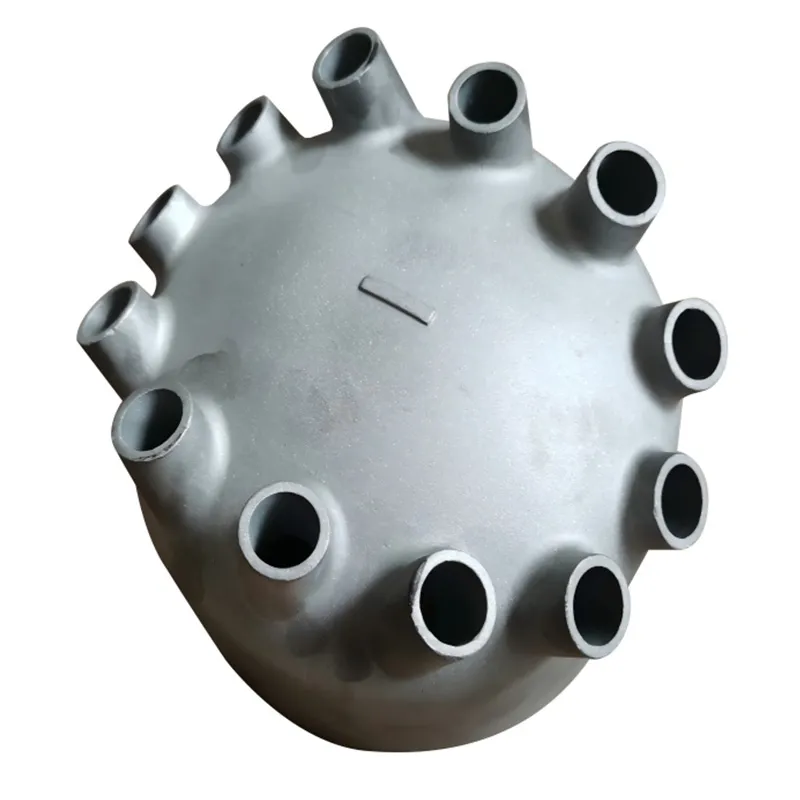
A detail that often gets overlooked is the state of the material before it hits the CNC machine. For Co 21 castings, are they in the as-cast state, solution treated, or fully aged? The hardness and ductility differ dramatically. We once machined a batch of as-cast Co 21 housings. The geometry was complex, with thin walls. In the as-cast condition, the material had some residual stress and was a bit softer. Machining went smoothly, but after we performed the required post-machining age hardening, some of the thinner sections exhibited slight distortion—a few thousandths of an inch, but enough to be out of tolerance for a mating surface. We learned. Now, for critical-dimension parts, we often perform a rough machining operation in the softer state, then apply the final heat treatment, followed by a light finishing pass to true up the geometry. It adds a step, but it guarantees the result.
Coolant strategy is another whole topic. With these alloys, heat generation at the cutting edge is intense. You need to manage it, but also consider the chemistry. Some high-performance cobalt alloys can be sensitive to certain sulfur or chlorine additives in coolants, which might induce stress corrosion cracking later. We use neutral pH, semi-synthetic coolants and maintain them meticulously. It's a small detail in the grand scheme, but in this business, the small details are the grand scheme.
The Integration Advantage: From Shell Mold to Finished Part
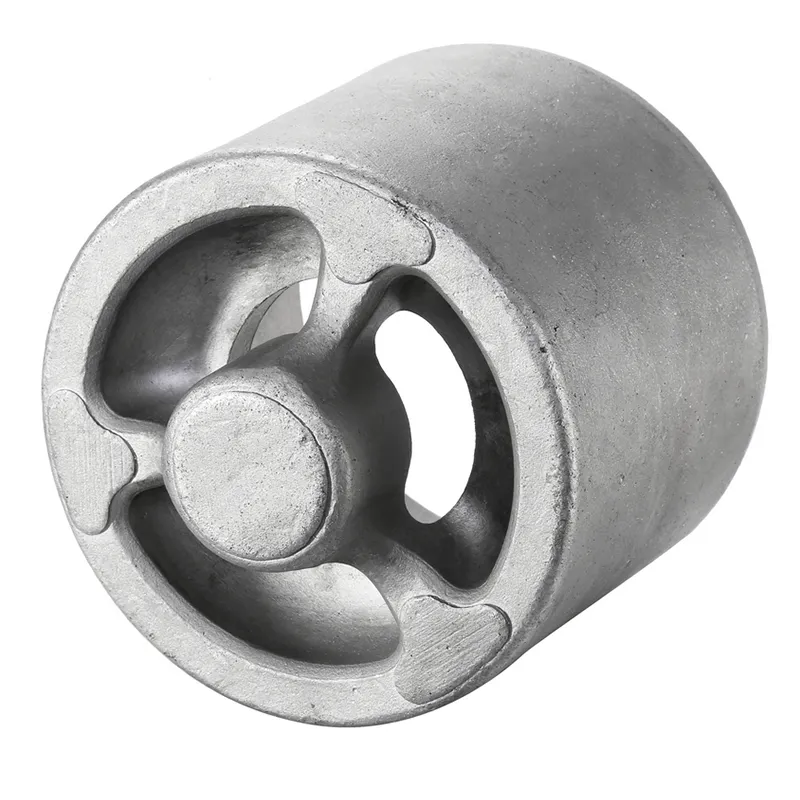
This brings me back to the core of how a vertically integrated operation like QSY handles a material like Co 21. The shell mold casting process we use is great for achieving the complex, near-net-shape geometries these high-value parts often require. When you're casting an intricate turbine component or a medical implant prototype in Co 21, you want minimal subsequent machining stock—maybe just 0.5mm per face. This saves on brutal machining time and expensive material waste.
But the integration is more than just saving steps. It's about knowledge flow. The foundry team knows that the Co 21 casting for a certain wall thickness will have a specific grain structure. They communicate that to the CNC programming team, who can then plan their tool paths and clamping to work with that structure, not against it. The heat treatment team gets data from both sides to fine-tune the cycles. It's a feedback loop that you only get from decades under one roof, working on everything from cast iron to nickel-based alloys and, of course, the cobalt family.
I've seen projects fail in disjointed supply chains. One company does the casting, another the heat treat, a third the machining. Information gets lost. The machinist gets a hardened, aged Co 21 part that's a nightmare to cut and doesn't know why it's so hard. They blame the material. Maybe the heat treater aged it at the wrong temperature for the machinist's intended tooling. When it's all connected, these problems are designed out before the first mold is even poured.
Beyond the Designation: A Pragmatic View
So, what's the takeaway on Co 21? Treat it as a functional category, not a commodity. Its value is realized not when you order it, but when you define how it will be made, treated, and finished. The success of a part hinges on treating the alloy designation as the opening line in a deep technical discussion about performance, environment, and manufacturability.
For engineers and purchasers, my advice is to look beyond the material line on the drawing. Engage with your supplier on the process. Ask: What's your experience with post-casting heat treatment for this application? How do you handle stress relief before machining? What's your standard machining parameter set for this condition? The answers will tell you far more than a mill cert ever could.
In the end, Co 21 is a tool. A phenomenally capable one for wear, heat, and corrosion resistance. But like any precision tool, its effectiveness depends entirely on the skill of the hands, and the depth of understanding, guiding its use from raw material to finished component. That's the real alloy—a blend of specified chemistry and accumulated, practical craft.