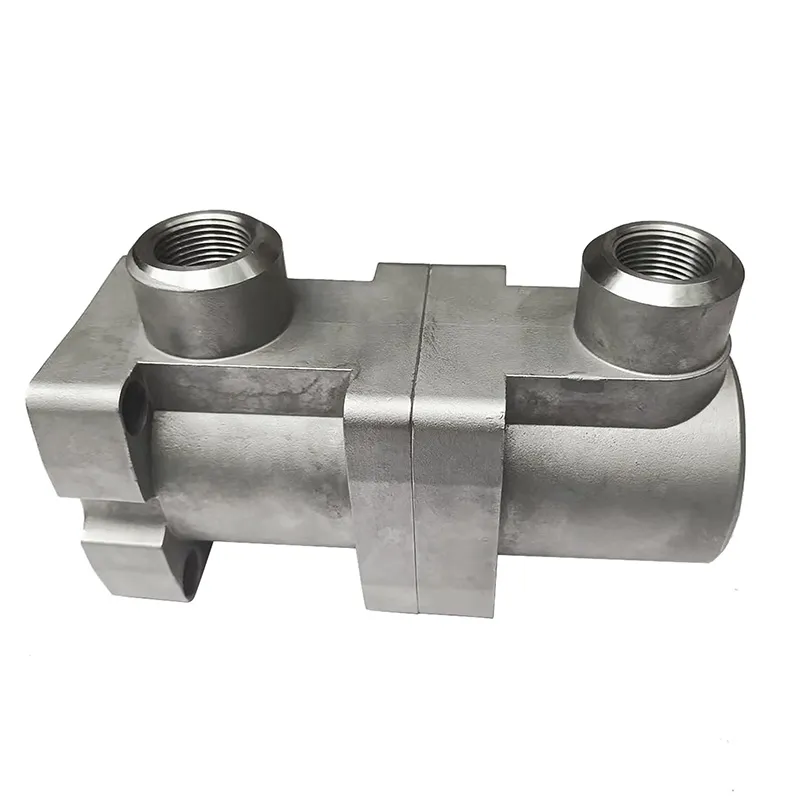
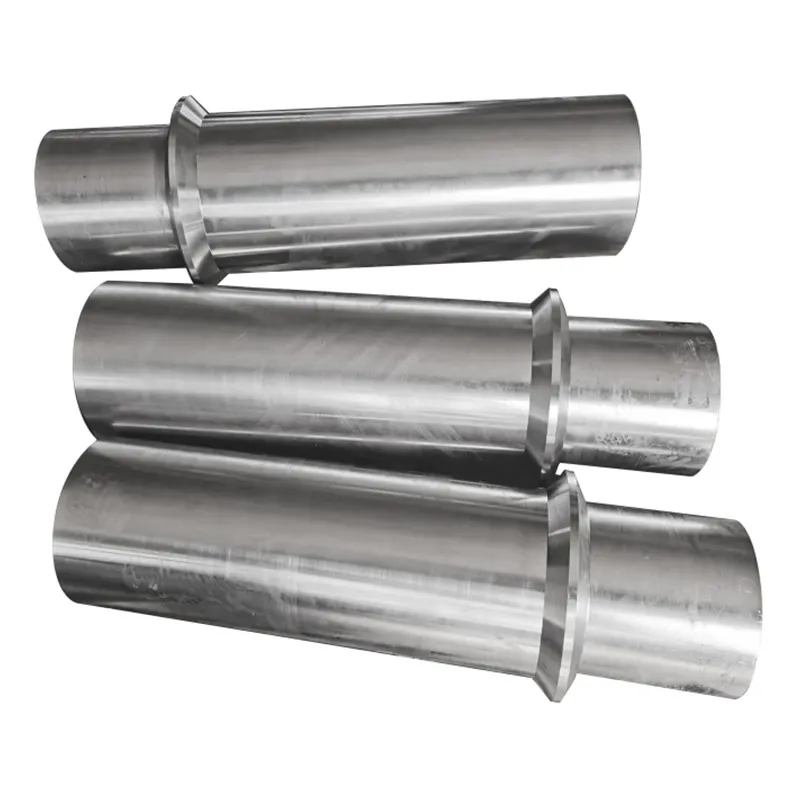
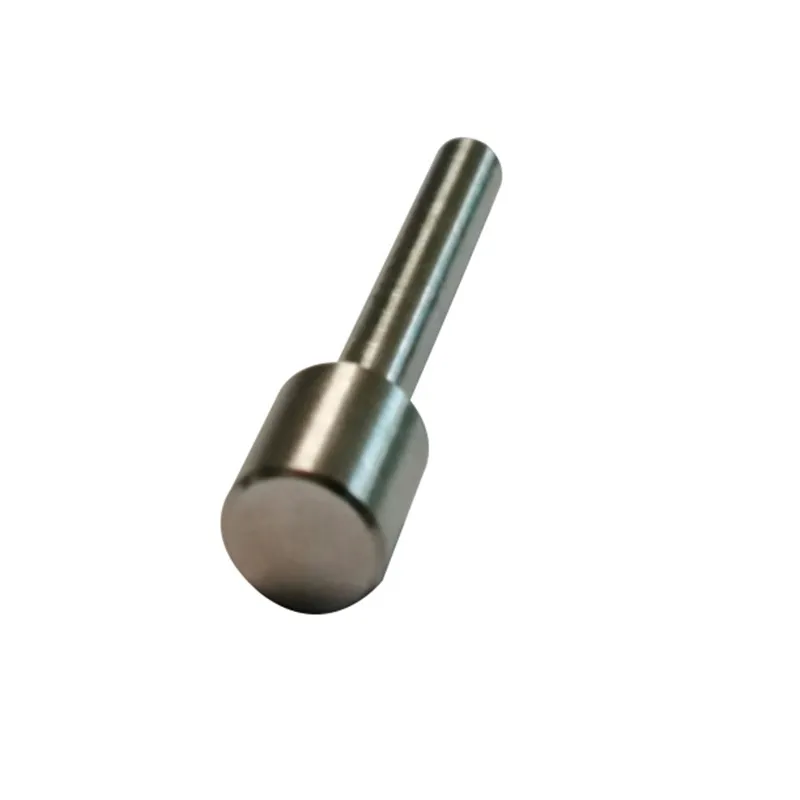
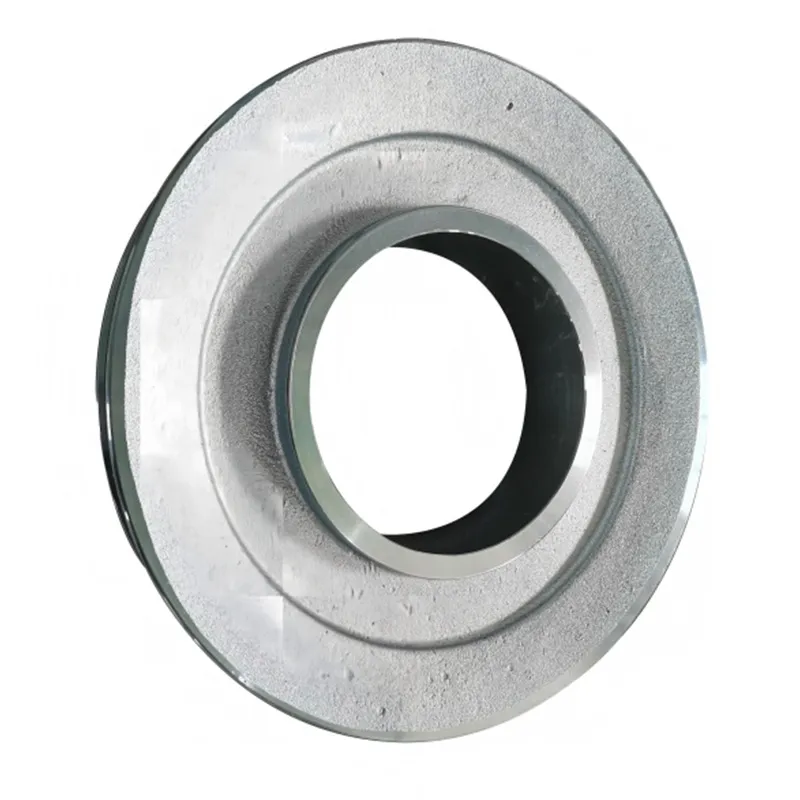
When people hear 'cobalt alloy casting parts', the immediate association is often 'high-performance', 'aerospace', or 'medical implants'. That's not wrong, but it's a surface-level understanding that glosses over the gritty reality of actually making these components. The real challenge isn't just in the alloy's spec sheet; it's in managing the transition from a molten, reactive puddle of metal to a dimensionally stable, defect-free part that can survive in a turbine or a human body. Many assume if you can cast steel, you can cast cobalt alloys. That assumption has cost more than a few shops a lot of money.
The Alloy Isn't Just a Formula, It's a Behavior
Working with cobalt-chromium alloys, like the common CoCrMo grades, is a lesson in humility. You're dealing with a material that has an incredibly high melting point and a nasty tendency to form stable oxides. The cobalt alloy casting process, particularly investment casting which we use extensively, becomes a tightrope walk between temperature, mold preheat, and pouring speed. A few degrees off on the mold preheat, and you get mistruns. Too slow on the pour, and you get cold shuts. Too fast, and you trap gas or erode the ceramic shell. It's not a recipe you follow; it's a reaction you try to anticipate and control.
I remember a batch for a gas turbine seal segment a few years back. The chemistry was perfect, the wax pattern tree was flawless. But we had a new guy on the furnace that day. He followed the standard protocol for a nickel-based superalloy we also run. The result? The metal 'pancaked' in the mold—it lost its fluidity too quickly. The parts looked okay visually, but X-ray showed internal shrinkage porosity in the thick sections. The entire heat was scrapped. That was the day the team really internalized that cobalt alloys don't forgive. Their solidification range and thermal conductivity are unique beasts. You can't apply generic casting rules.
This is where long-term experience, like the 30+ years at a shop like QSY, becomes tangible. It's not about having a magic trick; it's about having a deep, almost intuitive library of cause-and-effect for different geometries. You learn that a thin-walled valve component needs a radically different gating and risering strategy compared to a bulky wear plate, even if they're from the same alloy grade. The knowledge is in the pattern engineering long before the metal is ever melted.
Shell Mold Casting: Precision with a Ceramic Skin
For complex, high-integrity cobalt alloy parts, shell mold casting—a type of investment casting—is often the only viable route. The surface finish and dimensional accuracy are unmatched by sand casting. But the ceramic shell itself is a critical variable. Cobalt alloys are reactive. If the shell's binder or refractory material has any impurities that can reduce the local oxygen potential at high temperature, you get a phenomenon called 'metal-mold reaction'. It creates a hard, brittle, often contaminated surface layer on the casting that's a nightmare to machine off and can hide cracks.
We spent months dialing in our shell system for cobalt-based work. It's a proprietary blend, but the gist is using high-purity alumina and zirconia refractories with a silica-free binder system. The drying and firing cycles are brutal—slow ramps to very high temperatures to burn out organics and sinter the shell into a strong, inert container. A rushed firing cycle leads to a weak shell that can crack during pouring or, worse, create micro-cracks that let metal penetrate, ruining the surface. I've seen parts come out looking like they have a ceramic beard. That's all rework, or scrap.
The partnership with the shell room is crucial. At QSY, the casting and machining are under one roof, which helps. The machinists who later have to cut this hard material will immediately complain if the shell process is off, because their tool life plummets when they hit a reactive surface layer. That internal feedback loop is invaluable. It forces the foundry side to own the problem from start to finish, not just until the part is shaken out of the sand.
Where CNC Machining Enters the Chat
No cobalt alloy casting part is truly 'net-shape'. You always need machining, and this is where the rubber meets the road. Cobalt alloys are notoriously difficult to machine. They work-harden rapidly, they are abrasive, and they retain strength at high temperatures. A poorly machined part can have residual stresses or micro-cracks that will cause premature failure in service. This is why an integrated operation is so critical.
The as-cast part has scale, the gate system, and excess material (the 'stock'). The first step is often removing the gates with an abrasive cut-off wheel—sparks flying everywhere. Then it goes onto a CNC mill or lathe. Tool selection is everything. You need rigid toolholders, premium carbide grades, sometimes even ceramic or CBN inserts for finishing. Coolant pressure and volume are non-negotiable; you must flood the cut to control heat and wash away chips. A chip that recuts instantly ruins the insert.
We machined a series of cobalt-based alloy seats for severe-service valves. The tolerances on the sealing surfaces were in the microns. The challenge was that the casting, after heat treatment, had slight, unpredictable distortion. Our CNC programmers had to build in probing routines to 'map' the part's actual geometry in the fixture before the final finishing pass. It added time, but it was the only way to guarantee the seal. This kind of adaptive machining isn't in a textbook; it's born from scrapping a few expensive castings and figuring out why.
Heat Treatment: The Silent Game-Changer
This might be the most overlooked aspect. The properties of a cobalt alloy casting are made in the heat treat furnace, not the casting furnace. Solution treating, aging—these cycles define the final microstructure, carbide distribution, and mechanical properties. Get it wrong, and you have a part with the right chemistry that performs like junk.
The problem is consistency. A large, thick-section part and a small, thin one from the same heat cannot see the same time-temperature profile. The thick section's core might not reach the solution temperature, leaving undesirable phases. We learned this the hard way with a run of surgical implant prototypes. The tensile strength and fatigue life were inconsistent part-to-part. The culprit was the furnace's thermal uniformity and our loading pattern. We had to invest in precision furnaces with multiple-zone control and strict load management protocols. Now, for critical components, we even use thermocouples embedded in sacrificial parts within the load to verify the thermal history.
It's a costly step, but it's what separates a commodity casting from a high-reliability component. You can't inspect microstructure into a part; you have to process it in. This backend capability is what makes a supplier like QSY credible for medical and aerospace work, where the paperwork (the heat treat chart) is as important as the part itself.
The Real Measure: Failure Analysis and Iteration
The true test of expertise in cobalt alloy casting parts isn't a perfect first article. It's how you handle the ones that fail. We had a component for a chemical pump that failed in fatigue after a few hundred hours. The customer was, understandably, upset. The post-mortem involved sectioning the part, doing SEM/EDS analysis on the fracture surface. We found a cluster of non-metallic inclusions—likely a piece of broken ceramic from the shell or a slag particle—that acted as a crack initiation site.
That led to a full process review: improving our metal filtration during pouring (we switched to a ceramic foam filter in the gating system), more rigorous inspection of the ceramic shells before assembly, and implementing more frequent slag skimming during melting. The 'fix' wasn't a single action; it was a systemic tightening of controls. The next batch ran without issue. That failure, as painful as it was, probably did more to improve our process than a dozen successful runs.
This is the unglamorous side. It's not about selling the sizzle of 'aerospace-grade'. It's about having the metallurgical lab, the quality systems, and the culture to tear apart your own work, find the root cause, and change how you operate. That's the 30 years of experience talking. It's the accumulation of these small, hard-won corrections that builds a reliable process for making something as demanding as a cobalt-based alloy casting. In the end, the part is only as good as the weakest link in a very long chain, from wax pattern to final inspection.