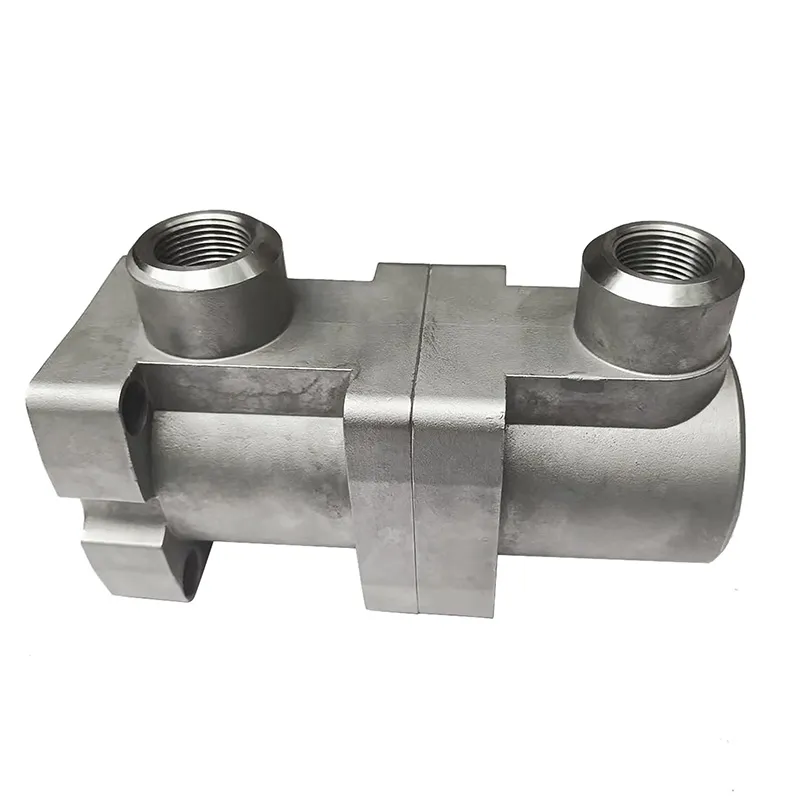
When most people in manufacturing hear 'cobalt base', they immediately think 'jet engines' or 'extreme heat' and stop there. That's the first mistake. It boxes the material into a niche, making you overlook its real, gritty utility in places you wouldn't expect. I've seen too many projects default to a nickel alloy because it's the go-to for corrosion, only to fail under combined wear and heat where a specific cobalt base grade would have quietly succeeded. The term itself is a bit of a misnomer—it's never pure cobalt; it's always a complex system, a balancing act between carbides for wear resistance and that solid-solution matrix for strength. Getting that balance wrong is expensive, and I've got the scrapped parts to prove it.
The Reality of Specifying Cobalt Alloys
You don't just pick a cobalt alloy. You're picking a fight against a specific set of conditions. Is it sulfidation? Is it galling in a high-pressure valve? Is it a pump shaft seeing slurry erosion at 400°C? Each failure mode points to a different family. Stellite 6, for wear. Haynes 25 (L605) for that mix of oxidation and strength. MP35N for when you need insane strength and corrosion resistance together, though that's a cobalt-nickel-chrome-moly beast. The data sheets give you properties, but they don't tell you about the scream of a tool machining Stellite 12, or how the residual stress in a welded overlay can crack if you don't manage the interpass temp meticulously. This is where thirty years of foundry and machining practice, like what you'd find at a specialist like Qingdao Qiangsenyuan Technology Co., Ltd. (QSY), becomes non-negotiable. They've been at this since the 90s, and that institutional memory on how these alloys behave from molten metal to finished component is what separates a working part from a liability.
I recall a project for a coal liquefaction valve trim. The spec called for cobalt-based alloy for high wear. We went with a standard high-carbon Stellite. It performed terribly, lasting only weeks. Post-mortem showed it wasn't pure abrasion; it was a combination of hot corrosion from sulfur compounds and micro-fretting. The hardness was there, but the corrosion resistance of that particular grade was wrong. We switched to a lower-carbon, higher-molybdenum cobalt base variant with better hot corrosion resistance. The difference was night and day. The lesson? The enemy is rarely one thing. You need a partner who understands the metallurgy, not just the machining.
That's why the process chain matters. With these alloys, your manufacturing steps talk to each other. The cooling rate during investment casting at a foundry like QSY directly affects the carbide size and distribution. Too fast, and you might get finer carbides but also cracking. Too slow, and the carbides can get too coarse, hurting impact resistance. Then you hand it to the CNC shop. If they treat it like machining steel, they'll burn through inserts and likely induce subsurface damage. You need parameters that account for work hardening and low thermal conductivity. It's one continuous, informed process from pour to part.
Machining: Where Theory Meets the Tool
This is the great filter. You can have a perfectly designed, beautifully cast cobalt base component, and ruin it on the lathe or mill. The first rule: respect the work hardening. These alloys, especially the solid-solution strengthened ones like Haynes 188, will harden under the tool nose if you're too gentle. You must maintain a consistent, positive feed with a sharp, dedicated toolpath. Pecking in and out? That's a recipe for a glazed, hardened surface that will shatter your next tool pass.
Tool geometry is everything. A large positive rake to shear the material, not push it. High-pressure coolant is not a luxury; it's a requirement to manage the heat at the cutting edge, because the heat doesn't leave with the chip easily. We standardized on specific carbide grades with post-coat treatments for these jobs. Even then, tool life is measured in minutes, not hours. You plan for it. The CNC machining page on tsingtaocnc.com isn't just a service list; it's a tacit admission they've invested in the right kit and know-how to handle this class of materials without flinching.
A practical headache: drilling deep holes. The low thermal conductivity and toughness make chip evacuation a nightmare. You need parabolic flutes, constant high-pressure coolant through the tool, and the courage to run the right speeds and feeds. Hesitate, and the chip packs, the drill walks, and you're looking at a very expensive piece of scrap. It's a skill built from breaking a lot of drills.
The Casting Nuance: More Than Just Melting Metal
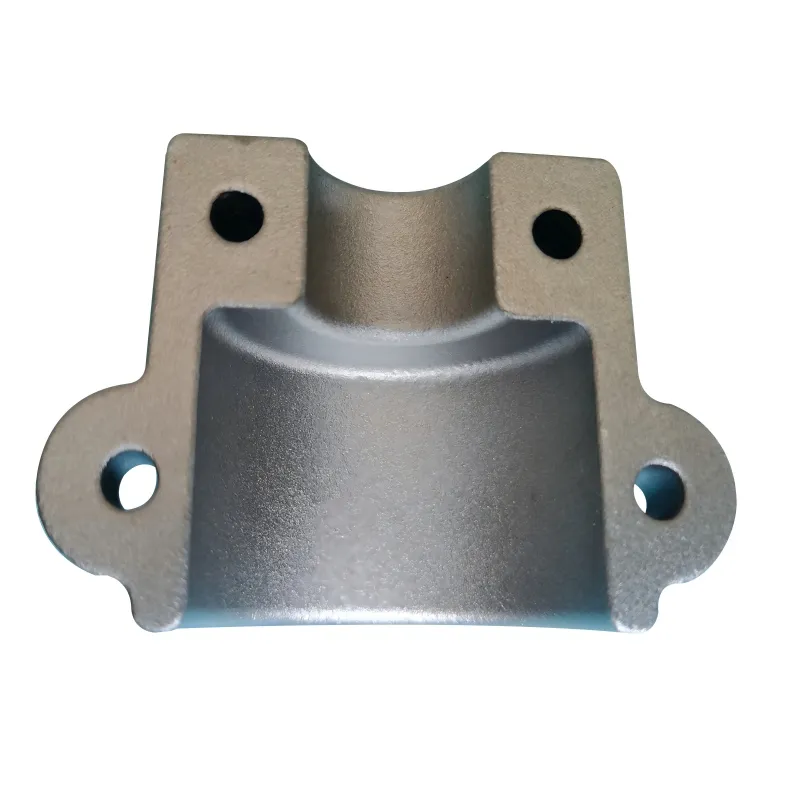
Shell mold casting and investment casting are the two primary routes for complex cobalt base parts. They're not interchangeable. For larger, relatively simpler geometries, shell molding from QSY's foundry can be cost-effective. But you have to watch the mold-metal reaction. Certain cobalt alloys are reactive, and the silica in the shell can lead to a poor surface finish if the binder system isn't tailored. It's a process that demands tight control over the preheat temperature of the mold and the pouring temperature.
Investment casting is the go-to for intricate shapes—think turbine nozzles with internal cooling passages. The ceramic shell is inert, so surface finish is superior. But here, the devil is in the feeding and solidification. These alloys have a distinct freezing range. You need carefully designed risers and gating to prevent shrinkage porosity in thick sections. I've seen X-rays of parts that looked perfect on the outside, only to show a spongy core because the solidification pattern wasn't modeled correctly. This is where decades of patternmaking experience pay off. It's not just CAD; it's knowing how to adjust the digital model to compensate for real-world shrinkage and thermal contraction, something a long-standing operator builds into their process.
Then there's the melt practice. Cobalt alloys are often vacuum melted or melted under a protective atmosphere to prevent oxidation of critical, reactive elements like lanthanum or yttrium that are added for oxide scale adhesion. You can't just throw scrap into an open furnace. The chemistry control has to be impeccable, batch to batch. The mention of special alloys on QSY's profile isn't marketing; it's a direct reference to this level of controlled, high-integrity melting capability.
Welding and Repair: The High-Stakes Game
This is perhaps the most delicate operation. Repairing a worn cobalt base overlay on a valve seat or building up a shaft isn't like welding steel. The heat input is critical. Too much, and you dilute the base metal excessively, or worse, cause constitutional liquation in the heat-affected zone, creating brittle phases that crack. The preferred method is often pulsed GTAW (TIG) with a cold wire feed, allowing for precise, thin layers.
You must match the filler metal not just to the base alloy, but to the service condition. Sometimes you use a slightly different composition to ensure crack resistance in the weld metal itself. Pre-heat is usually necessary, but interpass temperature is what you watch like a hawk. Let it get too hot, and you lose the benefit. I've been on site where a repair failed in service because the welder, used to stainless, kept stacking passes without letting the part cool down sufficiently between them. The result was a massive, cracked heat-affected zone. The repair cost more than a new part.
It leads to a broader point: the true cost of these alloys isn't just in the raw material, which is volatile enough. It's in the qualified, specialized labor and controlled processes required at every step. Sourcing from a general-purpose machine shop is a huge risk.
Beyond Aerospace: The Unseen Applications
While aerospace is the glamorous end, the real workhorse applications are dirtier and more demanding in their own way. Down-hole tools for oil and gas. Components for chemical processing plants handling hot, abrasive catalysts. Wear plates in pulp and paper machinery. Even in medical, for certain load-bearing implant surfaces. The value proposition isn't always about the highest temperature; it's about that unique combination of properties that nothing else matches reliably.
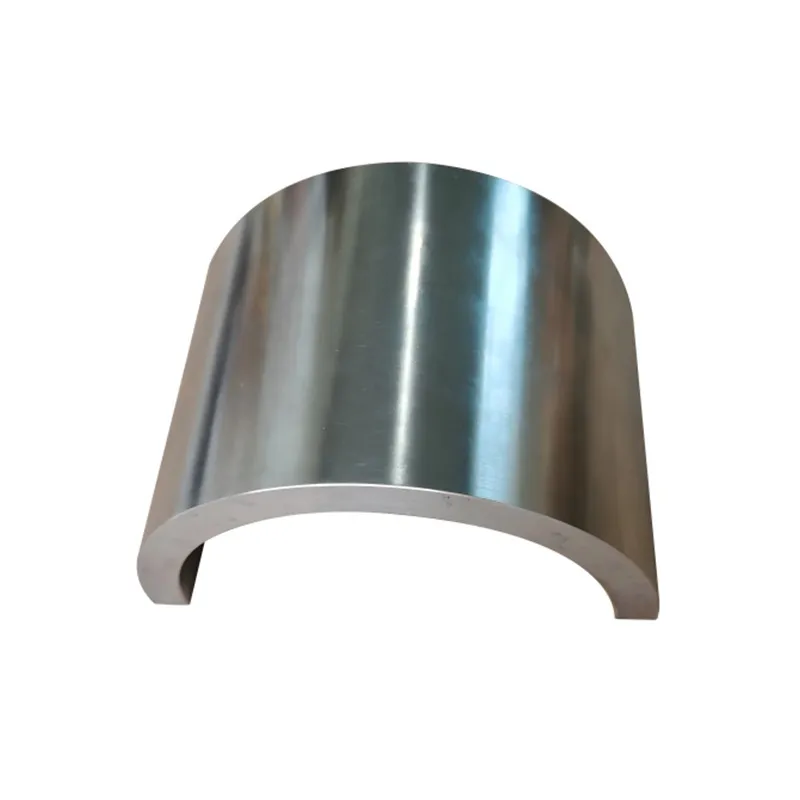
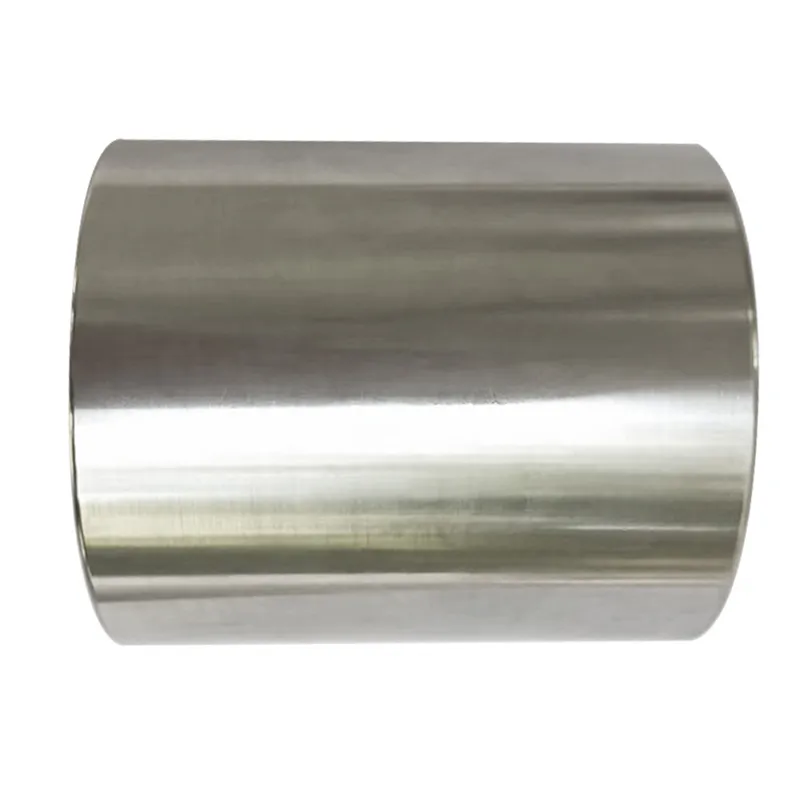
Take a simple-seeming part like a wear sleeve for a pump handling ash slurry. A hardened steel might last a month. A ceramic coating might spall. A specific cobalt base casting, machined to a fine tolerance, can last a full annual turnaround cycle, saving hundreds of thousands in downtime. That's the calculation. It's never about the piece price; it's about total cost of ownership and operational reliability.
This brings it back to the foundry and machine shop floor. When you work with a partner like QSY, you're not just buying a casting or a machined block. You're buying their thirty-year judgment on how to navigate all these trade-offs—from alloy selection, to molding, to the final cut. The website tsingtaocnc.com is just the front door. The real value is in the accumulated, hard-won knowledge of what works and what doesn't when the blueprints hit the factory floor. That's what makes the difference between a component that's merely expensive and one that's genuinely invaluable.