You hear 'custom lost wax casting' and immediately think of intricate jewelry or maybe those detailed art pieces. That's the common trap. In the industrial sphere, especially where I've spent years, it's a different beast entirely. It's less about aesthetics-first and more about solving a problem where no off-the-shelf part exists. The 'custom' part isn't a luxury; it's a necessity. It means you're often dealing with a component that has to survive extreme heat, constant corrosion, or ridiculous mechanical stress. The wax pattern is just the starting point of a very long, very fussy conversation between design intent and metallurgical reality.
The Shell of the Matter: It's Not Just a Mold
Most descriptions jump straight from wax to metal. They skip the most critical, temperamental phase: building the ceramic shell. This is where you win or lose the job. We're not just dipping the wax tree in slurry; we're engineering a shell that can withstand 1500°C+ molten steel without cracking, sagging, or reacting with the metal. At a place like QSY, with their three decades in shell mold and investment casting, they get this. The process isn't automated love; it's a manual, layer-by-layer ritual. The humidity that day, the drying time between coats, the grit of the stucco sand—each variable leaves its fingerprint on the final surface finish of the casting. Get it wrong, and you get a shell that looks perfect until it hits the furnace, then it fails catastrophically. I've seen it. A batch of valve bodies for the oil & gas sector, ruined because a new technician rushed the drying cycles. The shells looked fine, but they trapped moisture. Steam pressure during pour-off equals internal bubbles and scrap metal. That's a $20,000 lesson in patience.
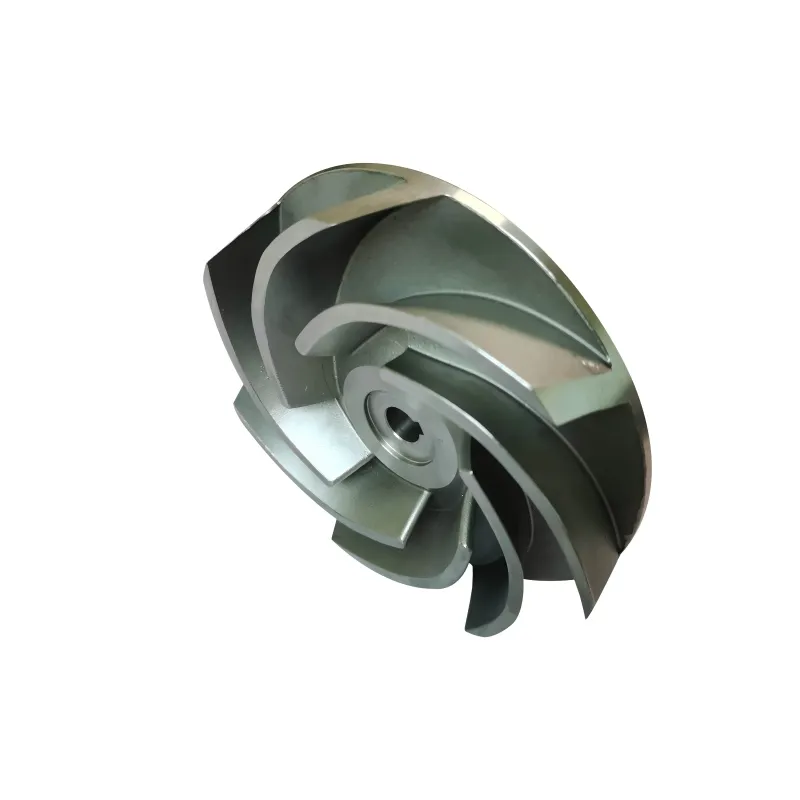
This is why the partnership with a foundry's machining side is non-negotiable. Let's say you're casting a pump impeller in duplex stainless steel. The casting will have some stock allowance. The CNC machining team needs to understand the casting's likely distortion, the skin effect, and where the potential shrinkage might be to program their cuts correctly. When the casting and CNC divisions are under one roof, like at Qingdao Qiangsenyuan Technology Co., Ltd., that feedback loop is tight. The machinist can walk over to the foundry floor, point at a problematic gate area on a sample, and they can adjust the gating system for the next run. That integration turns a prototype into a viable production part.
Material choice is another layer. People specify stainless steel and think it's done. But are we talking 304 for general corrosion, or 17-4 PH for strength, or a super duplex for chloride environments? For high-temperature applications, you jump into nickel-based alloys like Inconel 718. Each of these behaves wildly differently during the custom lost wax casting process. The nickel alloys, for instance, are viscous. They don't flow like aluminum. Your gating system has to be more generous, your pour temperature has to be precise to avoid segregation. The wax pattern for an Inconel turbine blade isn't just a shape; it's a thermal management blueprint.
Where Custom Meets the Real World: A Gear Case Story
I recall a project for a marine propulsion system. The client needed a custom gear case housing—complex internal channels for cooling, mounting points that had to be cast-in to avoid weak points from welding, and it all had to be in a nickel-chromium alloy for seawater resistance. The CAD model looked clean. But the first prototyping round failed. Not dramatically, but subtly. The pressure test revealed micro-porosity in a critical wall section.
The knee-jerk reaction is to blame the metal. But the real culprit was the wax. The original wax formulation had a slightly high ash content. When it was burned out, it left a tiny, fragile residue that the ceramic shell absorbed, creating a local weak spot that the molten metal infiltrated, causing a surface defect. The solution wasn't to change the alloy; it was to switch to a low-ash, polymer-enhanced wax for the pattern. It cost more, but it solved the issue. This is the grunt work of custom lost wax casting that no one talks about. It's materials science, not just sculpture.
We worked with the engineering team, tweaking the design to include subtle drafts in areas the designer thought could be straight-walled, adding small reinforcing ribs that didn't interfere with function but guaranteed mold integrity. The final part, after three iterative prototypes, passed all NDT and pressure tests. It's now in service on offshore service vessels. The client's website might just show a shiny gear case, but for us, it's a story of wax chemistry and wall thickness debates.
The Machining Handshake: No Casting is an Island
This is critical. You never just deliver a raw casting. The custom lost wax casting is, in 95% of industrial cases, a near-net-shape blank. The 'finishing' isn't buffing; it's precision CNC machining to final dimensions. The synergy here is everything. If the casting house and the machine shop are separate entities, you lose fidelity. Tolerances get lost in translation.
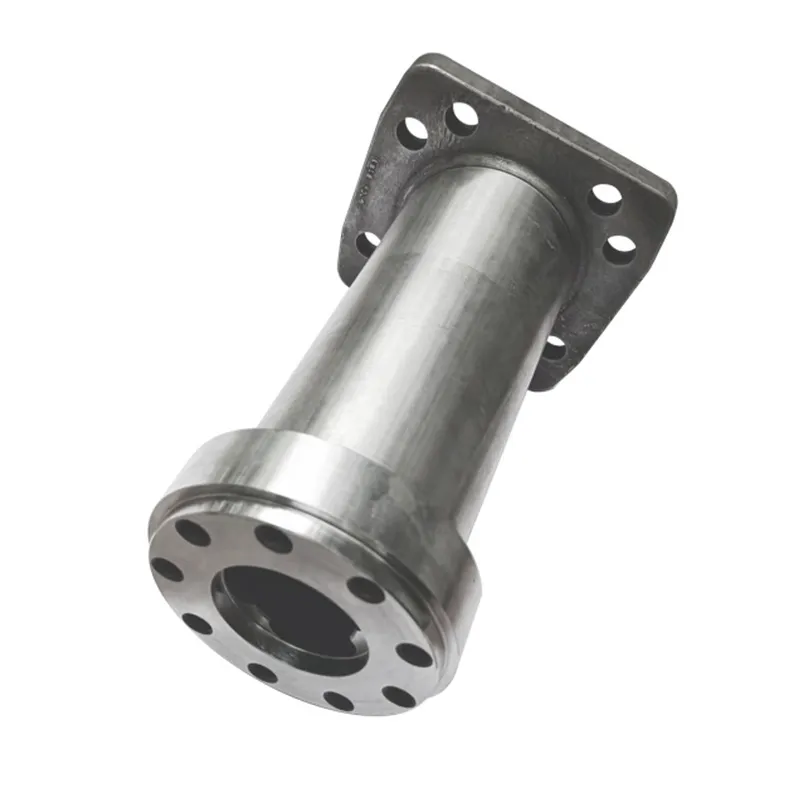
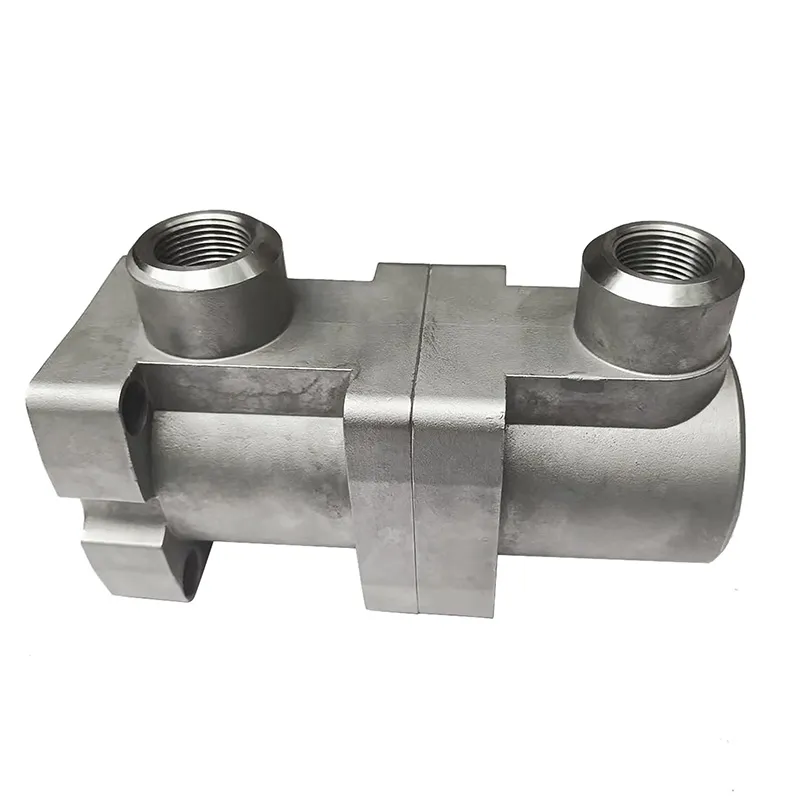
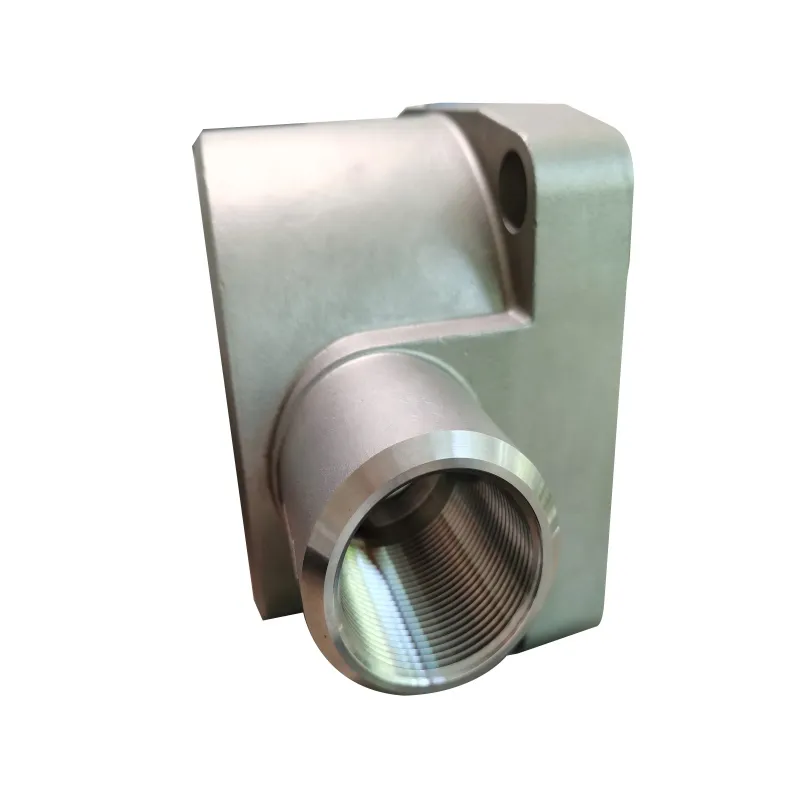
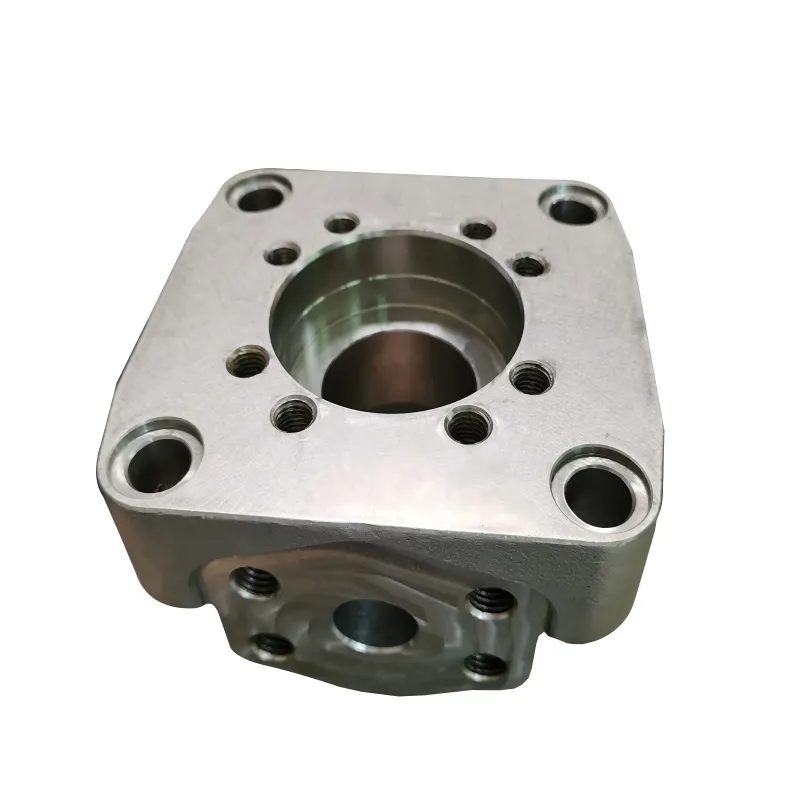
At an integrated operation, the process is seamless. The foundry produces the casting with predefined datum surfaces—these are the reference points the CNC machine will use. They know how much stock to leave (typically 1-3mm, but sometimes as little as 0.5mm on critical features). For a company like QSY, this is their bread and butter. They can cast a stainless steel valve body with integral flanges, and their in-house CNC department will mill the face seals, drill and tap the bolt holes, and bore the internal valve seat—all referencing the same casting datums. This guarantees concentricity and alignment that you simply cannot achieve by welding or assembling separate pieces.
I've inspected parts from disjointed supply chains. The casting comes from one vendor, machining from another. The machinist, to hit a tight bore tolerance, might cut through the cast skin and into a subsurface void that wasn't visible. Scrap. Or worse, a latent defect. When it's integrated, the machining team knows the casting's 'personality'—they know where shrinkage is likely, so they'll adjust their tool paths. They can perform a quick hardness test on a spot and inform the foundry to adjust the heat treat for the next batch. This closed-loop is what makes true custom manufacturing reliable.
The Alloy Conundrum: More Than a Data Sheet
Clients come with a material spec: ASTM A351 CF8M. That's a standard cast stainless. Good. But the mechanical properties and corrosion resistance of that alloy are directly dictated by the thermal treatment after the custom lost wax casting. The as-cast structure is brittle, with carbides precipitated along grain boundaries. You need a solution annealing heat treatment—heating it to around 1100°C and quenching it rapidly to put those carbides back into solution.
The quench is the tricky bit. Quench too slow, and the carbides re-precipitate, killing corrosion resistance. Quench too fast on a complex, thin-walled part, and you induce distortion or cracking. It's a balancing act. For cobalt or nickel-based superalloys, the heat treatment is even more complex, often involving aging cycles to precipitate strengthening phases. You can't just outsource this to a generic heat treater. It needs to be part of the process flow. The foundry must have control or a deeply trusted partner for this stage. A part can be perfectly cast and machined, only to be ruined in the furnace. I've seen it happen with a batch of instrument manifolds. The paperwork said they were heat treated. They weren't. They failed in the field within months due to stress corrosion cracking. The root cause? A broken temperature sensor in the annealing furnace that went unnoticed.
This is where long-term operators have an edge. They've built institutional memory. They know that a particular heat of alloy from a certain supplier tends to run at the low end of silicon content, which affects fluidity, so they'll adjust the pour temperature by 15 degrees. That kind of knowledge isn't in a handbook; it's on a notepad in the foundry manager's office.
Looking at the Horizon: Not Just Replication, but Enablement
The future of custom lost wax casting isn't about making cheaper copies. It's about enabling designs that are impossible with any other method. Think of a monolithic fuel injector tip with internal cooling channels that follow an aerodynamic profile—can't machine it, can't forge it. You cast it. Or a surgical implant with a porous surface structure for bone ingrowth fused to a solid core. That's investment casting.
The digital thread is tightening. Now, we can take a CAD model, run simulation software to predict solidification shrinkage and hot spots, and modify the wax tree design digitally before ever cutting a tool. This reduces prototype iterations from maybe four down to one or two. But the software isn't an oracle; it's a guide. You still need the human to interpret its results, to know that the simulation's ideal gate location might be impossible to de-gate without damaging the part. The craft isn't disappearing; it's moving upstream into the digital prep stage.
For a manufacturer, the value proposition shifts. It's no longer we cast metal. It's we provide a functional, high-integrity metal component from your digital design, with all the material and process rigor that three decades of dealing with cast iron, steel, stainless, and those finicky special alloys teaches you. You can see this approach on a site like tsingtaocnc.com—it's not flashy, it's factual. It lists the capabilities (casting, machining, materials) as interconnected steps in one flow. That's the real story. The end product isn't the casting; it's the certified, ready-to-install part that arrived on time and works. That's what keeps a shop like QSY operating for over 30 years in a tough industry. It's not magic; it's attention to the unglamorous, critical details that happen between the wax room and the CNC machine.