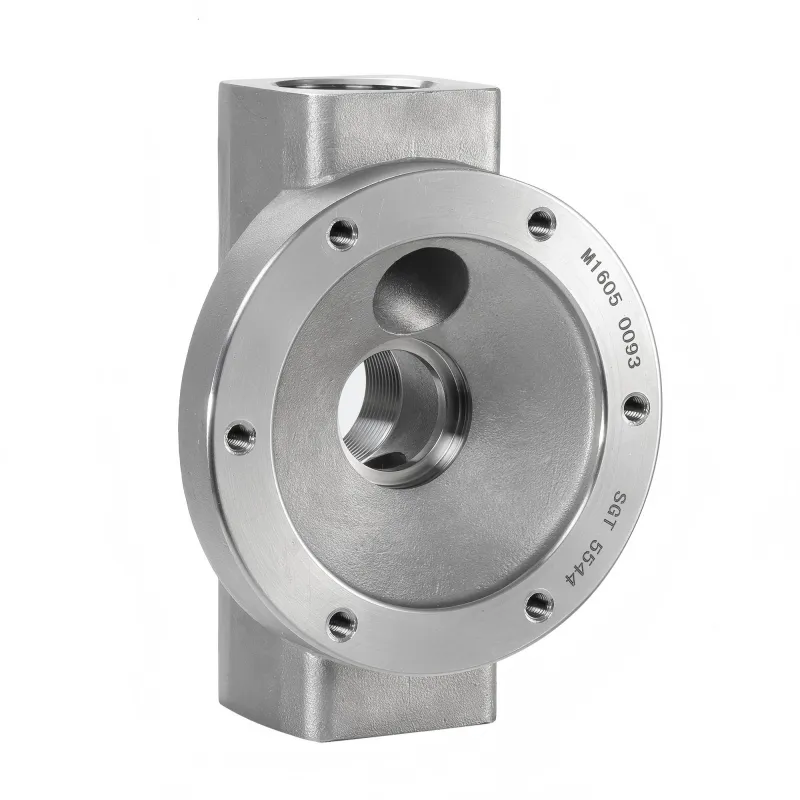
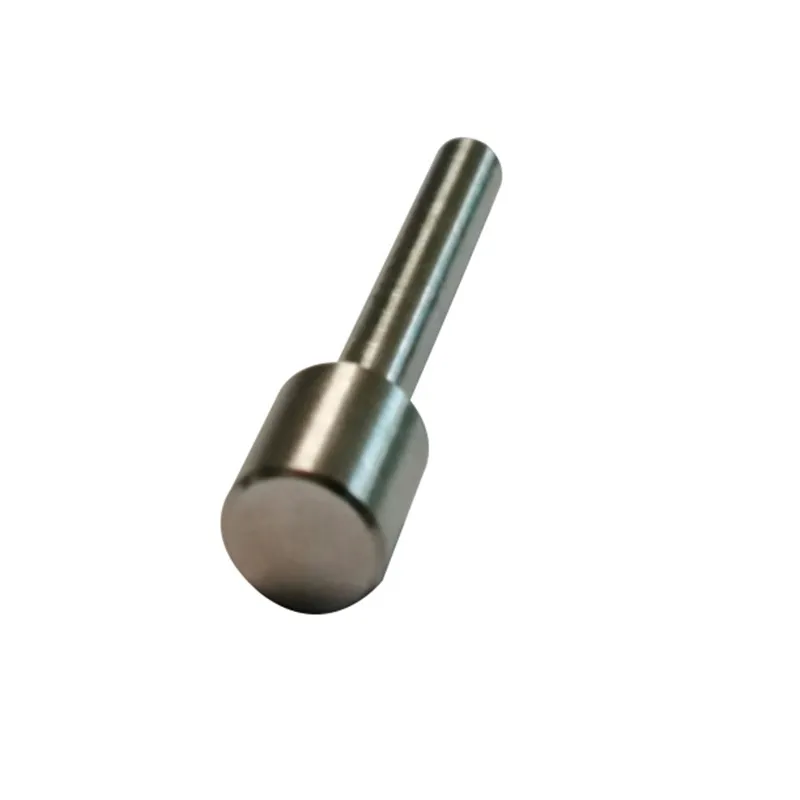
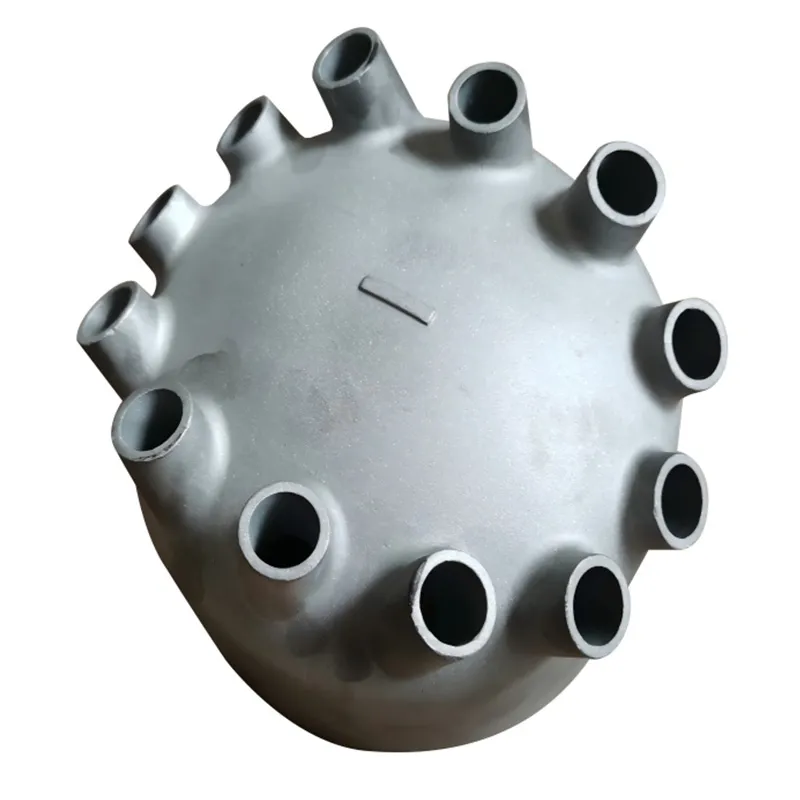
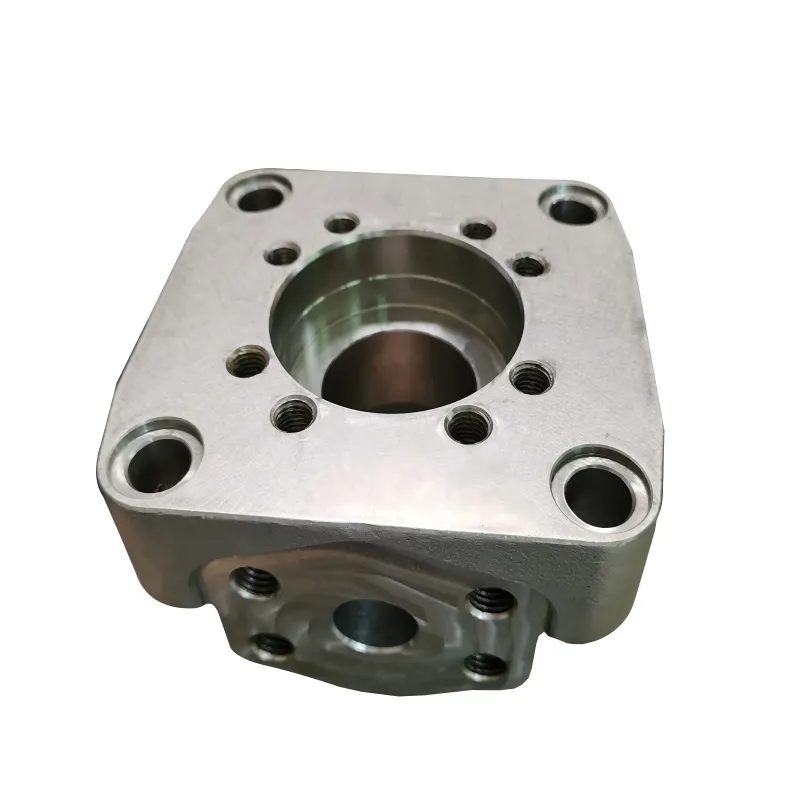
You hear 'custom precision machining' and most minds jump straight to tight tolerances and shiny CAD models. That's part of it, sure, but it's the easy part. The real story starts when the model hits the shop floor and you're staring at a billet of Inconel or a rough casting that doesn't quite match the print. That gap between the perfect digital world and the physical, sometimes stubborn, reality of metal—that's where the actual craft lives. It's not just about following instructions; it's about interpreting them, adapting, and sometimes arguing with them to make a part that actually works.
The Foundation: It Starts with the Material
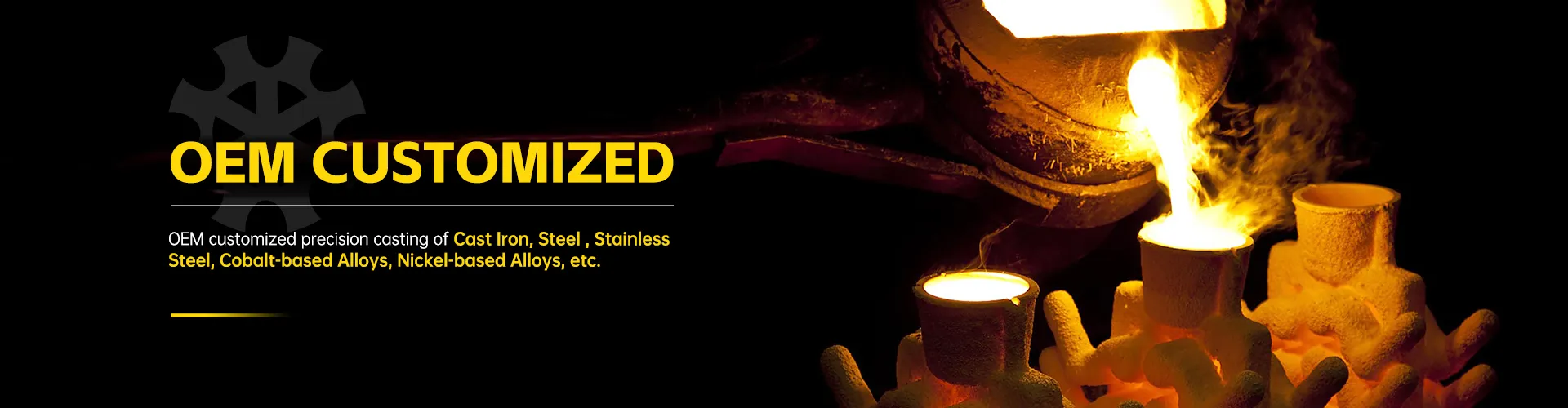
You can't talk precision without first talking about what you're cutting. I've seen too many projects stumble out the gate because the material spec was treated as a footnote. Take a company like Qingdao Qiangsenyuan Technology Co., Ltd. (QSY)—they've been in casting and machining for decades. When they mention working with nickel-based or cobalt-based alloys, that's not just a list on a website. That's a signal of dealing with the hard stuff. Machining a simple stainless steel bracket is one thing; tackling a complex, thin-walled investment casting in Hastelloy for a corrosive environment is a completely different beast. The machining strategy for that has to respect the material's tendency to work-harden, its heat sensitivity, its abrasive nature. You choose your tools, your feeds and speeds, even your coolant pressure, based on that first fundamental choice of alloy. Get that wrong, and no amount of custom precision machining wizardry will save you.
This is where the integration of processes under one roof, like at QSY, shows its value. They handle the shell mold and investment casting, then move straight to CNC machining. That continuity matters. The machinist isn't receiving a mysterious black box from a supplier; they likely know how that specific batch of material was poured, cooled, and what the likely internal stresses might be. That intimate knowledge informs the first setup, the initial cuts, helping to avoid surprises like distortion when you finally release a part from the fixture. It turns a potential point of failure—the handoff between casting and machining—into a controlled variable.
I recall a job for a sensor housing in 17-4 PH stainless, specified in the H1150 condition. The print called for a series of deep, small-diameter cross-holes. The material was tough, and drill walk was a real concern. We had to move beyond standard carbide drills. We ended up using a custom-ground, solid carbide drill with a specific parabolic flute geometry for better chip evacuation and a modified point angle. Even then, it was a process of step-drilling with frequent pecking cycles and high-pressure coolant directed right at the point. The 'precision' wasn't just in hitting the location tolerance; it was in designing the entire process to prevent the tool from deflecting in the first place. That's a material-specific solution you won't find in a generic handbook.
The Custom in the Process
Custom doesn't always mean geometrically insane. Sometimes, the deepest custom work is invisible. It's in the workholding. We had a client once who needed a run of large, irregularly shaped ductile iron castings machined. Every casting, being a casting, had minor variations. A standard vise or even a dedicated fixture plate would have been a nightmare for setup time and consistency. The solution was a modular fixture built with adjustable, hardened locators and custom soft jaws that we machined in-house to cradle the part's as-cast contour. We then probed each casting to find its datum surfaces and adjusted the locators accordingly before locking it down. The CNC program had to be written to reference these adjustable datums. The part itself was simple—a few face mills, bore a couple of holes. But the process to hold it securely and repeatably for fifty pieces was a completely custom precision machining project in itself. It added cost to the front end, but saved a fortune in scrap and setup time.
This is another area where a foundry-machining combo shines. A shop that only does machining might look at that casting and see a problem to be fixtured. A shop like QSY, which also produces the castings, might have designed a small sacrificial pad or a more consistent locating feature into the casting pattern from the start, making the machinist's life infinitely easier. That upstream/downstream collaboration is the essence of true custom manufacturing.
Then there's the software side. Five-axis simultaneous machining gets all the glory, but for many custom parts, 3+2 axis positioning is the workhorse. Programming for this requires a mindset that visualizes the part in 3D space, breaking it down into sets of features that can be completed with the spindle locked at a specific tilt and rotation. The programmer isn't just assigning toolpaths; they're choreographing the part's journey through the machine, minimizing re-fixturing, and ensuring the rigidest possible setup for each operation. A miscalculation here can lead to a tool collision with the fixture or poor surface finish because you're cutting with the tip of an end mill instead of its side. I've made that mistake—trying to be too clever with an angle and ending up with a scrapped part because tool holder clearance wasn't fully simulated. It was a humbling reminder that the machine's virtual envelope is as important as the part geometry.
Precision: A Relative Term
±0.001 inches is a common callout. But precision is contextual. Holding that on a 2-inch aluminum block is standard fare. Holding it on a 20-inch diameter, post-heat-treated steel ring gear is another story. Thermal growth, tool pressure, machine deflection—they all scale up. You have to let the machine and the part settle. Sometimes that means roughing, then walking away for an hour, then coming back for a light finishing pass. The schedule might hate it, but the part quality demands it.
I learned this the hard way early on with a large bearing housing. We machined it beautifully, measured it perfectly in the climate-controlled inspection room, and signed it off. A week later, the client called—it was out of spec. What happened? The massive amount of material removed during machining had relieved internal stresses from the original casting. The part had subtly warped after we were done with it. The solution, which we adopted for all large, heavy-cut items after that, was a stress-relief cycle. After rough machining, we'd send the part out for thermal stress relieving, then bring it back for finishing. It added a step, but it turned unpredictable scrap into reliable, custom precision machining. Precision isn't just the measurement at the end of the spindle; it's the stability of that measurement over time and in its working environment.
Measurement itself is a custom discipline. For some features, a standard CMM is perfect. For others—deep internal bores with tight cylindricity calls, or complex organic surfaces—you might need custom ground probe extensions, or to use a laser scanner, or even construct a functional gauge to test fit with a mating part. The inspection method must be as fit-for-purpose as the machining process. Assuming one size fits all for metrology is a fast track to delivering a perfectly measured part that doesn't assemble.
The Human Factor and Tooling Nuances
Automation is great, but custom, low-volume work still runs on experienced eyes and ears. The sound of a cut changing from a smooth hum to a slight chatter; the sight of a chip color shifting from silver to straw to blue; the feel of a finished surface for burrs the machine might have missed. These are non-digital QC checks that catch problems before they become disasters. A good machinist listens to the machine like a mechanic listens to an engine.
Tooling selection is a deep rabbit hole. For high-temperature alloys, you might be choosing between ceramic inserts (which can handle insane speeds but hate interruption) and specialized coated carbide (more forgiving but slower). It becomes a balancing act between cycle time, tool cost, and risk of catastrophic insert failure. We once tried to push the limits with a ceramic insert on a nickel alloy face grooving operation. The theoretical metal removal rate was fantastic. In practice, a tiny inconsistency in the cast surface caused a micro-interruption, and the insert shattered, taking the $800 custom grooving tool body with it. We went back to a robust, variable-helix carbide end mill strategy and accepted a longer cycle time. The best tool isn't always the one with the highest spec sheet numbers; it's the one that finishes the job reliably.
This is where relationships with suppliers like QSY matter. If you're machining their castings and you run into a persistent hard spot or porosity, you can have a technical conversation. They can look at their process—maybe it's a gating issue, maybe a sintering parameter—and adjust. A generic material supplier just sends a test report. The collaboration turns a defect analysis into a process improvement, which ultimately elevates the quality of the final custom precision machining deliverable.
Delivering More Than a Part
At the end of the day, you're not delivering a widget. You're delivering a solution to a problem. That solution includes the part, the inspection report, the certifications, and the tacit knowledge that if something seems off, you have the background to know why. It's about being a partner, not just a vendor. When a client sends a drawing, the real service is asking the questions they might not have considered: This radius is called out as sharp. Is that for clearance? Because we can electropolish it to be functionally sharp without the stress riser of a truly machined edge. Or, This tolerance is extremely tight on a non-functional datum. Can we relax it to save cost without impacting performance?
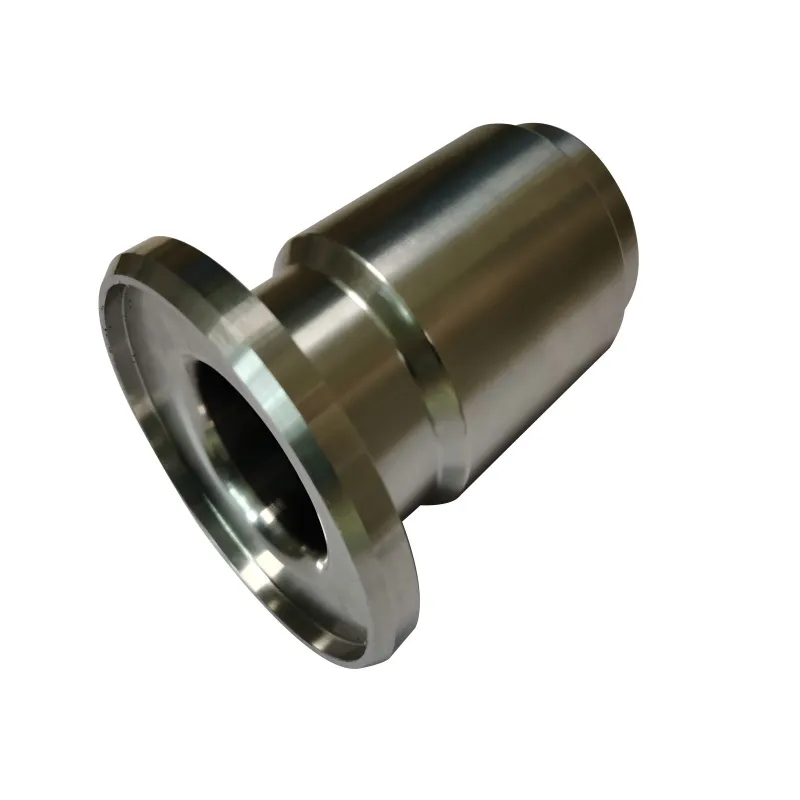
That consultative layer is what separates a job shop from a true custom precision machining provider. It's built on all those earlier stages: understanding materials, designing robust processes, knowing the limits of machines and tools, and applying practical metrology. It turns a purchase order into a collaboration. You see this mindset in companies that have weathered decades of cycles, like QSY. Their 30-year history isn't just a longevity stat; it's a ledger of solved problems, material quirks learned, and processes refined. That institutional knowledge becomes part of the value they machine into every part, whether it's a simple steel flange or a complex cobalt alloy component for extreme service. The precision is in the part, but the custom nature is in the thinking that got it there.