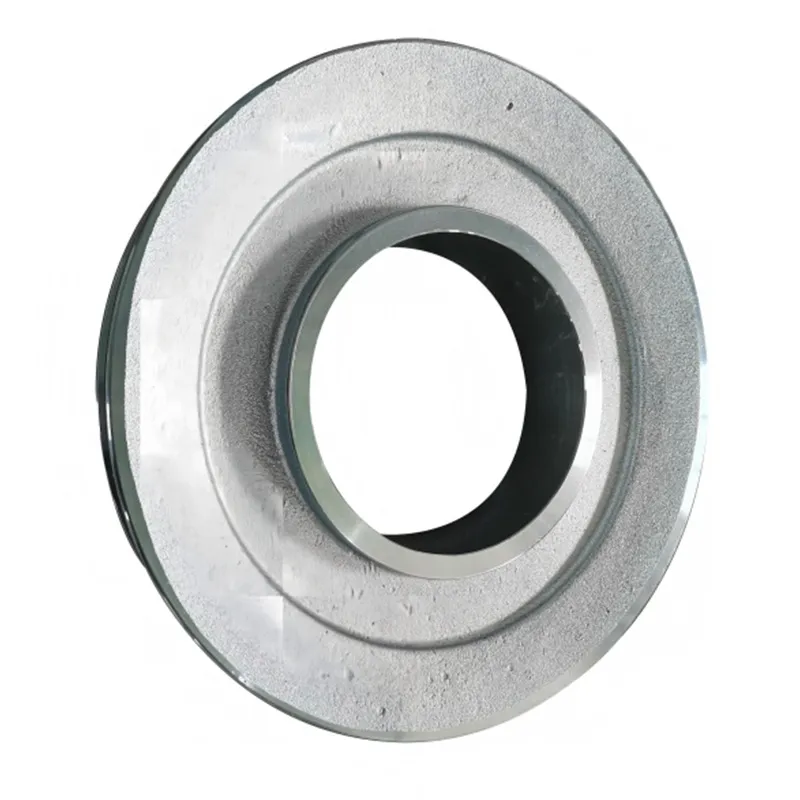
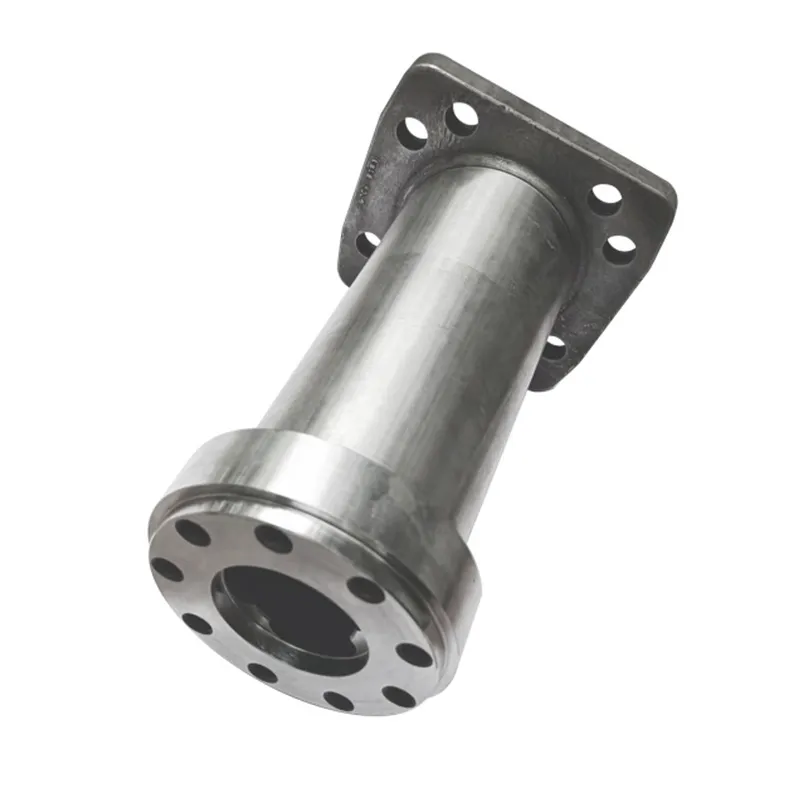
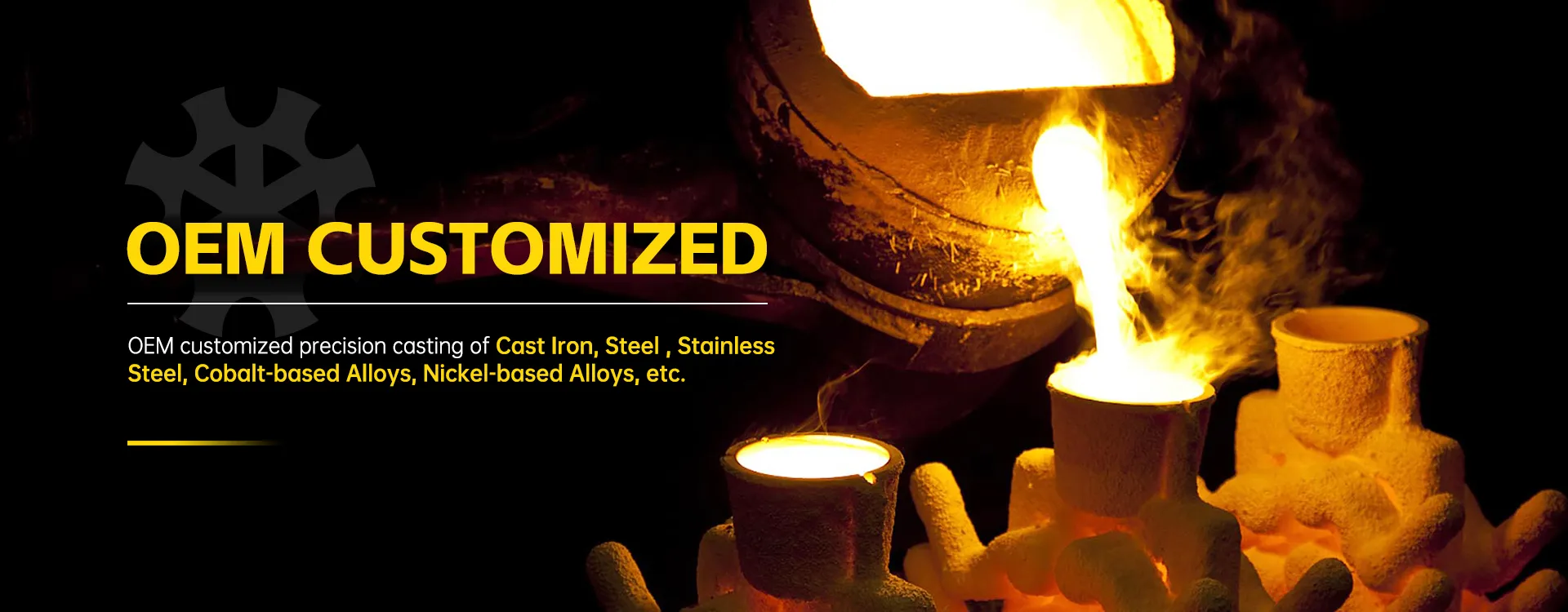
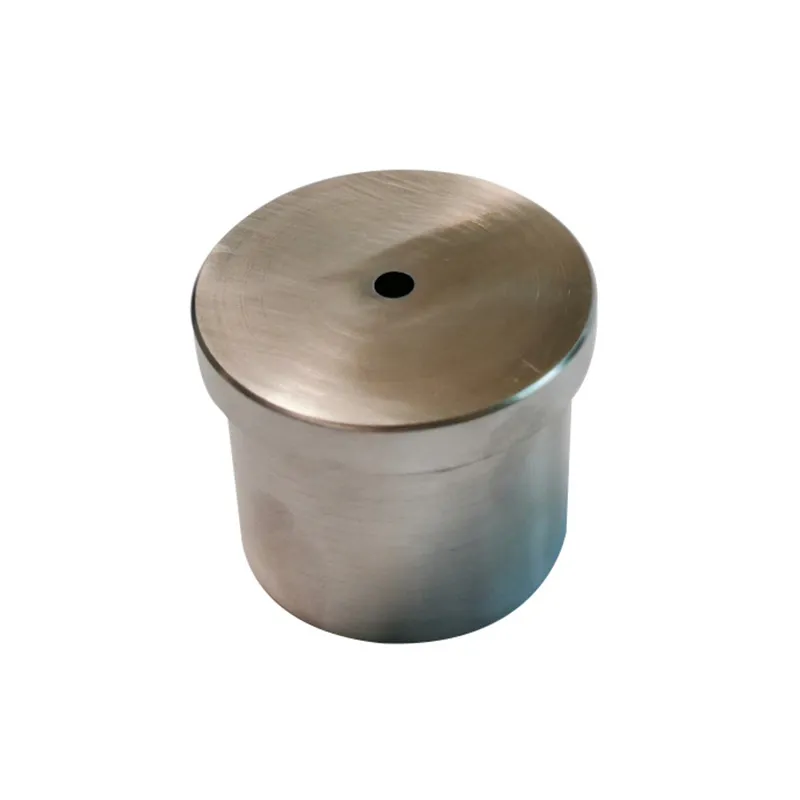
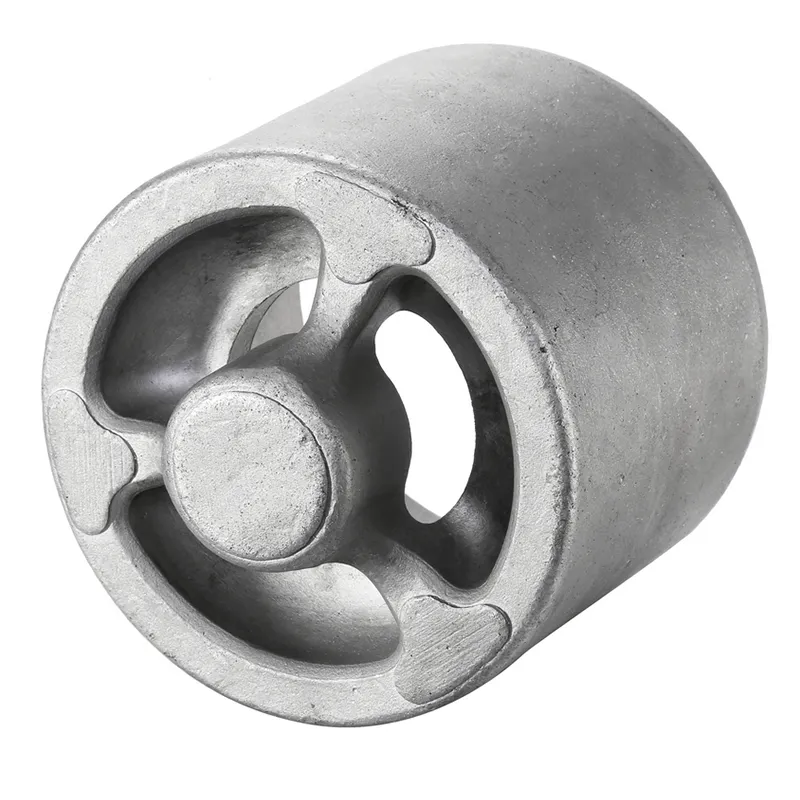
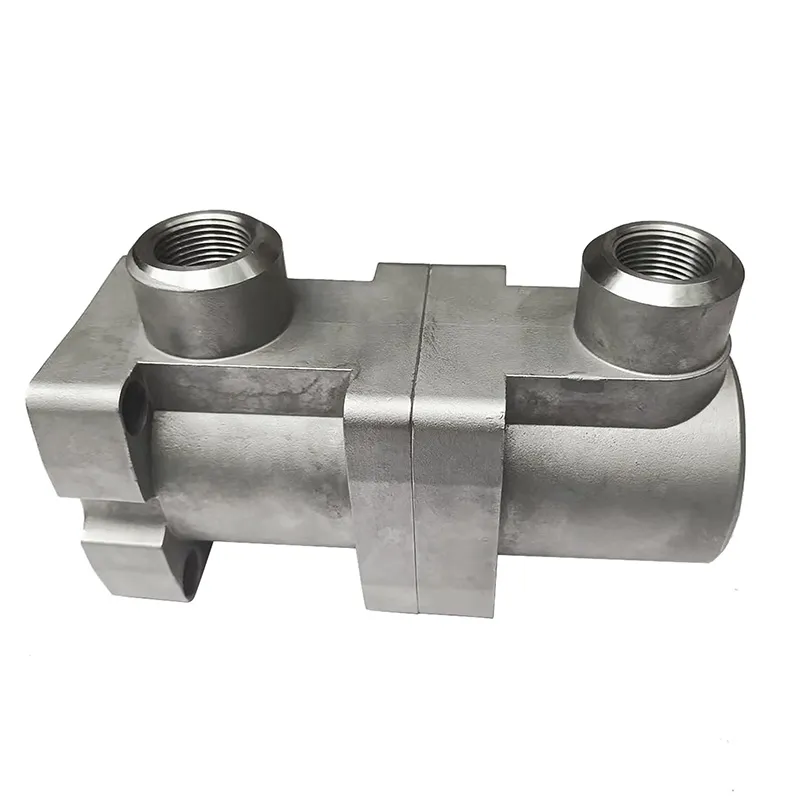
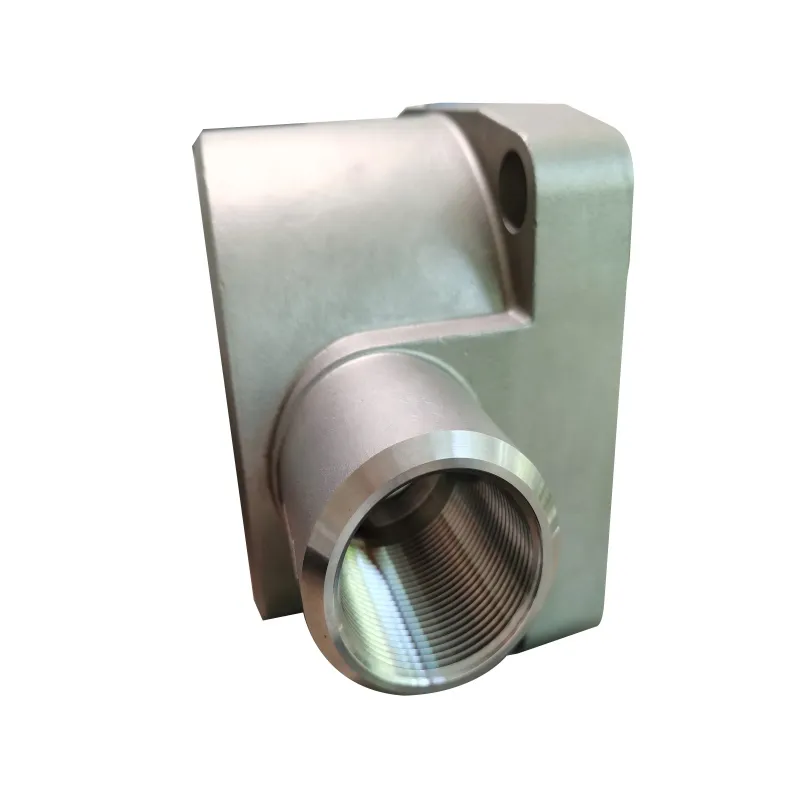
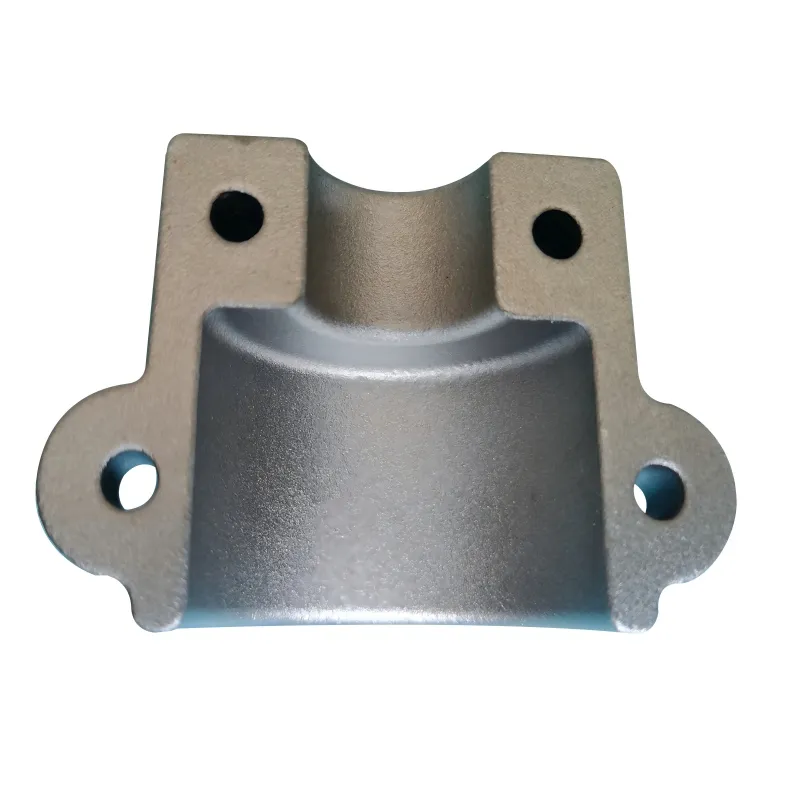
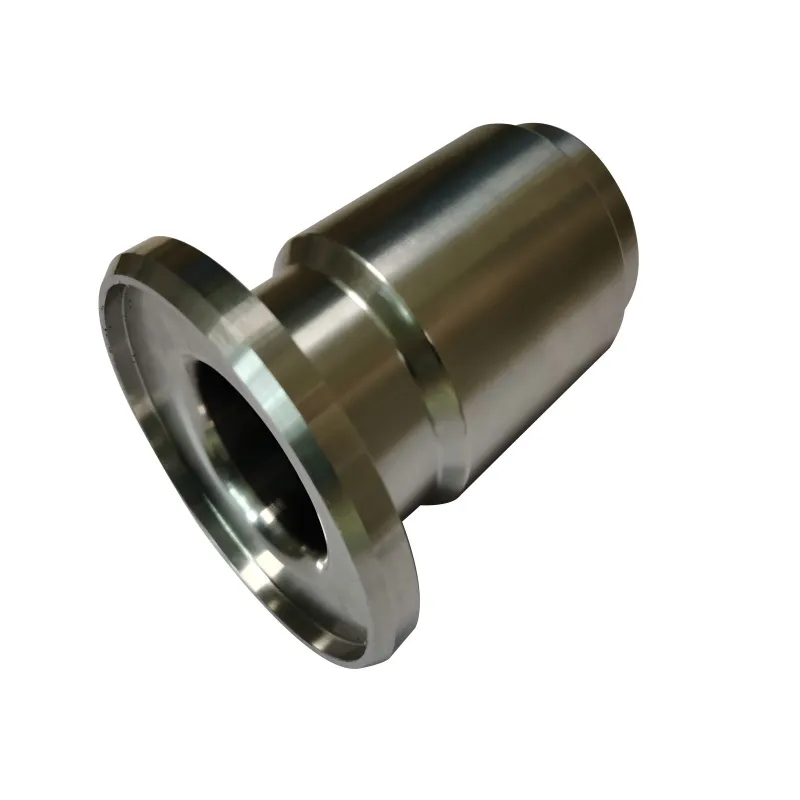
When you hear 'ductile iron casting', the first thing that probably comes to mind is that nodular graphite structure, the spheroids that give it the flexibility. But in the foundry, that's just the starting point. The real challenge isn't achieving nodularization—most decent foundries can manage that with a MgFeSi treatment. It's controlling everything that happens before and after that moment to get a casting that doesn't just pass a lab test, but performs in the field without cracking under pressure or failing prematurely from subsurface shrinkage. I've seen too many specs that just call for ductile iron and assume Grade 60-40-18 is a given. It's not. The difference between a sound casting and a scrap piece often lies in the gating system design, the cooling rate in the mold, and even the inoculant fade time—details that don't make it to the material certificate.
The Misunderstood Role of Inoculation and Mold Interaction
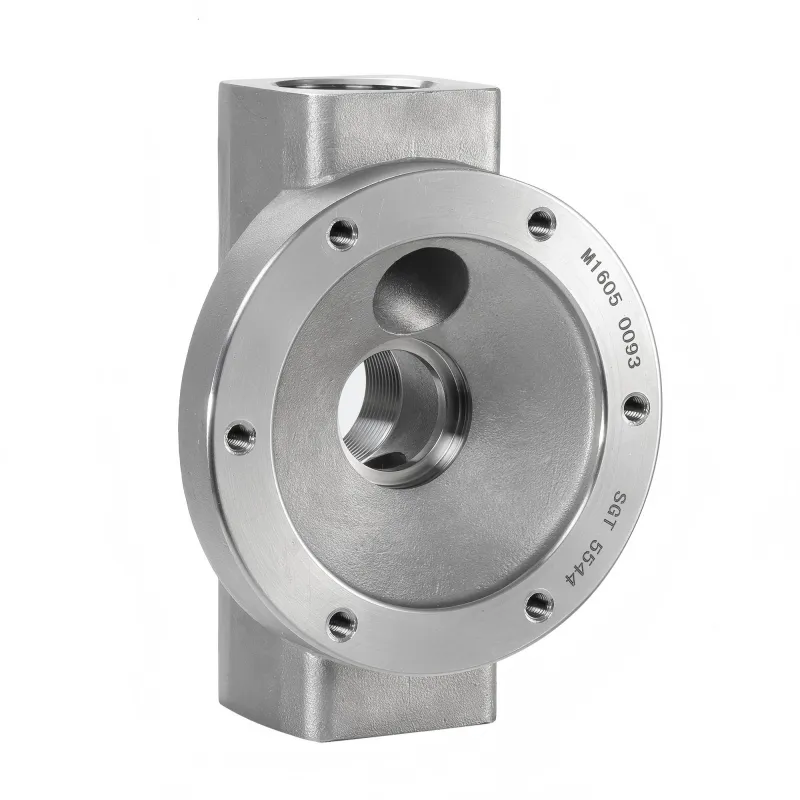
Let's talk inoculation. It's not a one-shot deal post-treatment. Late stream inoculation is standard, sure, but if your mold is a cold, dense resin sand, you're fighting a different battle. The rapid chilling can promote carbides, especially in thin sections, even with good inoculation. I recall a batch of hydraulic valve bodies we did, maybe five years back. The chemistry was perfect, treatment was textbook. But we had persistent hardness issues on the flange faces. Turned out the shell molding process we were using—a specialty of shops like Qingdao Qiangsenyuan Technology Co., Ltd.(QSY) who have deep experience with shell mold casting—was actually cooling the metal too fast in those specific areas. We had to tweak the mold coating, switch to a more potent inoculant containing bismuth, and adjust pouring temperature by a mere 15°C. That small window made the difference between acceptance and rejection. It's this kind of process-specific nuance you only learn by running production and seeing the patterns in failure reports.
This ties into a broader point about partnering with a foundry. You don't just want someone who can pour ductile iron. You need a partner that understands the entire manufacturing chain. For instance, if a casting requires complex internal channels and later CNC machining for precision sealing surfaces, the foundry's approach to core assembly and how they design for minimal residual stress becomes critical. A shop that only does casting might not factor in the machining stresses that reveal hidden porosity. A vertically integrated operation, like the one detailed at https://www.tsingtaocnc.com, which handles both casting and machining, inherently designs with the next step in mind. They know where to place feeders not just for soundness, but also to leave good, consistent stock for the machine shop, avoiding hard spots that destroy tools.
Speaking of machining, that's another area where ductile iron's reputation for good machinability can be misleading. Yes, it's better than gray iron in terms of tool life, generally. But the machinability of a 65-45-12 grade can vary wildly based on the pearlite/ferrite ratio in the microstructure. A part that's mostly ferritic will gum up tools, while one with too much pearlite (especially if it's coarse) wears inserts down fast. The foundry needs to control the cooling cycle and possible subsequent annealing to hit the right structure for machining, not just for tensile strength. It's a balancing act.
Gating and Feeding: Where Theory Meets the Floor
Textbook gating ratios are a safe starting point, but they often fail in practice for complex geometries. The goal is a tranquil fill to avoid slag and dross entrainment, but also to direct the hottest metal to the sections that need feeding most. For a heavy-section ductile iron casting, like a gear blank or a pump housing, you're dealing with significant shrinkage. It's a feeding problem, but it's also a graphite expansion problem. The expansion during solidification can compensate for shrinkage, but only if the mold is rigid enough to contain it. If the mold wall moves, you get shrinkage porosity. That's why the choice between green sand and chemically bonded sand (like furan or phenolic urethane) isn't trivial. For high-integrity parts, the higher rigidity of chemically bonded systems is often worth the extra cost.
We learned this the hard way on a project for a compressor bracket. It was a relatively simple shape, but with one thick hub section. We used a standard pressurized gating system in green sand. The castings passed X-ray, but in proof testing, a few failed at the hub. The defect wasn't classic shrinkage; it was more of a dispersed microporosity. The mold wall had yielded slightly, just enough to prevent a pipe but not enough to ensure full density. We switched to a furan sand mold for that section only (a costly but necessary change) and implemented a more aggressive chilling strategy right next to the hub in the mold. Solved the issue. The takeaway? You can't just design a gating system in isolation. You have to design the mold stiffness and cooling conditions around it.
This is where decades of patternmaking and mold engineering experience pay off. A company with a long track record, say over 30 years as mentioned in QSY's operational history, has built a mental library of these correlations. They've seen what works for a manifold versus a wheel hub. This tacit knowledge informs their initial process design, preventing a lot of trial-and-error scrap. It's not something you can easily codify into a software simulation, though simulation helps narrow the options.
Material Nuances: It's Not Just Iron and Carbon
Ductile iron isn't a single material. The standard ASTM grades (60-40-18, 65-45-12, 80-55-06, etc.) are defined by minimum tensile and yield strength and elongation. But the unmentioned variables—impact resistance at low temperature, fatigue strength, thermal conductivity—are heavily influenced by trace elements and heat treatment. For example, manganese. In steel, it's a strengthener. In ductile iron, high Mn (above 0.3% or so) segregates to the cell boundaries and promotes pearlite, which is fine, but it can also form carbides that hurt toughness and machinability. You have to keep it low, which often means using higher-purity pig iron or steel scrap.
Then there's copper and tin, used as pearlite promoters for higher strength grades. But they must be added with precision. Too much, and you risk reverse chilling or excessive hardness. I've seen a batch of castings meant to be 80-55-06 come out closer to because the tin addition was miscalculated. They were strong as hell, but brittle. They had to be re-annealed, which added cost and cycle time. It's a reminder that furnace chemistry control is a daily, hourly discipline.
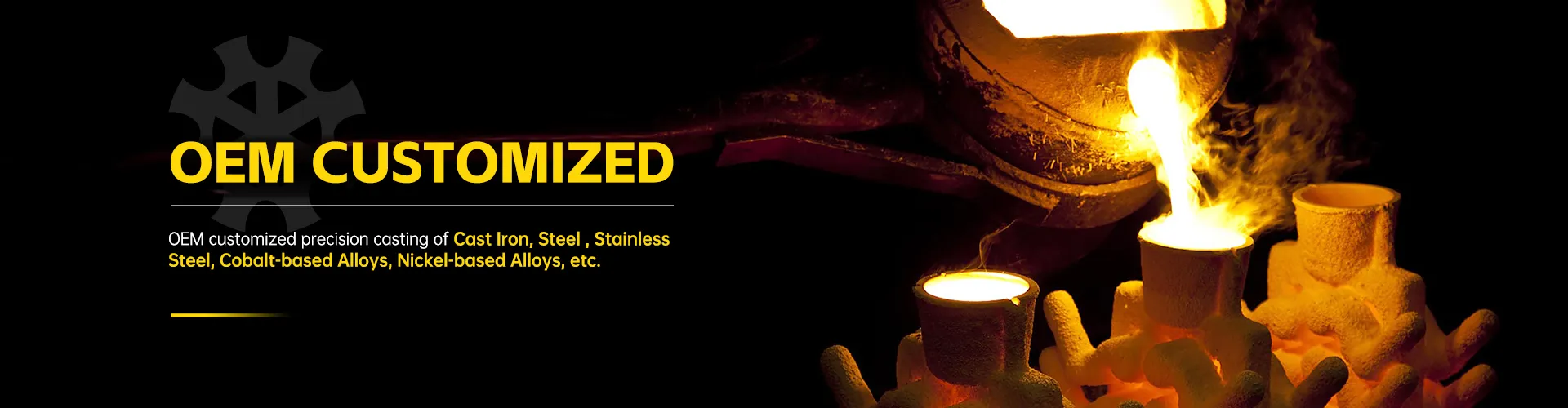
And this is before you even consider special alloys. While standard ductile irons cover most industrial needs, sometimes you need alloyed ductile iron for wear or heat resistance—adding nickel, chromium, or molybdenum. Or, the application demands a completely different material family, like the cobalt-based alloys or nickel-based alloys that some advanced foundries handle. The core principles of sound casting still apply, but the melting, treatment, and pouring practices become even more critical. The margin for error shrinks. A foundry that successfully manages these exotic materials likely has the rigorous process controls needed to make exceptional standard ductile iron castings.
The Reality of Dimensional Tolerances and Finishing
Another practical headache is holding dimensions. Ductile iron has a significant patternmaker's shrinkage allowance, typically around 0.8-1.0%. But it's not uniform. A long, flat casting will warp differently than a compact, cubic one. The pattern itself has to be corrected for this expected distortion, which is more art than science. We use 3D scanning on first-article castings to compare to the CAD model, then iteratively adjust the pattern. It's time-consuming.
Surface finish is another spec that gets glossed over. A clean, smooth as-cast surface isn't just about aesthetics; it reduces cleaning time, improves coating adhesion, and can be a fatigue life factor. The fineness of the molding sand (AFS number) and the type of mold coating are key. A rough, burned-on sand surface often indicates a pouring temperature that's too high, or a sand with low refractoriness. But sometimes, a slightly rougher surface in non-critical areas is a trade-off you accept to ensure complete filling of thin sections. It's a judgment call.
This is where the full-service model shows its value. When the same entity is responsible for the casting and the subsequent CNC machining, they take a holistic view of the part. They might decide to leave an extra 2mm of stock on a face that's prone to sand inclusion, knowing their machine shop can clean it up reliably. They design the casting layout and gating to minimize cleanup labor. This integration eliminates the finger-pointing that can happen between separate casting and machining vendors when a problem arises. The focus stays on delivering a finished, functional component.
Looking Back and Moving Forward
After years in this field, you start to see ductile iron not as a commodity material, but as a system. The system includes the charge materials, the treatment process, the mold design and materials, the pouring practice, and the post-casting operations. A weakness in any link shows up in the final part, sometimes immediately, sometimes months later in the field. The best foundries don't just operate these steps; they understand the cause-and-effect relationships between them.
That's why when evaluating a supplier, I look less at their marketing claims and more at their problem-solving approach. Do they have detailed process sheets for each job? Can they explain why they chose a certain feeder size or pouring temperature? Do they document deviations and outcomes? A technically competent partner, like the one described in the introduction with three decades of focus on shell mold casting, investment casting, and machining, usually has this discipline ingrained. Their website, tsingtaocnc.com, hints at this breadth of capability, which suggests they've had to solve a wide array of technical challenges across different processes and materials, from cast iron and steel to those special alloys.
In the end, successful ductile iron casting is about controlled consistency and informed adaptation. There's no single right way, only the way that produces a sound, functional part for a given design, within cost, and on time. It's a craft backed by science, and it's the accumulation of small, hard-won lessons—often from failures—that separates a proficient foundry from a truly reliable one. The goal is always to make the process predictable, so the performance of the casting in the customer's hands is never in doubt.