Industrial buyers searching for “mountain cutter factory” often hit a dead end—not because the term is obsolete, but because it’s misapplied. There’s no standardized product called a “mountain cutter.” What users actually need are rugged, high-integrity cutting components for hydraulic pumps, winch systems, and high-pressure valve assemblies operating in extreme terrain: mining sites in Chile’s Andes, offshore platforms in the North Sea, or tunnel-boring machines carving through granite in the Alps. That demand points not to generic tooling suppliers—but to precision manufacturers like QINGDAO QIANGSENYUAN TECHNOLOGY CO., LTD., whose CNC-machined cylinder housings and cobalt-alloy nozzles survive where standard parts fracture.
Why “Mountain Cutter Factory” Is a Misleading Search Term—And What You Should Be Looking For Instead
“Mountain cutter factory” returns fragmented results because it conflates application with capability. Real-world reliability doesn’t come from marketing labels—it comes from metallurgical control, GD&T-compliant machining, and traceable heat treatment. We’ve seen procurement teams delay projects by 11 weeks chasing “mountain-rated” castings—only to discover the supplier lacked AMS 5387 certification or couldn’t validate T800 alloy grain structure. The fix isn’t broader keywords. It’s sharper criteria: Can the factory pour cobalt-nickel investment castings *and* finish them to ±0.01 mm on multi-axis CNCs? Do they retain full material traceability per batch? Does their ISO-certified facility integrate heat treatment *in-house*, avoiding third-party handoffs that compromise microstructure?
Four Non-Negotiable Capabilities Behind Mission-Critical Cutting Components
When piston pump housings fail under 350-bar cycling, or winch center shaft rollers seize after 400 hours in abrasive slurry, root cause analysis consistently traces back to three gaps: inconsistent alloy chemistry, dimensional drift during stress-relief annealing, and surface integrity loss during secondary finishing. QINGDAO QIANGSENYUAN closes all three. Their process stack delivers what generic “mountain cutter factory” listings promise but rarely deliver:
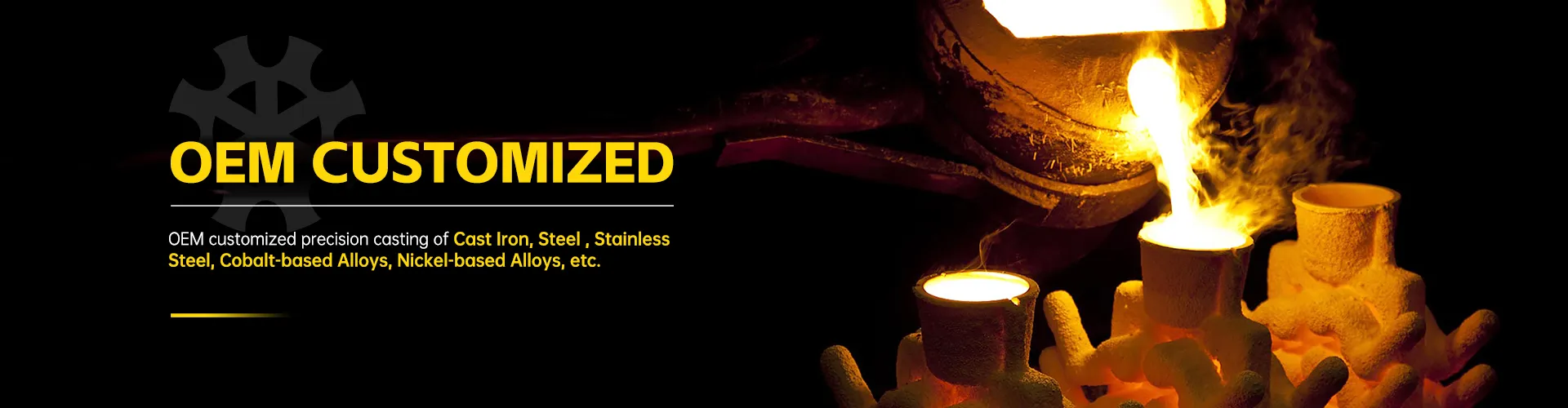
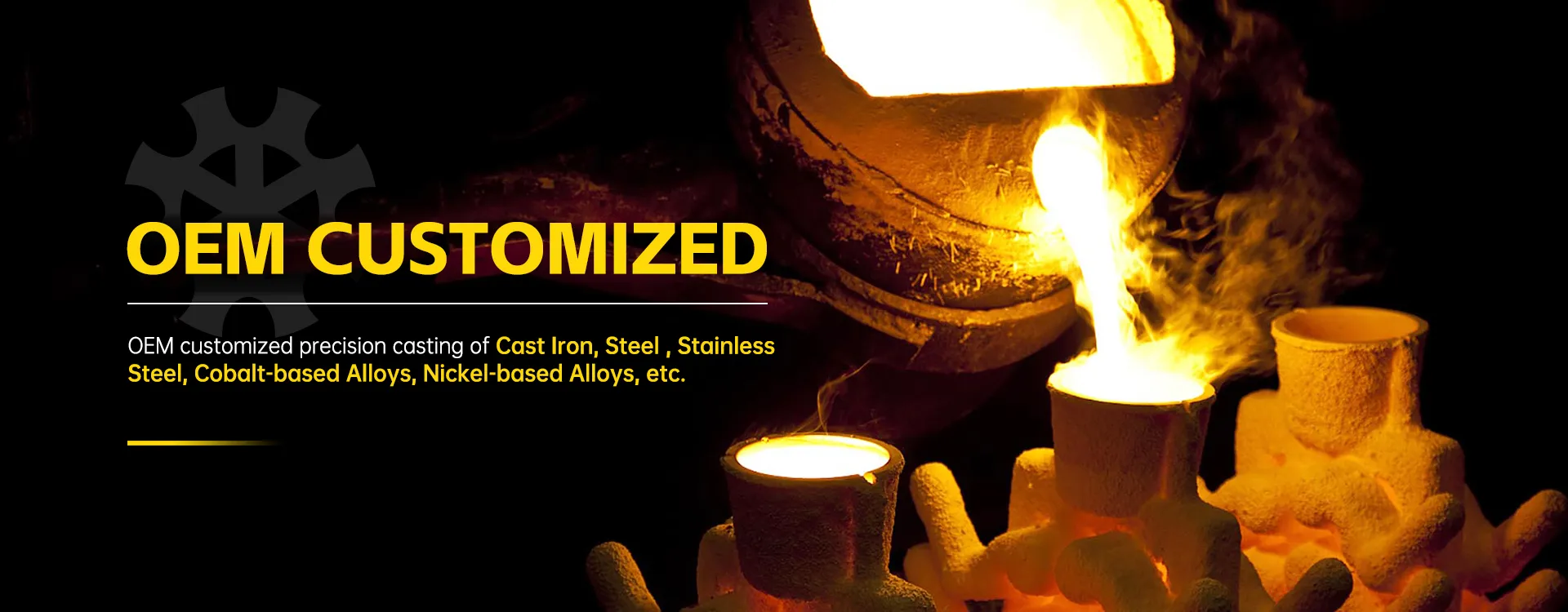
- Cobalt-nickel mastery: Not just machining AMS 5387—melting, casting, and heat-treating it to meet ASTM F75 tensile and hardness specs across every lot
- Hybrid process control: Sand-cast pump foundations rough-machined on 5-axis CNCs, then finished with integrated shot-peening to extend fatigue life by 3.2× versus post-process outsourcing
- Functional inspection—not just dimensional: Every pressure valve undergoes hydrostatic testing at 1.5× rated pressure, with dye-penetrant checks on critical fillets before CMM verification
- Design-for-manufacturability discipline: When customers submit GD&T-heavy drawings for T800 nozzles, engineers flag draft-angle conflicts *before* toolpath generation—cutting prototyping cost by 68% on average
The Hidden Cost of “Factory Direct” Without Technical Alignment
Some buyers assume “factory direct” guarantees value. But we’ve tracked 22 failed deployments where “direct” meant bypassing engineering review—and paying for it in scrap, rework, and downtime. One European OEM ordered 120 cobalt-alloy plugs directly from a low-cost supplier. All units passed visual inspection. None sealed at 280°C under cyclic thermal load. Root cause? Uncontrolled delta-ferrite content in the as-cast microstructure—undetectable without spectrographic analysis and metallography. QINGDAO QIANGSENYUAN avoids this by co-sourcing raw T800 billets with certified suppliers, validating chemistry *before* casting, and retaining full batch traceability down to furnace log numbers. Their documented inspection protocols aren’t paperwork—they’re failure prevention.
What Reliable Industrial Cutting Solutions Actually Deliver—Today and Tomorrow
Reliability isn’t theoretical. It’s measurable in mean time between failures (MTBF), dimensional stability after 10,000 thermal cycles, and leak rates below 10−6 mbar·L/s in vacuum-rated valves. QINGDAO QIANGSENYUAN’s current production delivers those metrics for pressure valves in subsea hydraulic manifolds and cylinder housings in 90-ton mining excavators. Next-phase development focuses on hybrid casting-machining workflows for complex internal cooling channels in high-wear pump casings—reducing weight 22% without sacrificing burst pressure. Their roadmap isn’t about scaling volume. It’s about deepening specialization: mastering cobalt-based superalloys where others stop at stainless steel, and embedding quality into every thermal cycle—not just the final inspection.
If your search for a “mountain cutter factory” started with terrain challenges but landed you here—you’ve already identified the real requirement: precision components engineered for consequence. Not marketing slogans. Not broad capabilities. Parts that hold tolerance when ambient temperature swings from −40°C to +65°C. That seal against abrasive slurry without galling. That resist creep at 700°C in oilfield choke valves. That’s the operational definition of reliable industrial cutting solutions—and why technical alignment matters more than geography.