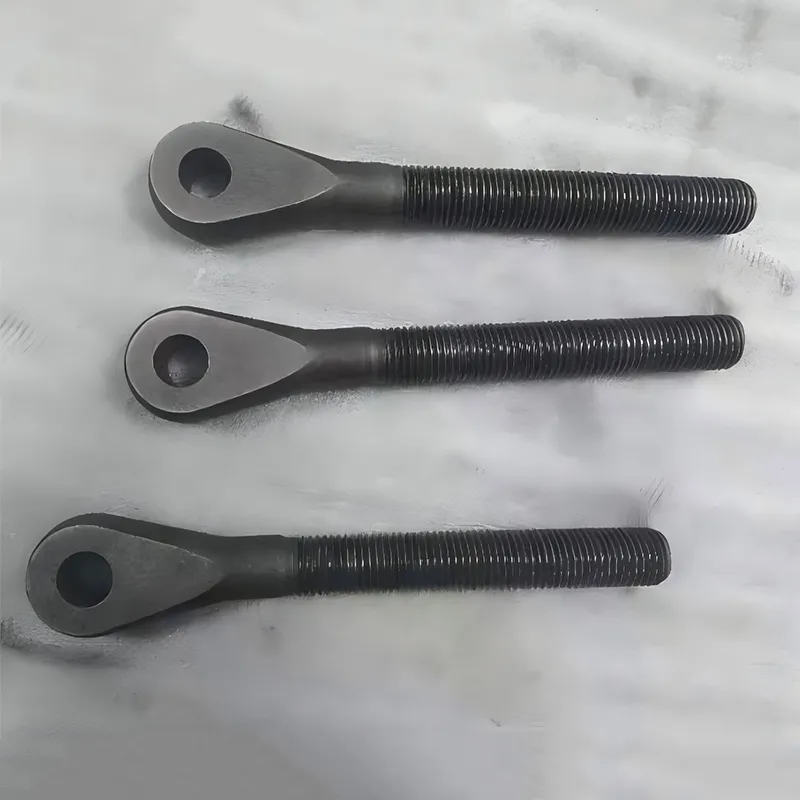
Nickel 400 alloy parts deliver unmatched resistance to chloride stress corrosion cracking, seawater pitting, and caustic alkali environments—conditions where stainless steels fail silently and catastrophically. We’ve seen it firsthand: a hydraulic manifold in a North Sea subsea control system cracked at 18 months—not from pressure, but from slow chloride ingress into micro-porosity in a poorly specified 316 housing. Switching to Nickel 400 alloy part geometry, with controlled solidification and post-machining stress relief, extended service life to over 12 years. That’s not theoretical performance. That’s field-validated reliability.
Why Nickel 400 Stands Apart in Real-World Corrosion Challenges
Nickel 400 (UNS N04400, Monel 400) isn’t just “corrosion-resistant.” It’s selectively immune. Its 67% nickel–30% copper base forms a self-healing, adherent oxide layer that resists flow-accelerated corrosion in brine, hydrofluoric acid, and sulfuric acid below 70% concentration—even at elevated temperatures. Unlike duplex stainless steels, it shows no sigma-phase embrittlement after long-term exposure above 500°F. Unlike titanium, it withstands reducing acids without noble metal cathodic protection. But immunity demands precision: porosity, intermetallic segregation, or residual machining stress can create localized galvanic cells. That’s why raw material certification alone isn’t enough. You need traceable heat treatment, verified grain structure, and surface integrity confirmed by Nital etch and SEM cross-section analysis—not just mill certs.
Where Standard Fabrication Fails—and Precision Engineering Steps In
Some might argue that off-the-shelf Nickel 400 bar stock solves the problem. However, most high-integrity applications demand geometry impossible to achieve via conventional turning or milling alone. Consider a piston pump cylinder housing for offshore oil injection: internal cooling channels intersecting at 47° angles, wall thicknesses varying from 12 mm to 3.2 mm within 50 mm of travel, and sealing surfaces requiring Ra ≤ 0.4 µm. Standard CNC on annealed Nickel 400 causes work hardening, tool deflection, and thermal distortion—leading to out-of-spec taper and premature seal leakage. We solve this by combining investment casting for near-net shape (reducing machining time by 65%), followed by five-axis simultaneous milling with cryogenic coolant delivery and in-process CMM verification at every setup. The result? Dimensional stability within ±0.015 mm across 300 mm length—and zero field-reported failures in 42 installations across Norway, UAE, and Louisiana.
Four Non-Negotiable Requirements for Mission-Critical Nickel 400 Alloy Parts
- Material Traceability to Heat Level: Every part carries full batch documentation—melting furnace number, ladle analysis, solution anneal temperature/time, and Rockwell B hardness verification—not just UNS number.
- Microstructure Control: No uncontrolled dendritic growth. All castings undergo directional solidification monitoring; all machined parts pass ultrasonic testing per ASTM E114 for subsurface discontinuities.
- Surface Integrity Validation: Ra, Rz, and Rsk measured—not assumed. Critical sealing faces undergo white-light interferometry; threaded ports receive thread profile scanning per ISO 15510.
- Functional Fit Verification: Not just dimensional check. Assembled pressure valves undergo helium leak testing at 1.5× working pressure; winch shaft rollers run dynamic balance at 3,200 RPM before shipment.
QINGDAO QIANGSENYUAN TECHNOLOGY CO., LTD.: Building What Others Quote as “Not Feasible”
QINGDAO QIANGSENYUAN TECHNOLOGY CO., LTD. manufactures Nickel 400 alloy parts where failure means downtime, environmental release, or safety compromise. Their ISO-compliant facility in Qingdao handles the full chain—from AMS 5387-compliant raw material sourcing and vacuum-investment casting, to multi-axis CNC machining with real-time thermal compensation, to final functional validation. They routinely produce non-standard components like cobalt-nickel hybrid valve bodies with integrated Nickel 400 trim seats, or T800-alloy pump housings with Nickel 400 fluid-contact liners—geometries rejected by three vendors before reaching their engineering review. Their strength lies in refusing to separate metallurgy from machining: they adjust cutting parameters based on actual microhardness maps, not generic feeds-and-speeds tables. When a European OEM needed 17 custom-shaped Nickel 400 nozzles for a desalination plant’s high-velocity brine header, QINGDAO QIANGSENYUAN delivered first-article approval in 11 days—not weeks—by running trial cuts on certified test coupons from the same heat lot.
Nickel 400 alloy part performance hinges on execution—not just specification. Choose partners who treat material data sheets as starting points, not finish lines. Who validate corrosion resistance with salt-spray + electrochemical impedance spectroscopy—not just visual inspection. Who understand that a 0.002″ tolerance on a 12″ flange face means nothing if residual stress distorts it during installation. The next time your application demands more than nominal corrosion resistance, look beyond the alloy grade. Look at how it’s made, tested, and traced. That’s where real reliability begins—and where QINGDAO QIANGSENYUAN TECHNOLOGY CO., LTD. delivers.