You hear European Investment Casting Federation and the first thought is often a stuffy, bureaucratic body somewhere in Brussels, maybe publishing standards nobody reads. That's the common misperception. In reality, the EICF is a nexus, a quiet but critical force shaping the practical, gritty world of lost-wax casting across the continent. It’s less about dictating rules and more about facilitating the conversations that actually solve problems on the shop floor. Having been in this industry for decades, I've seen its influence not in grand pronouncements, but in the subtle alignment of techniques, material specs, and quality benchmarks that make sourcing a complex stainless steel valve body from a Polish foundry for a German OEM a feasible, reliable process. It provides a common language, which in a field as detail-driven as ours, is everything.
The Practical Backbone: Standards and Real-World Gaps
The EICF’s work on harmonizing technical guidelines is its unsung hero. They don't invent new methods out of thin air; they consolidate the best practices from leading foundries. Take ceramic shell systems. The Federation’s recommended parameters for slurry viscosity and stucco application aren't just numbers in a PDF. They're a starting point that saved us weeks of trial and error when we first set up a new line for high-nickel alloy components. We started with their baseline, then tweaked drying times for our specific humidity—a local adjustment their framework explicitly allows for. That's the key: it's a framework, not a cage.
Where the real test comes is in material certification. The EICF advocates for traceability, pushing for common formats in mill certificates for alloys. This sounds dry until you're the one trying to reconcile a French supplier's cert for 17-4PH stainless with a customer's internal system that uses a slightly different impurity reporting threshold. The Federation’s push for a unified data field structure is slowly, painfully, making that easier. It's not glamorous, but it prevents costly delays and quarrels over chemistry.
However, the gap between the standard and the shop floor is where experience bites. The guidelines might specify a certain pre-heat temperature for molds before pouring a cobalt-based alloy. But they can't account for the thermal mass of your specific furnace car or the slight draft in your foundry affecting ambient temperature. We learned this the hard way on an early aerospace contract—followed the book, but our setup led to a marginal chill in one section of the casting, causing a hairline crack. The standard wasn't wrong; our application of it was too rigid. The lesson was to use the EICF's work as the definitive recipe, but you still need to know how your own kitchen stove behaves.
Networking: Where Deals and Solutions Are Forged
The true value of the Federation often materializes in the corridors during its technical forums, not in the presentation halls. It’s where you bump into a Dutch engineer who solved a shell cracking issue you're currently battling, using a modified binder from a supplier you'd never heard of. This informal tech transfer is priceless. For a company like ours, Qingdao Qiangsenyuan Technology Co., Ltd. (QSY), which has operated at the intersection of investment casting and CNC machining for over 30 years, these connections are vital for staying on the pulse of European quality expectations and technological shifts, even from our base in Asia.
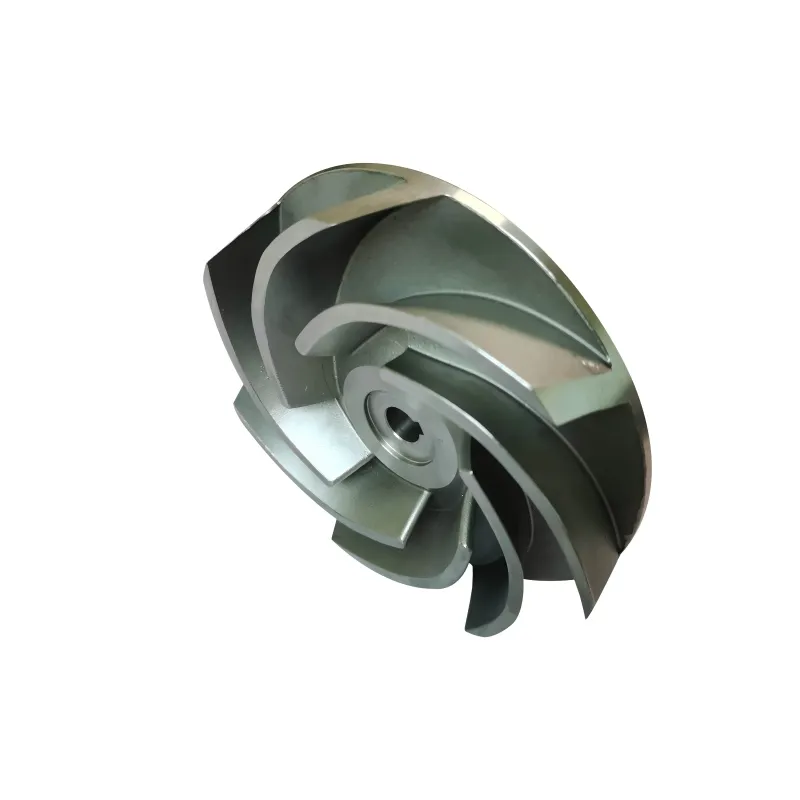
I recall a specific instance where we were developing a complex, thin-wall impeller in a duplex stainless steel. The core support was a nightmare—we were getting consistent distortion. Through a contact made at an EICF-associated event, we were put in touch with a specialist tooling workshop in Italy. Their approach to soluble core design wasn't in any standard, but it was born from a shared understanding of the fundamentals that the Federation helps propagate. That collaboration got the project back on track.
It also demystifies the market. Hearing Spanish foundries discuss their automation challenges with post-casting knockout, or Polish ones share data on energy consumption per ton of cast steel, gives you a brutally honest picture of the continent's competitive landscape. You realize who's leading in efficiency, who's pushing the envelope on near-net-shape tolerances, and where the real cost pressures lie. This isn't market research data; it's peer-to-peer reality.
The Global Context and Supplier Evolution
The EICF is inherently European, but its ripple effects are global. As European OEMs outsource more complex components, they export EICF-influenced quality protocols. To be a credible supplier to that market, you need to understand this ecosystem. This is where our long-term focus at QSY dovetails. Working with materials from cast iron to specialized nickel-based alloys, we've had to align our internal processes with these European-centric expectations to serve global clients effectively. Our website, tsingtaocnc.com, outlines this integrated approach from shell mold casting to precision machining, a response to the demand for vertically controlled quality that European frameworks emphasize.
The Federation's focus on sustainability and the green foundry is another quietly transformative area. Their shared studies on reducing binder consumption in shell building or recycling investment casting slurry aren't just CSR fluff. They translate directly into cost savings and regulatory compliance. We implemented a slurry reclamation process inspired by a case study from an EICF member, which cut our raw material costs for ceramic refractories by a noticeable margin. It paid for the equipment retrofit in under two years.
This creates an interesting dynamic for non-European suppliers. You're not just bidding on a print; you're implicitly bidding on your ability to operate within a certain technical and quality culture. It raises the bar. It forces you to invest in metallurgical labs, 3D scanning for first-article inspection, and detailed process documentation—all things the EICF community takes as a given. It's a tough but necessary evolution.
Missteps and the Limits of a Federation
It's not all seamless. There have been initiatives that felt out of touch. A few years back, there was a big push for a unified digital thread for casting process data—a fantastic idea in theory. But the proposed schema was so comprehensive it would have required massive IT investment from small-to-medium foundries, the backbone of the industry. It stalled. It was a classic case of a perfect, federation-developed solution meeting the imperfect reality of limited capital and legacy systems on the ground. The lesson was that even well-intentioned, collective advancement must be modular and adoptable in stages.
Another limitation is its inherent European focus. While that's its mandate, the global supply chain means best practices are also emerging from the US, Japan, and China. The EICF can sometimes be slow to look outward and incorporate those innovations. For instance, advancements in rapid prototyping for wax patterns via 3D printing were being heavily driven in North America before they became a major agenda item in EICF circles. A more globally attuned perspective would strengthen its role as a definitive knowledge hub.
Yet, these missteps are part of its authenticity. It shows it's a real organization with real debates, budget constraints, and competing priorities among its members. That's more reassuring than a facade of flawless, top-down authority.
Looking Ahead: Integration and Specialization
The future, I think, lies in the deeper integration of casting with subsequent processes, a trend the EICF is now acknowledging more. It's no longer just about producing a sound casting. It's about producing a casting optimized for minimal CNC machining, for specific surface treatments, or for automated assembly. This is where our own model at QSY, combining foundry and machine shop, aligns with the emerging need. The next frontier for the Federation could be developing guidelines for casting design that explicitly account for machining datum, clamping stresses, and post-casting heat treatment distortion—a truly holistic manufacturing view.
Furthermore, the push into extreme alloys for aerospace, energy, and medical devices demands another level of specialization. The EICF's role in creating specialized working groups for cobalt-based alloys or titanium investment casting is crucial. These are areas where the margin for error is vanishingly small, and shared learning on everything from hot isostatic pressing parameters to X-ray inspection standards isn't just helpful; it's a safety and reliability imperative.
So, circling back, the European Investment Casting Federation is far from a mere directory or a standards mill. It's the keeper of a shared technical culture. Its real output isn't documents, but a raised baseline of competence and a network of problem-solvers. For anyone serious in this field, from a veteran in Germany to a team at a place like QSY aiming for the international market, engaging with its output and its community isn't about compliance. It's about staying in the conversation, learning from collective stumbles, and ultimately, delivering parts that don't fail in the field. That's the unspoken, practical goal it serves every day.