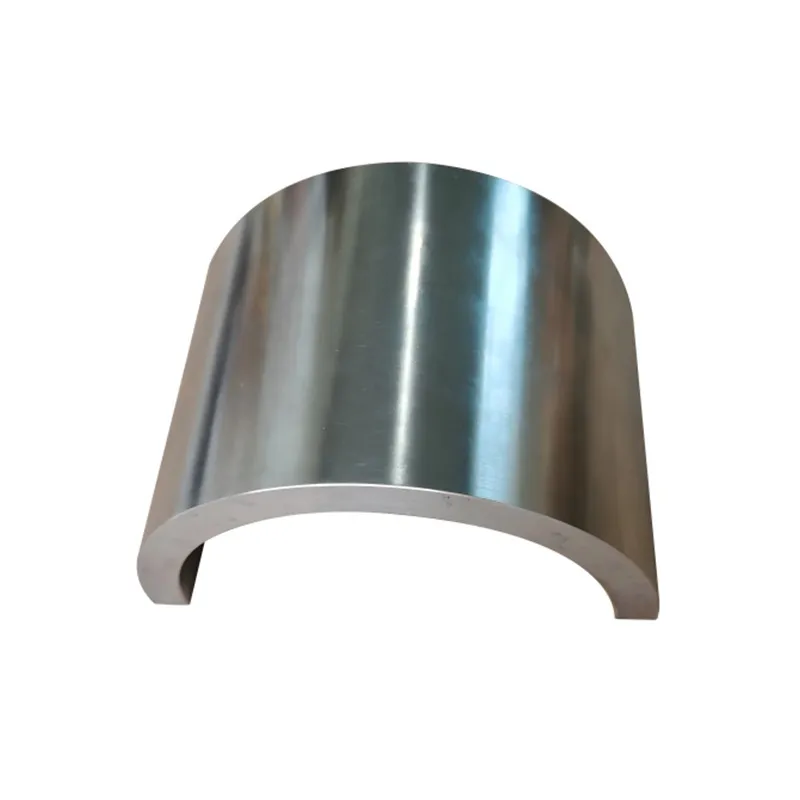
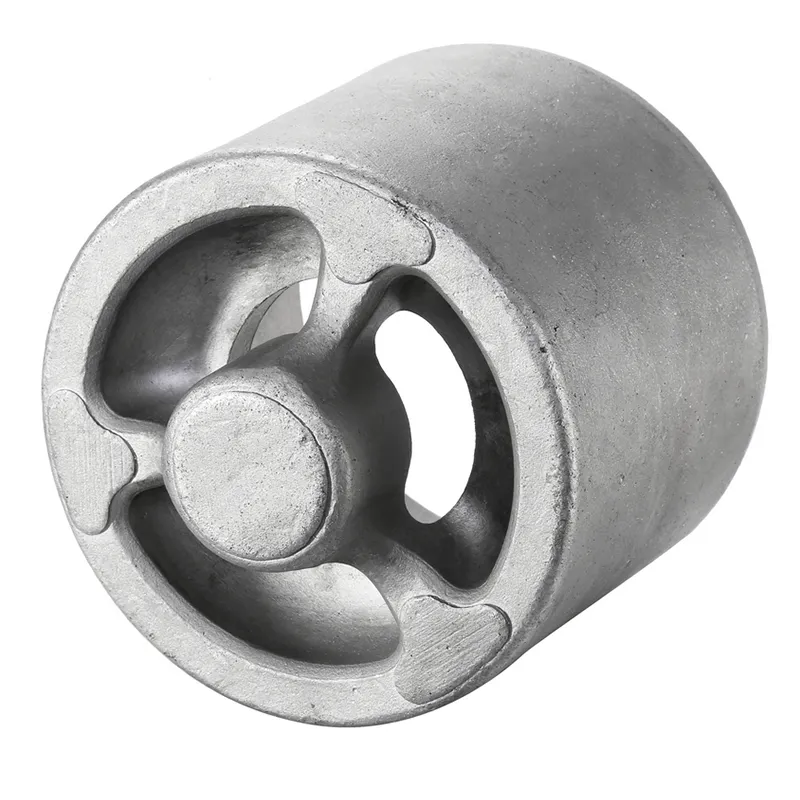
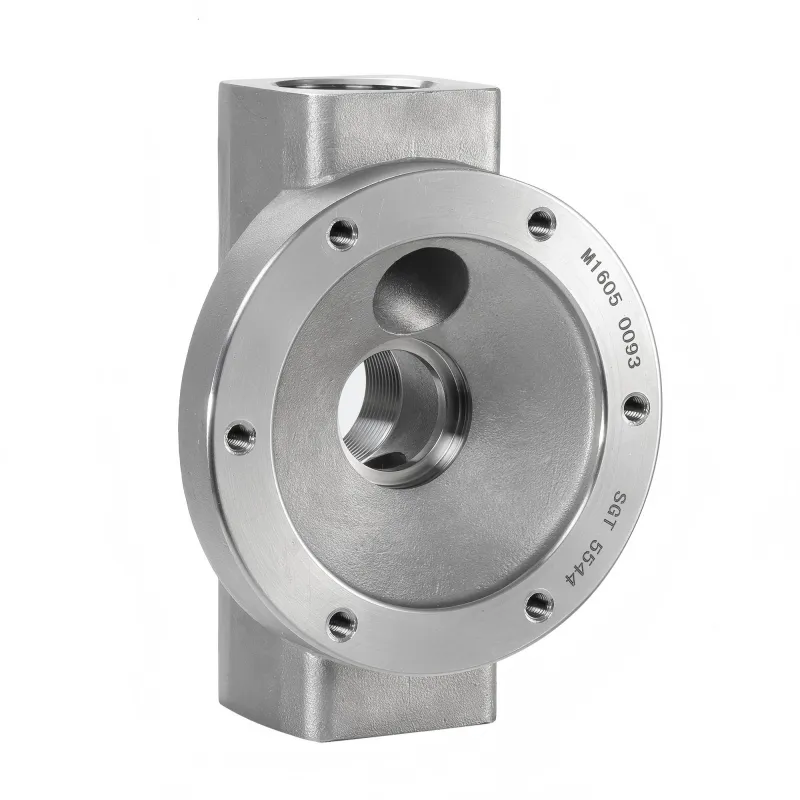
When you hear 'galvanized steel production line guide rails', most people immediately think of corrosion resistance. That's not wrong, but it's a starting point that glosses over the real, gritty challenges. The zinc coating is just one layer of the story; the real test is how that rail performs under constant load, heat, and abrasion for years on end. I've seen too many projects where the spec sheet looked perfect, but the installation and long-term performance told a different tale.
The Core Misconception: It's Just a Coated Rail
The biggest pitfall is treating these guide rails as a commodity item. You can't just order galvanized guide rails and expect them to slot seamlessly into a high-speed pickling or galvanizing line. The substrate steel grade matters immensely. A rail made from a standard mild steel, even with a thick hot-dip galvanized layer, will wear and deform faster under the lateral forces of a moving carriage than one forged from a higher-grade, high-tensile alloy. The galvanizing process itself can induce stresses if the base metal isn't prepared or selected correctly.
I recall a retrofit project for a continuous galvanizing line where the client insisted on using a common structural steel for the new guide rails, prioritizing initial cost. Within eight months, we observed noticeable wear patterns not on the coating, but a slight deformation in the rail profile itself. The zinc was intact, but the rail was subtly failing. The fix was costly—downtime, re-machining, and eventually replacing them with rails made from a more suitable, hardened steel before galvanizing. The lesson? The coating protects against rust; it doesn't compensate for poor mechanical properties.
This is where the expertise of a long-standing foundry and machining partner becomes critical. A company like Qingdao Qiangsenyuan Technology Co., Ltd. (QSY), with their 30 years in casting and machining, understands this material interplay. They wouldn't just see a rail; they'd consider the entire service environment—thermal cycling from the process heat, chemical exposure from pre-treatment zones, and the impact loads—before recommending a substrate material, whether that's a specific cast steel grade or a forged alloy.
Precision is Non-Negotiable, Even After Galvanizing
Another common oversight is assuming the galvanizing process won't affect the critical tolerances of the rail. Hot-dip galvanizing involves immersion in molten zinc at around 450°C. This can cause thermal distortion, and the coating adds thickness—typically between 70 to 150 microns. If the rail isn't machined to a pre-galvanizing oversize tolerance that accounts for this coating thickness, your final dimensions will be off.
We learned this the hard way on an assembly line for automotive parts. The galvanized steel production line guide rails were supposed to have a flatness tolerance of 0.1mm per meter. They were precision-ground beautifully before shipping for galvanizing. When they came back, the coating was flawless, but the flatness was out by nearly 0.5mm in sections due to uneven cooling and stress relief. The entire batch had to be re-straightened using hydraulic presses in a controlled manner, a delicate operation to avoid cracking the zinc layer.
This is where integrated manufacturing capability is a godsend. A supplier that handles both the CNC machining and has deep experience with material behaviors, like QSY, can manage this holistically. They can machine the component, often oversee or advise on the galvanizing process parameters for their specific castings, and then perform post-galvanizing verification and corrective machining if necessary. This control loop is something you don't get from a trader or a simple fabricator.
The Devil in the Details: Mounting and Alignment
Even the best rail is useless if installed poorly. The mounting surface—often the structural steel frame of the production line—must be prepared. We've fought battles with shimming and grinding on-site because the supporting beams weren't leveled properly before rail installation. The galvanized surface also requires careful handling; welding on or near it without proper procedures will destroy the zinc coating in the heat-affected zone, creating a future corrosion hotspot.
A practical tip is to specify machined mounting holes or slots in the rail, and use isolation pads or specially coated shims to avoid galvanic corrosion between the galvanized rail and a carbon steel frame. Don't just weld a bracket directly to the rail's running surface. I've seen it done, and it's a permanent repair waiting to happen. The team at tsingtaocnc.com often provides detailed mounting drawings and material compatibility advice for this very reason, drawn from their machining and assembly experience.
Alignment is another beast. Using a traditional spirit level isn't enough for lines longer than a few meters. You need optical or laser alignment tools. The goal isn't just level, but achieving a consistent, smooth running profile for the entire length, which might involve intentional micro-camber or compensation for beam deflection under load. This is where the inherent straightness and consistency of the rail as-cast and machined becomes the foundation for success.
Material Selection Beyond Plain Steel
While we're focused on galvanized steel, it's worth a brief divergence. For certain sections of a production line—like near intense heat sources or in extremely abrasive transfer zones—sometimes a different base material is smarter before galvanizing. For instance, a through-hardened alloy steel or even a stainless-steel substrate (which is then galvanized for additional protection in a mixed-chemical environment) can offer a better lifecycle cost.
This is the advantage of working with specialists who have a broad material portfolio. QSY's work with special alloys like nickel-based or cobalt-based alloys for extreme environments informs their approach to more common materials. They understand metallurgy. They might suggest, for example, using a spheroidal graphite cast iron for certain non-critical guide rail sections where vibration damping is more important than ultimate tensile strength, and then galvanizing it. It's this kind of applied material science that solves problems rather than just fulfilling an order.
For the core guide rails in the main galvanizing section itself, a balanced medium-carbon steel, properly heat-treated (normalized or quenched and tempered) for dimensional stability and wear resistance, then hot-dip galvanized, is often the sweet spot. It provides the core strength to resist deformation and the sacrificial layer to fight the corrosive atmosphere.
Long-Term View: Maintenance and Inspection
Nothing lasts forever, not even a well-made galvanized rail. The key is predictable degradation. A good rail system allows for inspection and maintenance. This means designing access points for measurement. We implement simple but effective routines: annual checks of coating thickness with a magnetic gauge at fixed points, looking for wear patterns on the running surface, and checking for any cracking or peeling of the zinc, especially at weld points or sharp edges.
The failure mode is rarely the zinc wearing through uniformly. It's usually localized—at a joint, a mounting point, or where debris has been trapped and caused abrasion. Having a relationship with your fabricator means you can source matching replacement sections or wear strips. A company with QSY's profile isn't just a vendor; they become a technical repository for your line. They have the casting patterns and machining programs, so getting a perfectly matching replacement part in five or ten years is straightforward, avoiding costly line re-engineering.
In the end, specifying galvanized steel production line guide rails is an exercise in systems thinking. It's not a purchase; it's an investment in the reliability of your entire line's movement system. It demands attention to material science, precision engineering, installation craft, and lifecycle planning. Cutting corners on any of these stages inevitably leads to higher costs down the line in downtime, repairs, and lost production. The goal is to install it and, apart from routine checks, forget about it for a decade or more. That peace of mind comes from the depth of understanding behind the component, not just its surface finish.