When you hear 'gravity casting', a lot of folks, even some in the trade, picture a simple pour. Just tilt a ladle and let gravity do the work, right? That's the biggest oversimplification. It's not about being primitive; it's about control. The real art—and the headache—lies in managing the thermal dynamics and the mold design to get a sound casting without the pressure assist. I've seen too many rushed jobs where the metal looks fine on the surface, but the internal structure is a mess, leading to failures down the line. It's a process that demands patience and a deep understanding of how your specific alloy behaves as it cools under nothing but its own weight.
The Core Principle and Where It Fits
At its heart, gravity casting is a permanent mold process. You've got a reusable mold, usually steel or iron, and you rely on gravitational force to fill the cavity. No pumps, no high pressure. This sets it apart from high-pressure die casting immediately. The fill is slower, more laminar if you get it right. That's key for certain materials. For instance, with some aluminum alloys or certain copper-based ones, a turbulent fill can trap oxides and gas, creating weak spots. Gravity pouring, when the gating system is designed correctly, can minimize that.
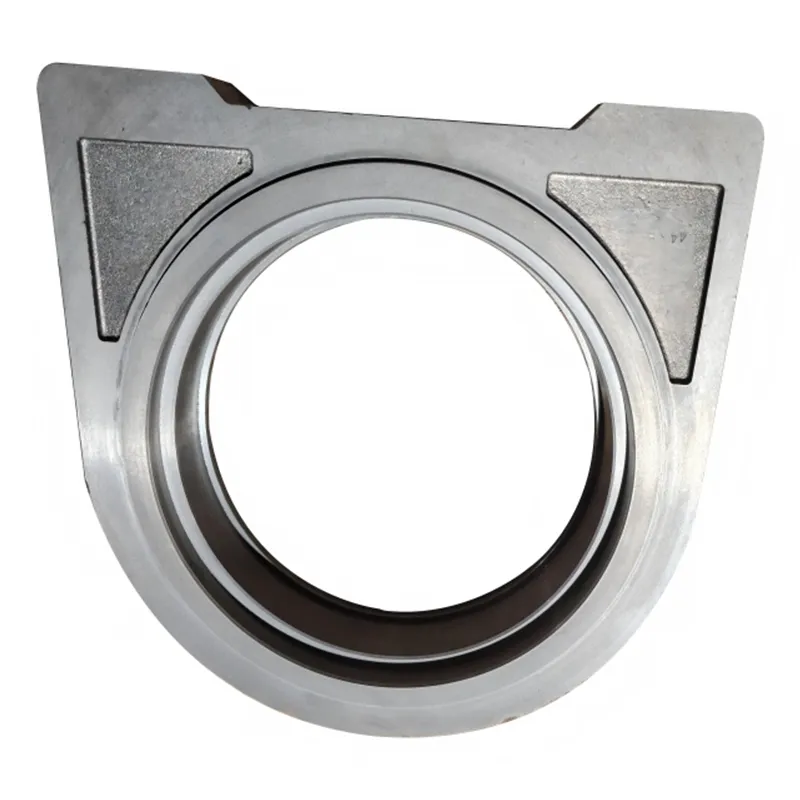
But it's not a one-size-fits-all solution. Where does it shine? For medium-volume runs of parts that need better mechanical properties than what you typically get from high-pressure die casting. Think automotive components like suspension arms, some engine brackets, or larger housings. The slower solidification under gravity can lead to a denser, less porous structure. However, the trade-off is cycle time and the upfront cost of a good, durable permanent mold. It's a calculation: will the superior integrity of the part justify the slower production rate compared to die casting?
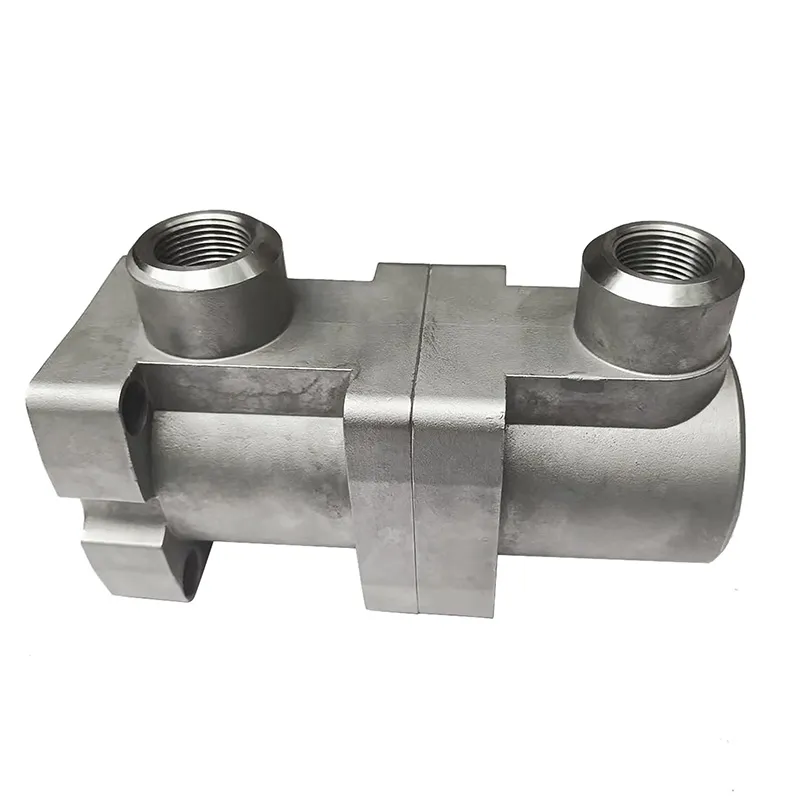
I remember a project for a pump housing, a fairly complex shape with varying wall thicknesses. The client initially wanted die casting for speed. We argued for gravity casting in a semi-steel mold. The debate was about longevity. Die casting would have been faster, but the potential for micro-porosity in the thicker sections was a risk for a pressure vessel. We ran prototypes both ways. The gravity-cast part, after machining, showed consistent integrity in pressure testing. The die-cast one had a higher scrap rate due to leakage. That slower fill and directional solidification made the difference.
The Devil in the Details: Mold Design and Thermal Management
This is where the 'hand of the craftsman' comes in, even today. The mold design for gravity casting is everything. The gating—how the metal enters the cavity—isn't just a channel; it's a thermal and hydraulic control system. You need to design it to minimize turbulence but also to ensure the thickest sections are fed properly as the metal shrinks. I've spent hours with flow simulation software, only to have to tweak the real mold anyway because the software's material models weren't perfect for our specific batch of alloy.
Then there's the mold temperature. This is a constant battle. Too cold, and the metal will chill too fast, leading to mistruns or cold shuts. Too hot, and you risk soldering (the casting sticking to the mold), slower cycles, and a grainy, weak structure. You develop a rhythm. Spray, pour, cool, eject, spray again. The type of die coat you use—a ceramic-based spray—affects heat extraction and release. Getting that consistent is more art than science sometimes. A company that has this down pat, like Qingdao Qiangsenyuan Technology Co., Ltd. (QSY), leverages decades of this tacit knowledge. You can see it in the consistency of their castings. They've been at this for over 30 years (https://www.tsingtaocnc.com), and that experience translates directly into how they manage mold thermal cycles across different materials, from cast iron to nickel-based alloys.
A failure that taught me a lot was with a simple-looking lever arm in ductile iron. The mold design looked textbook. But we kept getting shrinkage porosity in a critical load-bearing hub. We tried increasing the pouring temperature, adding risers... nothing worked. Finally, an older foundryman suggested we insert a small, high-conductivity copper chill pin in the mold wall opposite the problem area. It wasn't in any manual we had. It forced that specific spot to solidify first, directing shrinkage back to the riser. Problem solved. It was a brutal lesson in localized thermal control.
Material Choices and Limitations
Gravity casting is versatile, but not infinitely so. Aluminum and magnesium alloys are common, often for their good fluidity. Certain brasses and bronzes pour beautifully. Cast iron and steel are also done via gravity processes, though often in sand molds rather than permanent metal molds due to their extreme pouring temperatures, which would destroy a steel mold quickly. When you look at a specialist like QSY, their expertise spans shell mold and investment casting alongside their machining capabilities. This is telling. Gravity casting in permanent molds is one tool. For super high-temperature alloys or incredibly complex geometries, they might shift to investment casting. The choice is always driven by the material's behavior and the part's final requirement.
The limitation with permanent mold gravity casting is really about the mold material's tolerance for heat. You're not going to pour molten stainless steel at 1500°C+ into a steel mold repeatedly—it would warp and degrade rapidly. So, for the really high-melt-point stuff, you see a move to one-off ceramic shell molds (investment) or sand molds, where the mold is sacrificed. The 'gravity' principle might still apply in the pour, but the mold system is different. This is a crucial distinction often glossed over.
We experimented once with a cobalt-based alloy part. The client wanted the wear resistance but hoped for a permanent mold for cost. The trial was a disaster. Even with advanced ceramic coatings, the thermal shock on the mold steel was catastrophic after a few pours. We had to go back and recommend a precision investment casting route, which they ultimately used. You have to know the boundaries of the process.
The Integration with Machining: A Seamless Flow
Almost no gravity-cast part is finished as-cast. You've got to machine the critical faces, drill holes, add threads. This is where the casting process needs to be designed with machining in mind. Consistency is king for the machinist. If your casting process yields variations in wall thickness or hard spots from uneven cooling, you'll burn through tools and get dimensional scatter. A well-run gravity casting process should produce predictable, uniform stock allowances.
This is the advantage of a vertically integrated operation. A company that does both the casting and the CNC machining under one roof, like QSY, has a feedback loop that's invaluable. The machining team tells the foundry if a certain lug is always too hard, or if a datum face has too much variation. The foundry can then adjust the mold cooling or the pour sequence. It's this integration that turns a good casting into a reliable, precision component. Their website (https://www.tsingtaocnc.com) highlights this synergy—it's not just a list of services; it's a description of a connected manufacturing flow.
I recall a batch of aluminum housings where the machining yield suddenly dropped. The machinists were complaining about rapid tool wear on one specific interior surface. The casting looked fine. We traced it back to a change in the die coat spray pattern. It was causing that area of the mold to run slightly cooler, creating a finer, harder microstructure on that face of the casting. A slight adjustment to the spray robot's path fixed it. Without the casting and machining teams talking daily, that issue could have dragged on for weeks.
Common Pitfalls and How to Avoid Them
Beyond the technical stuff, there are practical pitfalls. One is over-complicating the mold to minimize machining. Sometimes it's cheaper to cast a simpler shape and machine away more metal than to build and maintain an insanely complex mold with fragile cores. Another is neglecting the mold maintenance schedule. Cracks, erosion in the gates, built-up die coat—these slowly degrade quality. You need a strict regimen for inspection and refurbishment.
The biggest pitfall, in my view, is treating gravity casting as a 'low-tech' option and therefore under-investing in process control. Monitoring pour temperature precisely, controlling mold temperature zones, using good quality, consistent charge material—these are not places to cut corners. The gravity process is forgiving in some ways, but it punishes inconsistency harshly. The defects might not show up until final testing or, worse, in the field.
Finally, communication with the designer is critical. You often need to educate them on draft angles, optimal wall thickness transitions, and the importance of uniform sections for this process. A design perfect for forging or fabrication might be a nightmare to cast soundly. Early involvement is the best way to avoid a problematic project. It's about setting realistic expectations based on the physics of metal flowing and solidifying under its own weight—a deceptively simple concept that, in practice, requires a depth of experience to master.