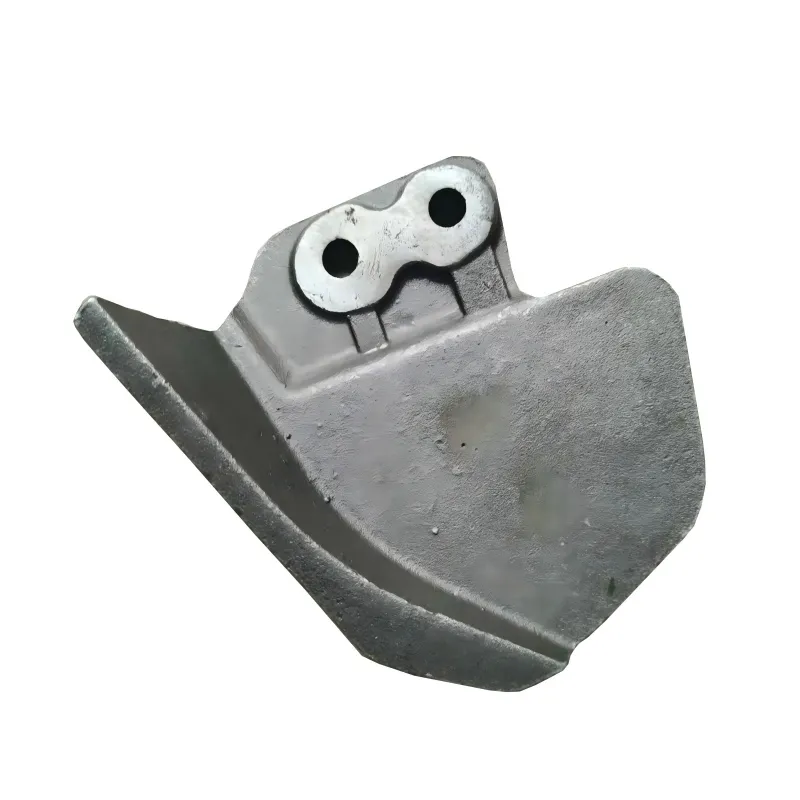
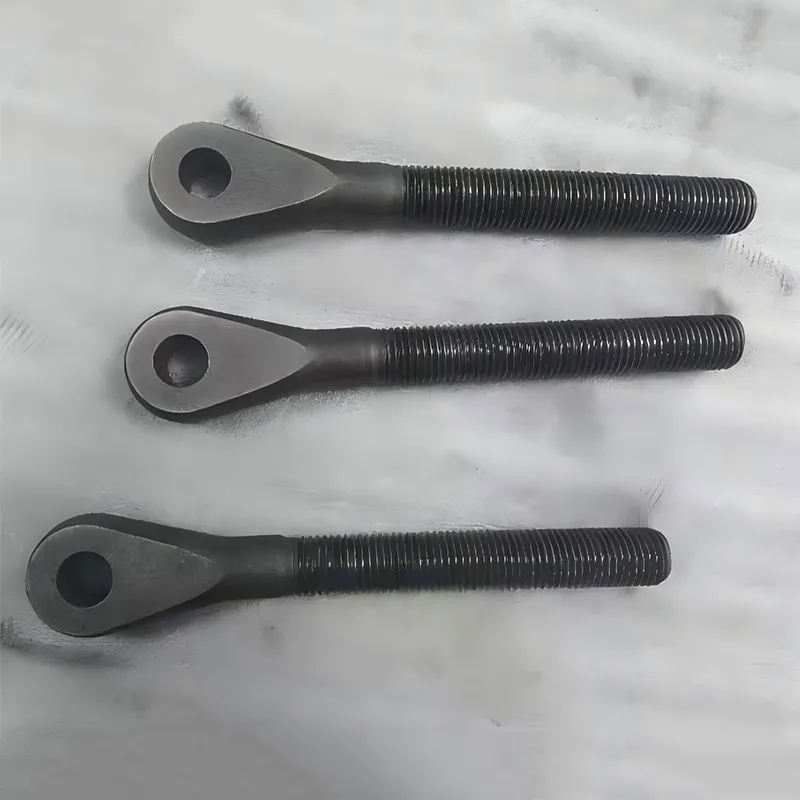
When you hear 'hardware clamping fixture', most folks immediately picture a simple vise or a basic jig. That's the first misconception. In reality, it's the silent, often custom-built backbone of any serious machining or casting operation. It's not just about holding a part; it's about holding it with zero deflection under heavy cuts, with thermal stability during long runs, and with repeatability across a thousand cycles. Get this wrong, and your high-tolerance part is scrap, no matter how good your CNC or your casting process is. I've seen too many shops invest in a half-million-dollar machine and then cripple it with a $500 fixture.
Beyond the Blueprint: The Reality of Fixture Design
The theoretical design on a CAD screen is just the starting point. You can specify a hardened steel hardware clamping fixture with all the right locating pins and hydraulic clamps, but the real test comes with the first chip. For instance, when we were developing a fixture for a complex turbine blade casting at our facility, the CAD model looked perfect. The casting was a nickel-based alloy from a client who used investment casting to get the basic form. Our job was the final precision machining.
The initial fixture held the airfoil profile beautifully. But we didn't account for the residual stress in the casting. After the first milling pass, the part shifted microscopically as internal stresses relieved. The result? A beautiful, shiny, and utterly out-of-spec part. The fixture wasn't wrong; it just didn't engage with the material's reality. We had to go back, add supplemental supports in the webbing areas to pre-load and stabilize the part before the cut, not just hold it in its nominal shape.
This is where generic fixtures fail. A company like Qingdao Qiangsenyuan Technology Co., Ltd. (QSY), with its three decades in CNC machining and casting, sees this interplay daily. You can't separate the fixture from the material's history—whether it's a rough steel forging or a delicate shell mold casting. The fixture must compensate for that history.
The Material is the Message
Fixture strategy changes completely with the substrate. Clamping a ductile iron housing? You can be fairly aggressive with clamping forces. But switch to a cobalt-based alloy or a thin-walled stainless steel component, and it's a different game. Excessive point loading from a clamp can distort the part before you even start, or worse, work-harden a local spot and ruin tool life.
For these tricky materials, we often use kinetic mounting or vacuum fixtures. I recall a batch of large, flat stainless plates that needed peripheral milling. A traditional top-clamp fixture would have caused a dome effect. We ended up using a modular vacuum plate system, but even then, the seal had to be perfect. A tiny leak on one corner meant the part could shift during a high-speed finishing pass. It's these minute details—the gasket material, the surface finish of the fixture plate itself—that make or break the job. It's not glamorous, it's troubleshooting.
This material-specific knowledge is critical. Looking at QSY's portfolio, which spans from cast iron to special alloys, you know their fixture solutions aren't one-size-fits-all. The hardware clamping fixture for a heavy steel valve body will be a brutal, rigid monster. The one for a machined investment-cast aerospace bracket will be an elegant, minimally intrusive dancer. Both must be equally precise.
Integration with Casting Processes
This is a key point often overlooked. The best fixture design sometimes begins before the part is even cast. In shell mold and investment casting, you have the opportunity to create integral fixture features. We've worked on projects where we designed casting lugs or datums into non-critical areas of the part. These are then used as the primary locating and clamping points during machining, and are finally machined off in the last operation.
It creates a closed-loop process: the casting process creates its own perfect reference points for machining. This eliminates the double datum error, where you try to register a machined surface to a separate, imperfect cast surface. The downside? It requires deep collaboration between the foundry and the machine shop from the design phase. It's not just buying a fixture off a catalog; it's engineering a manufacturing sequence.
For a vertically integrated operation, this is a huge advantage. A company that handles both the casting and the machining, like QSY, can optimize this loop. They can decide whether a feature is better cast-to-size or machined, and design the hardware clamping fixture strategy accordingly, saving the client from costly iterations.
The Failure Museum: Learning from What Broke
Any honest machinist or tooling engineer has a mental museum of failures. One that sticks with me involved a modular fixture system we were too confident in. We had a family of similar aluminum housings. The idea was to use a standard baseplate with interchangeable locators and clamps. On paper, it was efficient.
In practice, the cumulative tolerance stack of the modular components—the baseplate flatness, the dowel pin holes, the adapter plates—killed our repeatability. Part 1 would be within spec, part 50 would be drifting. The fixture itself had become a source of variation. We scrapped the efficient modular approach for that job and built dedicated, monolithic fixtures for each part variant. The upfront cost was higher, but the scrap rate went to zero. The lesson? Sometimes, the pursuit of flexibility is the enemy of precision. A dedicated hardware clamping fixture, while less sexy, is often the most reliable tool on the floor.
Another classic failure is underestimating coolant and chip flow. You design this beautiful, complex fixture that fully encapsulates the part for rigidity. Then, on the first run, chips pack into every cavity, coolant can't flush them out, and the part gets scratched, or worse, the packed chips alter the clamping force. Now you're stopping the cycle every 10 minutes to blow out the fixture. The design must account for the mess of real-world machining.
The Unquantifiable: Feel and Iteration
Finally, there's an aspect to this that never makes it into a spec sheet: the feel of a good fixture. When you load a part into a well-designed fixture, it should seat with a solid, positive clunk, not a hesitant slide. The clamps should engage smoothly, without you having to fight them. You can feel the rigidity.
This comes from iteration. The first version of a fixture is rarely the last. You might add a support after seeing a slight chatter mark. You might change a clamp from a swing arm to a push-pull design for faster loading. This iterative tuning is where the practical experience of a long-running shop shows. It's not just about manufacturing a fixture; it's about developing a working solution alongside the machining process itself.
In the end, a hardware clamping fixture is the physical embodiment of process knowledge. It's where theoretical tolerances meet the vibrating, heating, chip-filled reality of the shop floor. Whether it's for a high-volume automotive component or a one-off prototype in a nickel alloy, its success isn't just in holding a part. It's in enabling the machine and the craftsman to do their best work, reliably, time after time. That's what you're really investing in.