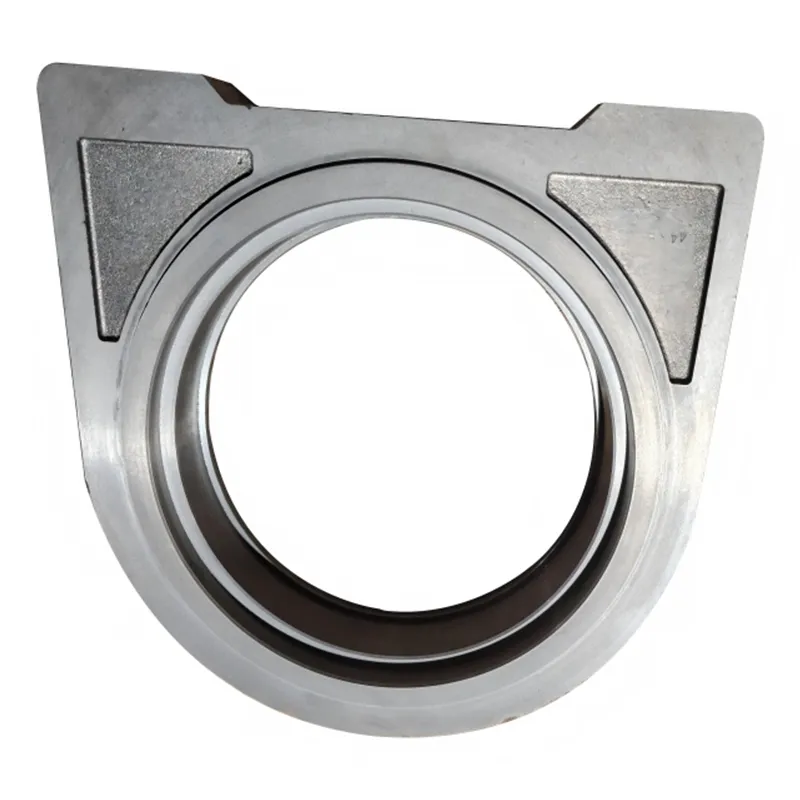
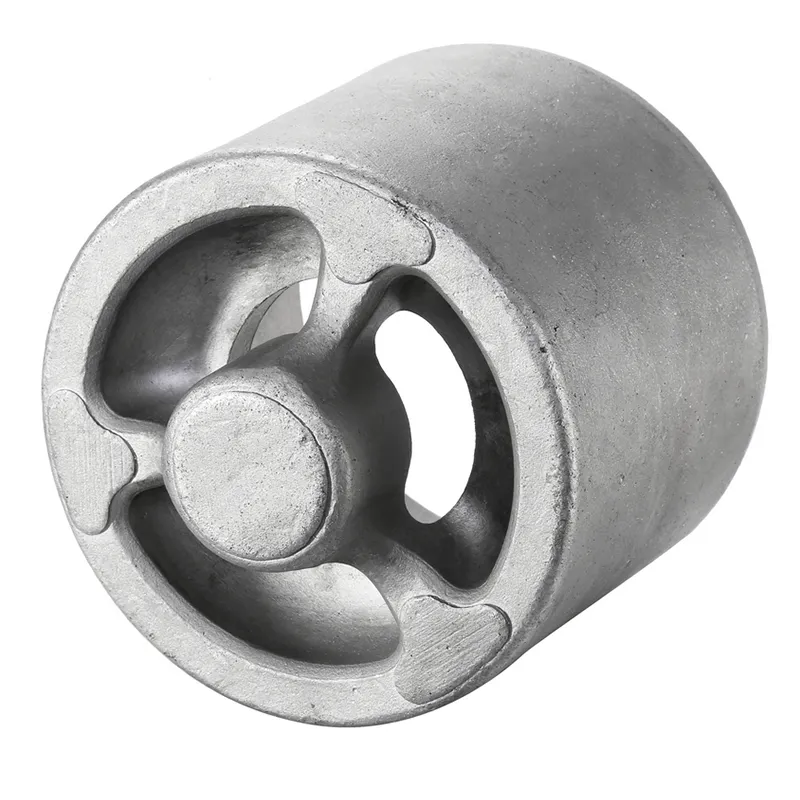
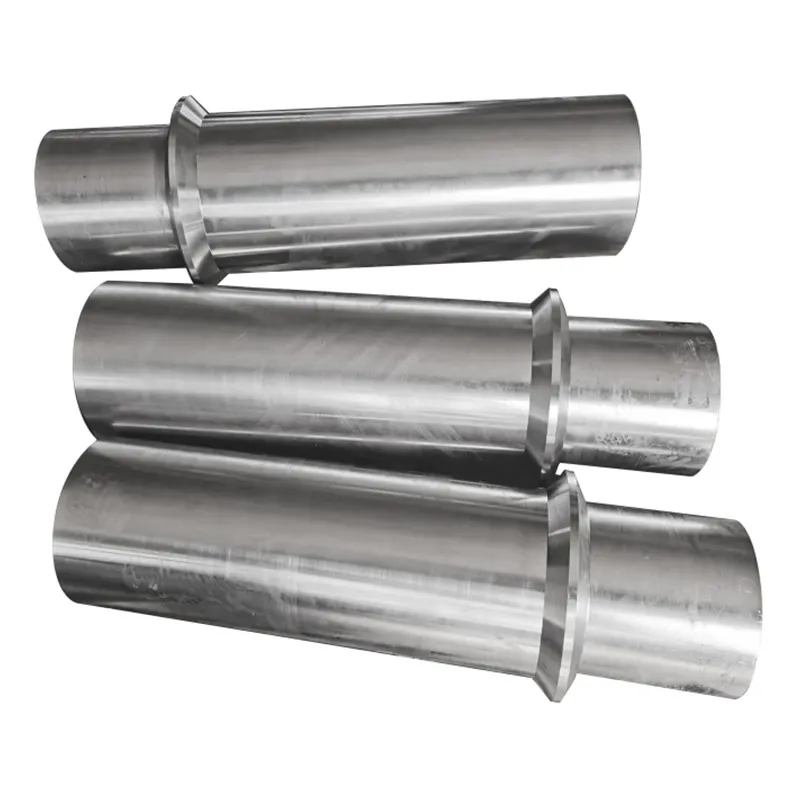
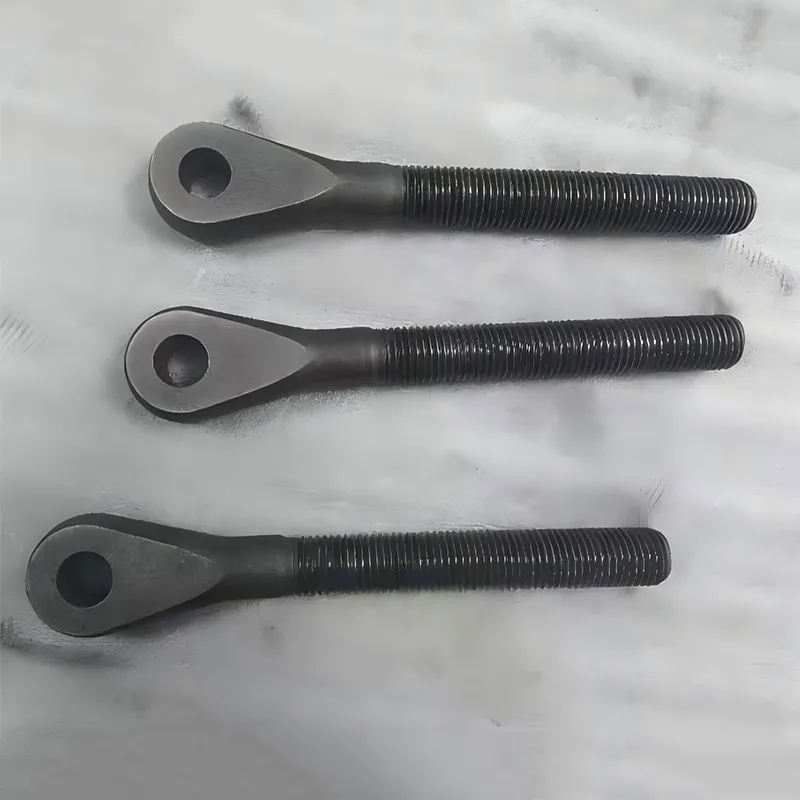
When you hear 'high-strength parts', the immediate thought often jumps to tensile numbers on a data sheet—UTS, yield strength, maybe elongation. That's the starting point, sure, but it's where a lot of projects, especially from clients new to heavy industry or demanding applications, get tripped up. They'll come in with a material grade, say 4340 or 17-4 PH, and assume the part's performance is guaranteed. The reality, the part that actually fails or succeeds on the shop floor or in the field, is forged in the messy intersection of material, process, and design intent. It's not just about what the metal is, but what you do to it and how you shape it.
The Foundation: It Starts with the Casting
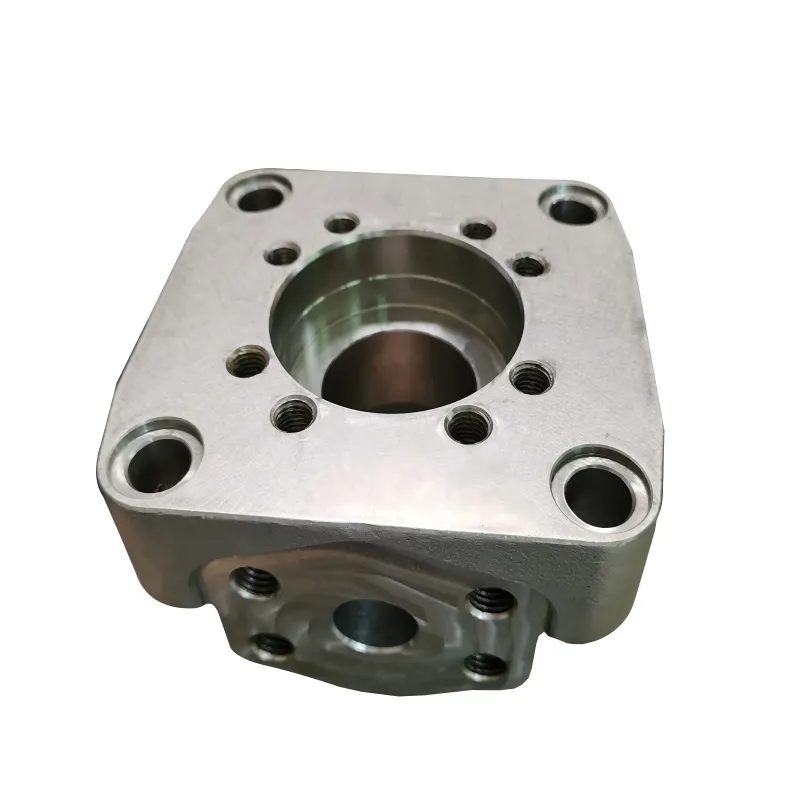
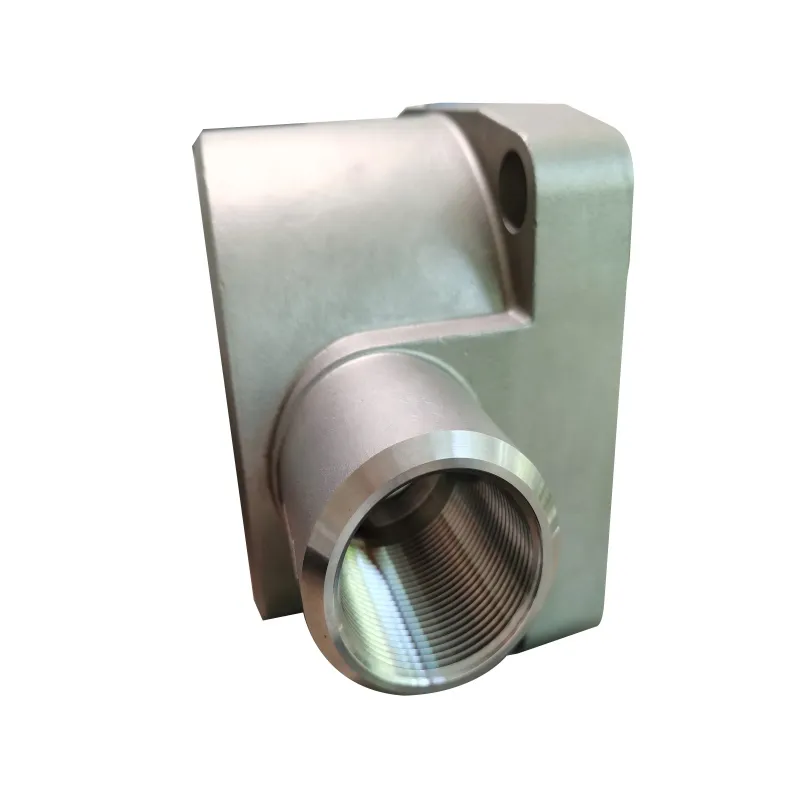
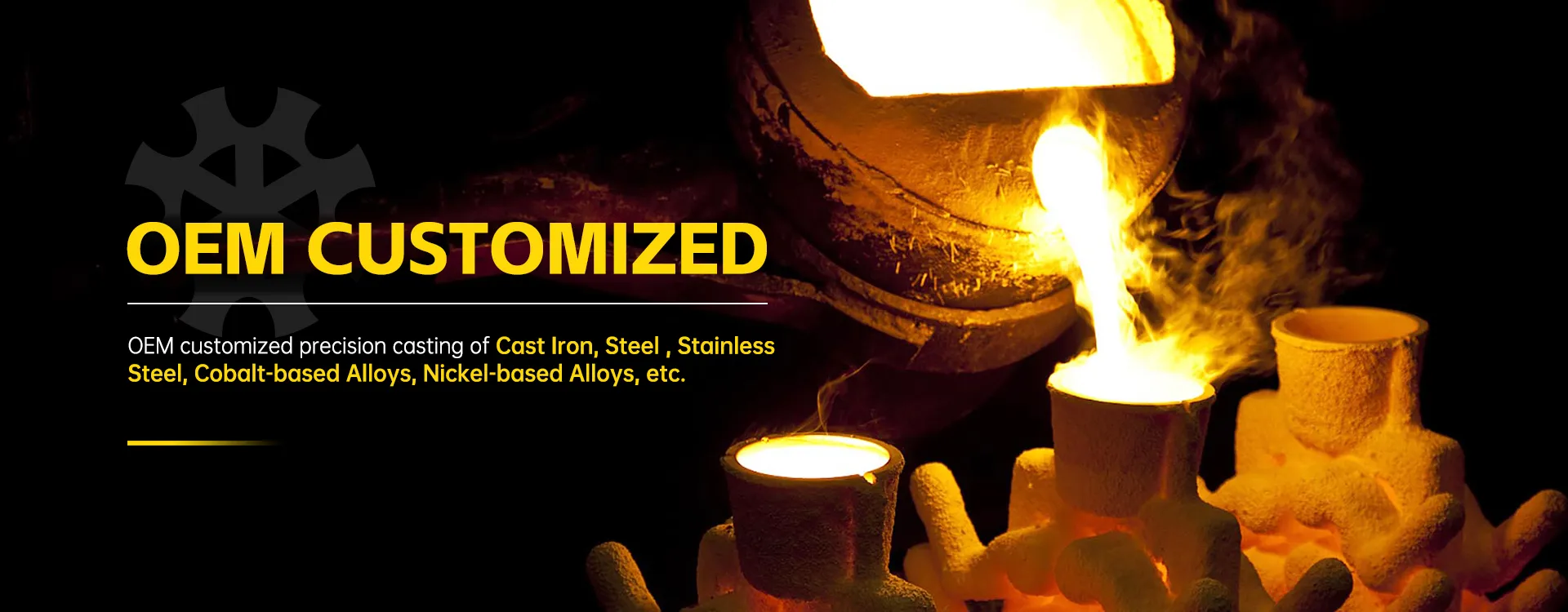
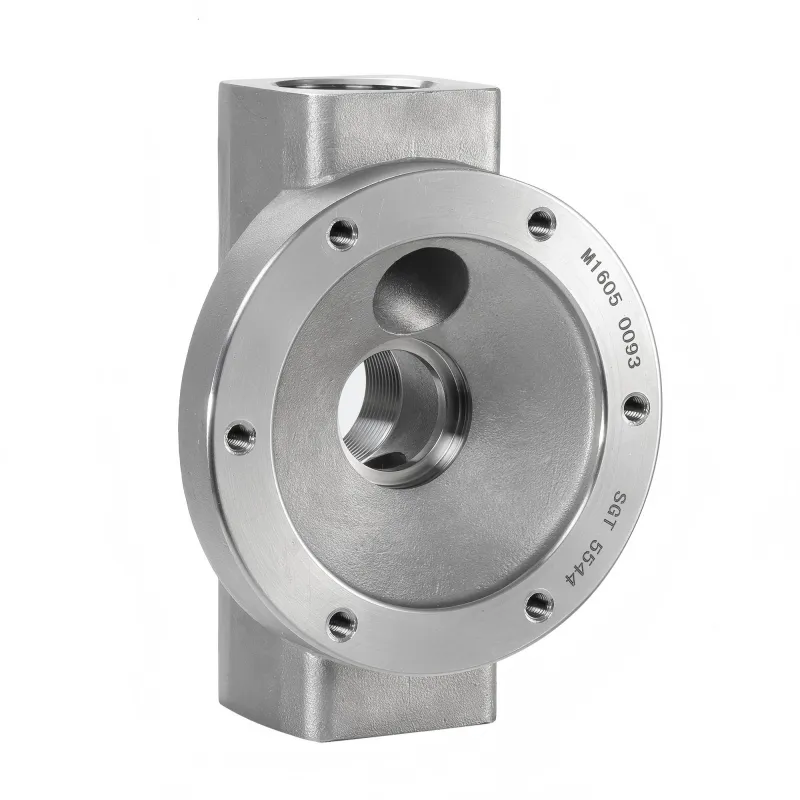
You can't machine in strength that wasn't there to begin with. That's the cardinal rule. For us, a lot of these high-strength parts begin as a casting. Take shell mold casting—it's not just about making a shape. For a hydraulic valve block or a pump housing that needs to handle sustained 5000+ PSI, the integrity of that initial casting is everything. Porosity isn't just a surface flaw you can machine away; it's a stress concentrator waiting to initiate a crack under cyclic loading. We've seen it. A part passes all the static tests, then fails in fatigue testing after a few thousand cycles. The culprit? A tiny shrinkage cavity in a critical wall section, invisible until you cut the part open. That's why process control in the foundry isn't a cost; it's the insurance policy for the part's entire service life.
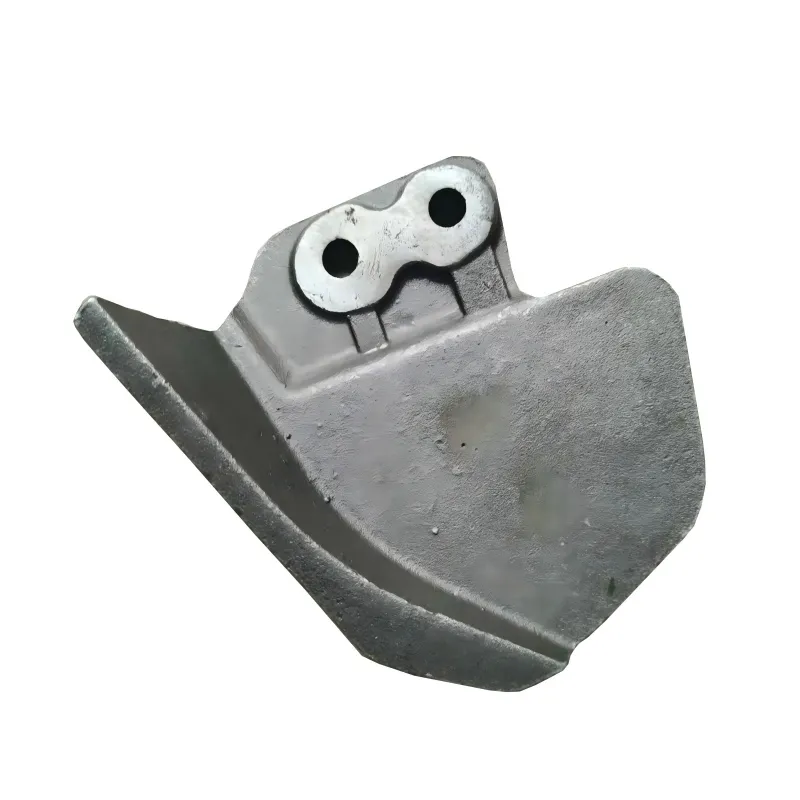
Investment casting gets you closer to net shape with better surface finish, which is great for complex geometries in high-strength parts like turbine blades or impellers. But here, the gating system design and the cooling rate become the critical variables. Get the solidification sequence wrong, and you introduce internal stresses or microstructural inconsistencies that no amount of heat treatment can fully rectify. It's a subtle art. You're not just pouring metal into a ceramic shell; you're directing how it turns from a liquid to a solid, grain by grain. That structure is the bedrock of its strength.
And the alloys themselves—this is where the 30 years comes in. Moving from standard 316 stainless to a precipitation-hardening grade like 17-4PH, or into the realm of nickel-based alloys like Inconel 718, changes the entire game. These materials are less forgiving. Their high-strength potential is locked behind specific heat treatment protocols. For instance, with 17-4PH, the difference between H900 and H1150 tempers isn't just a few ksi; it's a complete shift in the application profile—one favors maximum strength, the other better corrosion resistance and toughness. Recommending the wrong one because it's standard is a classic mistake. You have to ask: what's the operating environment? Is it pure mechanical load, or is there thermal cycling, corrosion, abrasion? The high-strength requirement is never in a vacuum.
The Machining Dance: Removing Material Without Compromising Integrity
This is the stage where a good casting becomes a great part, or gets ruined. CNC machining on high-strength parts isn't a simple matter of running a program. The residual stress in a raw casting or a forged blank is a hidden map. Take a heavy cut in the wrong sequence, and you can literally pull the part out of shape as you're machining it, or worse, induce new stresses that will warp later during heat treatment. We learned this the hard way years ago on a batch of large ductile iron gear blanks. Machined them beautifully, sent them out. They came back after heat treat, out of tolerance by a few thou on the bore. The stress relief from the furnace let the material move to a new equilibrium. Now, we use strategic roughing sequences, leave balanced stock, and often include a stress-relief cycle before the final machining passes. It adds a step, but it saves the whole batch.
Tool selection and coolant strategy become critical with harder alloys. Running a generic carbide insert on a cobalt-based alloy will burn up the tool in minutes and work-harden the surface, making the next pass even harder and potentially damaging the material's subsurface structure. You need rigid setups, positive rake geometries, sometimes even CBN or PCD tools. And coolant isn't just for cooling; it's for chip evacuation. A built-up edge or a recut chip can mar a surface, creating another tiny stress riser. For a company like QSY, maintaining a deep library of tooling strategies and parameters for different materials—from cast iron to Inconel—is as important as the machines themselves. It's tacit knowledge built from thousands of hours on the floor, not from a manual. You can find some of our approach to these challenges documented in case studies on our site at https://www.tsingtaocnc.com.
Then there's the question of features. Sharp internal corners are the enemy of high-strength parts. They're perfect stress concentrators. We spend a lot of time in design review, advocating for generous fillet radii, even if it complicates the toolpath. Sometimes a client's CAD model shows a beautiful, sharp corner that's theoretically possible to machine with a tiny end mill. We have to push back: That corner will be the failure point. Let's radius it, even if it's just an R0.5mm. It's a constant negotiation between ideal design and manufacturable, reliable reality.
Heat Treatment: The Alchemy of Strength
If machining is the sculpture, heat treatment is the ritual that brings it to life. This is where the specified material properties are actually achieved. And it's far from a set it and forget it oven cycle. Quenching media—oil, water, polymer, air—have drastically different severities. Quench a complex-shaped high-strength part too fast, and you risk cracking or severe distortion. Too slow, and you don't get the desired martensitic transformation in steels, leaving you with a soft core.
We partner with specialized heat treat shops, but we don't just send out drawings. We provide detailed process instructions based on the part's geometry and the alloy. For a thick-section low-alloy steel part, we might specify an interrupted or marquench process to reduce thermal shock. For precipitation-hardening stainless, the time-temperature curve for aging is sacred; a deviation of 10°C or 15 minutes can shift the hardness and toughness significantly. I recall a project for a marine component where the salt-spray corrosion resistance was as crucial as the yield strength. The standard H900 temper for 17-4PH gave us the strength but left the corrosion resistance borderline. We had to experiment with an over-aged condition (closer to H1150) and then adjust the machining allowances to account for slightly different material removal rates post-treatment. It was a balancing act, but it delivered a part that worked.
Verification is non-negotiable. Certifications from the heat treater are a start, but for mission-critical parts, we often perform our own spot checks—hardness tests across different sections of a sample part, or even sending out coupons from the same heat lot for full mechanical testing. You trust, but you verify. The cost of a failed part in service dwarfs the cost of this extra diligence.
Case in Point: A Gear Hub That Almost Wasn't
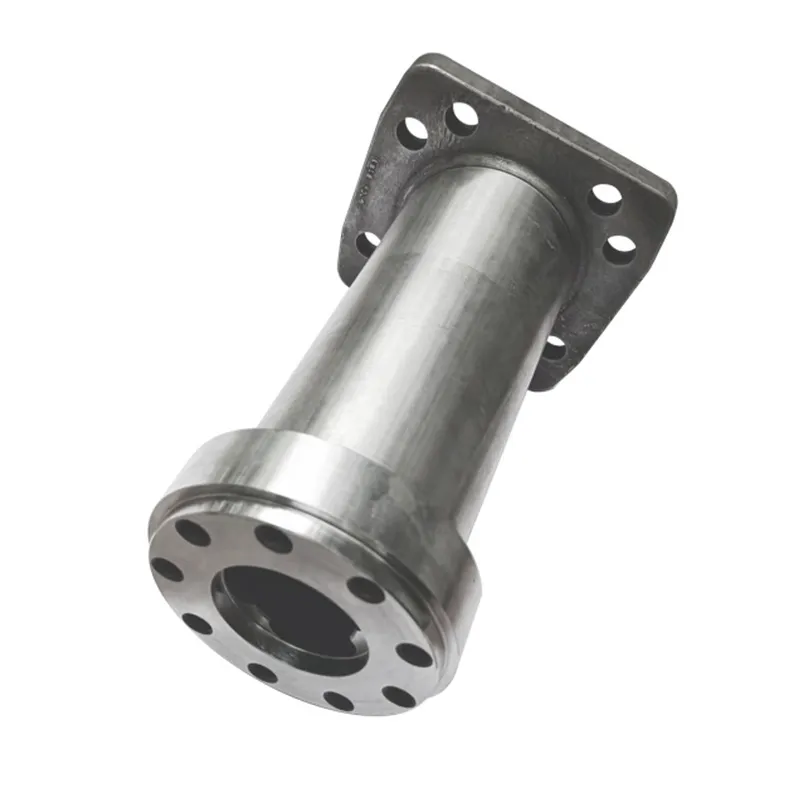
A few years back, a client came to us with a failed gear hub from a heavy-duty winch. The original was a fabricated weldment that cracked at the heat-affected zone. They wanted a monolithic, high-strength replacement. The spec called for ASTM A ductile steel (90 ksi tensile) with high impact toughness at low temperature. The casting itself, using shell molding for dimensional stability, was straightforward for us at QSY. The challenge was the machining and the final properties.
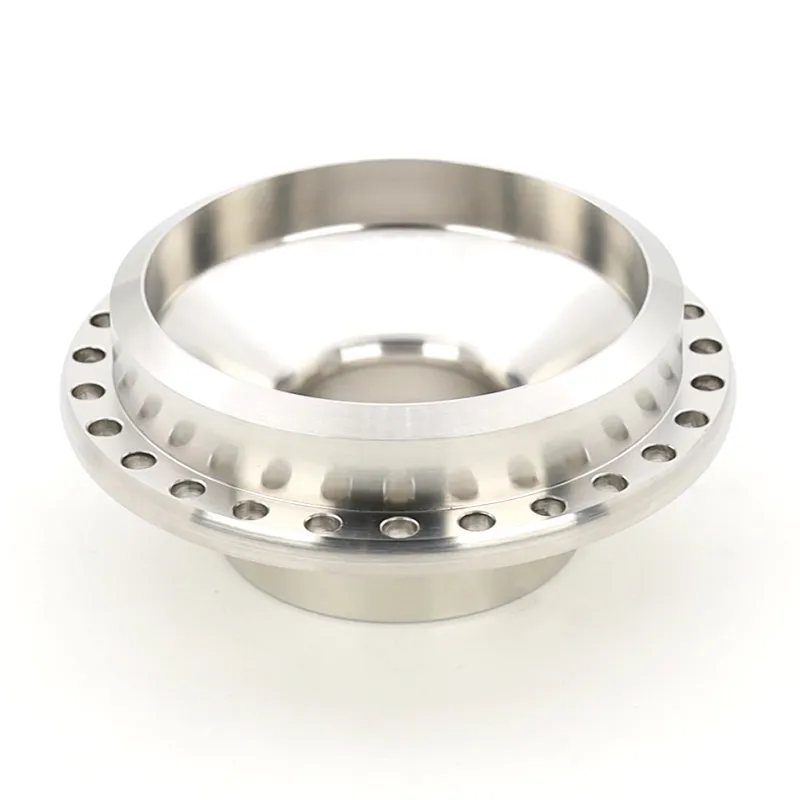
The part had a large, thin flange. Our initial machining sequence, based on standard practice, resulted in slight but unacceptable warpage after the roughing passes. We had to go back, redesign the fixturing to support the flange throughout the process, and adopt a slower, more balanced cutting strategy. Then came the heat treatment. To achieve the toughness, a proper quench and temper was needed, but we were worried about the flange distorting. We worked with the heat treater to design a custom fixture that would hold the part vertically during the quench to ensure uniform cooling. It was an extra step, an extra cost, but it worked. The parts met all mechanical specs and have been running without issue. That project, like many others, is summarized in our portfolio at Qingdao Qiangsenyuan Technology Co., Ltd.(QSY)'s website. It's a good example of how high-strength is a journey, not a destination you reach by just picking a material off a list.
The takeaway from that, and from countless other orders, is that delivering a truly reliable high-strength part requires treating the entire workflow—from the melt chemistry in the foundry to the final inspection—as a single, integrated system. A weakness in any link compromises the whole chain. You can't inspect quality into a part; you have to build it in, step by controlled step.
The Human Factor and the Feel of the Process
Finally, there's an intangible element that specs don't capture. After decades in this business, at QSY and before, you develop a kind of feel. An experienced machinist can hear a change in the cut—a slight harmonic shift—that tells him the tool is starting to dull or the material has a hard spot. A foundry technician can look at the flow of metal into a mold and sense if the temperature is a bit off. This isn't mystical; it's pattern recognition born from hands-on repetition.
This feel informs judgment calls. When a ultrasonic test shows a tiny, isolated discontinuity in a non-critical area of a massive casting, do you scrap a $10,000 part? The standard might say yes. But based on the location, the stress direction, and the application's safety factor, an experienced engineer might approve it with a note, saving the project. Conversely, a perfect-looking surface might get rejected because the machining feed rate was too high, potentially causing subsurface damage. These decisions are where the rubber meets the road. They're based on a deep, almost instinctual understanding of how high-strength parts live and die in the real world, an understanding that QSY has cultivated over its long operation in casting and machining.
So, when we talk about high-strength parts, we're really talking about a philosophy of control and understanding, applied across a chain of complex processes. It's about connecting the dots between metallurgy, thermodynamics, mechanical engineering, and practical shop floor wisdom. The data sheet is the promise; everything that happens after the order is placed is the delivery of that promise. And that delivery is never, ever automatic.