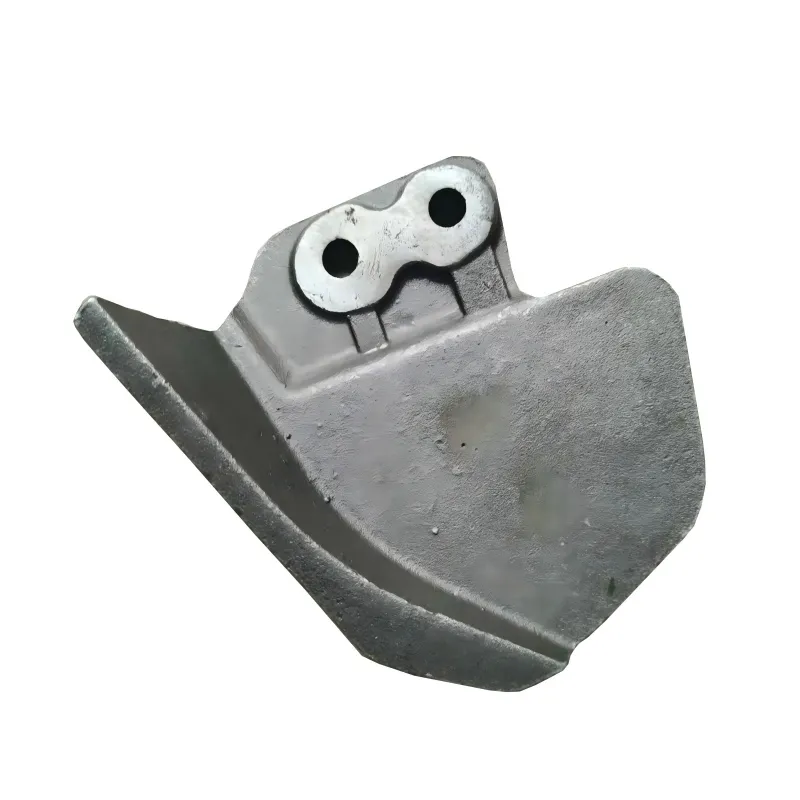
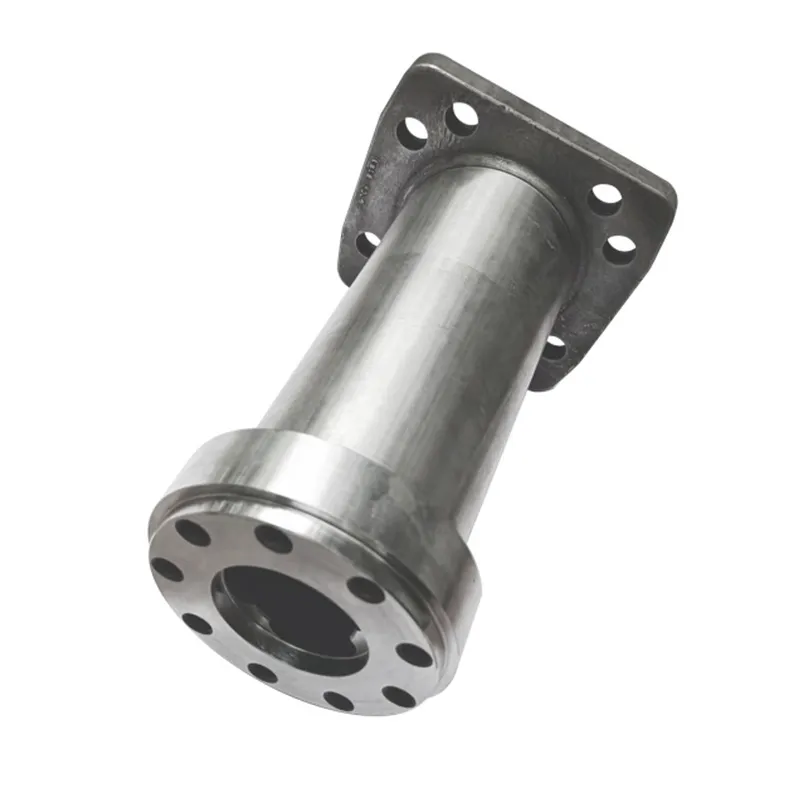
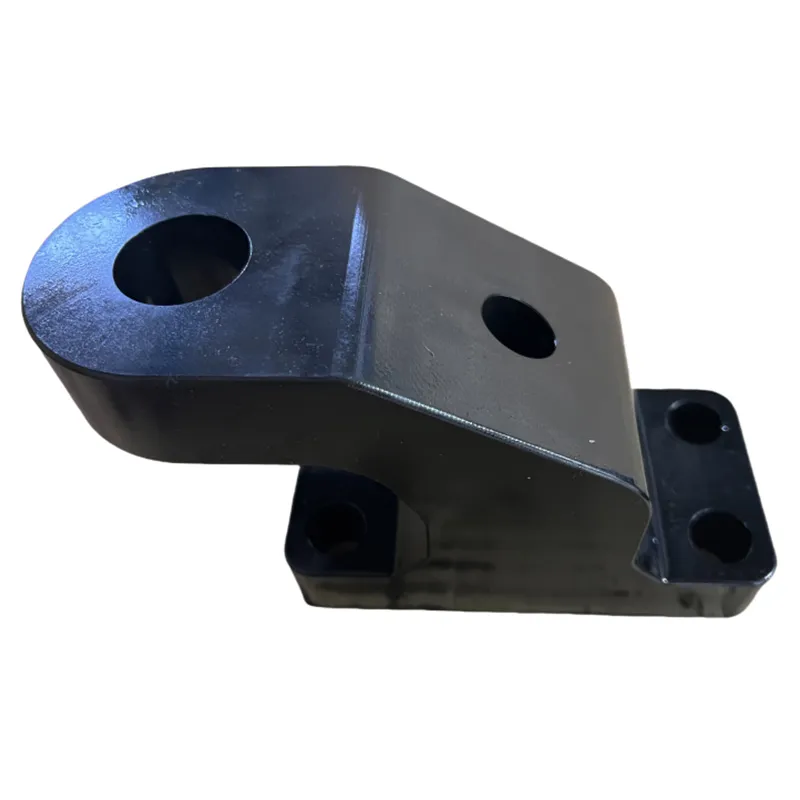
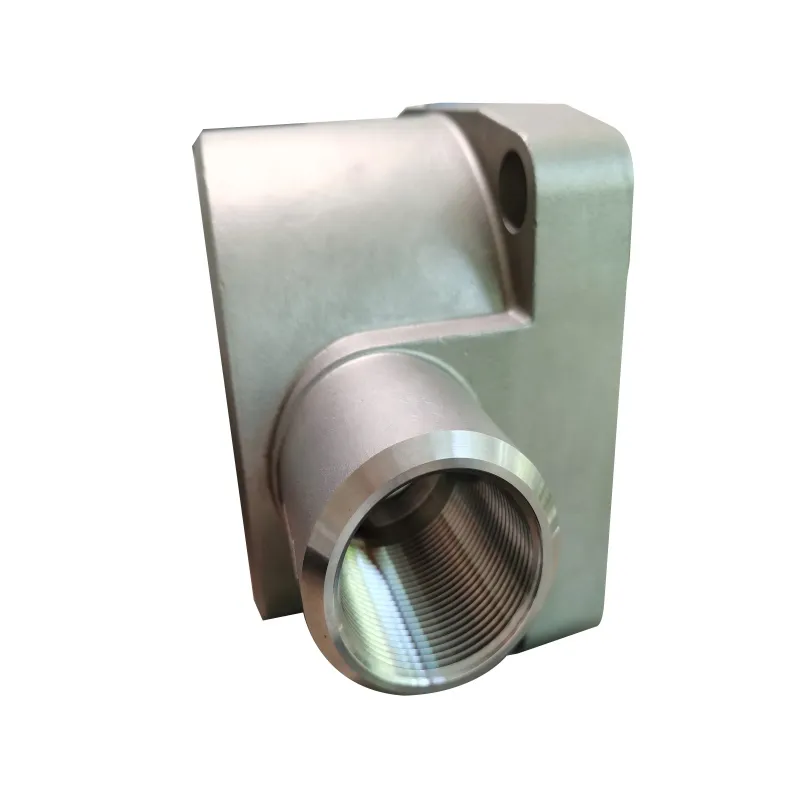
When most people hear 'high temperature alloy', they immediately think of jet engines or maybe land-based turbines. That's not wrong, but it's a surface-level view that misses the real, gritty challenges of working with these materials. The spec sheets list the impressive numbers—creep resistance, oxidation limits, tensile strength at 1000°C—but they don't tell you about the warping during machining, the inconsistent grain structure from one heat lot to the next, or the sheer difficulty of getting a clean, defect-free casting from a nickel-based superalloy. That's the gap between theory and the shop floor.
The Casting Conundrum: Where Theory Meets the Crucible
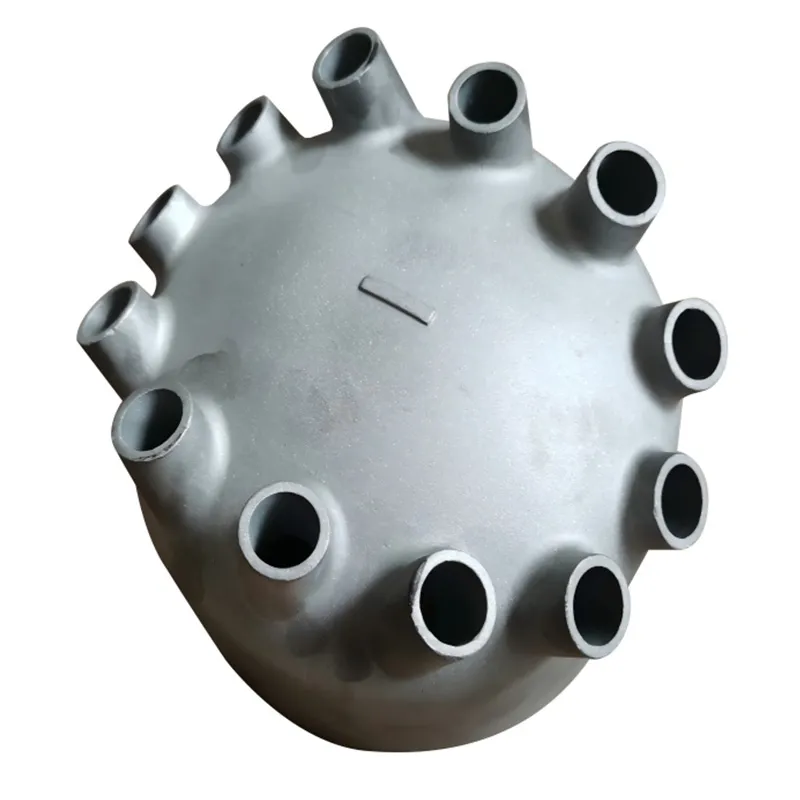
Let's talk about casting, specifically investment casting which is our bread and butter at QSY. With high temperature alloys, especially the nickel-based ones like Inconel 718 or Hastelloy X, the entire process is a tightrope walk. The melt temperature control is critical, but so is the cooling rate in the shell mold. Too fast, and you induce stress and hot tears; too slow, and you get excessive grain growth that kills the mechanical properties later. We've had parts come out looking perfect, only to fail X-ray inspection with subsurface shrinkage porosity. The data sheet says excellent castability, but it never defines what excellent means for a complex turbine blade versus a simple bushing.
I recall a project a few years back for a client in the thermal processing sector. They needed custom radiant tubes made from a wrought high temperature alloy, but the lead time for the bar stock was prohibitive. We proposed casting them via our shell mold process using a similar-grade casting alloy. The chemistry was close, but not identical. The first few batches cracked during the solution heat treatment. The issue? Trace elements—something like a slight variance in boron or zirconium content between the wrought spec and our casting master—that affected the grain boundary strength at the critical temperature range. It wasn't in the main spec; it was in the footnotes. We had to go back, tweak the pour temperature and modify the heat treatment ramp-up rate specifically for our melt. It worked, but it added weeks of trial and error. That's the reality.
This is where a foundry's experience counts. At Qingdao Qiangsenyuan Technology Co., Ltd. (QSY), with over three decades in shell and investment casting, we've built a library of these subtle, unwritten parameters for different geometries and alloys. It's not just about having the furnace; it's about knowing that for a particular cobalt-based alloy, you need to adjust the mold pre-heat temperature differently than for a nickel-based one to achieve a uniform fill in thin sections. This knowledge isn't downloaded; it's accumulated through iterations, and yes, through occasional failures.
Machining: The Hard Truth About Cutting Hard Materials
If casting is a delicate dance, machining high temperature alloys is a controlled battle. The very properties that make these alloys great—high hot hardness and work hardening tendency—make them a nightmare for cutting tools. People often underestimate this. They think, We have a modern CNC, we'll just slow it down. It's far more nuanced.
The biggest mistake is treating it like machining stainless steel. With something like Inconel 625, if your tool isn't sharp, if your speeds and feeds are even slightly off, or if your coolant isn't hitting the exact right spot, you don't get a nice chip. You get a built-up edge on the tool, which then work-hardens the surface of the part you're cutting. Now you're trying to cut through an even harder skin, which generates more heat, which further degrades the tool. It's a vicious cycle that leads to scrapped parts and destroyed, expensive carbide inserts. We learned this the hard way early on, burning through tooling budgets before we dialed in the parameters.
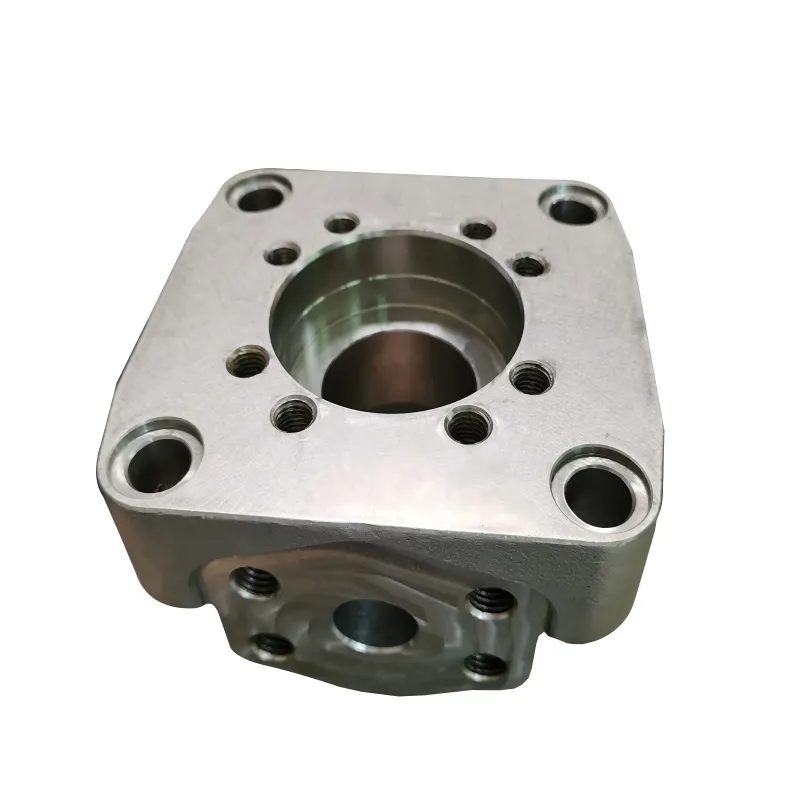
For us at QSY, integrating CNC machining with our casting operations is a strategic advantage. We often perform the initial rough machining on our as-cast components. This means we have to account for the casting skin, potential slight distortion, and the inherent residual stress from the casting process. We've developed in-house protocols for fixturing and sequencing operations to minimize stress reintroduction. For instance, we might do a stress-relief heat treatment after rough machining but before finishing the critical tolerances. It adds a step, but it prevents the part from moving later in service—a lesson learned from a batch of valve bodies that drifted out of spec after final delivery.
The Special in Special Alloys: Material Sourcing & Traceability
Another layer often overlooked is the raw material itself. Not all Inconel 718 is created equal. The performance hinges on the purity of the virgin material and the precision of the master alloy additions. We've switched material suppliers before because of inconsistent oxygen or nitrogen content between melts, which manifested as poor fatigue life in the final cast parts. When you're dealing with high temperature alloys for critical applications, the certificate of analysis (CoA) is your bible. At QSY, we audit that closely and often do our own spark testing or spectral analysis on incoming material, especially for cobalt-based or nickel-based alloys. You can't control what you don't measure.
This focus on material integrity extends to our entire process. For investment casting, we use specific ceramic shell systems compatible with reactive alloys to avoid surface contamination. A stray impurity from the shell can create a weak point that becomes a crack initiation site under thermal cycling. It's a detail that doesn't show up on a finished part's dimensions, but it's everything for its service life in a high-temperature environment.
Failure Analysis: The Most Valuable Teacher
Some of our most valuable knowledge has come from parts that didn't make it. Early in our work with a high-chromium nickel alloy for a pyrolysis furnace component, we had a field failure. The part cracked along a seemingly random line. Metallurgical analysis pointed to sigma phase embrittlement. The alloy was prone to it if held in a certain temperature range for too long. Our heat treatment cycle, which was standard for similar alloys, had inadvertently pushed it into that window. The fix wasn't about changing the casting; it was about redesigning the post-casting heat treatment to quench through that critical temperature zone faster. Now, for any new high temperature alloy project, we don't just look at the standard treatment; we dig into the phase diagrams and potential embrittlement mechanisms. It's a defensive practice born from a painful lesson.
This mindset shapes how we approach new projects with clients. When a client from the power generation sector comes to us with a request for a custom-designed heat exchanger part using a special alloy, our first questions aren't just about dimensions. They're about the operating atmosphere (oxidizing? carburizing?), the thermal cycle profile, and the expected stress state. This informs everything from alloy selection (maybe a silicon-enhanced grade for better oxidation resistance?) to the design of feeders and risers in the mold to ensure soundness in the most critical areas.
Integration: From Foundry to Finished Part
The real value for many of our clients at QSY lies in the vertical integration—handling the journey from molten metal to a machined, ready-to-install component. For high temperature alloys, this continuity is crucial. The machinist needs to understand the casting's likely internal structure; the foundry engineer needs to know where the critical machining surfaces will be to ensure extra density there.
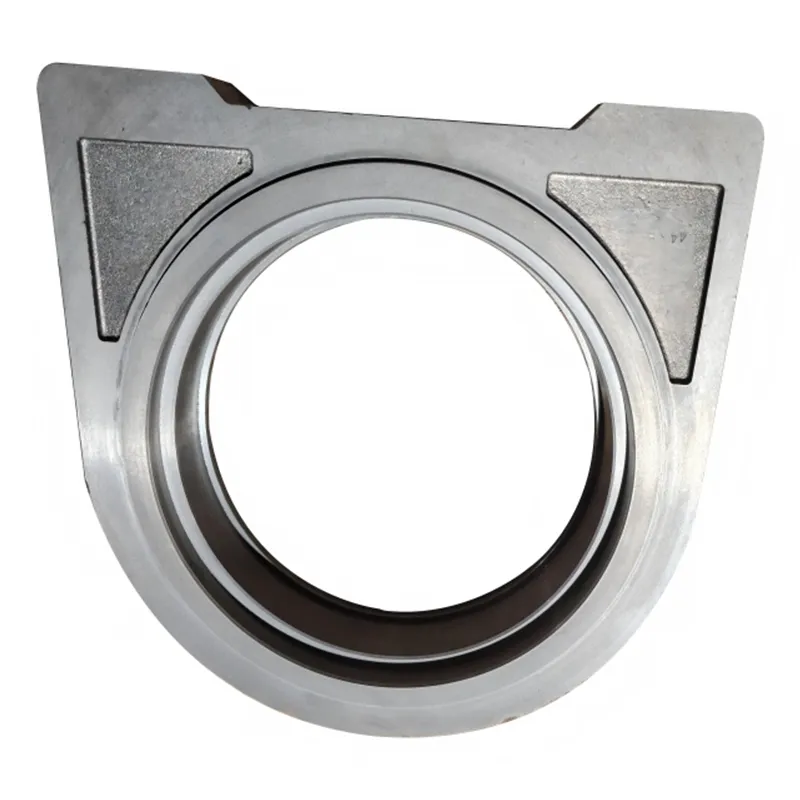
We recently completed a run of turbine shrouds for an industrial turbocharger upgrade. The material was a challenging nickel-based superalloy. By controlling both the casting and the precision CNC machining in-house, we could coordinate. We cast the parts with extra stock on the mating faces, then performed a hot isostatic pressing (HIP) treatment to close any micro-porosity. Only after HIP did we do the final machining. This sequence, decided collaboratively between our casting and machining teams, ensured we removed any surface distortion from HIP while achieving the material's optimal density. The result was a component with better performance consistency than if the processes were split between separate vendors.
That's the endgame. Working with high temperature alloys isn't just about selecting a material from a catalog. It's about understanding its behavior through every single step of transformation—from liquid to solid, from rough casting to precision part. The numbers on the spec sheet are the starting point for a conversation, not the conclusion. The rest is learned in the foundry, at the CNC control, and sometimes, in the sobering light of a failure analysis report. It's a demanding field, but that's what makes a successfully operating component, years later in a blistering hot environment, so satisfying. It means you got all the invisible details right.