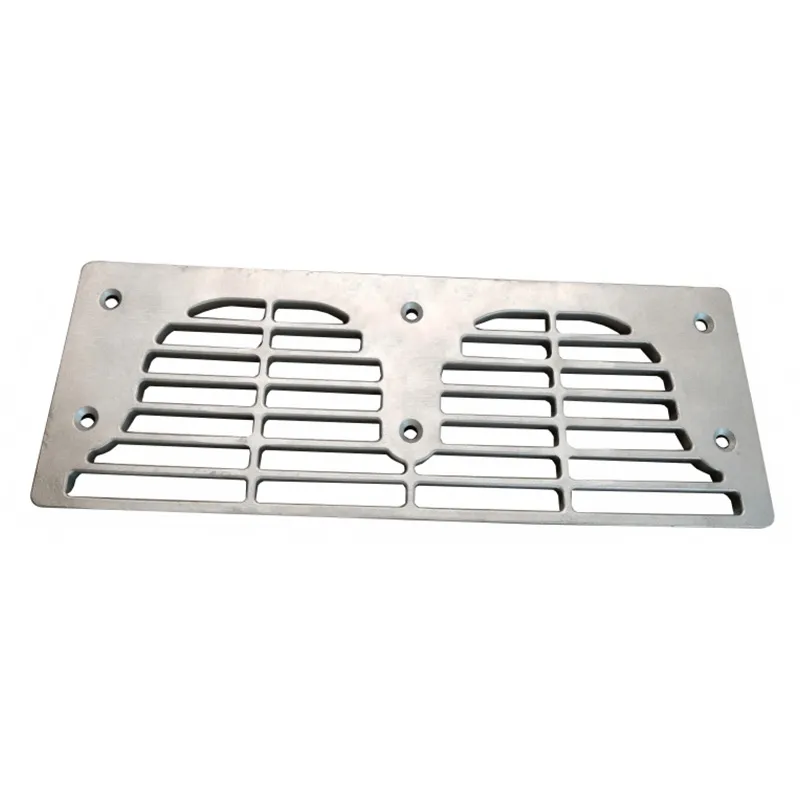
When you hear 'homogenizer valve guide', most minds jump straight to the valve seat or the impact ring. That's the common pitfall. The guide isn't just a passive sleeve; it's the director of the entire high-pressure ballet happening inside that head. Get its alignment or material wrong, and you're not just looking at wear—you're inviting catastrophic pulsation or a complete blowout. I've seen too many operations treat it as a simple wear part, ordering generic replacements, only to be back in shutdown within months. The truth is, its function is deceptively simple, but the execution is everything.
Material Misconceptions and The Reality of Wear
Let's talk materials first. A lot of specs call for hardened stainless steel, which is fine on paper. But in practice, especially with abrasive media or certain food products with high chloride content, standard 440C just doesn't cut it. I recall a dairy plant that was burning through guides every six months. They were using a decent 316 stainless guide, but the product had a specific mineral profile that caused incredible micro-pitting. The failure wasn't sudden; it manifested as a gradual loss of pressure stability, which they kept compensating for by tightening the gap, accelerating the wear on the seat. The real fix wasn't a harder steel, but a switch to a cobalt-based alloy for the guide. The cost was higher, but the lifecycle tripled. This is where a foundry with real alloy expertise, like Qingdao Qiangsenyuan Technology Co., Ltd.(QSY), becomes invaluable. They're not just pouring metal; they understand that a homogenizer valve guide needs to resist both impact fatigue and chemical attack, which often requires a tailored material solution beyond the catalog standards.
The wear pattern on a retrieved guide tells the whole story. A uniform, smooth wear along the bore? That's ideal, just normal clearance increase. But if you see scoring on one side, that's a dead giveaway of misalignment during assembly or a bent valve stem—a problem no guide material can solve. Worse is cavitation erosion on the leading edge, little pits that look like the surface was sandblasted. That points to a pressure profile issue upstream, or sometimes an incorrect inlet geometry in the valve head assembly itself. Replacing the guide without diagnosing the cause is just throwing money away.
Then there's the thermal side. In UHT processing, the thermal cycling is brutal. The guide, the valve, and the head all expand at different rates. If the guide's thermal expansion coefficient isn't considered relative to the housing, you can end up with a seizure at operating temperature or excessive clearance when cold, both leading to leakage and pressure drop. It's a tightrope walk. I've had success with nickel-based alloys in these high-cyclic thermal applications, as they maintain their dimensional stability better. It's a detail most generic suppliers gloss over.
The Machining Precision You Can't See
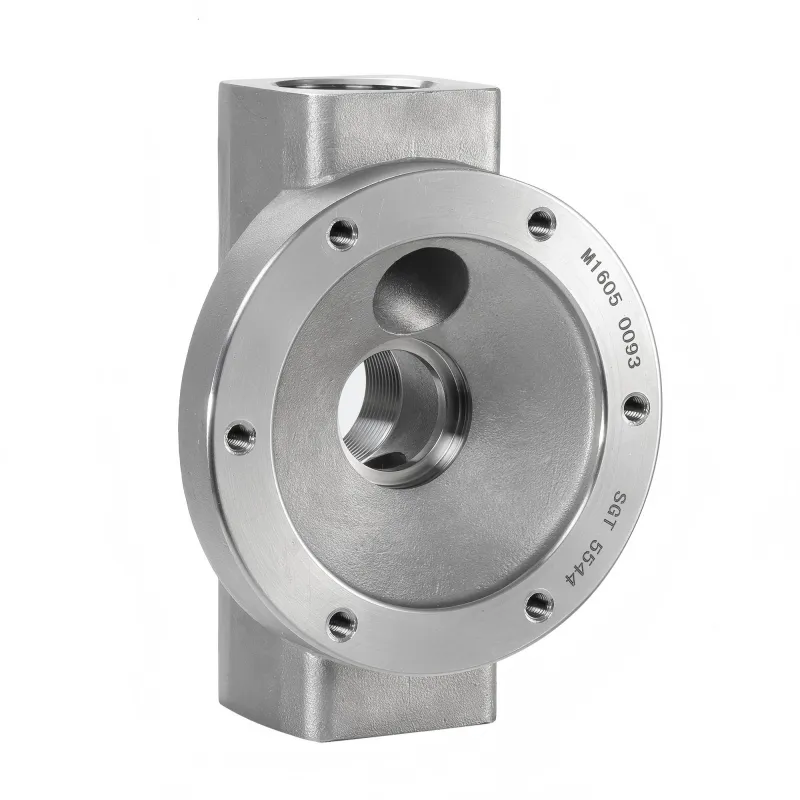
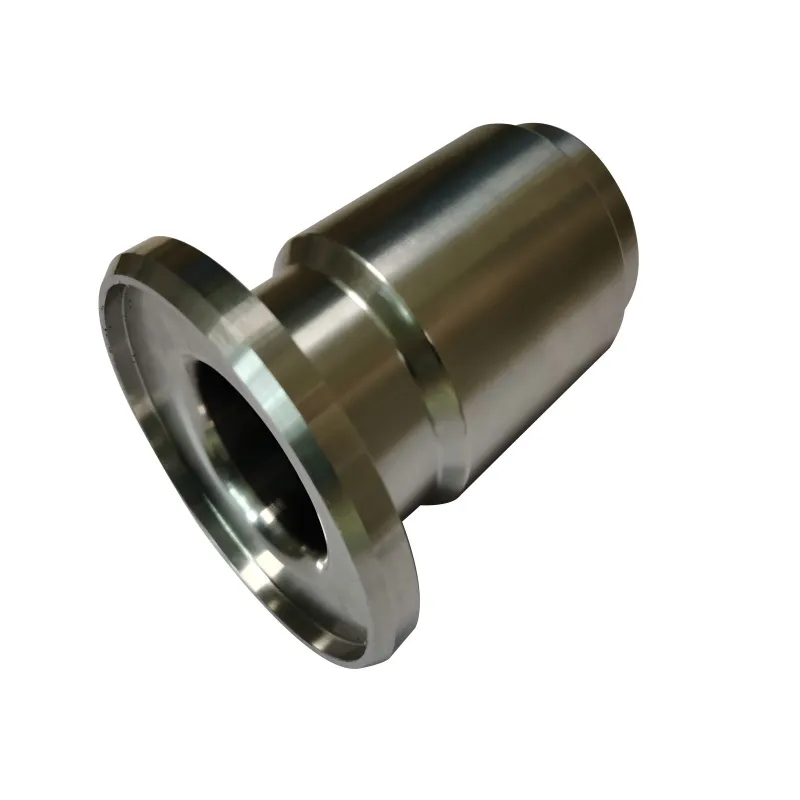
This is where the rubber meets the road. The ID bore finish and straightness are critical. We're talking about tolerances that feel surgical. A surface that's too smooth can hinder lubrication in certain designs, while one that's too rough accelerates stem wear. The ideal is a honed finish with a specific cross-hatch pattern to retain a film of the product itself. I've worked with machined guides from various sources, and the difference between a good one and a great one is in the final finishing steps. A company that does its own CNC machining in-house, like QSY, typically has better control over this final, critical step compared to a shop that outsources it. You can see it in the consistency.
Concentricity is another silent killer. The guide's OD must be perfectly concentric to its ID, and both must be perpendicular to the mounting face. If not, the valve stem will wobble, impacting the seat unevenly. This doesn't just wear the seat; it creates a harmonic vibration that travels through the entire pump frame. I remember troubleshooting a persistent vibration issue on a Gaulin unit. We balanced the plungers, checked the crankshaft—nothing. Finally, we mic'd a new batch of valve guides. The concentricity was out by a few tenths. It was enough. Swapping in properly machined guides from a source with tight shell mold casting and machining control eliminated the vibration. It was a textbook case of a tiny component causing a massive operational headache.
Threads and mounting features are often an afterthought, but they shouldn't be. In designs where the guide is threaded into the head, any inconsistency in the thread form creates a stress riser. Under 10,000+ PSI pulsating loads, that can lead to a crack originating in the thread root. I prefer a fine-pitch thread with a robust root radius, and I always specify a proper thread sealant, not just Teflon tape, which can shred and contaminate the line. It's these minutiae that separate a reliable spare part from a time bomb.
Integration and Real-World Failures
A perfect guide installed poorly is a bad guide. The installation procedure is paramount. It's not just about torque specs; it's about sequence and cleanliness. Any debris left in the counterbore will misalign the guide from the start. I advocate for a cleanroom-style approach during reassembly, even if it's just a dedicated, covered bench. I learned this the hard way early in my career. We had a perfect, custom-machined guide for a high-pressure pharmaceutical homogenizer. Post-installation, performance was off. After a frustrating teardown, we found a single, tiny metal shaving—from a different job—lodged under the guide's flange, tilting it just enough to bind the stem. A five-dollar part, a fifty-thousand-dollar downtime lesson.
Compatibility with the valve stem is the other half of the equation. The clearance is specified for a reason. Running a stem that's at the low end of its wear tolerance with a new guide at the high end of its bore tolerance can create excessive clearance, leading to hammering and loss of efficiency. Conversely, a worn stem with a new, tight guide can gall and seize. The best practice is to measure and match. Always treat the homogenizer valve guide and stem as a matched pair, replacing them together if there's any significant wear on either. It saves a second teardown.
One of the most insightful resources I've found for understanding the casting integrity behind these components is the portfolio of a long-term player like QSY (https://www.tsingtaocnc.com). Their experience in investment casting for complex, high-integrity parts shows they grasp the need for a defect-free microstructure from the start. A guide that has a hidden inclusion or porosity from the casting process will fail under pressure, no matter how well it's machined. You need a supplier that controls the process from molten metal to finished part, especially for critical wear components in a homogenizer.
Beyond the Standard: When to Go Custom
Not all homogenizers are created equal, and neither are their processes. Sometimes, the OEM guide just isn't optimal for your specific application. This is where a technical partnership with a capable manufacturer pays dividends. We had a client processing a slurry with extremely hard particulates. They were destroying standard guides. We worked with an engineering team to design a guide with a proprietary tungsten carbide insert liner in the wear zone. The base was a tough, ductile steel to handle the impact, and the liner provided the wear resistance. It was a custom solution that turned a monthly change-out into a yearly maintenance item.
Design tweaks can also solve chronic issues. For instance, adding a slight taper or a relief groove at the high-pressure end of the guide bore can dramatically improve flow characteristics and reduce cavitation potential. Another modification we've implemented is changing the lubrication channel design on grease-lubricated models to ensure positive pressure in the critical interface zone. These aren't off-the-shelf fixes; they require a manufacturer willing to engage in problem-solving, one with both casting and machining expertise to execute the design without compromising structural integrity.
Ultimately, the homogenizer valve guide is a testament to the principle that in high-pressure systems, there are no unimportant parts. Specifying it requires a blend of materials science, mechanical design insight, and practical field experience. It's about looking past the bill of materials and understanding its role in the dynamic system. Choosing a supplier isn't just about price and delivery; it's about their depth of knowledge in creating a component that performs under pressure, cycle after cycle. That's what turns a simple guide from a consumable into a cornerstone of reliability.