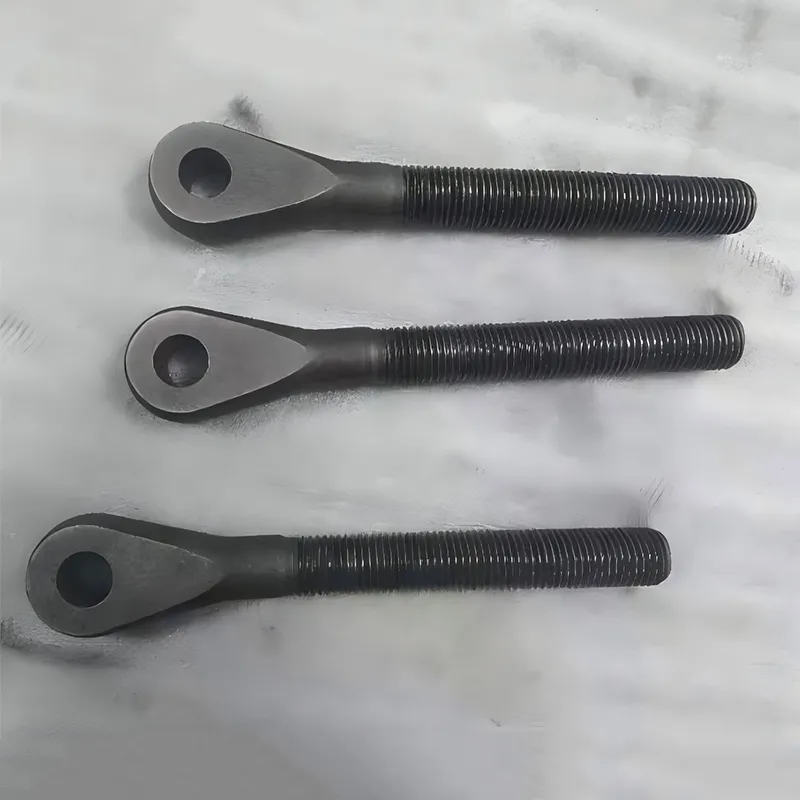
When sealing systems operate under extreme pressure, high temperatures, or aggressive chemical exposure, standard elastomers and stainless steels fail fast. Engineers in hydraulic, oil & gas, and heavy-duty pump applications increasingly turn to Haynes 25 material seal factory partners—not for off-the-shelf gaskets, but for mission-critical, custom-engineered seals that retain integrity where others crack, oxidize, or creep.
We’ve supplied Haynes 25 (UNS R30025) sealing components since 2018—first for a North American subsea valve retrofit, then for a European engineering vehicle winch system running 24/7 in desert-sand conditions. What we learned wasn’t theoretical: Haynes 25 isn’t just “corrosion-resistant.” Its cobalt-nickel-chromium-molybdenum base delivers simultaneous resistance to sulfidation, carburization, and thermal fatigue—while maintaining yield strength above 690 MPa at 700°C. That’s why it replaces Inconel 625 or Waspaloy in dynamic seal housings where thermal cycling exceeds 300 cycles per shift.
But raw material specs mean little without controlled processing. Haynes 25 work-hardens aggressively during machining. A single interrupted cut can induce micro-cracking in the subsurface layer. We saw this firsthand on an AMS 5387-compliant cobalt alloy plug order—where surface finish deviation of just 0.8 µm Ra triggered premature leakage in a high-pressure piston pump test rig. The fix? Not tighter tolerances. It was switching from conventional turning to low-RPM, high-rigidity CNC milling with cryogenic nitrogen cooling—and verifying every part with cross-sectional metallography. That’s the difference between quoting a spec sheet and delivering functional reliability.
- Material traceability starts before casting: Every Haynes 25 billet carries full heat-certified reports per ASTM B572, including grain size (ASTM E112), intergranular corrosion testing (ASTM A262 Practice A), and spark emission spectroscopy validation
- Machining is non-negotiable: We use 5-axis DMG MORI machines with rigid toolholding, forced lubrication, and real-time vibration damping—no chatter marks, no recast layers
- Heat treatment is sealed into the process: Solution annealing at 1175°C ±10°C, followed by rapid water quenching, is performed in-house under NADCAP-accredited furnaces—never outsourced
- Seal geometry defines performance: For face seals, we machine interference fits to ±2.5 µm; for radial lip seals, we control land width tolerance to ±0.02 mm across 300 mm diameters
Some assume Haynes 25 seals are “just expensive versions of Inconel 718.” They’re not. Inconel 718 excels in tensile strength—but fails catastrophically in reducing sulfur environments common in sour gas extraction. Haynes 25’s chromium content (20–22%) and molybdenum (8–10%) create a stable, self-healing oxide layer that resists pitting even in H₂S concentrations exceeding 100,000 ppm. We validated this on-site with a Southeast Asian client: their previous Inconel 625 seal assemblies lasted 4,200 operating hours before micro-leak detection. The Haynes 25 equivalents exceeded 12,800 hours—with zero dimensional drift measured via CMM re-scanning after field return.
That level of confidence comes from vertical integration—not marketing claims. Our Qingdao facility casts, machines, heat-treats, and inspects every Haynes 25 seal component under one ISO 9001:2015 and IATF 16949-certified roof. No handoffs. No batch inconsistencies. When a customer sends GD&T-heavy drawings for a non-standard hydraulic cylinder end-cap seal groove, our engineers don’t just check tolerances. They simulate thermal expansion mismatch between the Haynes 25 insert and the parent steel housing—then adjust the interference fit accordingly. That’s how we prevent cold-welding during assembly and avoid stress-corrosion cracking during startup ramp-up.
Cost remains a real concern—and rightly so. Haynes 25 raw material runs 3.2× the price of 316 stainless. But lifecycle cost tells a different story. One European pump OEM calculated total cost of ownership over five years: $18,400 per seal set for standard alloys (including downtime, labor, and recalibration), versus $29,700 for Haynes 25. Their ROI? Achieved in 14 months—driven by 92% fewer unplanned shutdowns and zero warranty claims related to seal failure. That math only works when your Haynes 25 material seal factory treats metallurgy as engineering—not procurement.
Looking ahead, demand is shifting from static flange seals to dynamically loaded, multi-material hybrid assemblies—like Haynes 25 seal rings bonded to ceramic-coated steel carriers for ultra-high-speed centrifugal pumps. We’re expanding our R&D on diffusion bonding parameters and developing proprietary surface passivation protocols that extend service life beyond current ASME BPVC Section VIII limits. Because sealing isn’t about stopping leaks. It’s about guaranteeing continuity—when pressure spikes, temperature surges, or chemistry turns hostile. And that starts with knowing exactly what happens to Haynes 25 at the micron level, under load, in real time.