Stellite alloy is a general term for a series of cobalt-chromium alloys that are resistant to high temperatures, wear and corrosion. "Stellite" was originally a patent of the Deloro Group. In 2012, the Deloro Stellite Group was acquired by Kennametal and became a registered trademark of Kennametal, used to refer to specific cobalt-based alloys.
The chemical composition of Stellite alloy:
Stellite alloy belongs to the cobalt-based alloy family and mainly contains the following core elements:
Cobalt (Co) : A matrix element, accounting for approximately 50-65% of the total weight, providing excellent high-temperature strength and thermal fatigue resistance.
Chromium (Cr) : Its content is typically between 25% and 33%, and it is the key to forming a dense protective layer of chromium oxide (Cr₂O₃), endowing the alloy with outstanding resistance to high-temperature oxidation and corrosion.
Tungsten (W) and molybdenum (Mo) : The main solid solution strengthening elements. Some tungsten or molybdenum will combine with carbon to form hard carbides, significantly enhancing the red hardness and wear resistance of the alloy.
Carbon (C) : The content fluctuates between 0.1% and 3.0%. Carbon is the core element in the formation of carbides (such as MC, M₂₃C₆, M₇C₃), which are embedded in the cobalt matrix like steel bars, forming the "skeleton" for the alloy to resist wear.
The strengthening of Stellite alloy mainly comes from the austenite matrix strengthened by solid solution and the carbides distributed in the matrix. This unique strengthening mechanism enables Stellite alloy to experience a very slow decline in strength as the temperature rises, endowing it with extremely high thermal stability.
The main grades and characteristics of Stellite alloy:
Wear-resistant series
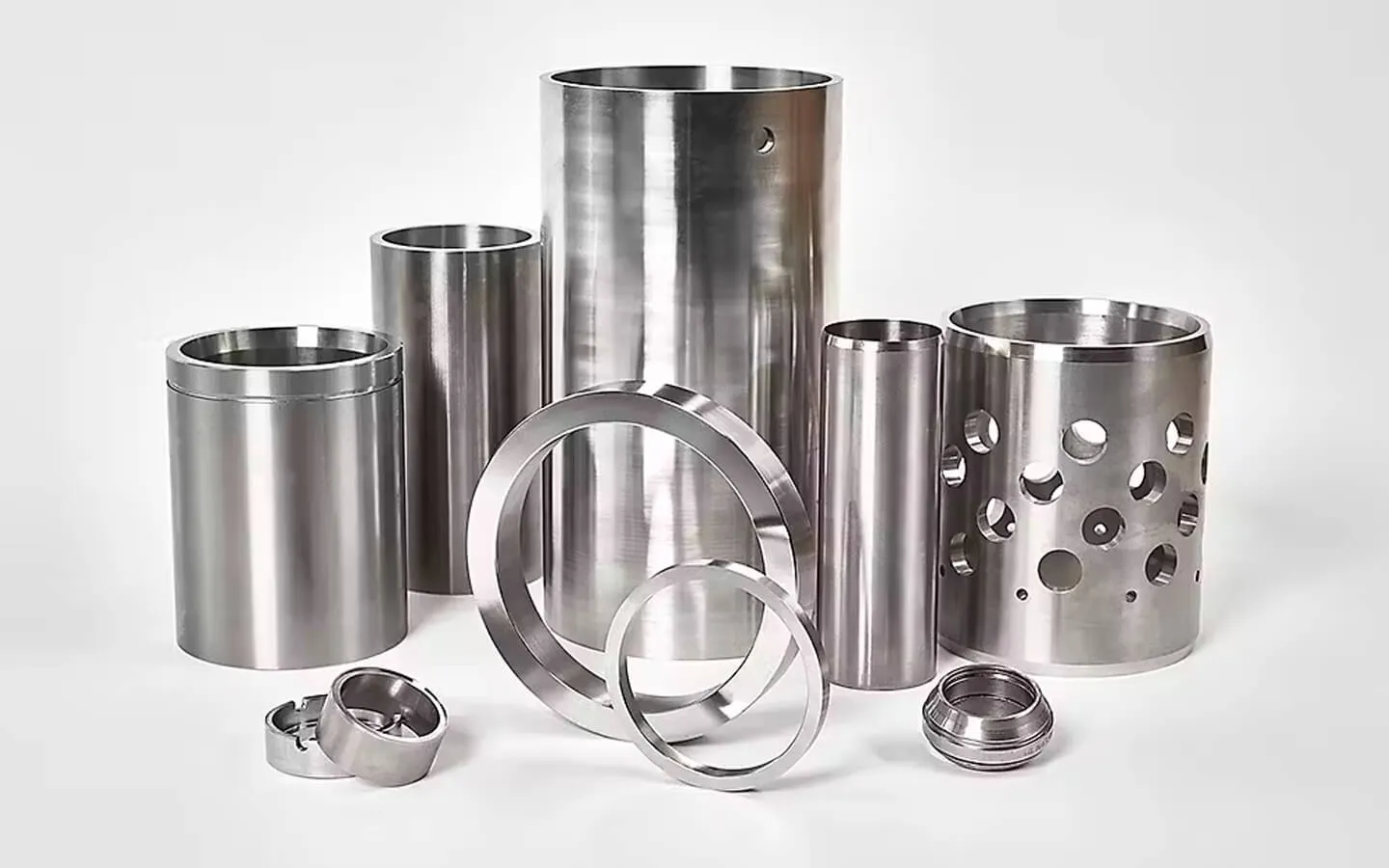
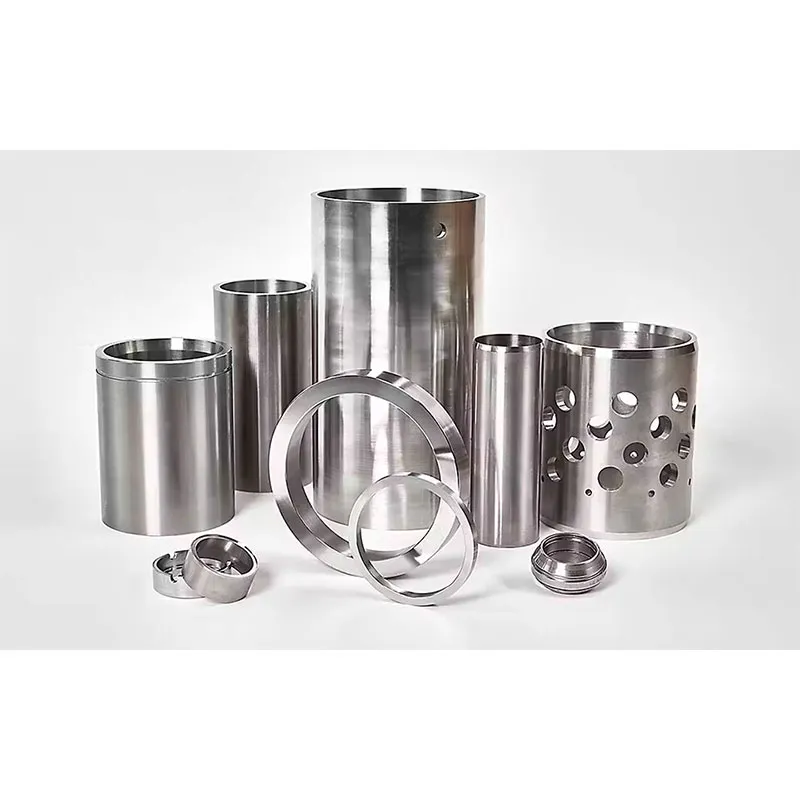
Stellite 1: A high-carbon and high-tungsten grade with a hardness of up to HRC 48-55. It has excellent anti-abrasive wear performance and is suitable for valve seats, bearings and wear-resistant liners, etc.
Stellite 4: High strength, high hardness. It is suitable for cold stamping dies, high-stress wear parts, etc.
Stellite 6: The most versatile and classic grade, it is known as the "Jack of all kinds". It has a perfect balance of hardness (about HRC 40) and toughness, and also features excellent impact resistance, corrosion resistance and high-temperature resistance. It is widely used in valve sealing surfaces, engine valves and various bushings, etc.
Stellite 12: Its performance lies between that of Stellite 1 and Stellite 6, with a hardness of approximately HRC 45. It is harder and more wear-resistant than Stellite 6, and is suitable for high-temperature and high-pressure valves, sawteeth, screw push rods, and control valves.
Stellite 20: A grade with extremely high hardness (approximately HRC 60), mainly designed for extreme abrasive wear conditions, and is often used in bearing sleeves, wear-resistant plates, and rotary sealing rings.
Stellite 100: Impact-resistant and cavitation resistant, mainly designed for extreme abrasive wear conditions, it is often used in pump impellers, turbine blades, and chemical equipment.
High-temperature/corrosion-resistant series
Stellite 21: A low-carbon, molybdenum-containing grade with excellent toughness and outstanding thermal shock resistance. Gas turbine blades, high-temperature valves, nuclear industry components.
Stellite 31 (X-40) : Containing nickel, it features excellent high-temperature strength and thermal fatigue resistance, and has long been used as a material for guide vanes in aero engines and components of gas turbines.
Stellite 25: Low carbon content, with excellent resistance to thermal fatigue, oxidation and sulfidation, suitable for combustion chamber components.
Special Performance Series
Tribaloy T-400: High molybdenum content, excellent high-temperature self-lubricating property, achieving high-temperature self-lubrication through Laves phase, particularly suitable for gate valves and oil-free lubrication components in high-temperature and highly corrosive media.
Tribaloy T-800: High molybdenum and high chromium, with better wear resistance than T-400, suitable for more demanding, highly corrosive and high-temperature environments.
Advantages and disadvantages of Stellite alloy
Advantages
Outstanding red hardness: The most prominent feature of Stellite alloy is that it can maintain high hardness and strength even at high temperatures ranging from 650 to 1000℃. Its carbides do not re-dissolve until as high as 1100℃, which is difficult for many iron-based and nickel-based materials to achieve.
Comprehensive corrosion resistance: The high chromium content enables it to form a stable passivation film in various corrosive media, including seawater, sulfuric acid, nitric acid and high-temperature gas, demonstrating excellent resistance to both uniform and local corrosion. Especially in terms of resistance to thermal corrosion (such as sulfidation), Stellite alloys are often superior to nickel-based alloys due to the higher melting point of cobalt sulfides.
Outstanding wear resistance: Whether it is intermetallic friction wear (adhesive wear) or erosion wear caused by fluids containing particles, Stellite alloy performs exceptionally well. It has a low coefficient of friction and strong anti-scratch ability.
Excellent thermal fatigue resistance: It can withstand drastic temperature changes (thermal shock) without cracking, making it highly suitable for frequent start-stop conditions of valves, molds, etc.
Disadvantage
Insufficient medium-temperature strength: At medium temperatures (such as 600-800℃), the strength of Stellite alloys is typically only 50-75% of that of nickel-based alloys due to the lack of coherent strengthening phases.
High processing difficulty: Due to its high hardness and high toughness, the cutting processing of Stellite alloy is extremely difficult. Usually, only grinding or special processing methods can be adopted, resulting in high manufacturing costs for parts.
Resource scarcity: Cobalt is an important strategic resource. Its global reserves are limited and unevenly distributed, which leads to the high price of Stellite alloy. To some extent, this restricts its large-scale application.
Limited oxidation resistance: Despite its excellent resistance to thermal corrosion, the oxidation resistance of Stellite alloys in pure high-temperature oxidation environments is usually lower than that of nickel-based alloys.