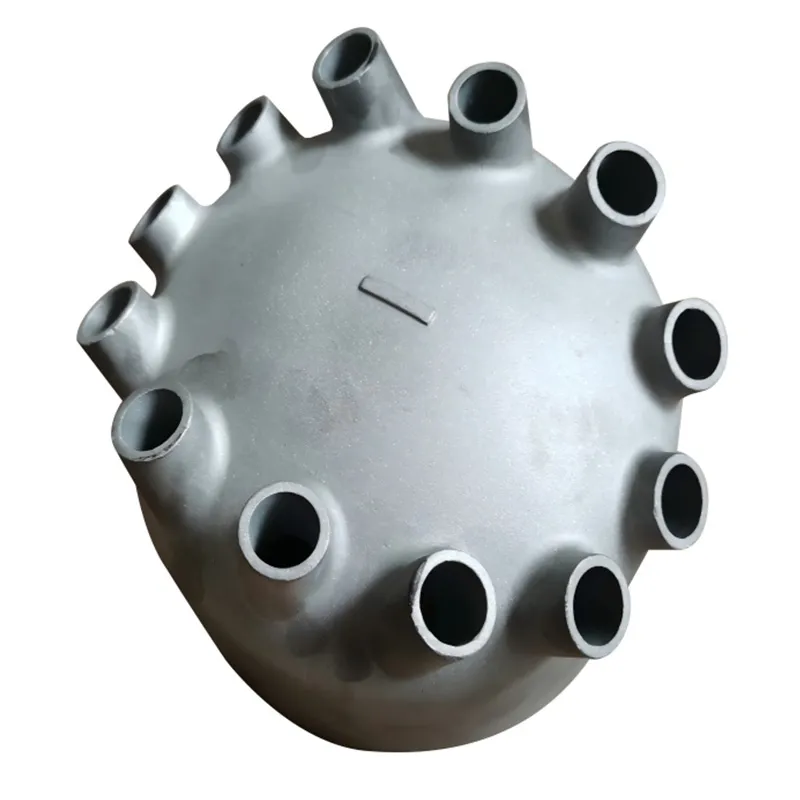
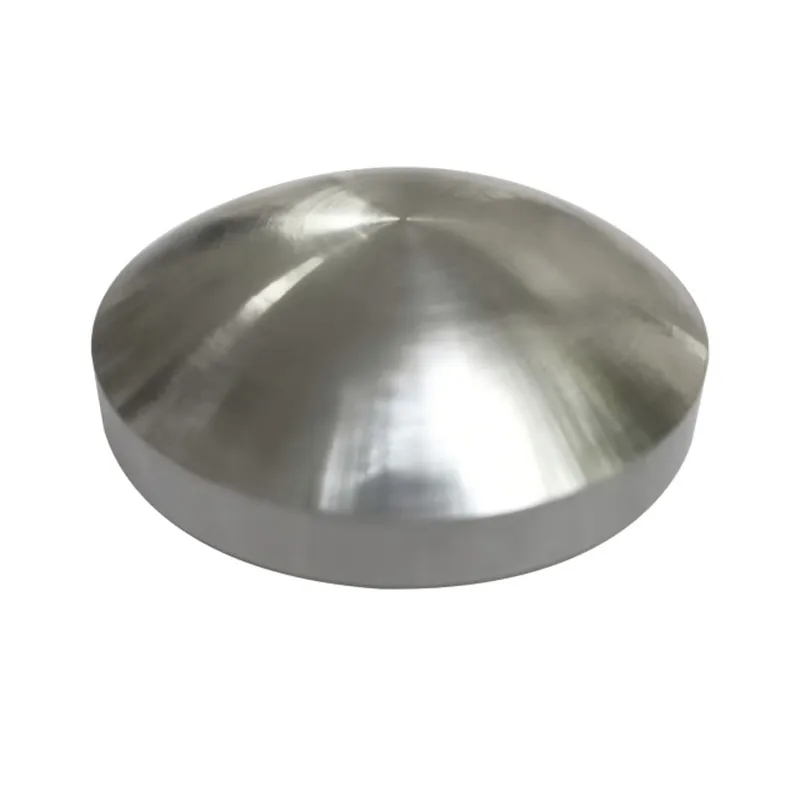
If you've been around cast iron parts long enough, you hear HT300 thrown around like it's a universal guarantee. People see that tensile strength spec and think the job is done. That's the first mistake. In my experience, specifying HT300 is just the starting gun, not the finish line. The real work begins with understanding what that number means on the shop floor, in the pattern, and during the pour. It's not a magic formula; it's a promise that's incredibly easy to break if you're not watching the details—carbon equivalent, cooling rates, inoculant timing, you name it. I've seen too many drawings where someone just scribbled Material: HT300 and expected a perfect, machinable, stress-free component. It never works out that way.
The Reality Behind the Spec
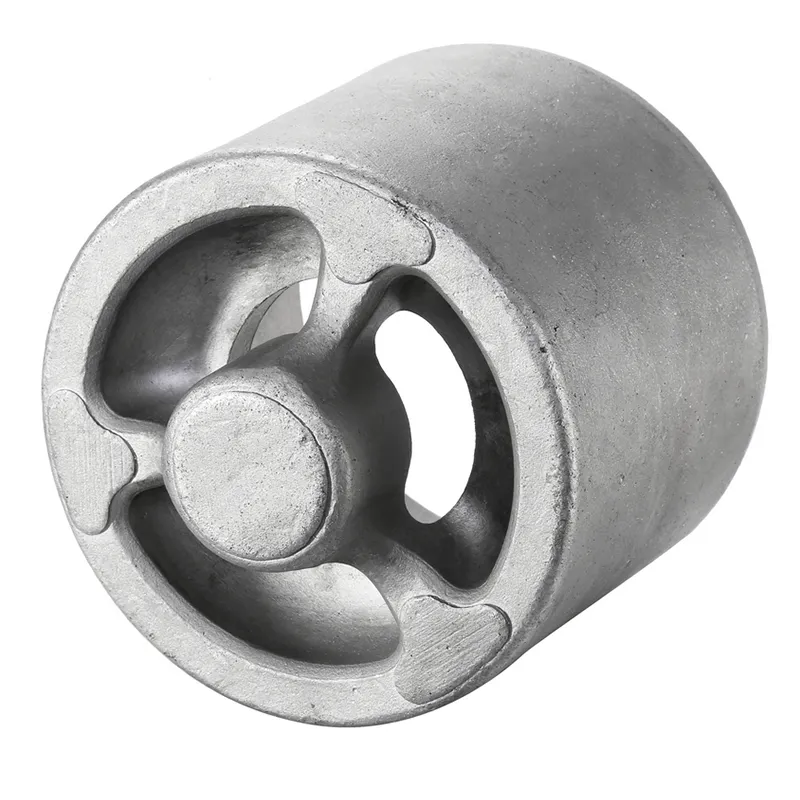
Let's get specific. HT300, or Grade 300 in some systems, refers to a gray cast iron with a minimum tensile strength of 300 MPa. The key word is minimum. Achieving it consistently is a craft. Early on, I learned this the hard way with a batch of hydraulic valve bodies. The chemistry was on paper perfect for HT300, but the tensile bars came back brittle, barely scratching 280 MPa. The failure? We overlooked the effect of the molding sand's thermal properties on the cooling gradient for our specific section thicknesses. The iron was right, but the process was wrong. The datasheet doesn't tell you that.
This is where long-term foundry partners make the difference. A shop like Qingdao Qiangsenyuan Technology Co., Ltd. (QSY), with their three decades in shell mold and investment casting, gets this intuitively. They've likely poured more tons of HT300 than most of us have seen drawings. When you work with such a vendor, the conversation shifts from Can you meet HT300? to How do we adjust the gating system for this boss geometry to ensure the flake graphite structure is right here? That's the level you need.
For instance, on their platform at tsingtaocnc.com, they list their material capabilities broadly, but the implication for a spec like HT300 is clear: it's not just about having the furnace. It's about having the historical data. They've probably built an internal library of how different inoculants like FeSi75 behave with their base iron for various shell mold thicknesses, which directly impacts the final matrix and that all-important tensile number. You can't fake that knowledge.
Machinability: The Hidden Battle
Here's another common trap. You get a beautiful casting that meets the HT300 strength spec, only to have it destroy tooling in the CNC stage. The hardness might be in range, but the machinability is terrible. Why? Often, it's the pearlite content and the graphite flake morphology. Too fine, and it's abrasive; too coarse, and you lose strength. It's a balancing act.
I recall a project for a compressor housing where we needed intricate milling and tapping. The first samples from a new supplier were technically HT300, but our tools were wearing out three times faster than usual. The problem was traced back to an over-inoculation practice that made the structure too uniform and hard. The fix wasn't changing the grade; it was a slight tweak in the post-inoculation process and a longer, controlled cooling cycle. The part still tested well over 300 MPa, but now it cut like butter. This is the kind of process nuance a mature operation brings.
Looking at QSY's integrated offering—casting and CNC machining under one roof—is a major advantage here. They're forced to face the machinability consequences of their own castings. That feedback loop is immediate. If their HT300 recipe is hard on tools, their own machining division feels the cost first. It aligns incentives perfectly to optimize the material not just for the test bar, but for the entire manufacturing chain.
When HT300 Isn't the Answer
Blindly applying HT300 is a recipe for over-engineering and cost inflation. I've been guilty of this. For a non-critical structural bracket in a static, low-stress environment, specifying HT300 was overkill. We paid a premium for the chemistry control and testing, when a lower grade would have functioned identically and been easier to cast. The lesson: always question the load case. Does it need fatigue resistance? Does it undergo thermal cycling? If not, you might be adding cost for no reason.
Conversely, there are situations where HT300 might be the bare minimum, and you need to plan for upgrading. Think about parts with high thermal shock. The thermal conductivity of gray iron is great, but cyclic heating and cooling can promote growth and cracking. Sometimes, you need to look at compacted graphite iron (CGI) or even a nickel-alloyed iron, despite the cost jump. A good foundry will push back on a spec if they see a risk. I've had engineers from shops like QSY suggest a material review after looking at a drawing, because their experience told them the thermal stresses in service would make standard HT300 a reliability risk. That's valuable.
Their work with special alloys, like nickel-based ones, as mentioned on their site, informs this. They understand the property spectrum. So when they quote on a HT300 part, they're not just thinking about pouring iron; they're implicitly comparing it against other materials in their portfolio for fitness-for-purpose. That depth is what separates a part supplier from a manufacturing partner.
The Testing and Trust Factor
You can't manage what you don't measure. Relying solely on the foundry's certificate of conformity for HT300 is risky. Early in my career, we accepted certs at face value. Then we had a field failure. When we did our own destructive testing on retained samples, the properties were borderline. The lesson was brutal: you need a verification strategy. Will you do periodic third-party testing? Will you review their internal process control charts for key parameters like carbon equivalent and inoculation records?
A transparent supplier makes this easier. They should be able to explain their process control points. For a critical HT300 component, I'd want to know: at what temperature are they pouring? What's their target cooling curve for my part's modulus? How are they verifying the structure (often via wedge tests or micro-samples) before the full heat treat? If they can't or won't discuss this, it's a red flag.
Building a relationship with a technically capable foundry is the ultimate time-saver. Over time, with a track record of good parts, the need for exhaustive testing diminishes because trust, built on data and consistent performance, replaces it. You start sharing load calculations with them, and they advise on rib placement to avoid hot spots that could weaken the HT300 structure. It becomes a collaboration.
Wrapping It Up: The Practitioner's View
So, what's the takeaway on HT300? It's a reliable, well-understood material, but it's not a commodity. It's a performance specification that is entirely dependent on the skill and control of the foundry executing it. The number on the spec sheet is just an output. The inputs—melting, molding, inoculation, cooling—are where the battle is won or lost.
When evaluating a source, don't just look at their material list. Look for evidence of deep process integration and historical stability. A company that has evolved from a foundry to a full solution provider, like QSY with its combined casting and CNC machining, often has a more grounded, practical understanding of these materials. They've had to live with the consequences of their process decisions in the next stage of production.
In the end, successful use of HT300 comes down to respect—respect for the complexity hidden behind a simple alphanumeric code, and respect for the craft required to deliver it consistently. Specify it with purpose, partner with someone who has the scars to prove their expertise, and always, always keep an eye on the real-world behavior, not just the test report.