When people hear 'in powder metallurgy', they often picture a neat, modern process—press powder, sinter, done. The reality on the shop floor is messier, full of compromises and 'it depends' moments that data sheets don't cover.
The Gap Between Spec and Reality
Take density, for instance. Everyone chases that theoretical 100% dense part. But in practice, achieving uniform density, especially in complex geometries, is a constant battle. You can have a spec calling for 7.2 g/cm3, and you hit it on average. Yet, cross-section the part, and you'll find gradients—thinner sections sintering differently than massive hubs. This isn't a failure of the process in powder metallurgy per se, but a fundamental characteristic. The tooling design, the fill, the press stroke—they all leave their fingerprint. I've seen components pass QA on dimensions and average density, only to fail in fatigue testing because of a subtle density trough at a radius. That's where the real work begins.
This connects to a common client misconception. They send a drawing for a machined part and ask, Can you make this via PM to save cost? Sometimes, yes. But often, the design has sharp corners, non-uniform wall thickness, or features that require secondary machining anyway. The real value in powder metallurgy is designing for the process from the start—incorporating drafts, optimizing wall transitions, and specifying tolerances that the process can realistically hold without turning it into a machining project. It's a consultative step that's often skipped in the rush for a quote.
Material choice is another area ripe with nuance. The standard iron-copper-carbon mixes are workhorses, but when you need corrosion resistance or high temperature performance, you step into pre-alloyed steels or stainless. Here's a detail: with 316L stainless powder, the sintering atmosphere becomes critical. A tiny leak in the furnace, a bit of residual oxygen, and you don't just get surface discoloration—you get chromium oxide formation that saps the corrosion resistance right out of the core. It looks fine coming out of the furnace, but it'll rust. You learn to trust dew point analyzers more than your eyes.
Where PM Meets the Broader Manufacturing Chain
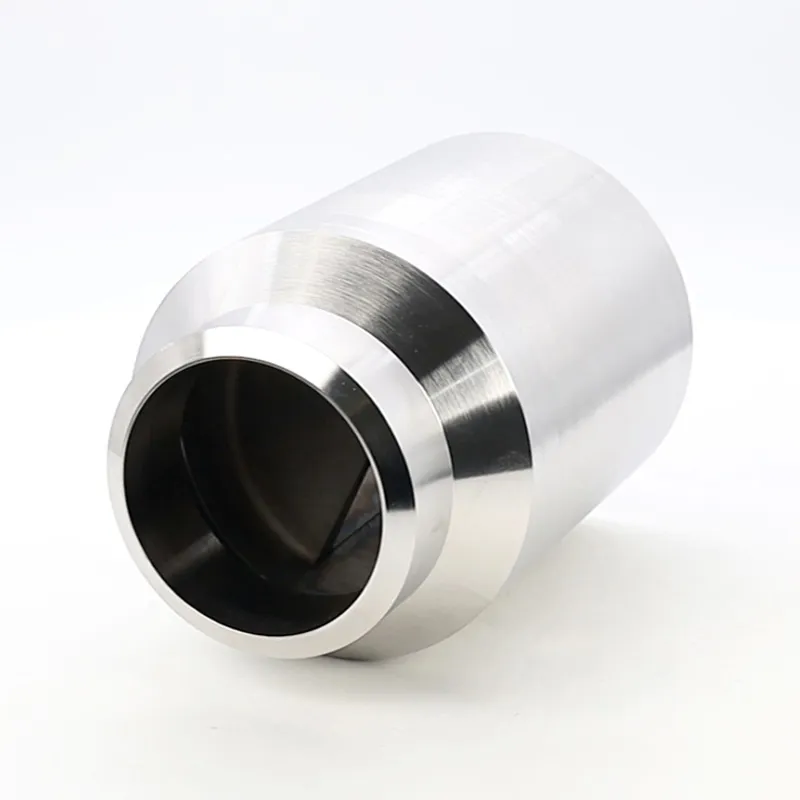
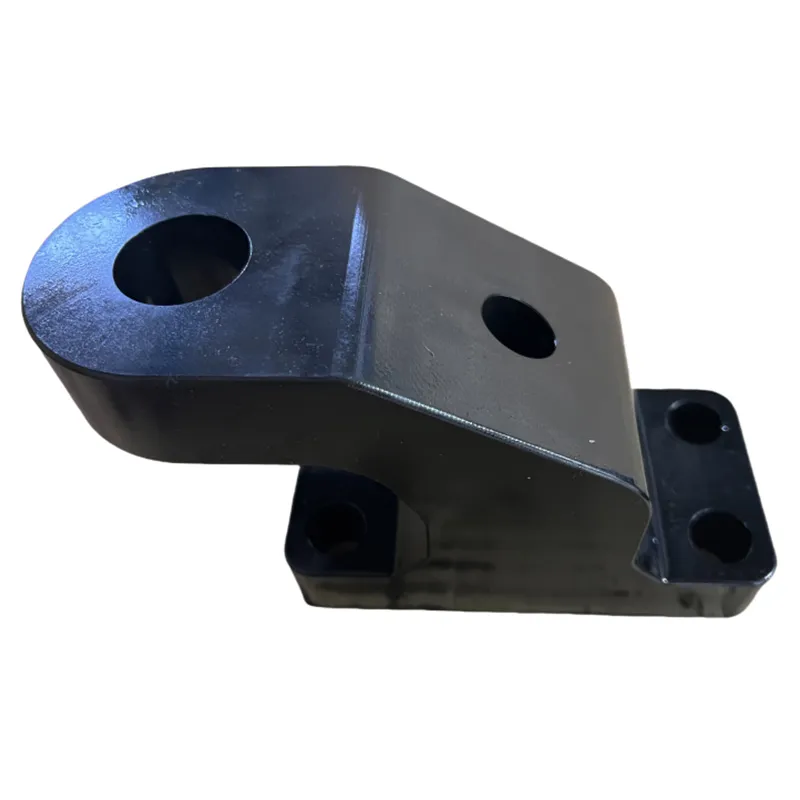
This is where the expertise of a full-service manufacturer becomes crucial. A part isn't born in the sintering furnace and called complete. Take a sprocket or a gear made in powder metallurgy. It might need a bore honed to a precise finish, a keyway broached, or teeth ground. If the sintering isn't controlled to minimize distortion, those secondary operations become expensive, eating up the initial cost savings. I've worked with partners who get this integration right. For example, Qingdao Qiangsenyuan Technology Co., Ltd. (QSY), with their decades in casting and machining, understands this transition between processes intuitively. While their foundation is in shell mold and investment casting, the principles of managing material behavior and precision secondary machining are directly transferable. Visiting a facility like theirs, you see the CNC machines ready to finish near-net-shape parts, whether they come from a casting mold or a PM compact. That downstream capability dictates how you run the upstream PM process.
Speaking of secondary ops, heat treatment post-sintering is a world of its own. Case hardening a PM part isn't like hardening a wrought steel bar. The porosity acts as a network of tiny stress concentrators. If you're not careful with the carburizing atmosphere and quench rate, you can promote grain boundary oxidation along the pore surfaces, making the part brittle. We learned this the hard way on a batch of transmission components. They passed hardness checks but started fracturing under torque. The failure analysis pointed to this intergranular oxidation. The fix? A modified thermal cycle with a much tighter atmosphere control during the boost-diffuse stages. It added cost and time, but it was that or scrap the whole application.
Sometimes, the solution isn't more process, but a material switch. We had a project for a high-wear component in a food processing machine. A standard hardened PM steel wasn't holding up. We looked at infiltrating with copper, but that complicated things. Then we pivoted to using a powder blend that could accommodate a solid lubricant, like a controlled amount of graphite, sintered into the matrix. It created a self-lubricating characteristic that dramatically increased service life. It wasn't the textbook first choice, but it came from understanding that the function—reducing friction and galling—was more important than chasing ultimate tensile strength.
The Tooling Grind and Prototype Hurdles
Nothing brings theory down to earth like tooling. Designing and machining the die set is where the part concept gets real. Clearances are measured in ten-thousandths of an inch. A slight mismatch in the core rod alignment, and you get wear on one side, leading to part ejection issues and rapid tool failure. The cost and lead time for tooling are the biggest barriers to prototyping in PM. It's not like machining where you just reprogram the path. This forces a very disciplined design freeze. I remember a prototype run for a sensor housing where the client kept tweaking a mounting hole location. After the third tooling modification, the cost outweighed the entire projected first-year production savings. We had to push back and finalize the design, explaining that the agility in PM comes after the tooling is proven, not during its creation.
This high barrier to entry for prototypes is why many look to companies with parallel capabilities. If a component's viability is uncertain, it might be smarter to prototype it via a more flexible process like investment casting or even CNC machining from bar stock to validate form, fit, and function. Once the design is locked, then you invest in PM tooling for volume production. A company like QSY, operating across multiple processes (https://www.tsingtaocnc.com), is positioned to advise on this exact journey. They can handle the prototype via their casting or CNC shops, then transition the matured design to PM for the production run, all while maintaining consistency in material specs and critical dimensions through their in-house machining.
Tooling wear isn't a linear event; it's a gradual degradation that subtly changes the part. You might start producing parts at the top of the tolerance band, and over 100,000 presses, they drift to the bottom. A good process includes scheduled checks and tooling maintenance, but you also learn the signs—a slight increase in ejection force, a minor burr on a specific edge. Catching it then saves a mountain of sorting and scrap later.
Atmosphere and Sintering: The Invisible Hand
The sintering furnace is the heart of the operation, and the atmosphere is its lifeblood. Running a 90/10 nitrogen-hydrogen mix is standard, but the purity matters. A spike in oxygen or moisture content, and you're sintering a boatload of scrap. We installed a real-time atmosphere monitoring system after losing a full day's production to a contaminated gas bottle. The data was eye-opening—you could see the dew point creep up minutes before any visual part defect appeared. Now it's a non-negotiable part of the setup.
Sintering temperature and time are a dance. The textbooks give you a range, say 1120°C for 30 minutes for a certain steel. But your furnace hot zone, your part loading density on the belt, even the ambient humidity affecting the green parts as they enter—they all shift that ideal point. You develop a recipe for each part family, but you're always tweaking it. Is the belt speed a touch too fast? Are the parts in the center of the belt reaching temp? You learn to read the sintered color and the ring of a part tapped on a table as much as you read the pyrometer.
Cooling rate is an under-discussed factor. Fast cooling might get parts out the door quicker, but for some alloys, it can lock in stresses or prevent the full formation of desired metallurgical phases. Sometimes you need a controlled cool, which bottlenecks the furnace throughput. It's a classic production vs. quality trade-off that gets resolved not by a manual, but by the part's performance in the field. If parts are coming back with micro-cracks, the first place to look is the cooling zone.
Thinking Beyond the Press
Ultimately, success in powder metallurgy is about seeing the part as a system within a system. It's not an isolated component. How does it mate with a shaft? Is it press-fit, and if so, how does the porosity affect the interference fit calculation? We had a case where a perfectly in-spec PM bushing cracked during a press-fit assembly. The problem wasn't the bushing; it was the aggressive press-fit spec carried over from a wrought part design. We had to recalculate the fit based on the actual compressive strength of the porous material, not its theoretical solid density.
This systemic view is what separates a parts supplier from a manufacturing partner. It's about asking, What is this part meant to do? rather than just, Can we make this shape? It involves understanding the entire supply chain, from powder sourcing (where consistency is king) to final delivery. It's why long-standing manufacturers, whether focused on PM, casting, or machining, often have the deepest practical knowledge. They've seen the failures, navigated the material shortages, and adapted processes to keep lines running. That experience, the kind built over 30 years as noted in QSY's operations across casting and machining, informs every step—from material selection and process design to final inspection—ensuring the part doesn't just meet a print, but survives in the real world.
So, when I think about working in powder metallurgy, it's less about the textbook process and more about this accumulated layer of practical adjustments. It's a field where you're always balancing ideal physics with the realities of production economics and material quirks. The powder is just the starting point.