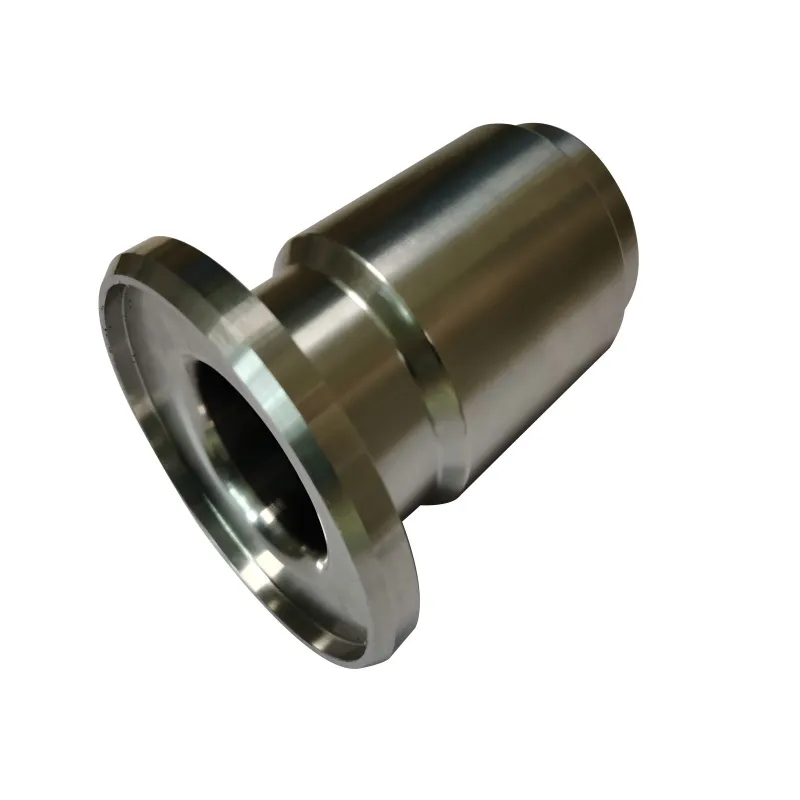
When you hear 'Incoloy washer', the immediate thought for many is just a high-temp spacer, a fancy washer for hot places. That's the common pitfall. In reality, specifying the right Incoloy washer is less about the temperature rating on a chart and more about the specific cocktail of chlorides, sulfides, and thermal cycling in the actual service environment. I've seen projects where the material grade was technically correct, but the failure came from the machining process altering the surface integrity, creating a path for stress corrosion cracking. It's never just a washer.
The Material Maze: More Than Incoloy 800H
Everyone defaults to 800H or 825 for washers. They're workhorses. But in a high-chloride, low-pH scrubber system we worked on, 800H showed signs of pitting after 14 months. The client was furious—they paid for a premium alloy. The issue? The washer's geometry. It was a standard flat washer, which created a crevice. In that stagnant microenvironment, the chemistry changed, and the alloy's general resistance wasn't enough. We learned that with Incoloy washer applications, you must specify the environment in microscopic detail: is it fully immersed, is there cyclic wet/dry, is there deposit buildup?
That's where the alloy nuance matters. For that scrubber retrofit, we moved to Incoloy 625 washers. The higher molybdenum content was crucial for that specific pitting resistance. But it's not a universal upgrade. 625 is tougher to machine, more expensive, and for standard flue gas ductwork, it's overkill. You end up wasting money. The judgment call is in knowing the difference between general high-temperature service and a localized corrosion trap.
I recall sourcing these 625 washers for a rush job. The usual supplier was backlogged. We found a new vendor promising quick turnaround. The washers arrived, dimensions were perfect, but the surface finish was wrong—too smooth, almost polished. It raised a red flag. A polished surface on a Incoloy washer can sometimes reduce the friction coefficient in a bolted joint, potentially affecting the clamp load under thermal expansion. We had to put them in a vibratory finisher to get the right, uniform matte finish. It delayed us two days. The lesson? The spec sheet doesn't list everything. Surface texture matters for function, not just aesthetics.
Manufacturing Realities: From Casting to CNC
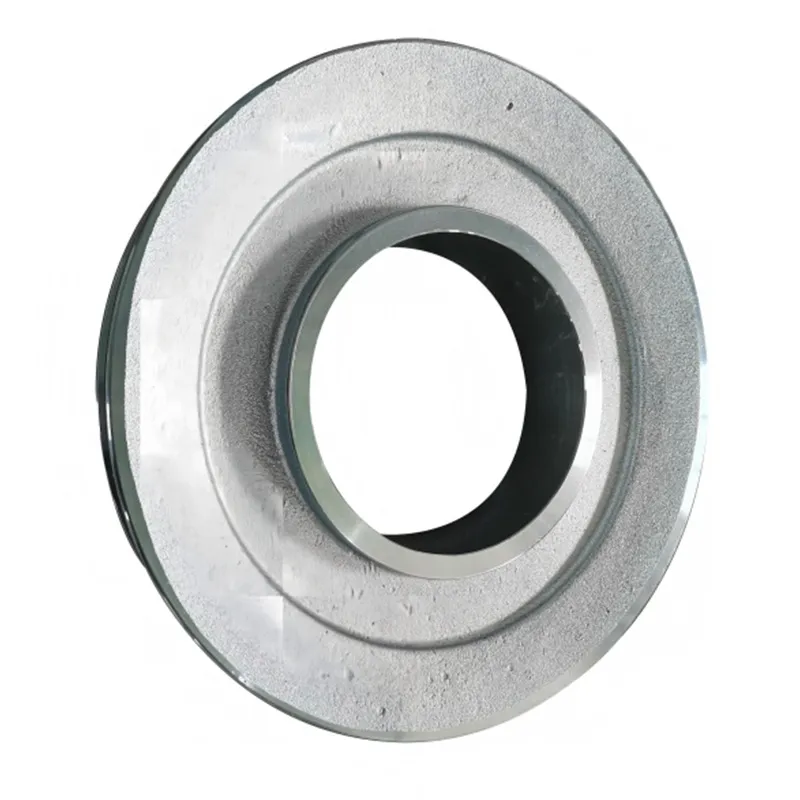
This is where the rubber meets the road. You can't just stamp these out like a standard steel washer. Most high-performance Incoloy washer components start as investment castings or are machined from wrought bar. For large-diameter or non-standard thickness washers, casting is often more economical. I've worked with Qingdao Qiangsenyuan Technology Co., Ltd. (QSY) on several projects requiring custom alloy components. Their three decades in shell mold and investment casting, specifically with nickel-based alloys, shows in their process control. They understand that for Incoloy, the heat treatment post-casting is as critical as the melt chemistry. A poorly managed solution annealing cycle can leave you with sensitized grain boundaries, a perfect highway for corrosion.
CNC machining is the other route, especially for prototypes or smaller batches where you need precise dimensional control from a wrought material. The challenge here is work hardening. Incoloy alloys are notorious for it. You take a pass with the wrong feed rate or a dull tool, and you've hardened the surface, making the next cut harder and potentially inducing micro-cracks. I've ruined a few blanks learning this. The machinists at shops like QSY, who list CNC machining of special alloys as a core competency, get this. They use specific tool geometries, high-pressure coolant, and controlled parameters. It's not just running a program; it's managing the material's behavior.
There's a failure that sticks with me. We needed a thick washer for a reactor head closure. The print called for Incoloy 718, machined from bar stock. The shop delivered parts that met all dimensional checks. But during installation, several washers cracked when torqued. The root cause? The bar stock had a non-uniform grain structure from the mill, and the machining process didn't account for it. The stress of machining, combined with the applied torque, found the weak path. We had to switch to a forged ring blank, which has a more homogeneous structure, and re-machine. The cost and delay were significant. It taught me that the source of the raw material form—bar, forging, casting—is a fundamental part of the Incoloy washer specification that's often overlooked on the purchase order.
The Specification Gap: What Drawings Don't Show
Engineering drawings are terrible at conveying context. They'll specify Incoloy 600, ASTM B166 and a hardness range. But they rarely specify the required corrosion test for the finished part, like ASTM G28 Method A for intergranular attack. For a Incoloy washer sitting in a weld neck flange of a sulfuric acid line, that test is the only guarantee it won't turn to Swiss cheese in a year. I make it a point now to add a note: Material certs must include ASTM G28 results for heats used. It filters out suppliers who just stock generic material.
Another missing spec is flatness and parallelism over the entire surface. For a soft gasket, it's less critical. But for a metal washer that's part of a sealing system, a slight dish or crown can concentrate stress. I've used optical flats and blue dye to check this. You'd be surprised how many washers from general machine shops rock on a surface plate. This isn't pickiness; a 0.05mm warp over a 150mm diameter washer can reduce the effective sealing area by 30% under bolt load.
Then there's the marking issue. You need traceability. But stamping a heat number directly onto a thin washer can cause localized cold work and stress risers. Laser marking is better, but it must be shallow. I prefer a small, etched area or even a tag wired to the batch. I once received a batch where the supplier deeply stamped the ID, violating the max material thickness rule for stamping. We had to reject the lot. It seems trivial, but in failure analysis, that stamp mark is where the crack often starts. The details are everything.
Supplier Landscape and Pragmatic Choices
Finding a reliable source isn't about Googling Incoloy washer supplier. It's about finding a partner who understands the metallurgy and the application. Many general fastener distributors will list them, but they're just reselling. You need a manufacturer or a deeply technical distributor. A company like Qingdao Qiangsenyuan Technology (QSY), with its long history in casting and machining special alloys, is positioned differently. They're not just cutting blanks; they're involved from the material selection phase. I've sent them a service environment description, and their engineers have come back with suggestions on grade and manufacturing route—sometimes casting over machining for better corrosion resistance in the final shape.
Price is always a factor, but with Incoloy, the cheap option is a trap. The raw material cost is high, so if a quote is significantly lower, they're cutting corners—maybe on the chemistry, the heat treatment, or the inspection. I've learned to ask for the mill certs upfront, not just a generic certificate of compliance. I want to see the actual chemical analysis and mechanical test results for the heat of material my washers will be made from. Reputable shops like QSY provide this as standard. It builds trust.
For standard sizes, sometimes it makes sense to buy from a specialist stockist. But for anything custom—odd OD/ID, special thickness, a required chamfer profile, or a need for a specific heat treatment like annealing under a hydrogen atmosphere—you go direct to a manufacturer. The lead time is longer, but the control is complete. The key is planning. Don't wait until the last minute to order a custom Incoloy washer; the material alone might have an 8-week lead time from the mill.
Concluding Thoughts: The Washer as a System Component
So, after all this, what's the takeaway? An Incoloy washer is never an off-the-shelf commodity. It's a critically engineered component of a larger system. Its performance is a function of the alloy grade, the manufacturing process, the quality of the raw material, and the precision of the finishing steps. Treating it as a simple spacer is where failures begin.
The industry is getting better, but slowly. More engineers are now specifying not just the material grade but also the manufacturing standard (e.g., ASME SB564 for forgings), non-destructive examination requirements (like liquid penetrant testing), and post-fabrication treatments. This level of detail separates a functional component from a liability.
In the end, success comes from collaboration between the design engineer, the metallurgist, and a competent manufacturer. It's about sharing the full story of the operating environment and being meticulous about the details that most drawings omit. When that happens, that humble washer does its job for decades, unseen and unremarked upon—which is the highest compliment it can receive.