When you hear 'Inconel 625 investment casting', the immediate thought is often about its spec—corrosion resistance, high strength, all that good stuff. But the real story starts when you try to actually make a complex, thin-walled component with it. The gap between the alloy's datasheet and the foundry floor is where most assumptions fail.
The Alloy's Character and the Wax Pattern Dilemma
Inconel 625 isn't just another nickel-base superalloy you throw into the process. Its high nickel and chromium content, with that molybdenum and niobium boost, gives it that legendary performance, but also a personality in the mold. The first hurdle isn't even the metal; it's the wax. For intricate aerospace or marine fittings, the pattern needs to be perfect. Any minor flaw gets magnified after shell building and the intense heat. I've seen too many projects where the initial wax injection phase was rushed, leading to costly rework later. The dimensional stability of the wax pattern for 625 is more critical than for, say, a 316 stainless part.
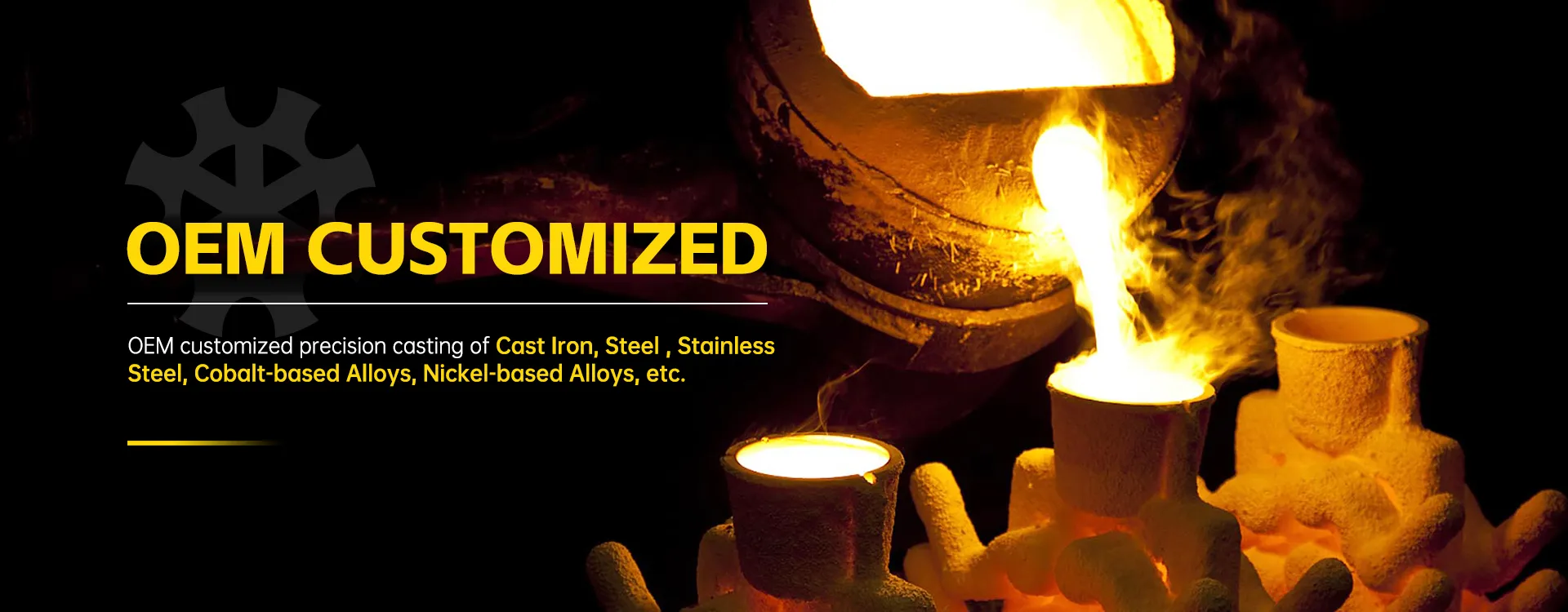
Then comes the shell. You can't use just any ceramic. The thermal expansion mismatch between a standard silica-based prime coat and Inconel 625 during dewaxing and pre-heat can cause micro-cracking, a perfect launchpad for metal penetration. We shifted to a fused silica or zircon-based primary slurry system, which sounds simple, but dialing in the viscosity and drying time for our humidity here was a months-long trial. A partner foundry, Qingdao Qiangsenyuan Technology Co., Ltd. (QSY), with their three decades in investment casting and shell mold work, echoed this. They pointed out that for their nickel-based alloys portfolio, the shell formulation for 625 often needs a tweak compared to their cobalt-based runs, especially for parts with sudden section changes.
It's these subtle adjustments that separate a usable casting from a scrap one. The pre-cast phase for 625 demands a respect for detail that borders on obsessive. You're not just building a mold; you're engineering a thermal and chemical interface.
The Pour: Where Theory Meets the Crucible
Melting and pouring Inconel 625 is where the rubber meets the road. The alloy's tendency to form secondary phases if the pour temp and cooling rate aren't in sync is a classic pitfall. It's not just about hitting °C. You have to consider how the metal flows through those thin sections of the ceramic shell. Too cool, and you risk misruns or cold shuts; too hot, and you aggravate reaction with the shell, potentially affecting surface integrity.
We learned this the hard way on an early project for a turbine seal ring. The geometry had a dense cluster of small cooling channels. The first few pours looked good visually, but radiographic testing revealed isolated areas of incipient melting and micro-porosity at the channel junctions. The issue? The thermal mass of the ceramic around those intricate features was altering the local solidification profile in a way our standard parameters didn't account for. The fix involved not just adjusting the superheat, but also redesigning the gating system to promote more directional solidification toward the risers, a fundamental principle that got overlooked in the quest to maximize yield.
Degassing is another silent factor. Hydrogen pickup can be a nightmare. A rigorous degassing practice in the induction furnace is non-negotiable. I recall a batch where the mechanical properties, particularly impact toughness, were inconsistently below spec. After ruling out chemistry, the culprit turned out to be minor humidity variations in the shop air affecting the melt. It's a humbling reminder that with materials like this, the environment itself becomes a process variable.
Post-Cast Reality: Heat Treatment and the Machining Grind
As-cast Inconel 625 has a cored dendritic structure that needs to be homogenized. The standard solution annealing around 1150°C followed by a rapid quench is textbook. But the 'rapid quench' part is tricky for heavy-section castings. If you don't get the quench rate right, you can end up with excessive carbide precipitation at grain boundaries, which then becomes a starting point for corrosion or cracking in service. It's a balance between achieving the required dissolution of secondary phases and avoiding distortion or quench cracking.
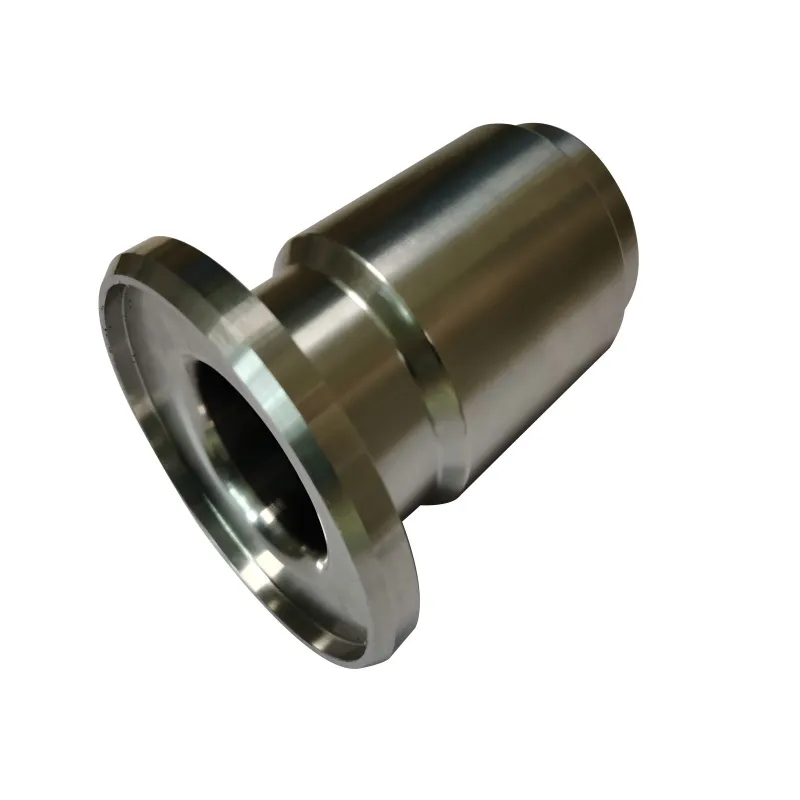
Then comes CNC machining. Anyone who thinks machining cast 625 is similar to machining bar stock is in for a shock. The cast surface layer, often with a slightly different hardness and possible alpha-chromium precipitates, can play havoc with tool edges. We adopted a conservative, high-pressure coolant approach with rigid tool paths, treating the initial roughing passes almost like a separate operation. Companies that integrate casting and machining, like QSY (you can see their approach at https://www.tsingtaocnc.com), have an advantage here. Their machinists are familiar with the specific 'as-cast' condition of their own foundry's 625 output, which allows for more optimized feeds and speeds from the get-go, reducing tool wear and improving final surface finish on critical sealing faces.
The cost of a scrapped part after hours of machining is far greater than one scrapped after casting. This post-cast phase often determines the overall project viability.
Case Point: A Valve Housing and the Dimensional War
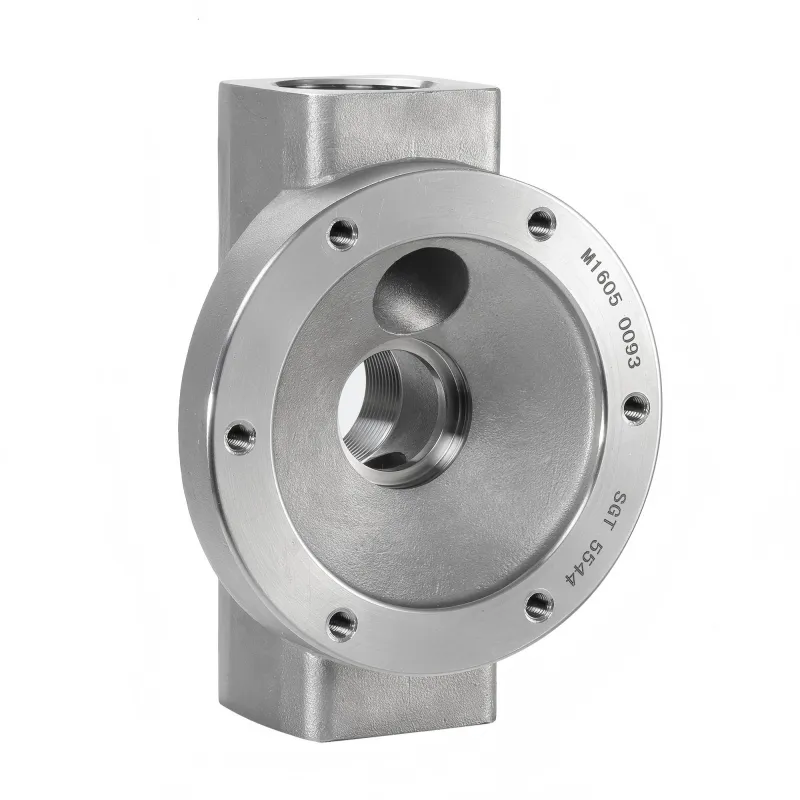
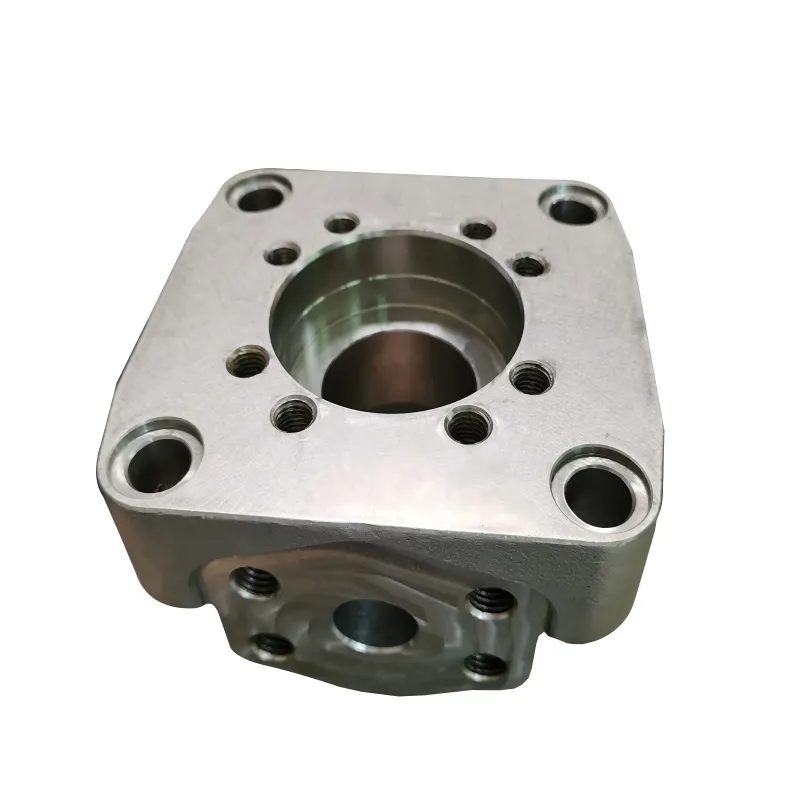
A concrete example was a large, complex valve housing for offshore service. The print called for ASME SB-366 Grade CW6MC (the casting equivalent of Inconel 625) with full NACE MR0175 compliance for sour service. The challenge wasn't the corrosion test; it was holding a 0.2mm tolerance on a large, irregular internal bore after heat treatment.
The casting and heat treat caused predictable but non-uniform dimensional shifts. Our initial method of adding a generic machining stock allowance failed. We had to implement a 'first article' process: cast, heat treat, then 3D scan. The scan data was used to create a compensated CNC program for the final machining. It added a step, but it was the only way to hit the spec reliably. This kind of adaptive process flow is critical for high-value Inconel 625 investment casting.
It also highlights why close collaboration between the foundry and machine shop is vital. When they're under one roof, or have a tight partnership, feedback loops are shorter. Issues like residual stress patterns from casting that manifest during machining can be diagnosed and addressed at the process design stage for the next run.
Looking Back and Moving Forward
So, what's the takeaway? Successful investment casting of Inconel 625 is a systems engineering problem. It's not a commodity process. It demands a deep, almost intuitive understanding of how each step—from wax to final inspection—influences the next. The alloy doesn't forgive shortcuts.
The industry is moving towards more simulation, which helps. Modeling solidification and stress can flag potential hot spots. But the simulation is only as good as the material property data and boundary conditions you feed it, which still often come from old-fashioned trial and error.
For engineers sourcing these parts, the key is to look beyond the sales brochure. Ask about the specific shell systems used for 625. Discuss their historical data on dimensional repeatability post-heat-treat for similar geometries. Inquire about their in-house machining capability for the material. The expertise of a supplier like QSY, with its long-term focus on special alloys and integrated CNC machining, often lies in this accumulated, practical knowledge—the kind that turns a challenging alloy specification into a reliable, functioning component. That's the real value in this field.