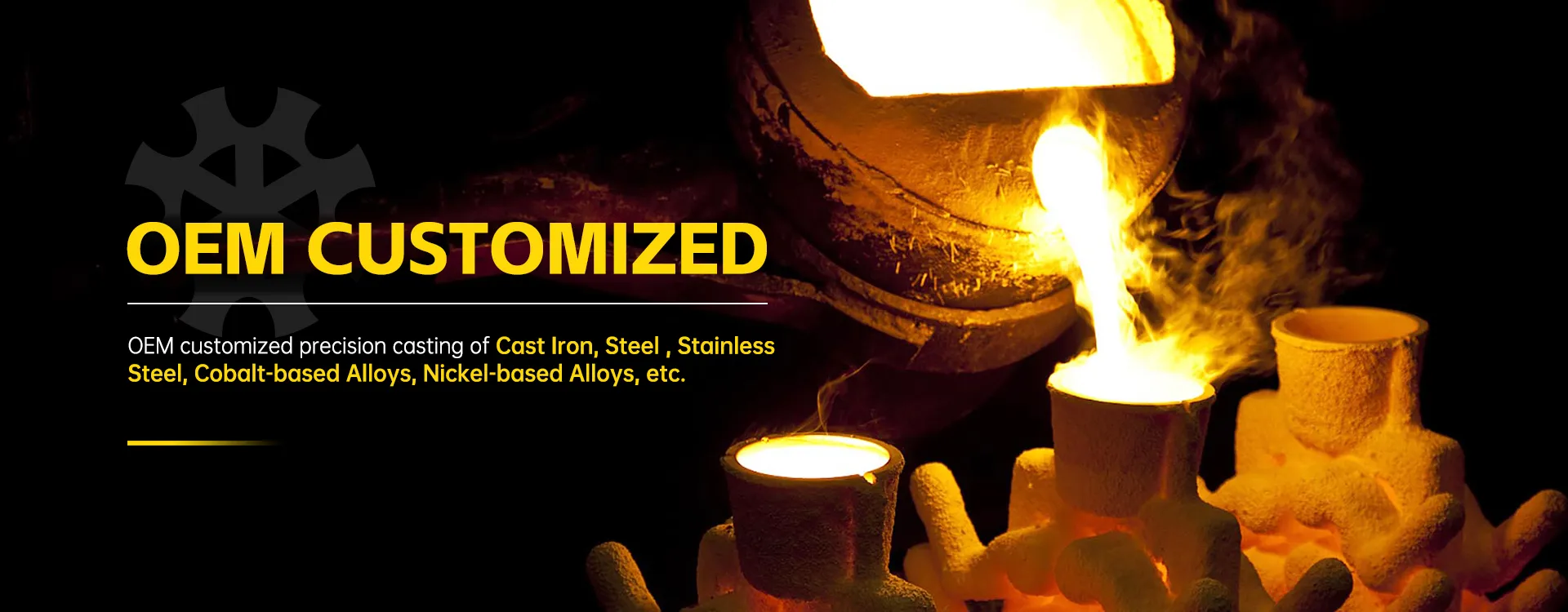
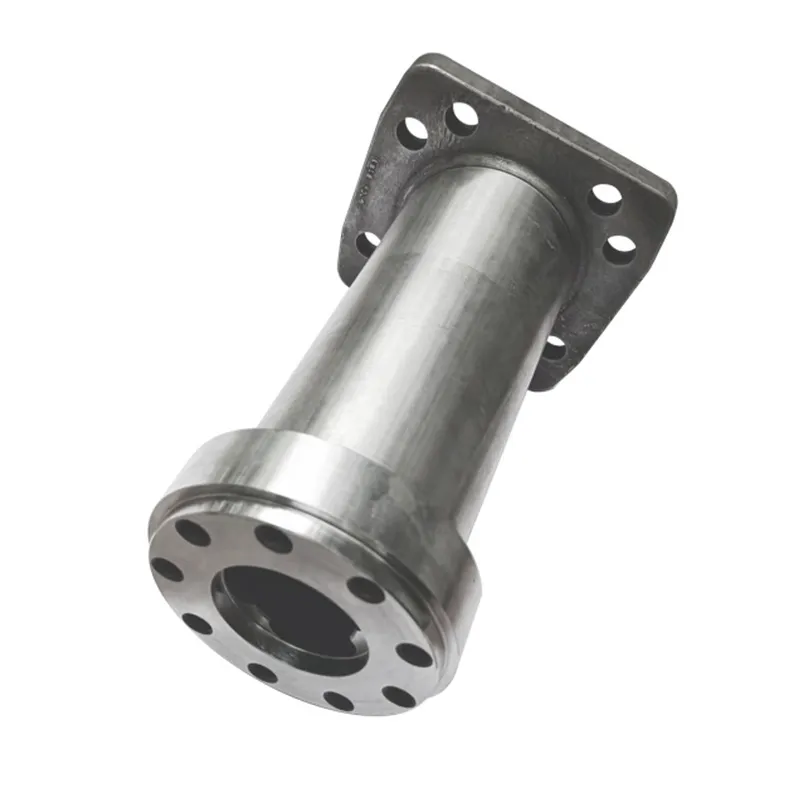
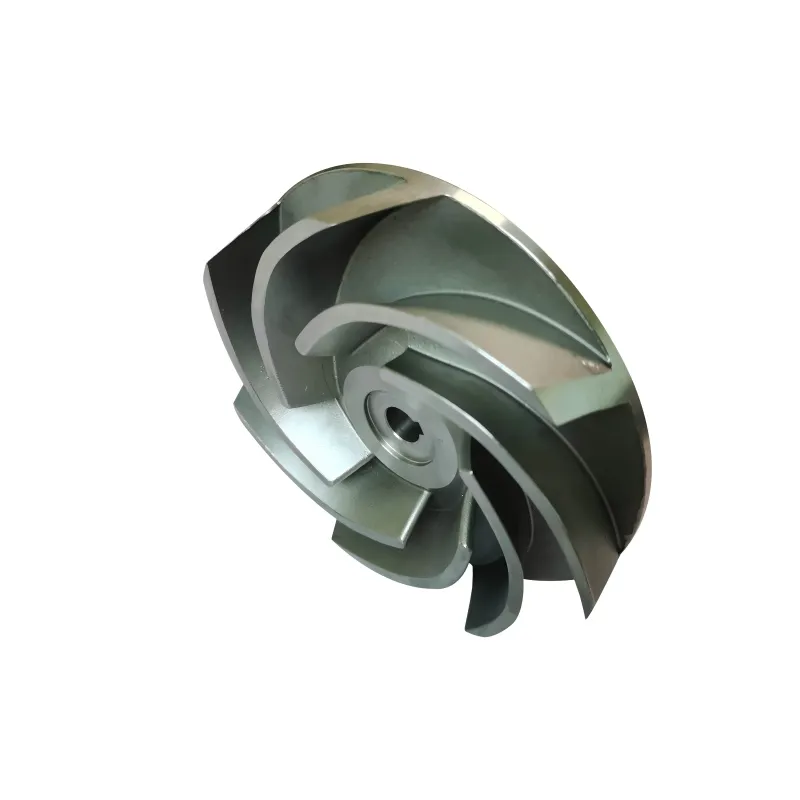
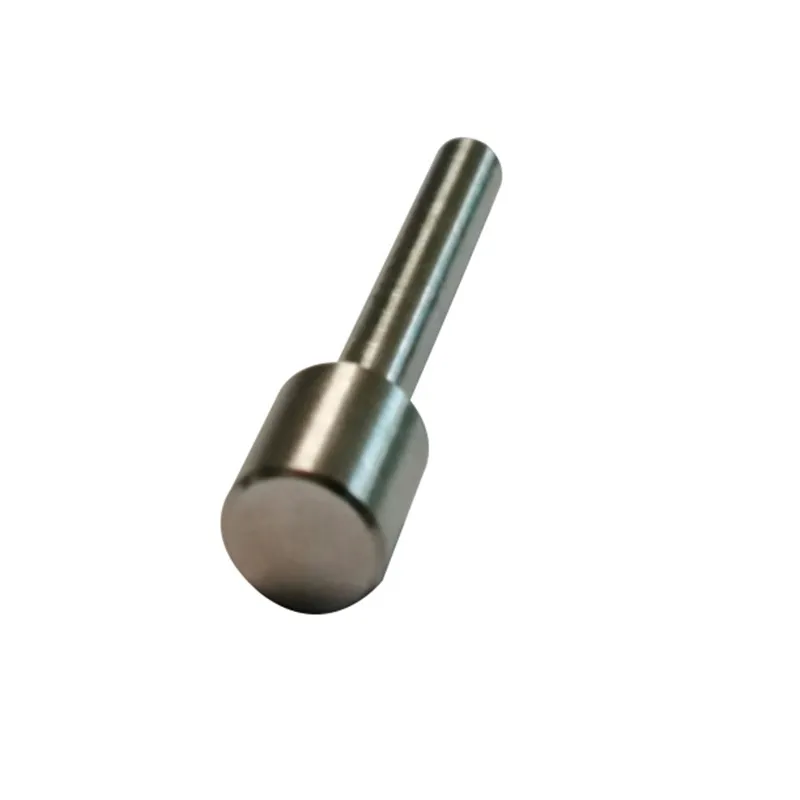
When you hear 'Inconel investment casting', the immediate image is often one of indestructible aerospace parts or turbine blades glowing cherry red. That's not wrong, but it's a surface-level view that glosses over the gritty reality. The real story isn't just about the alloy's legendary high-temperature strength; it's about the meticulous, often frustrating dance between chemistry, heat, and ceramic shells. Many assume if you can cast 316 stainless, you can cast Inconel 718. That assumption is where projects start to bleed money and time.
The Core Challenge: It's All About Control
Let's get specific. With Inconel, especially the precipitation-hardening grades like 718 or 625, you're not just pouring liquid metal. You're managing a reactive soup of nickel, chromium, niobium, and molybdenum that wants to form deleterious phases if you let it cool wrong. The investment casting process, with its ceramic shell, offers fantastic dimensional control for complex geometries—think integrated cooling channels in a turbine blade. But that same shell becomes a thermal barrier, critically influencing the solidification rate. Too slow, and you get excessive grain growth and those nasty Laves or delta phases precipitating in the interdendritic regions, killing ductility and fatigue life. I've seen parts pass X-ray but shatter in low-cycle fatigue testing because the microstructure wasn't right. The spec sheet says Inconel 718, but the performance is in the details the spec often doesn't cover.
This is where the foundry's experience becomes non-negotiable. It's not just about having a vacuum induction melting (VIM) furnace. It's about the pre-cast process: the wax injection die design to minimize shrinkage and warpage in the pattern itself, the formulation of the primary slurry (often a zircon-based facing), and the stuccoing process. For Inconel, shell permeability and hot strength need a different balance than for steel. A shell that's too dense can trap gas and cause porosity; too weak, and you risk a runout or distortion during the high-temperature pour. We learned this through a painful batch of valve bodies a few years back. Beautiful surface finish, but ultrasonic testing revealed scattered shrinkage in the thick sections. The culprit? The shell baking cycle was off, and the thermal gradient during solidification wasn't managed. Back to the wax room.
Speaking of wax, the removal (dewaxing) step is another subtle art. With Inconel's high melting point, you typically use high-pressure steam autoclaving. But if the wax formulation isn't compatible or the steam pressure curve is too aggressive, you can crack the green shell. A hairline crack you can't even see will open up during the 1500°C+ preheat and become a fin or flash on the casting. It's a reject. This is the kind of process control that separates a job shop from a specialist. A company like Qingdao Qiangsenyuan Technology Co., Ltd.(QSY), with their three decades in investment casting and specific mention of nickel-based alloys, would have had to build this library of cause-and-effect through trial and error. It's in their machining capabilities too—finishing an as-cast Inconel part requires knowing how the skin reacts to cutting tools, which ties back to the casting's surface integrity.
The Post-Cast Puzzle: Heat Treatment is Part of the Casting Process
You cannot separate the casting from its heat treatment. It's not a secondary operation; it's the final phase of solidification. For Inconel 718, you're looking at a solution treatment and aging cycle. But the time and temperature are dictated by the as-cast structure. If your grain size is larger due to slower solidification, you might need to adjust the solution treatment parameters. Get it wrong, and the gamma double-prime (γ) strengthening phase won't precipitate optimally. The part will be soft, underperforming.
I recall a project for a manifold operating in a high-pressure, hot gas environment. The castings came out dimensionally perfect. We did the standard 718 heat treat: 980°C solution, air cool, then 720°C hold for 8 hours, furnace cool to 620°C, hold for 8 more hours, air cool. The tensile properties were just at the lower spec limit. The problem? Homogenization. The microsegregation from casting was just enough to create local chemistry variations that affected aging response. We had to add a higher-temperature homogenization step before the standard cycle, which slightly affected grain growth but gave us a uniform matrix. It worked, but it added cost and cycle time. The lesson: the foundry's metallurgist and the heat treater need to be in constant dialogue. A full-service provider that handles both casting and CNC machining under one roof, as QSY's operations suggest, has a distinct advantage here. They control the entire sequence from wax to finished machined part, so the feedback loop is tight.
Nondestructive testing (NDT) also takes on a different character. With Inconel castings for critical applications, you're often beyond standard X-ray. Fluorescent penetrant inspection (FPI) is a must for surface breaking defects. But for internal integrity, especially in thin-walled sections, we've moved more towards computed tomography (CT) scanning. It's expensive, but for a complex fuel nozzle with internal passages, it's the only way to be sure there's no core shift or residual ceramic that could break off in service. This is the level of scrutiny the material demands.
Material Selection: Not All Inconels Are Equal for Casting
Inconel is a family. 625 is often chosen for its weldability and corrosion resistance, and it's generally considered more castable than 718 because it's solid-solution strengthened, not age-hardened. You have fewer heat treatment worries, but you still need to watch for hot tearing. Then there's Inconel 713C, a vintage but still-used alloy for turbine blades, containing zirconium and carbon for grain boundary strength. It's notoriously sensitive to pouring temperature. A few degrees too hot, and the grains go coarse; too cool, and you get mistruns. It requires a foundry that keeps impeccable logs—every heat, every pour temperature, every lot of master alloy.
The choice of alloy often comes down to the operating environment and the part's geometry. A static structural bracket might get away with 625. A rotating component under stress at 700°C will likely need 718 for its creep strength. But designing the part for castability is 50% of the battle. Sharp corners are the enemy. Uniform wall thickness is a dream you chase. We once had to redesign a flange transition on a housing six times with the design engineer, adding gradual fillets and ribs, before the simulation software showed a sound casting. That collaboration between designer and foundry engineer is priceless. It's something you develop over years, and it's hinted at in the longevity of a firm's operations, like the over-30-year history noted for QSY. That timeline suggests they've seen these design iterations countless times.
And let's not forget the scrap value. Inconel revert material is valuable, but its chemistry must be tightly controlled when recycled back into the melt. Cross-contamination with other nickel alloys or even different heats of Inconel can push elements like niobium or titanium out of spec. A serious foundry will have a rigorous revert management program, often melting revert under a separate heat number for use in less critical applications. It's a material cost game as much as a technical one.
The Real-World Compromise: Cost vs. Performance
This process is expensive. The alloy is expensive. The tooling for wax patterns is expensive. The shell materials are expensive. The energy for vacuum melting and heat treatment is expensive. So when do you choose Inconel investment casting? When the part's function justifies it absolutely. When it's a high-value component where failure is catastrophic, or where the complexity eliminates machining from billet as an option. We're talking about parts where the buy-to-fly ratio (the weight of the raw material versus the finished part) is astronomical if machined. Casting gets you much closer to net shape.
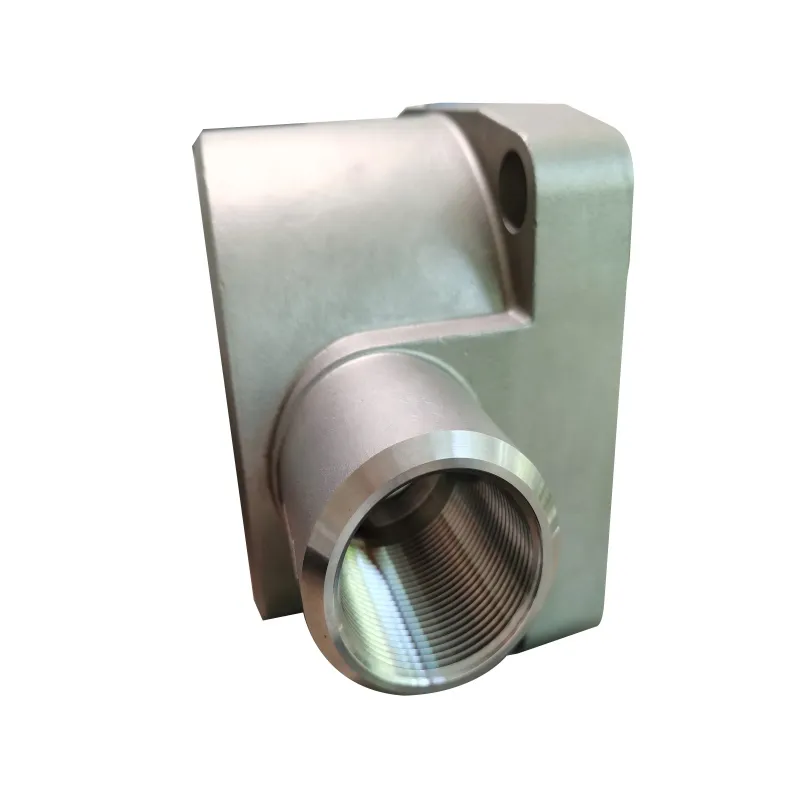
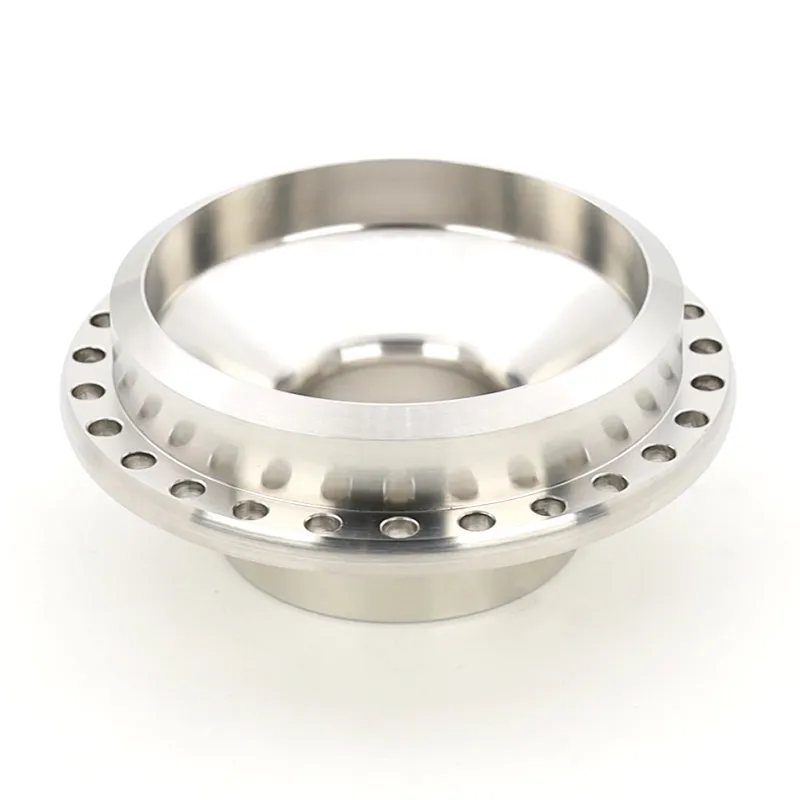
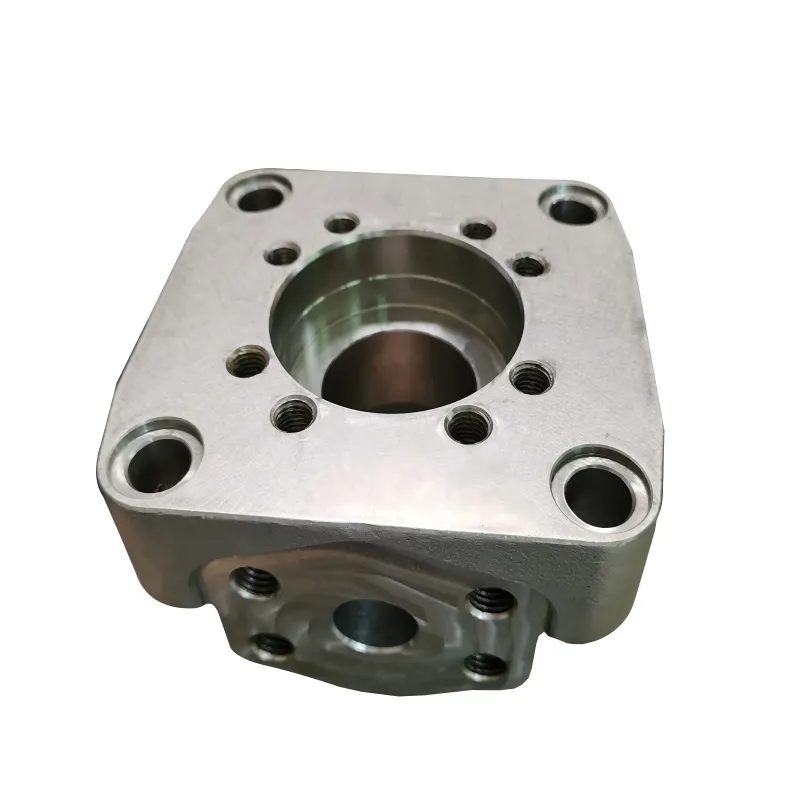
But there's a compromise zone. Sometimes, for less critical components, you might opt for a hybrid approach. Cast the general shape, but leave extra stock on critical sealing surfaces or bolt holes for CNC machining to hit perfect tolerances. This is where integrated facilities shine. Shipping a fragile, as-cast Inconel part to a separate machine shop risks damage and adds logistics. Having it all done in one place, as implied by QSY's combined casting and machining services, reduces risk and can improve overall quality control. You're not just buying a casting; you're buying a capability chain.
The final word is on quality culture. With these materials and processes, paperwork and traceability are part of the product. A casting should come with a certified material report, heat treat charts, and NDT reports. It's a dossier. If a supplier is hesitant to provide that level of documentation, walk away. The part isn't just the physical object; it's the guarantee of the process that made it. After three decades, a company understands that its reputation is built on that dossier as much as on the parts that ship out the door.
Looking Forward: The Evolving Craft
Where is this all going? Additive manufacturing (3D printing) in Inconel is getting a lot of press, and for good reason. It offers insane geometric freedom. But for medium-to-high volume production of smaller, highly complex parts, investment casting still holds a strong economic edge. The future, I suspect, is in hybridization. Using 3D printing to create the wax patterns or even the ceramic cores directly, allowing geometries previously impossible to mold, then leveraging the traditional investment casting process for surface finish and metallurgical quality. It's an exciting convergence.
Simulation software is also getting better. Finite element analysis for solidification and stress is moving from a nice-to-have to a standard tool. But the software is only as good as the material property database and boundary conditions you feed it. That database is built on real-world trials and tears—the kind of institutional knowledge that accumulates in a long-standing operation. You can't simulate everything; you still need the craftsman's instinct to know when the simulation is lying.
So, back to the start. Inconel investment casting is less about brute force and more about finesse. It's a chain of a hundred controlled steps, each one capable of breaking the final product. Success comes from respecting the material's temperament, understanding the process's nuances, and having the patience—and the historical data—to troubleshoot when things inevitably don't go to plan. It's not magic; it's controlled chaos, turned into a repeatable engineering discipline. And that's something you only learn by being in the thick of it, year after year.