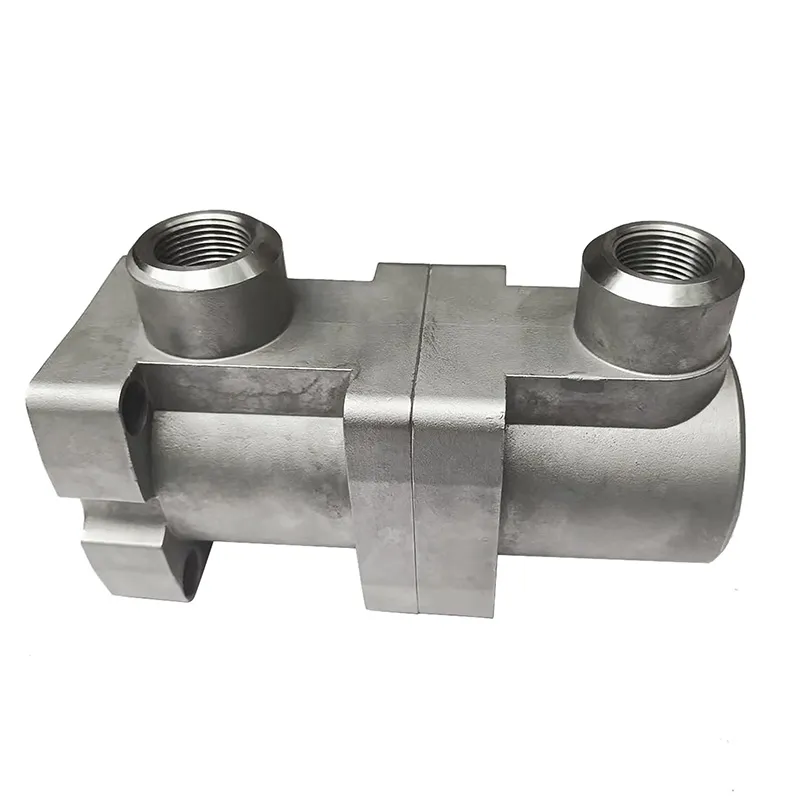
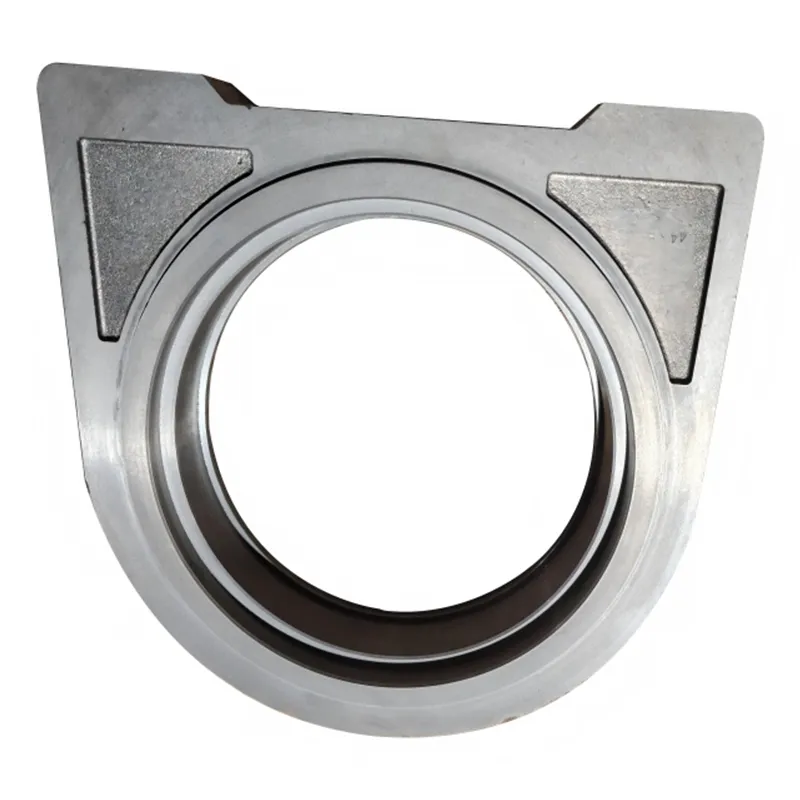
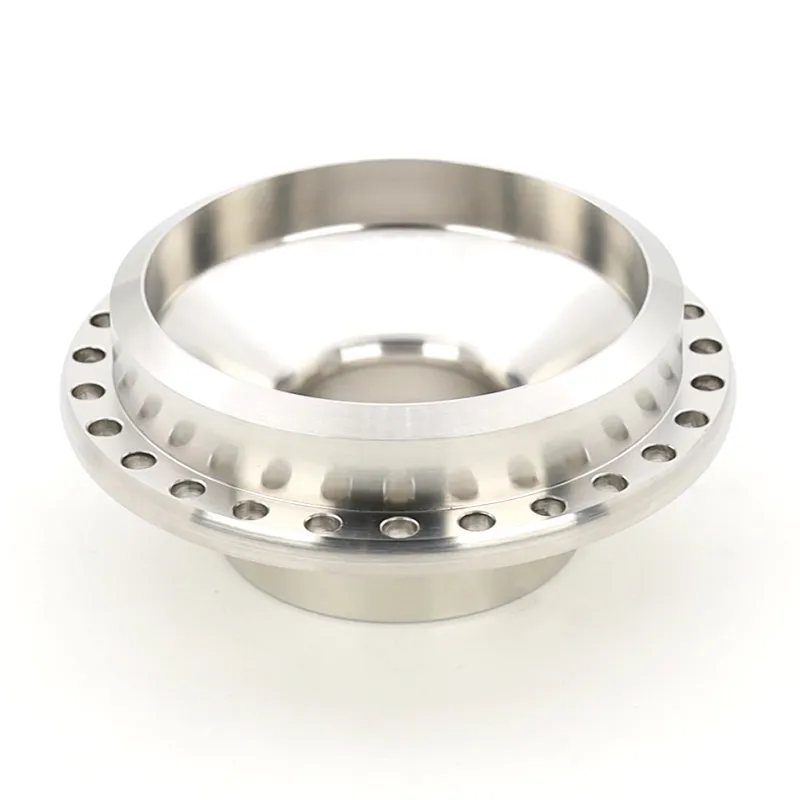
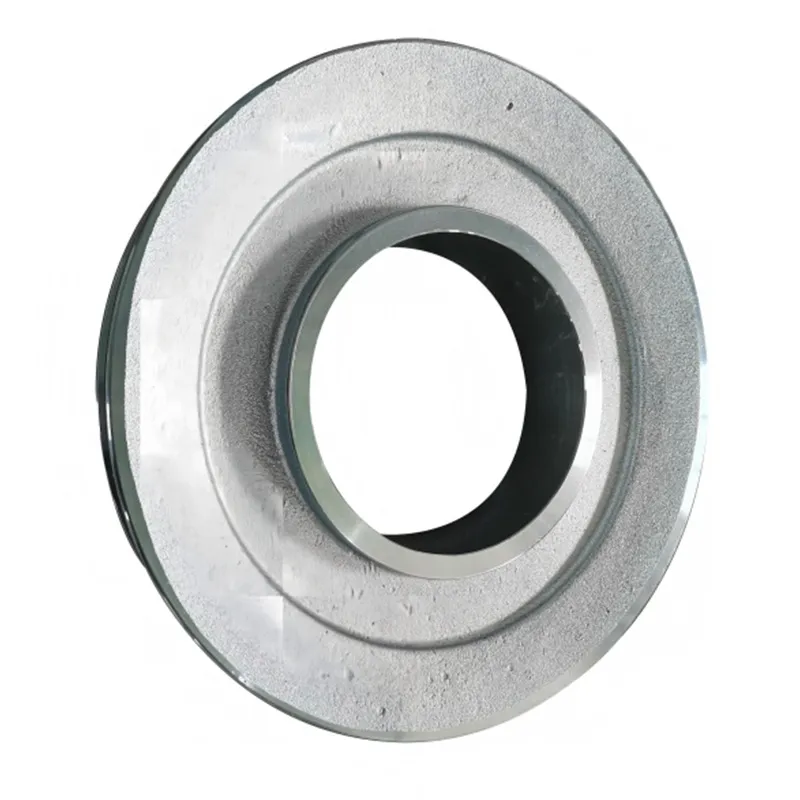
When you hear 'investment casting Inconel', the immediate thought is often about extreme performance—turbine blades, aerospace manifolds, that sort of thing. But there's a gap between the spec sheet and the actual pour. A lot of shops claim they can do it, but handling these nickel-based alloys, especially the likes of Inconel 718 or 625, isn't just about having a ceramic shell and a furnace. The real trick is in the thermal management, the gating design, and frankly, knowing when to walk away from a geometry that's just asking for trouble. I've seen more than one project stall because the focus was solely on the material grade on the drawing, not on how it behaves when it's molten and racing through a mold.
The Alloy Isn't the Whole Story
Starting with the melt is where you separate the talk from the work. Inconel has a nasty habit of reacting if you get the atmosphere wrong. We run our vacuum furnaces tight, but even then, trace elements can cause issues. It's not just about preventing oxidation; it's about controlling the cooling rate from the get-go. Too fast, and you lock in stresses and promote micro-porosity that'll fail inspection later. Too slow, and you get excessive grain growth, killing the mechanical properties you're casting it for in the first place.
I recall a batch for a static structural component in a land-based turbine. The print called for investment casting Inconel 718, standard stuff. But the wall thickness variations were severe. We poured, and the NDT showed a clean bill. However, during the solution heat treatment stage, a few parts warped beyond salvage. The culprit? Uneven solidification creating internal stress patterns that the heat treat just exacerbated. The alloy met spec, but the process didn't account for its specific thermal contraction behavior. We had to go back, redesign the investment casting gating to create more uniform cooling, and add a stress-relief step before the full heat treatment cycle. It added cost and time, but it was that or scrap.
This is where experience with the full chain matters. A shop that just pours metal and ships it is a liability. You need the foundry and the machining under one roof, or at least in tight collaboration. I've worked with Qingdao Qiangsenyuan Technology Co., Ltd. (QSY) on prototyping before. Their setup makes sense—over 30 years in casting and machining, handling everything from shell mold to investment casting and then CNC work on the same materials. For Inconel, that continuity is crucial. You can't have the casting house blaming the machinist for a hard spot, and the machinist blaming a bad cast. When it's one entity, the feedback loop is immediate. They see the full lifecycle, from wax to finished part, which informs better decisions at the pouring stage.
Where the Process Bites Back
Shell building is another silent battleground. For carbon steels, a standard slurry and stucco system might fly. For Inconel, especially for thin-walled or complex internal passage parts, the shell needs exceptional thermal stability and collapsibility. If the shell is too strong, it constrains the casting during cooling, leading to hot tears. If it's too weak, it might fracture during handling or the pour itself. We've experimented with different refractory blends—fused silica, zircon, alumina—trying to find the right balance for a particular Inconel 625 valve body. It took three iterations to get a shell that would survive the autoclave dewaxing and the 1500°C+ pour without buckling or causing surface finish issues on the cast part.
Dimensional accuracy is the promised land of investment casting, but with Inconel, shrinkage isn't always predictable. The published shrinkage allowance is a starting point, not a guarantee. The actual factor depends on part geometry, gating, and how we orient it in the cluster. We maintain a library of correction factors for our common part families. A simple cylindrical shape might be fine with the textbook 2.1% linear shrinkage. But a part with intersecting ribs, like a compressor housing, will pull differently. We learned this the hard way on an early aerospace order. We used a standard shrink rule, and the final cast was out of tolerance on critical mating surfaces. Had to re-tool the wax die, which set the project back weeks. Now, for any new complex geometry, we'll run a simulation if the volume justifies it, or even pour a single sacrificial prototype in a cheaper alloy first to measure the actual shrink.
Post-casting is where many assume the hard work is done. It's not. Inconel's strength comes from its precipitation hardening. For 718, that means a precise sequence: solution treat, quench, age. The quench rate is vital. If the part cools from solution temperature too slowly, you get excessive precipitation of strengthening phases in the grain boundaries, making it brittle. We had a batch where the quenching rack was overloaded, and parts in the center cooled slower. They passed the initial hardness check but failed dramatically in later fatigue testing. The failure analysis pointed right at the compromised microstructure from an uneven quench. It was a logistics failure, not a metallurgy one, but the result was the same—scrap.
Machining: The Other Half of the Battle
This is why the integrated model of a company like QSY is relevant. Casting a perfect Inconel part is only half the job. If the downstream CNC machining isn't tuned for the material's work-hardening nature, you'll ruin a good casting. Inconel is abrasive and tough. It laughs at standard tooling. You need rigid setups, specialized carbide grades, high-pressure coolant to break the chip, and low, consistent feed rates. The goal is to shear the material without letting the heat build up, which just hardens the area you're trying to cut.
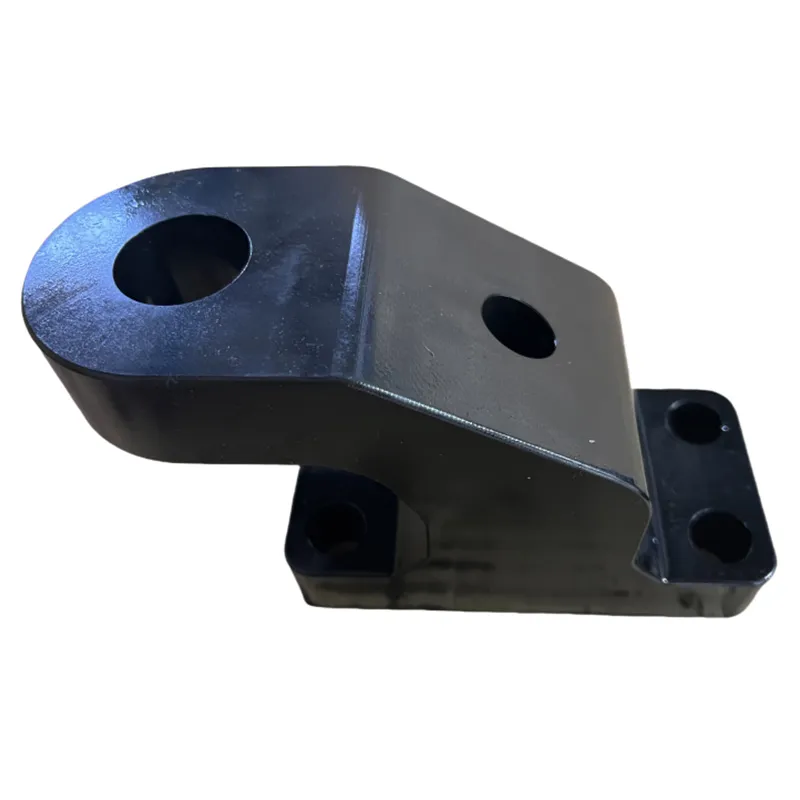
We once received a beautifully cast Inconel 718 bracket, only to have our machinist snap three expensive end mills trying to mill a simple flat. The problem? The casting skin, while visually sound, had a slightly harder, altered microstructure from contact with the shell. Our standard machining parameters, which worked on the interior of the part, were too aggressive for that skin. We had to add a light, initial roughing pass with specific parameters just to break through that surface layer. It's a nuance you only learn by doing, or by working with a partner whose CNC department talks daily with their foundry. Checking their site at tsingtaocnc.com, you can see they list both investment casting and CNC machining for nickel-based alloys. That integrated knowledge is what prevents these costly surprises. The machinist knows what to expect from the foundry's process, and the foundry knows what the machinist needs for a clean cut.
Surface integrity is paramount for fatigue-critical parts. A poor machining pass can introduce micro-cracks or tensile stresses that become initiation points for failure. This is where the final machining steps—often grinding or honing for critical surfaces—become part of the quality chain. It's not an afterthought; it's a specified process. The ability to control that entire chain, from molten metal to final finish, under one quality system, reduces variables dramatically.
The Reality of Sourcing and Vetting
So, when you're sourcing investment casting Inconel, what should you look for beyond the sales brochure? First, ask about their thermal management philosophy. Do they just follow a recipe, or do they adjust parameters like pour temperature and mold pre-heat based on part geometry? Second, probe their material traceability. For aerospace or oil & gas, you need full melt reports and chemistry checks. Can they provide that? Third, and most importantly, look at their post-casting capabilities. Do they heat treat in-house to a certified spec (like AMS 2774)? Do they have CNC machining dedicated to hard alloys, or do they outsource it?
A supplier like QSY, with their decades of history, typically has these systems bedded in. Their mention of specializing in both casting and machining for special alloys like nickel-based ones is a key signal. It means they've likely encountered—and solved—the interoperability problems between the casting and finishing stages. They're not just a wax-and-pour shop; they're a component manufacturer. That distinction matters.
Finally, be realistic about cost and lead time. A proper Inconel investment cast isn't cheap or fast. The tooling for the wax pattern is precise. The shell process is multi-day. The heat treatment is a critical controlled operation. And the machining is slow. If a quote seems too good to be true, they're probably cutting corners—maybe on the vacuum level during melting, or skipping a proper HIP (Hot Isostatic Pressing) cycle to close porosity, or using generic tooling for machining. Any of those will come back to haunt the part in service. The value isn't in the pound of metal you get; it's in the controlled, documented, and integrated process that turns that metal into a reliable component. That's what you're really paying for.