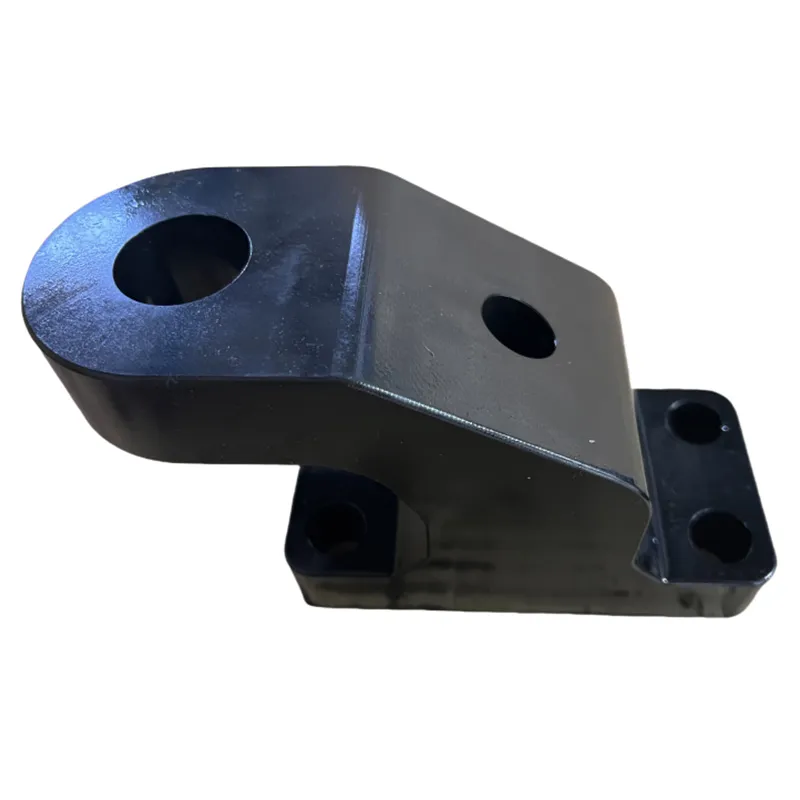
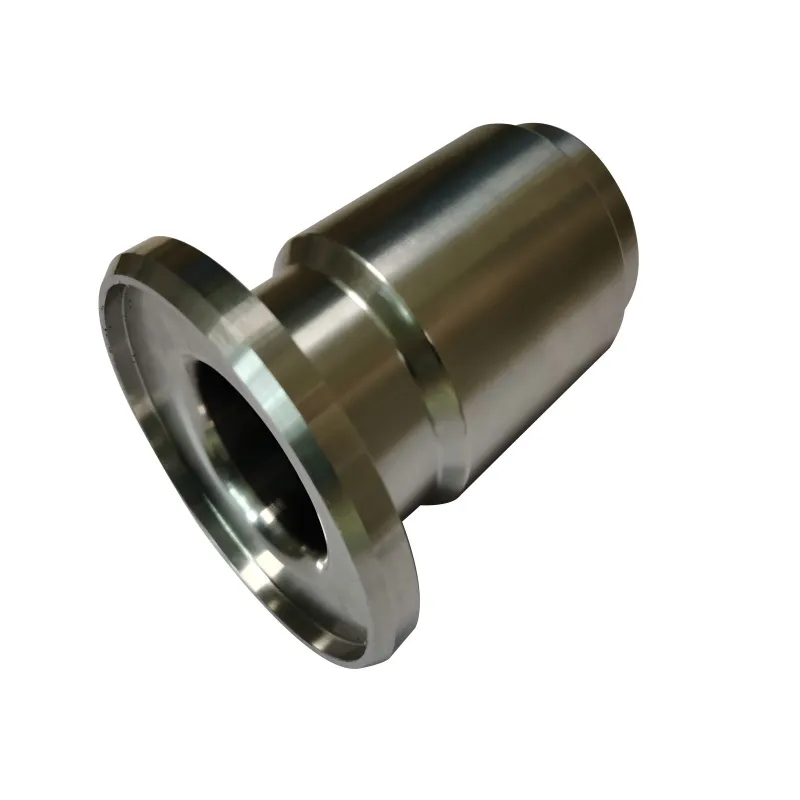
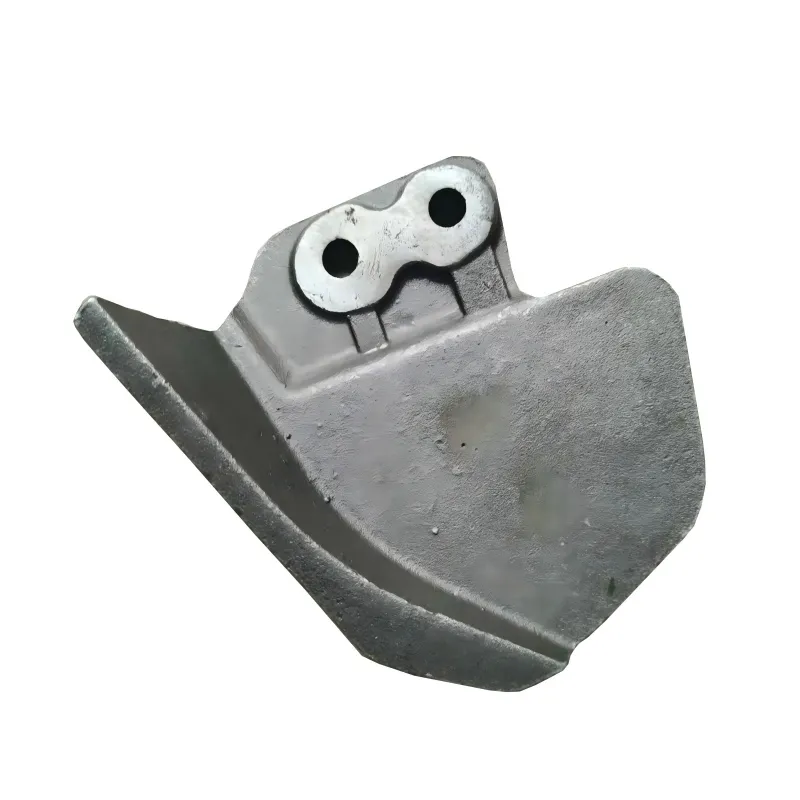
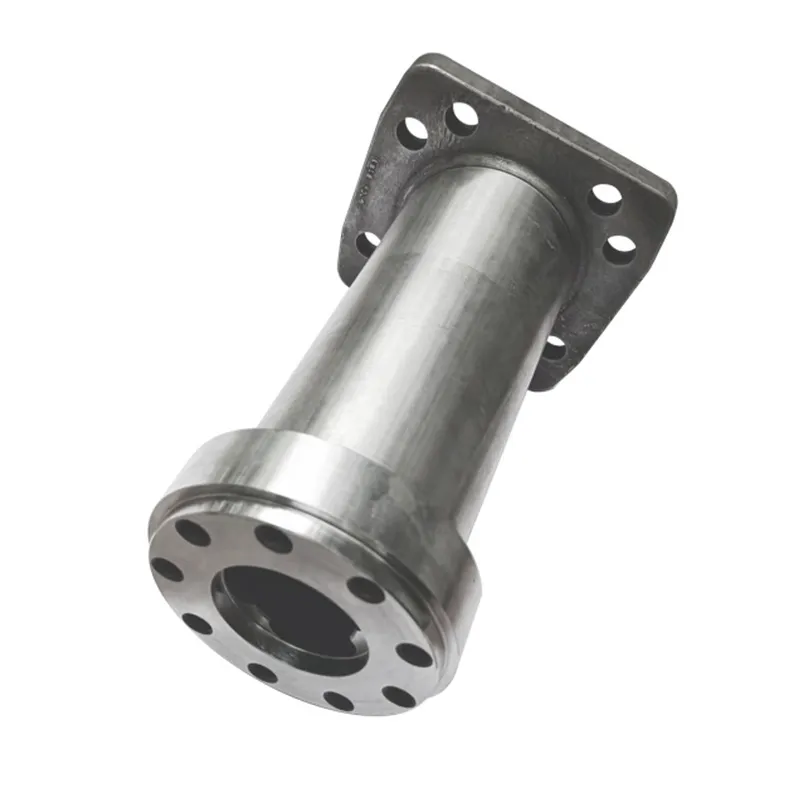
When you hear 'investment casting manufacturer,' what comes to mind? For many, it's a glossy brochure full of shiny, complex parts. The reality, the day-to-day grind, is something else entirely. It's less about the perfect final photo and more about the smell of burnt wax in the morning, the endless parameter tweaks for a new superalloy, and the quiet dread when a shell cracks during dewaxing. The term itself can be misleading—it suggests a singular focus. In truth, the best shops aren't just foundries; they're integrated problem-solvers, bridging the gap between a CAD model and a functional, high-integrity component. Many buyers get fixated on unit price or lead time, missing the critical nuance: consistency under thermal stress, dimensional fidelity in the fifth decimal place, and the metallurgical know-how to prevent a costly batch failure six months down the line.
The Core Misconception: It's Just Pouring Metal
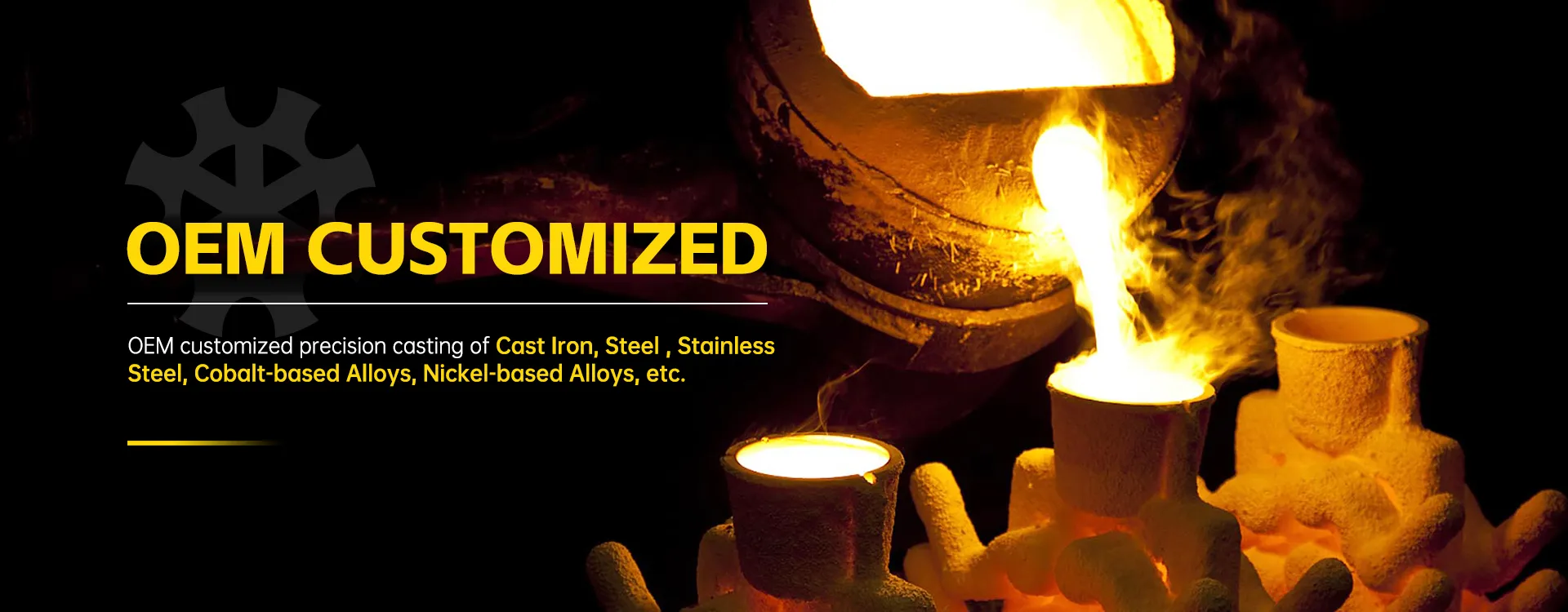
Let's cut to the chase. The biggest mistake is viewing investment casting as a commodity process. You send a drawing, you get a part. If only. The real value of a manufacturer lies in what happens before the metal ever sees the furnace. Take pattern tooling. A cheap, hastily machined aluminum die might save $5k upfront. But if it lacks proper draft, or its thermal expansion isn't accounted for, you'll get distorted wax patterns that cascade into dimensional nightmares post-casting. I've seen projects where the 'savings' on tooling led to six-figure losses in scrap and delayed assemblies. A proficient shop, like Qingdao Qiangsenyuan Technology Co., Ltd. (QSY), will argue, sometimes strenuously, for a more robust tool design. It's not upselling; it's preventing disaster. Their three decades in the game mean they've likely already made the mistake you're about to pay for.
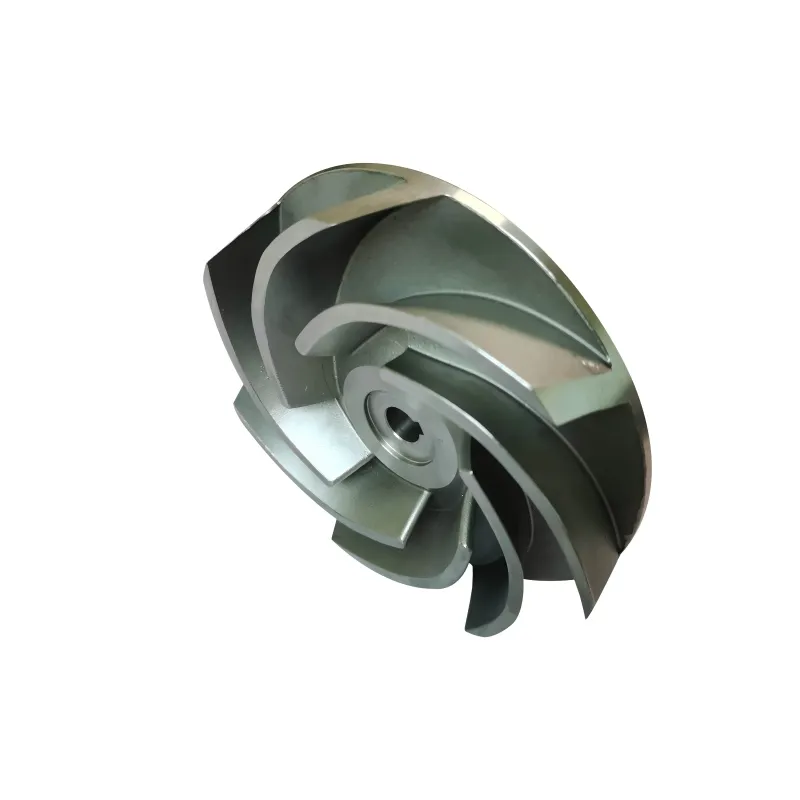
Then there's the wax. Not all injection waxes behave the same. For a thin-walled aerospace bracket, you need a low-viscosity, high-fluidity formulation to capture fine details without sink marks. For a heavy-section valve body, a harder wax is crucial to prevent deformation during handling. The selection isn't arbitrary; it's a judgment call based on geometry, alloy, and the subsequent shell-building process. I recall a job for a pump impeller where we switched to a polymer-enhanced wax. The unit cost went up 15%, but the reduction in weld repairs on the final casting due to better surface finish saved the client over 40% in finishing costs. That's the hidden calculus.
And shell building? That's where art meets science. It's not just dipping and stuccoing. The slurry viscosity, the drying environment (humidity control is a beast), the number of coats—each variable is a lever that affects permeability and strength. A shell too weak will crack during pouring; too impermeable, and you get gas entrapment. I've spent nights in the shop with technicians, adjusting the zirconia flour content in the prime coat slurry by half a percent to eliminate metal penetration on a stainless steel housing. This isn't in any brochure. It's in the notebook scribbles and the shared frustration when a test batch fails.
The Material Maze: Alloys Are Not Created Equal
Everyone claims to work with 'stainless steel' or 'nickel-based alloys.' The devil is in the spec sheet: 316L versus 316, Inconel 718 versus 625. The difference often lies in the heat treatment and how the metal behaves during the solidification phase. Investment casting is a rapid solidification process, which can lead to segregation of alloying elements if not controlled. For a company like QSY, which lists cobalt-based alloys and nickel-based alloys as specialties, this isn't a checkbox. It implies they've dialed in pouring temperatures, mold pre-heats, and cooling rates specific to these finicky materials.
A concrete example: we once ran a batch of cobalt alloy (Stellite 6) wear plates. The chemistry was perfect, but the parts showed micro-cracking. The issue? The standard shell we used for stainless had a different thermal shock response. The cobalt alloy, with its different solidification range, needed a shell with a slightly modified refractory blend to accommodate the contraction. The fix wasn't in the melting department; it was back at the slurry tank. This is the integration I mentioned. The casting process is a chain, and the weakest link isn't always where you expect.
This is why a manufacturer's material list is a story, not a menu. When you see 'special alloys,' probe deeper. Ask about their typical pouring weights for that alloy, the complexity level they've achieved, and—critically—if they do their own spectrographic analysis in-house. Waiting 24 hours for an external lab report while a heat of metal sits in the furnace is a luxury no one can afford.
Where Machining Intersects: The CNC Handshake
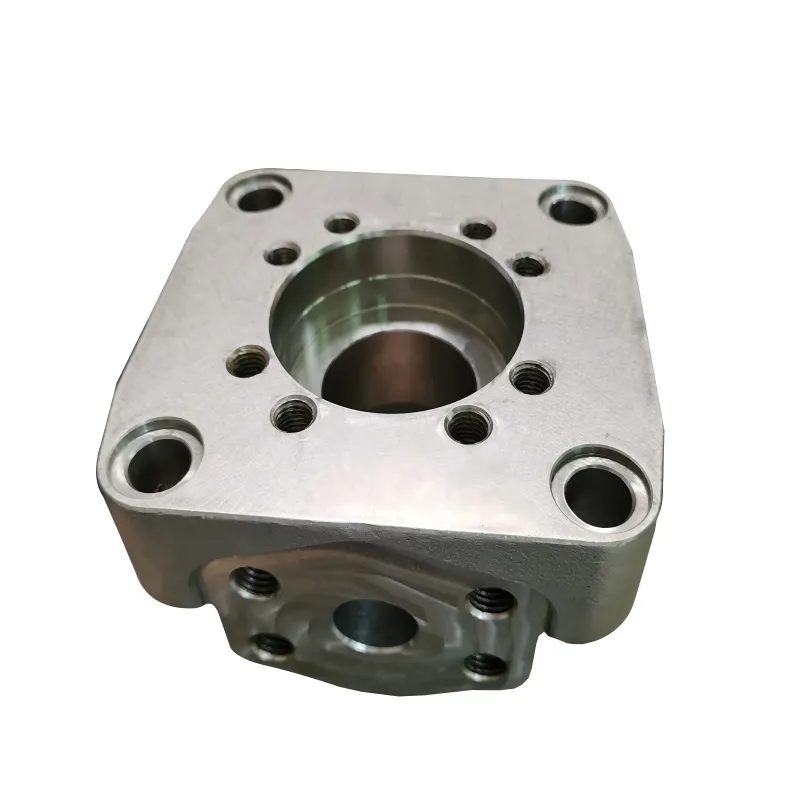
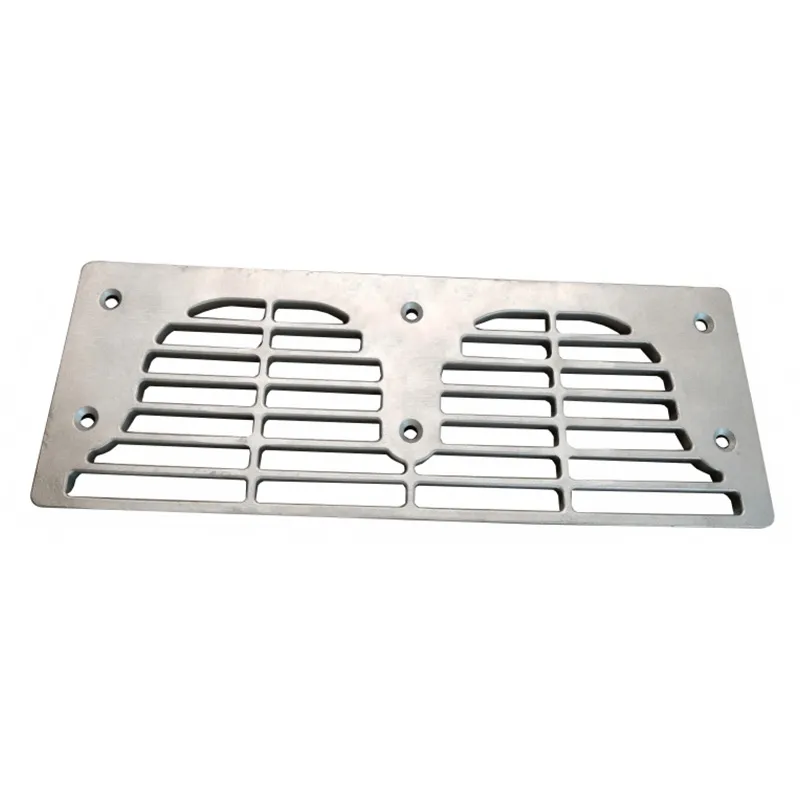
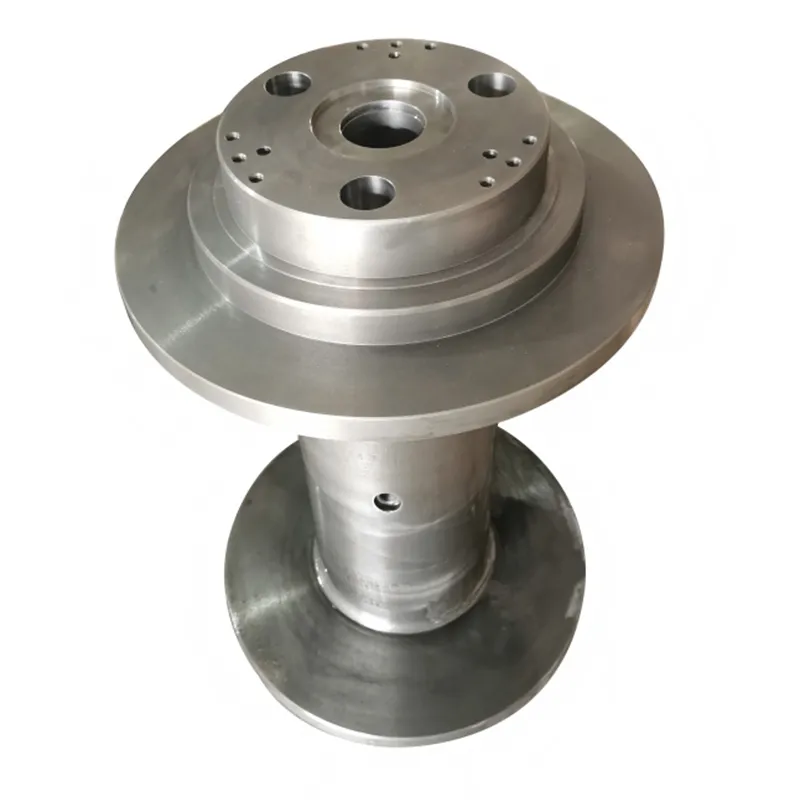
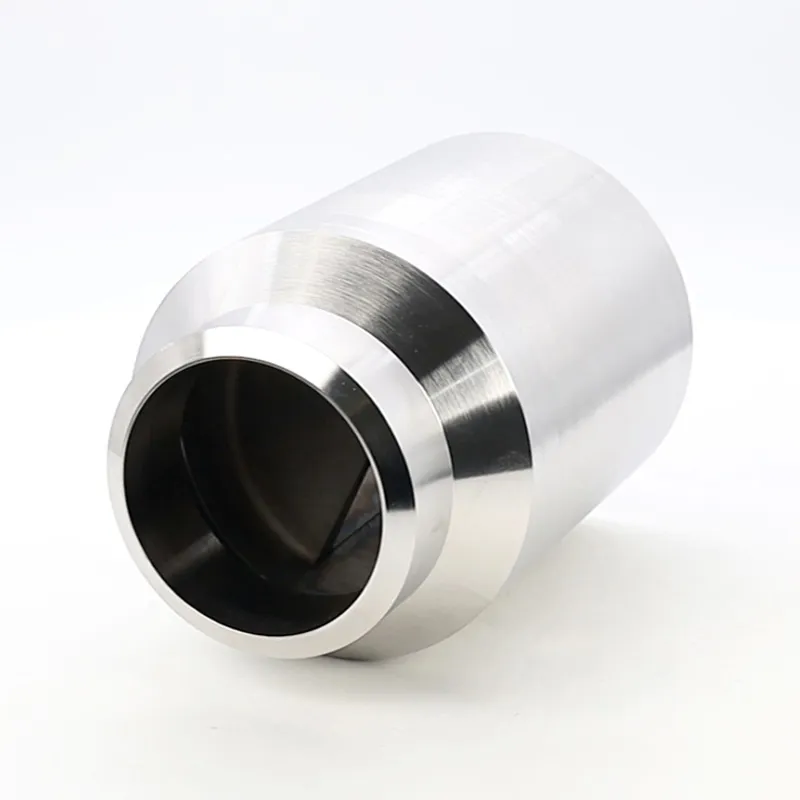
No investment casting is truly 'net-shape.' There are always datum faces to machine, mating surfaces to finish, and threads to tap. This is where the model of a combined investment casting and CNC machining operation shows its true colors. The major benefit isn't logistical convenience (though that's real); it's dimensional intelligence.
The machining team that works alongside the foundry learns its quirks. They know that for a particular family of turbine blades cast in Inconel, there's a predictable, non-uniform stock allowance on the root platform—maybe 0.7mm on one side, 1.1mm on the other, based on how the shell drains. Their CNC programs can be written to accommodate this expected variance, optimizing tool paths and preserving cutter life. If casting and machining are separate entities, this feedback loop is slow, formal, and often lost in translation. The machinist gets a part with 'unexpected' stock and blames the foundry; the foundry is oblivious to the machinist's fixturing challenges.
At an integrated facility, the post-casting process is a continuation. The part is designed with machining in mind from the start. We often advise adding small sacrificial pads on non-critical surfaces to provide a secure clamping location for the CNC, something that would be an afterthought (or an impossibility) if the processes were divorced. Visiting their site at tsingtaocnc.com, you can see this flow: from the casting cleaning area, parts move directly to CMM inspection and then onto CNC beds. This continuity reduces handling damage, cuts lead time, and, most importantly, builds a shared responsibility for the final part quality.
The Failure Archive: Lessons in the Scrap Bin
You learn more from a failed casting than a perfect one. Anyone who says otherwise is selling something. Early in my time working with these processes, we had an order for a complex ductile iron manifold. The prototypes were beautiful. In full production, we started getting random, brittle fractures. The culprit? A change in the inoculant used in the iron treatment, combined with a slightly faster cooling rate in our new, larger shell molds. The metallurgy was sound on paper, but the process interaction was off. We solved it by adjusting the mold pre-heat and switching back to the original inoculant, but not before scrapping a significant batch.
This is the unglamorous side. A good manufacturer has an archive of these stories—their own and the industry's folklore. They should be paranoid about process drift. When a new batch of refractory sand arrives, do they run a test shell? When the humidity spikes in July, do they adjust the drying cycle? This operational vigilance is what 30 years of experience, like QSY references, really means. It's not 30 years of repetition; it's 30 years of adapting to a thousand small variables.
Another classic 'failure' is miscommunication on specs. A drawing calls for a Roughness of 125 Ra max. As-cast, we can hit that. But if the customer actually needs a machined finish on that surface and forgot to note it, the part is useless. Now, an experienced shop will catch this. They'll see a tight tolerance on a bore or a note about a seal groove and call to clarify: Are you machining this face? Because as-cast, we can't hold that flatness. That phone call, that moment of doubt and clarification, is worth more than a thousand perfect but misunderstood castings.
The Real Measure: Consistency Over the Long Haul
So, how do you judge an investment casting manufacturer? Don't just ask for their best sample. Ask for their statistical process control (SPC) data for a critical dimension on a long-running part. Ask about their first-pass yield percentage. Inquire about their procedure for qualifying a new material or a new core supplier. The answers will tell you everything.
The goal isn't to produce one miraculous component for a trade show. It's to produce lot number 500 with the same reliability as lot number 1, five years apart, even when the original tooling engineer has retired. This requires systems, but also a culture that respects the craft. It's the veteran mold assembler who feels a slight drag on a wax pattern and knows the die needs cleaning before the CMM flags a dimensional error.
Ultimately, partnering with a manufacturer is about accessing their collective memory of problems solved and disasters averted. It's about their willingness to say that design will be problematic, here's why before the tool steel is cut. When you look at a portfolio from a firm that pairs shell mold casting with precision machining, you're seeing the end result of that integrated, problem-solving mindset. The part isn't just cast; it's engineered, born from a process that considers every step from the wax room to the final deburring. That's the substance behind the keyword.