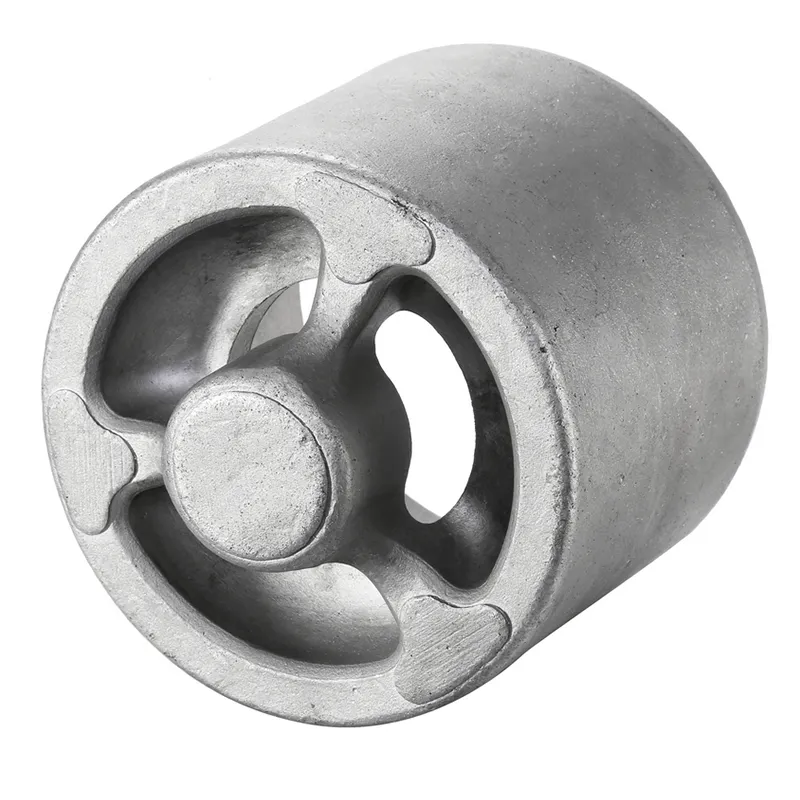
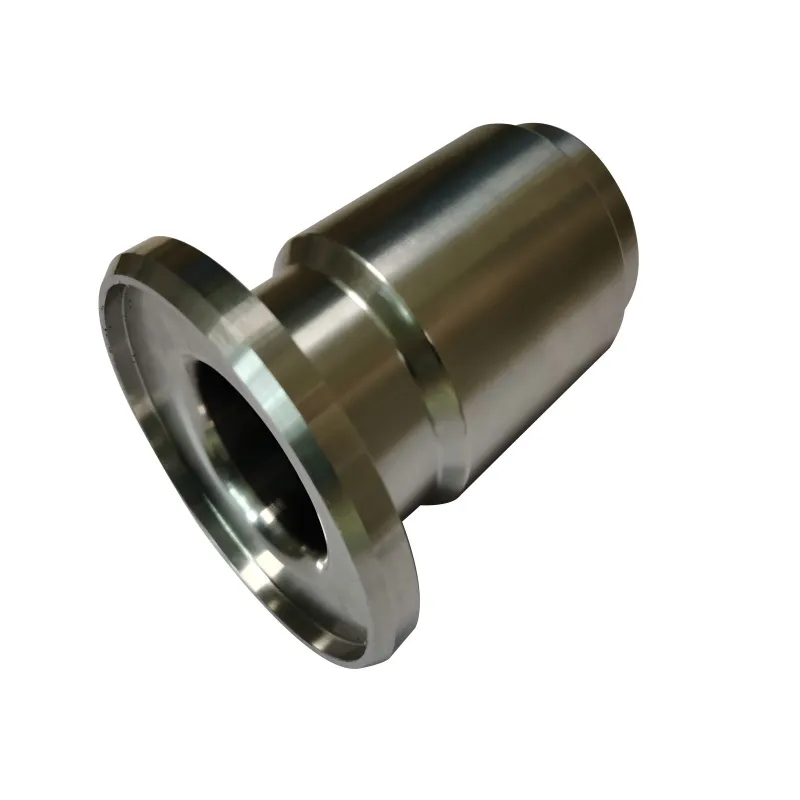
When most people hear 'iron casting', they picture a ladle of molten metal and a sand mold – a messy, brute-force process. That's not wrong, but it's a starting point that misses the nuance. The real challenge isn't just getting iron to flow; it's controlling what happens as it solidifies, cools, and gets machined. I've seen too many projects stumble by treating cast iron as just a cheap, shapable lump. The grade matters, the mold type matters more, and the post-casting work determines everything.
The Mold is the Message
You don't just choose a mold for shape; you choose it for the skin. For intricate, high-tolerance parts in iron casting, we almost always lean towards shell mold or investment casting. Sand casting has its place for large, rough components, but the surface finish and dimensional consistency from a resin-coated shell are on another level. I remember a batch of pump housings where the client insisted on green sand for cost. The castings came out with a surface like coarse sandpaper, and the machining time to clean them up erased any initial savings. The mold dictates the first 50% of your final part cost.
That's where a shop's experience shows. A company like Qingdao Qiangsenyuan Technology Co., Ltd. (QSY), with their three decades in shell and investment casting, has the patterns and the process parameters dialed in. They know, for instance, how the thermal expansion of their shell material interacts with the contraction of different iron grades. It's not textbook knowledge; it's the kind of thing you learn after seeing a thousand molds crack or produce flashing in the same spot.
The gating system design – the channels that feed metal into the mold cavity – is another dark art. Pour too fast with the wrong gates, and you get turbulence, air entrapment, and slag inclusions. I once worked on a complex gear casing where we had persistent shrinkage porosity in a thick section. We tried everything: adjusting pour temperature, using chills. The fix? Redesigning the gating to create a more directional solidification pattern. It was a subtle change in the runner size and placement, something a novice would never spot.
Material is More Than a Spec Sheet
Specifying cast iron is like walking into a restaurant and asking for food. Gray iron (Grey Iron), ductile iron (Nodular Iron), compacted graphite… each behaves like a different material entirely. Gray iron is great for damping vibration but brittle; ductile iron has strength and some toughness. The alloying elements and the inoculation process during the pour make or break it.
We had a project for a high-stress mounting bracket. The drawing called for a generic Grade 250 gray iron. Something felt off. After talking through the load cases and impact risks with the engineer, we pushed for a switch to a ferritic ductile iron. The raw material cost was higher, but the part was lighter, stronger, and survived fatigue testing the gray iron version would have failed. The client was looking at the per-kg price; we were looking at the part-in-service performance.
This is why partnering with a foundry that handles special alloys is a safety net. Knowing that a supplier like QSY works with everything from standard irons and steels to nickel-based alloys means they understand metallurgy at the melt level. They're not just pouring; they're analyzing charge composition, managing melt superheat, and controlling the cooling curve. For a standard part, maybe it doesn't matter. For anything critical, it's everything.
The Machining Handshake
This is where the disconnect often happens: the casting is perfect, but it's unmachinable. Or rather, it can be machined, but not efficiently or with good tool life. The hardness variation from the skin to the core in a casting, especially with certain cooling rates, can wreak havoc on CNC tools. A seemingly perfect casting can hide hard spots or inconsistent microstructure that causes chatter and ruins surface finish.
Integrated shops have a huge advantage here. If the same entity doing the iron casting also handles the CNC machining, they can design for manufacturability from the start. They know how to orient the part in the mold to ensure critical faces have consistent hardness for machining. They can add minimal stock allowance in the right places because their process is repeatable. I've been in shops where the machining team and foundry are at war, blaming each other for scrap. It's a costly way to work.
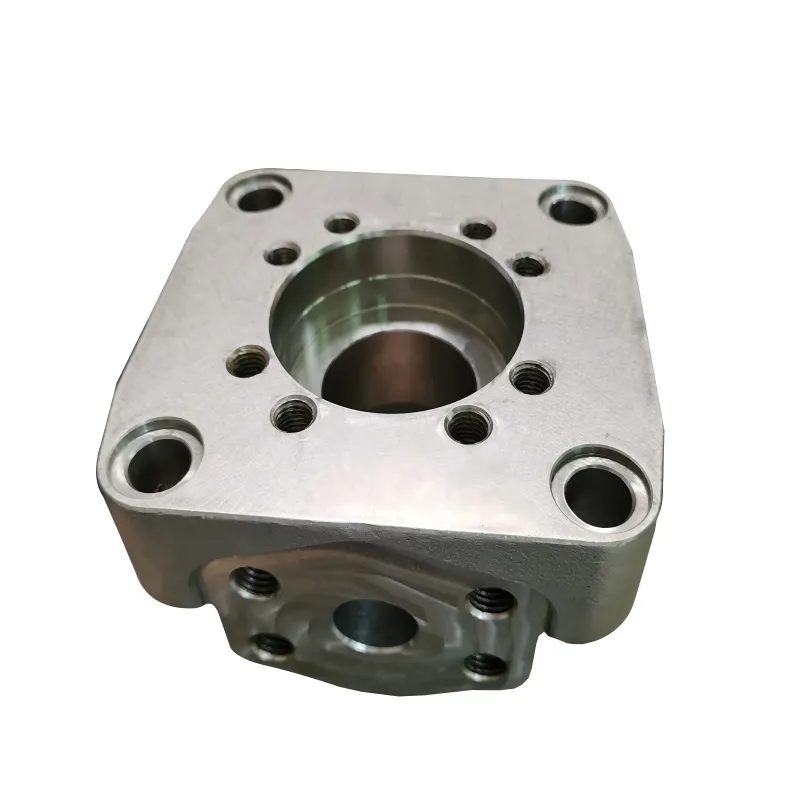
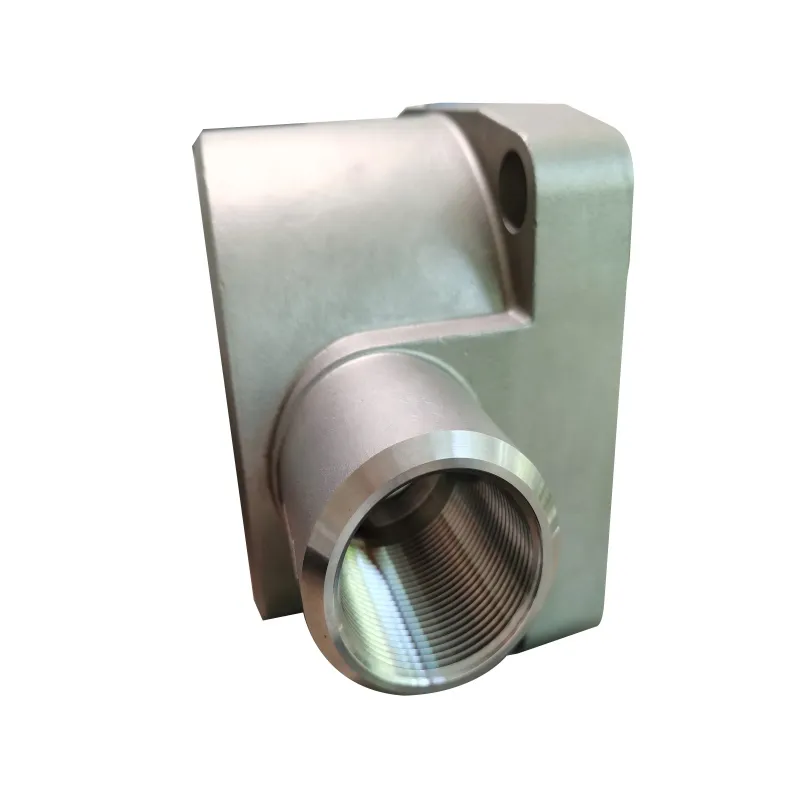
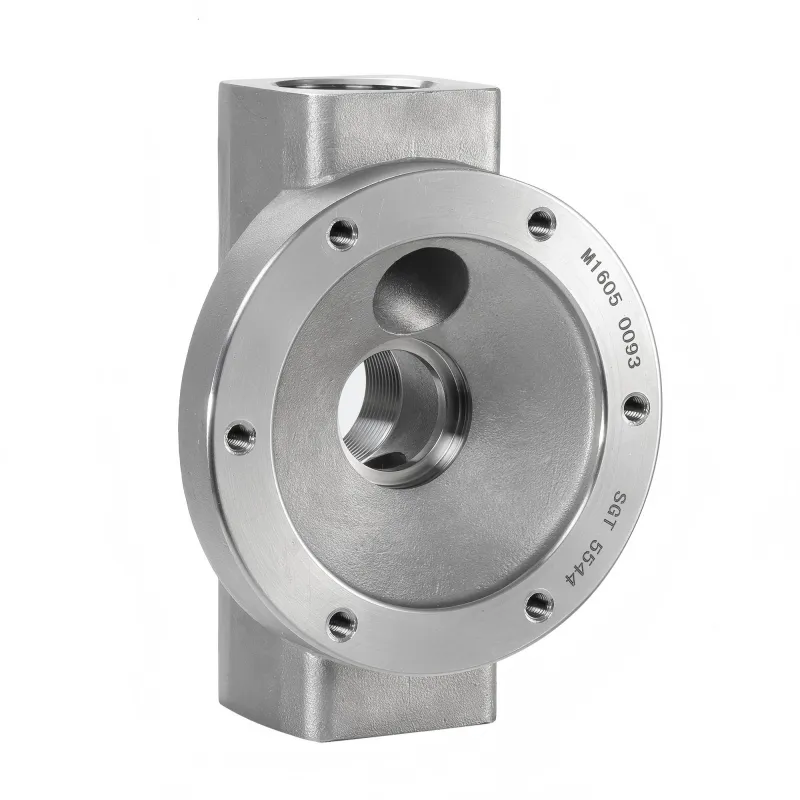
Looking at QSY's setup, the combination of casting and in-house CNC machining is a logical progression. It closes the loop. They can cast a ductile iron valve body, for example, with integral flanges and connection ports, then machine the sealing faces and thread holes in one fixturing. The feedback is immediate: if a tool is wearing too fast on a particular batch, they can trace it back to the melt log or the cooling time. That control is hard to replicate when you're shipping rough castings across the country to a separate machine shop.
When Things Go Wrong (They Do)
Failure analysis is the best teacher. Early on, I was responsible for a run of small actuator bodies in gray iron. They passed all initial inspections but started cracking in the field after a few thermal cycles. The culprit? Residual stresses from uneven cooling. We hadn't specified a stress relief annealing cycle after casting, assuming the geometry was simple enough. It was an expensive lesson. Now, for any part with varying cross-sections or service under thermal load, post-casting heat treatment is the first thing I consider.
Another classic is porosity. It's not always a casting defect; sometimes it's a design one. A client once sent us a CAD model with a beautiful, organic shape with several thick sections blending into thin walls. It was a porosity trap. We had to negotiate design changes – adding ribs, coring out thick areas – to make it castable. The ideal casting design often isn't the ideal mechanical design. It's a compromise, guided by the flow and solidification of iron.
Scrap happens. The mark of a good foundry isn't zero defects; it's how they handle them, how they trace the root cause, and how they adjust the process card for the next run. I value a supplier who sends back a report with photos of the defect, a sectioned part showing the porosity, and a proposed change to the gating or pouring temperature more than one who just quietly replaces the part.
The Real Cost Equation
Finally, the biggest misconception: that iron casting is always the low-cost option. For one-offs or tiny batches, it's terrible. The pattern costs alone kill it. But when you hit volume – say, a few hundred pieces a year and up – the economics flip. The unit price plummets. The real savings, though, come from consolidation. Casting lets you integrate multiple fabricated pieces into one, eliminating fasteners, assembly labor, and potential failure points.
We redesigned a structural frame that was made from over a dozen laser-cut and welded steel plates. The new one-piece ductile iron casting was 15% lighter, 40% stiffer, and reduced the assembly time from hours to minutes. The tooling cost was significant, but amortized over the production volume, the per-part saving was substantial. The value was in the performance and assembly simplification, not just the raw material.
That's the endgame. It's not about choosing iron casting because it's traditional or cheap. It's about choosing it because it's the most efficient way to make a particular geometry with the required material properties, especially when paired with precision molding and integrated machining. It's a process that rewards deep, tactile knowledge and punishes shortcuts. When it's done right, with the right partner for the job, the result is something that feels solid, works perfectly, and frankly, just looks like it was meant to be.