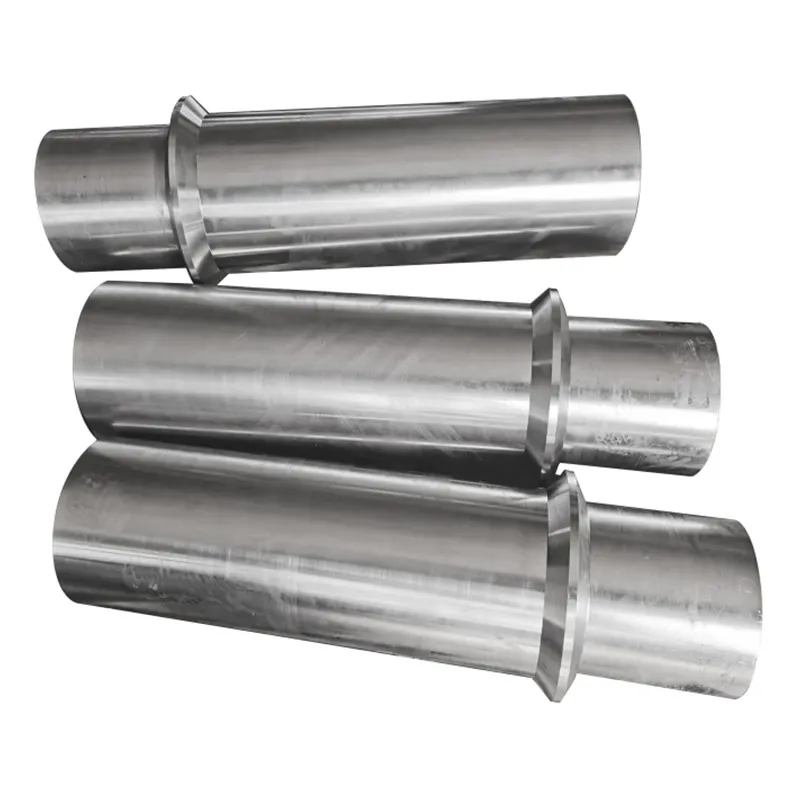
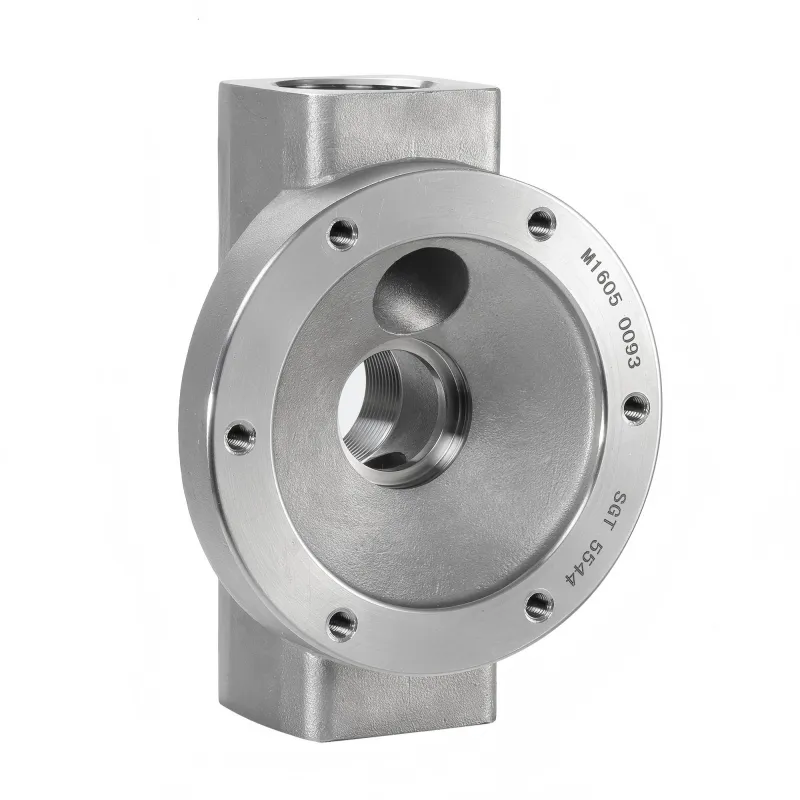
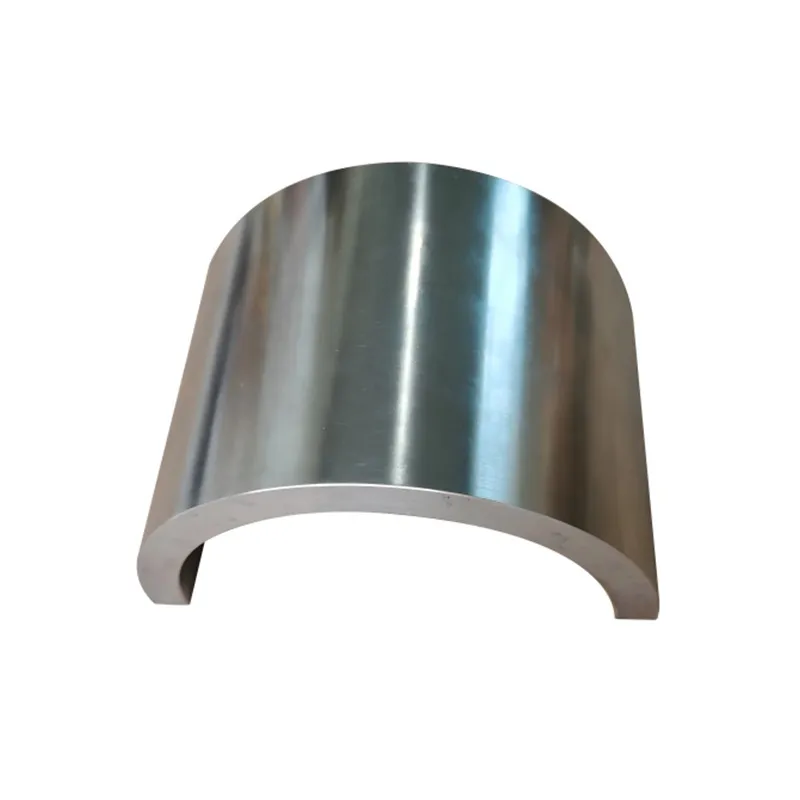
When most people hear 'leveling equipment spare parts', they think of generic bolts or off-the-shelf shims. That's the first mistake. In reality, these components are the critical interface between a machine's design intent and its operational reality. The wrong part doesn't just cause downtime; it silently degrades accuracy until your entire process is out of spec. I've seen too many operations treat these parts as commodities, ordering the cheapest option from a generic catalog, only to face recurring alignment issues. The truth is, the leveling equipment spare parts—especially the machined pads, custom jack screws, and foundation bolts—are where the fight for long-term stability is won or lost.
The Material is the Message
You can't talk about these parts without starting with what they're made of. Cast iron might be fine for a static, low-vibration base, but it's brittle. For dynamic loads or thermal cycling, you're looking at forged steel. Then there's corrosion. A stainless steel jack screw sounds great until you need its tensile strength in a high-load application; that's where high-grade alloy steels with proper plating come in. I recall a project where a client used standard carbon steel pads in a humid environment. Within a year, corrosion creep had introduced a 0.5mm tilt in a critical grinder. The fix wasn't just replacing the pads; it was a full realignment. The cost multiplier was brutal.
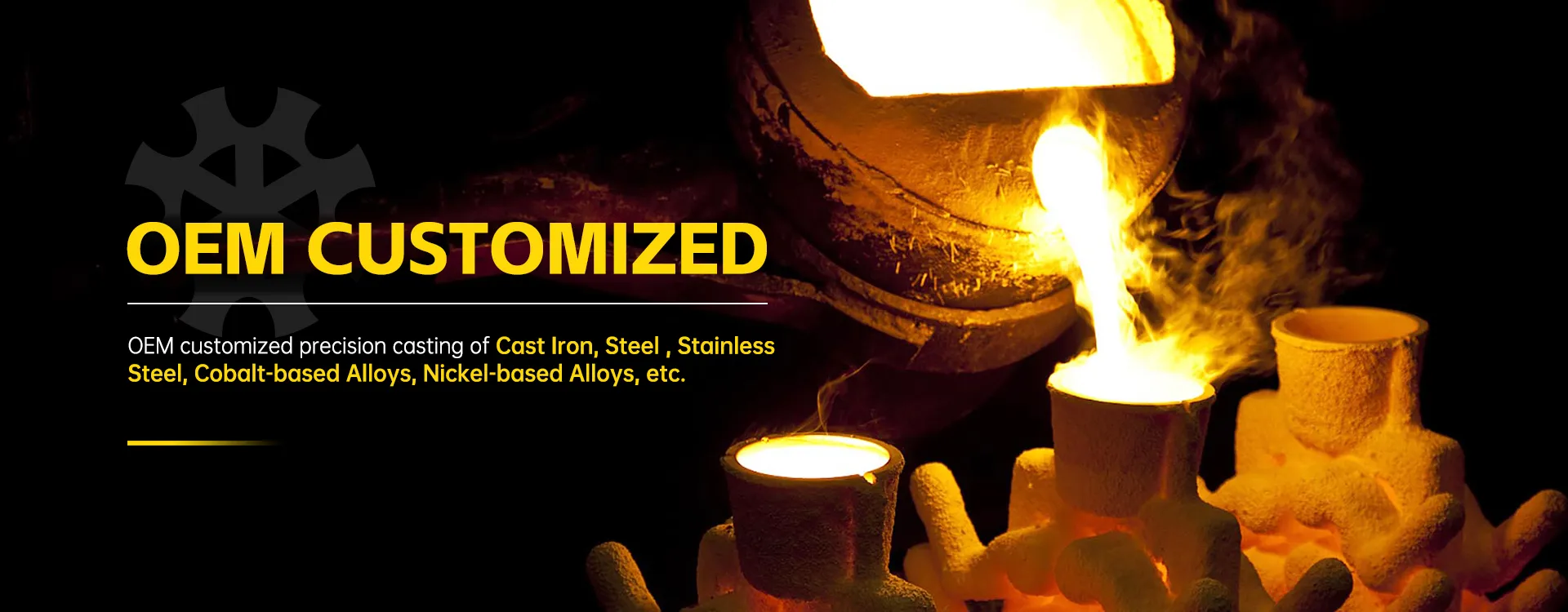
This is where a supplier's material expertise becomes non-negotiable. A company like Qingdao Qiangsenyuan Technology Co., Ltd.(QSY) isn't just a machine shop. With 30 years in casting and machining, they get that the choice between ductile iron, 4140 steel, or a 304/316 stainless for a leveling foot isn't a checkbox. It's a calculation involving load, environment, fatigue life, and the coefficient of friction against the floor. Their work with special alloys like nickel-based ones hints at experience with extreme environments—think chemical plants or high-temperature zones—where standard solutions fail catastrophically.
The nuance is in the specs. A leveling bolt isn't just an M20x100. It's the thread class (3 or better for precision), the underhead radius to prevent stress concentration, and the hardness. I've specified parts where the core hardness and surface hardness were different to prevent thread galling. If your supplier's eyes glaze over at those details, find a new one. The tsingtaocnc.com website shows a focus on shell mold and investment casting. That's relevant because for complex, stress-efficient shapes for custom sole plates or vibration-damping feet, these casting methods can be superior to welding simple plate together.
Precision Machining: Where Dimensional Tolerance Meets Surface Integrity
Here's the second big pitfall: assuming 'machined' means 'precise'. The tolerance on the seating surface of a leveling pad might need to be flat within 0.05mm over its entire area. But more importantly, the surface finish and grain structure matter. A poorly machined surface will wear unevenly, creating a rocking point. CNC machining is essential, but it's the programming and tool path strategy that ensures consistency across a batch of 50 or 500 parts.
We had a case with a large milling machine that kept losing level. We checked everything—foundation, loads, the machine itself. Finally, we pulled a leveling pad and put it on a surface plate. It looked fine. Under a profilometer, though, we saw a slight, consistent concavity from a worn tool during final facing. Each pad had it. Under load, it deformed minutely, then settled. The fix was a new set of pads from a shop that understood that the final pass isn't just about hitting a dimension, it's about leaving a stable, work-hardened surface. QSY's explicit mention of CNC machining as a core service suggests they have the capability to deliver this, not just rough shape a casting.
Thread quality is another silent killer. The threads on a leveling screw take immense stress. Rolled threads are stronger than cut threads, as they follow the grain. I always specify rolled threads for critical leveling equipment spare parts. A part might look identical, but the performance under cyclic loading is worlds apart. This is the kind of detail a seasoned manufacturer thinks about, and it's what separates a reliable spare part from a time bomb.
The Design Oversight: Why OEM Parts Aren't Always Holy
Blindly ordering OEM spare parts is often safe, but not always optimal. Sometimes, the OEM design has a flaw that only shows up after years in the field. Maybe a radius is too sharp, causing a crack. Perhaps the bearing surface area is too small for the actual load distribution. One of the most valuable things a good fabrication partner can do is offer a value-engineering suggestion on a spare part redesign.
I collaborated with a foundry—not unlike QSY in its integrated approach—on a replacement for a cracked compressor mounting foot. The OEM part was a sand casting. We redesigned it as a shell mold casting with slightly thicker webbing in the high-stress area and changed the alloy mix for better impact resistance. The result was a part that outlasted the original. The client's maintenance schedule changed because of a simple spare part improvement. This requires a supplier who can do more than just read a drawing; they need to understand load paths and material behavior.
This is where the full-service model shines. A company that handles the casting and the machining in-house, like the entity behind tsingtaocnc.com, has a huge advantage. The machinists can feedback to the foundry team about a casting's machinability or a hidden porosity issue, leading to a better part in the next run. This closed-loop feedback is gold for critical spare parts where reliability is paramount.
Logistics and Real-World Failures
All this technical talk means nothing if you can't get the part when the machine is down. But stocking every possible spare is capital-intensive. The smart move is to identify the critical, high-wear, or long-lead-time leveling equipment spare parts and keep spares. These are often the custom-machined items: the eccentric bushings for fine-adjustment screws, the large-diameter spherical washers for pivoting feet, or the foundation bolts for specific epoxy grout installations.
A failure story that sticks with me involved a gear hobber. A custom leveling wedge, a seemingly simple tapered block, failed. The OEM lead time was 16 weeks. Production was dead. We had no drawing. We had to reverse-engineer the broken part from fragments, source a suitable steel blank, and have it heat-treated and ground. It took us 10 days of frantic work and cost triple. After that, we made two spares. The lesson was clear: for non-standard, mission-critical interface parts, proactive spare management isn't maintenance; it's insurance.
This is another point for specialized manufacturers. Their ability to produce a one-off or a small batch from a sample or sketch, using processes like investment casting for complex shapes, can be a lifesaver. It turns a catastrophic 16-week downtime into a manageable 10-day scramble.
Closing the Loop: It's About System Thinking
So, it's never just about the part itself. It's about how that leveling equipment spare part interacts with the foundation, the machine base, the load, and the environment. Specifying them requires thinking like a systems engineer. You need to consider galvanic corrosion between a steel bolt and a cast iron machine foot. You need to think about lubrication compatibility on threaded components. You need to understand whether a part should be hardened or remain somewhat ductile to absorb shock.
The best suppliers in this space, those with decades of cross-industry experience like QSY, become consultants. You don't just send them a PO number; you describe the problem: We have high lateral force on this press and the leveling bolts keep shearing. Their response should be a discussion about material grades, thread design, maybe even suggesting a change from a bolt to a shear-pin design with a different housing. That depth turns a transaction into a partnership.
Ultimately, leveling equipment spare parts are a test of an operation's attention to detail. They are unglamorous, often dirty, and hidden from view. But ignoring their specificity is a direct path to diminished accuracy, unplanned downtime, and hidden costs. It pays—literally—to source them from partners who see them not as simple widgets, but as precision-engineered components that hold your entire process literally and figuratively level.