When someone asks about lost wax casting price, most suppliers, including us, instinctively think about giving a per-kilo rate. That's the industry shorthand, but it's also where the first big misunderstanding happens. Price isn't just about the weight of metal; it's about everything you don't see in the CAD file. I've spent years at QSY (Qingdao Qiangsenyuan Technology Co., Ltd.), and the first lesson is that a client's shock at a final quote often stems from this oversimplification. They see a 5kg stainless steel part and expect a linear cost. The reality is, the lost wax casting price for that part could swing 300% based on factors they haven't considered yet.
Where the Real Cost Hides in the Process
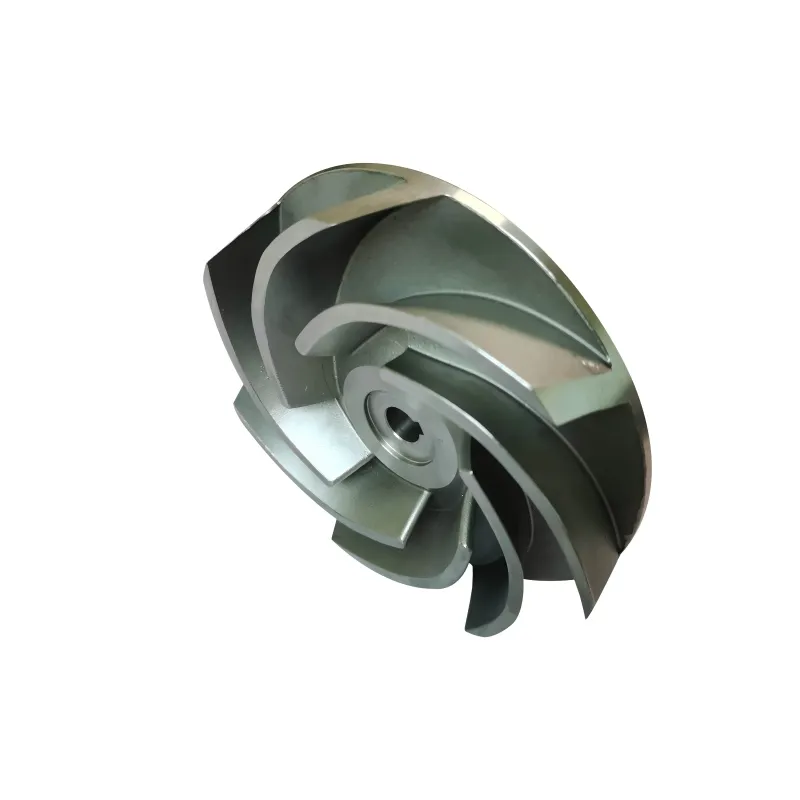
Let's break down the invisible cost drivers. The wax pattern stage is deceptive. A complex internal geometry might need a multi-part die or soluble wax cores, which skyrockets the tooling cost before a single metal drop is poured. This isn't machining where you just program a path; here, every undercut and thin wall demands a strategy for wax injection, assembly, and shell building. I recall a pump impeller project where the initial quote was based on a standard wax tool. The client's tweak to the blade profile meant we had to switch to a silicone rubber mold for the wax patterns. The unit lost wax casting price nearly doubled, not from the metal, but from the labor-intensive, low-yield wax process.
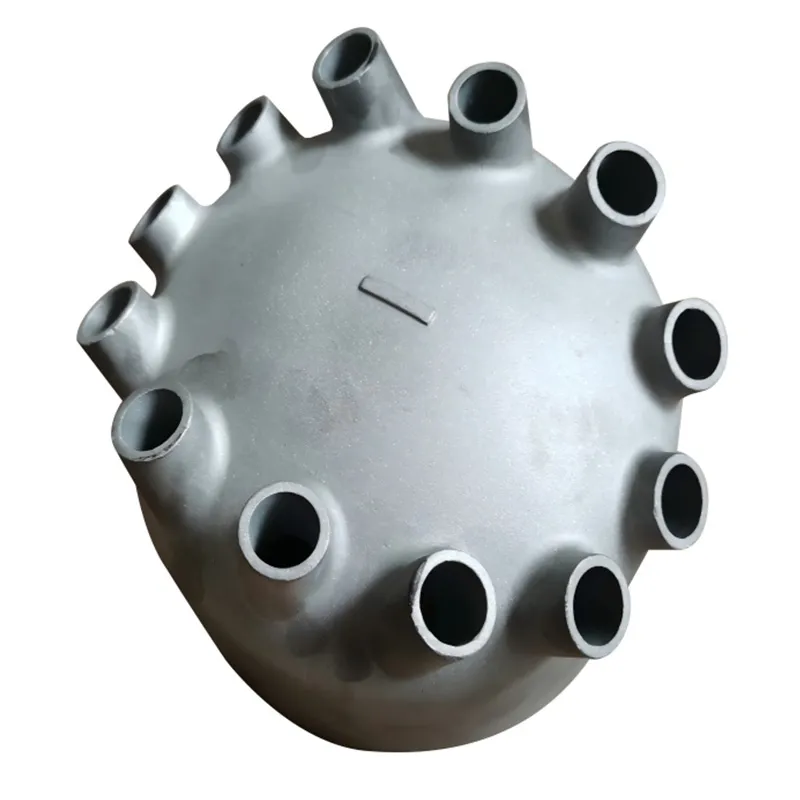
Then comes the shell. A standard ceramic shell for carbon steel might need 7 layers. For a high-temperature nickel-based alloy? You're looking at 9-11 layers, with specific refractory materials and controlled drying times. Each layer is labor, material, and furnace time. If the part has deep, narrow cavities, ensuring a perfect shell without voids or cracks becomes a craft. We've had parts where the shell cost per unit outweighed the material cost of the 17-4PH stainless steel inside. That never shows up in a simple per kg online calculator.
De-waxing and firing seem like straightforward steps, but they're energy hogs. The autoclave for steam de-waxing and the high-temperature furnace for sintering the shell run for hours. With global energy prices volatile, this is a direct and often unpredictable hit to the final investment casting price. A furnace cycle for a batch of cobalt alloy parts can be a major cost center, something a client ordering 50 pieces might not internalize.
Material: The Obvious and Not-So-Obvious Impact
Yes, 316L stainless is more expensive per kilo than carbon steel. That's the easy part. The hard part is how the material behaves. Aluminum alloys are cheaper but can be gassy, leading to higher scrap rates. Nickel-based alloys like Inconel 718 have terrible machinability but excellent high-temperature performance. The cost isn't just the ingot; it's the potential for hot tears during solidification, the need for controlled cooling, and the extra machining allowance you must leave because you can't predict distortion perfectly.
We work extensively with special alloys at QSY. A project for a turbine component required a proprietary cobalt-based alloy. The raw material was costly, but the real price driver was the post-casting heat treatment. It needed a specific solution annealing cycle in a vacuum furnace to achieve the required grain structure. That single heat treat step added 40% to the processing cost. When you're dealing with shell mold casting of superalloys, the price is as much in the post-processing protocol as in the casting itself.
Scrap rate is the silent killer of any budget. For simple shapes in ductile iron, we might hit a 95% yield. For a thin-walled, intricate stainless steel enclosure, a 70% yield is a success. That lost 30% isn't just metal; it's all the wax, shell, labor, and energy that went into those failed pieces, amortized into the price of the good ones. This is where experience matters. A good foundry engineer will look at a design and predict trouble spots—those sharp thermal junctions that will cause shrinkage porosity—and factor that risk into the quote from QSY.
The Machining Finish: Where Casting Cost Truly Blends
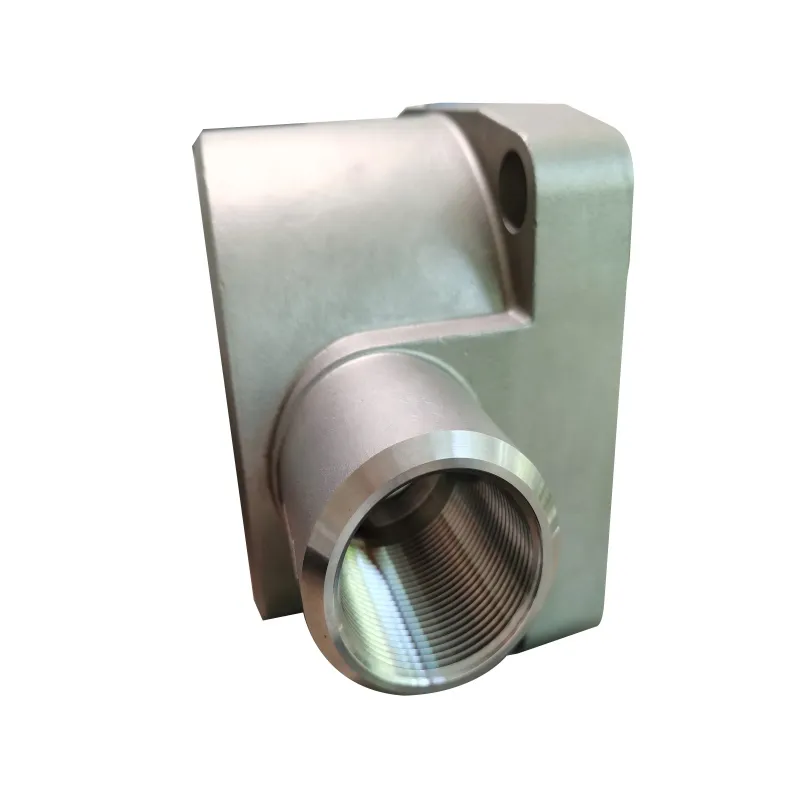
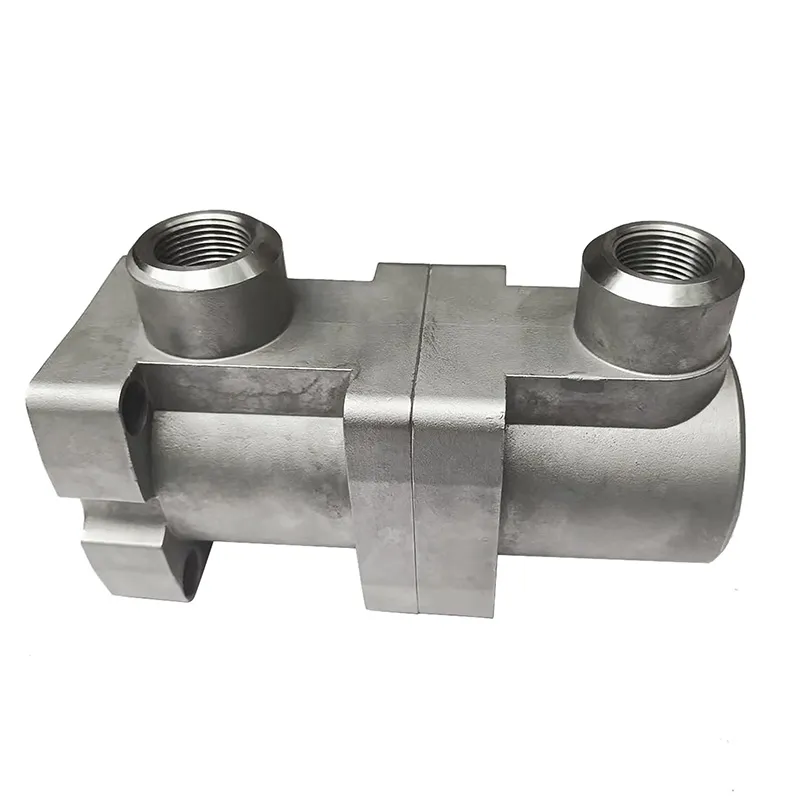
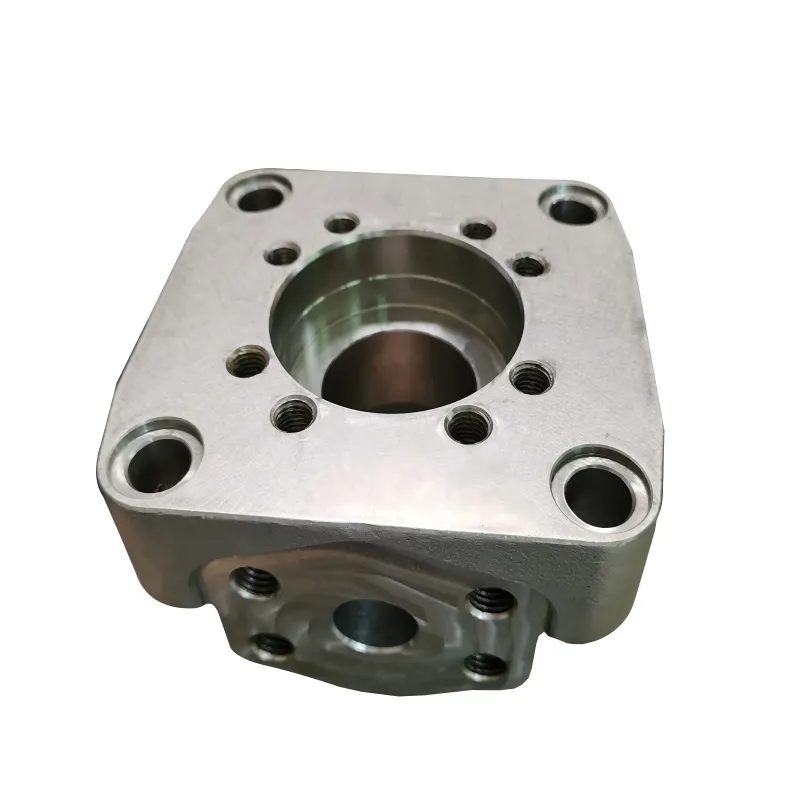
This is critical. Very few lost wax castings are net-shape. Almost all require CNC machining for critical interfaces—threads, sealing surfaces, precision bores. The lost wax casting price is often just the entry ticket. The integration with machining is where the total cost is defined. A poor casting with inconsistent wall thickness or unexpected hard spots will destroy machining tools and time.
Our advantage at Qingdao Qiangsenyuan is the vertical integration. We do the CNC machining in-house. This means when I quote a casting, I'm already thinking about how it will be fixtured on the mill, which datum surfaces we'll machine first, and how much stock to leave. I've seen quotes from places that only cast; they give a low number, but then the client gets hit with a massive, unpredictable machining bill from a separate shop. Our quotes might look higher initially, but they cover a finished, functional component. For a valve body last year, we suggested a slight draft angle modification that added negligible cost to the casting but reduced machining time by 3 hours per part. That's real cost saving.
The surface finish requirement is another subtle driver. An as-cast surface (CT7-8) is standard. But if you need a smooth CT5 for a hydraulic seal or glass-bead blasted for cosmetic appeal, that's extra handling. If you need full surface NDT like penetrant testing, that's another line item. These are the details that get glossed over in early emails but become major points in final negotiations.
Volume and Tooling: The Nonlinear Cost Curve
Tooling is a fixed cost. For a one-off prototype, we might use 3D-printed resin patterns or quick-and-dirty soft tooling. The unit price is high because the tooling cost is amortized over one piece. For 10,000 pieces, you invest in hardened steel dies for wax injection. The unit price plummets. The crossover point is different for every part. I often have to explain to clients that ordering 100 pieces might not be 100 times the cost of 1 piece; it might only be 30 times, because the tooling is spread out.
But there's a trap. Committing to high-volume steel tooling for a part that hasn't been validated is risky. We usually recommend a stepped approach: prototype with soft tooling, pilot run of 100 with improved tooling, then full production. This affects the investment casting price trajectory. You can see our approach to this staged process on our site at https://www.tsingtaocnc.com, where we outline how we manage projects from prototype to mass production.
Maintenance of tooling over long runs is a hidden factor. Wax injection molds wear. Over 50,000 cycles, a steel mold might need polishing or re-cutting to maintain pattern accuracy. A good quote builds in a contingency for tooling refurbishment, or clearly states the piece count guarantee for the initial tool. This is the kind of gritty detail you only learn from running production lines for decades, as we have at QSY over our 30 years in casting and machining.
So, How Do You Get a Meaningful Quote?
To get a real lost wax casting price, don't just send a CAD file and ask how much?. Provide the context. What's the annual volume forecast? What are the critical tolerances (call out the three that matter most)? What is the material specification—not just stainless steel, but the actual grade like 304 or CF8M? What post-processing is needed? Heat treat? Plating? Full PMI? A detailed RFQ allows us to model the real process flow.
Be open to Design for Manufacturability (DFM) feedback. A slight radius increase, a more uniform wall thickness, or a tweaked gate location can dramatically improve yield and lower cost. The best client relationships are collaborative. We recently worked with an engineer who was adamant about a zero-draft internal feature. After explaining the need for complex ceramic cores and the associated high scrap rate, they agreed to a minimal draft. The investment casting price dropped by 22%, and the part functioned identically.
Finally, understand that the cheapest initial quote is often the most expensive total cost. A foundry cutting corners on shell material or heat treatment will deliver parts that fail in machining or, worse, in the field. The price should reflect a sustainable process that delivers consistency. It's about value, not just cost. After three decades, that's the core of what we offer at Qingdao Qiangsenyuan Technology: a realistic price for a reliable part, where every cost factor has been accounted for, not hidden.