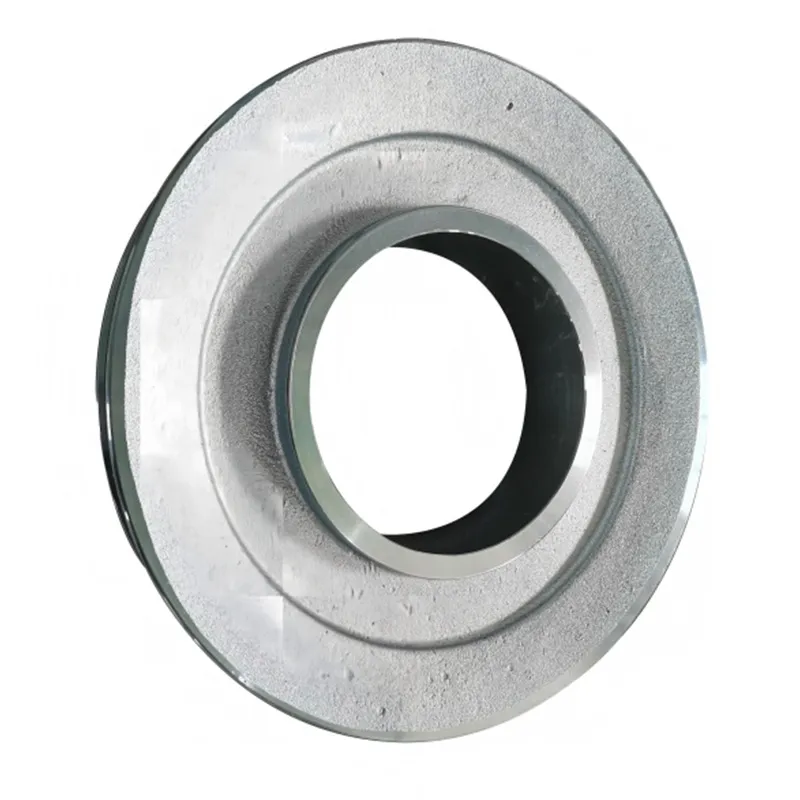
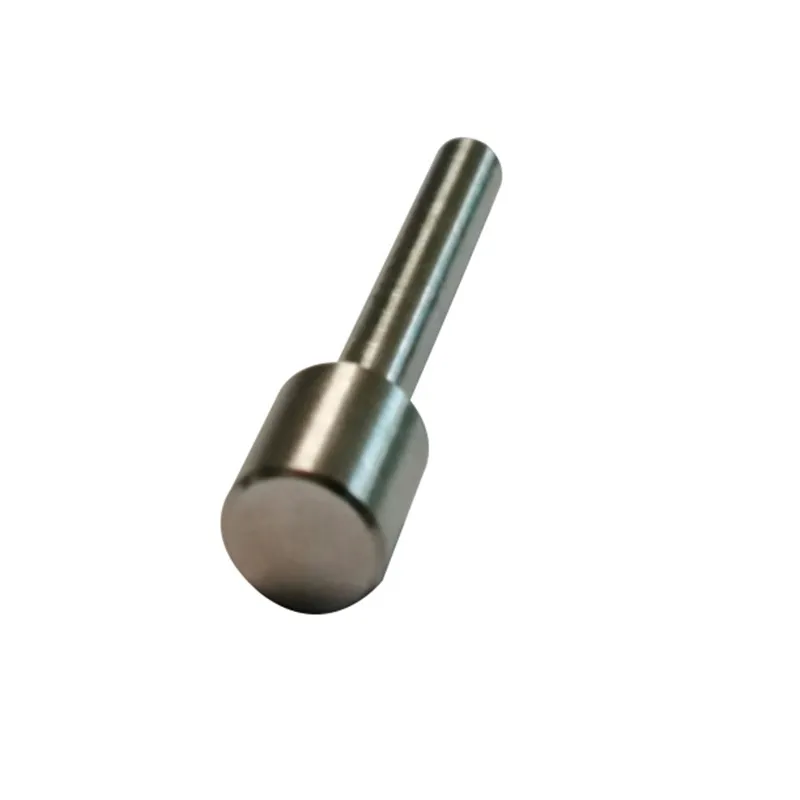
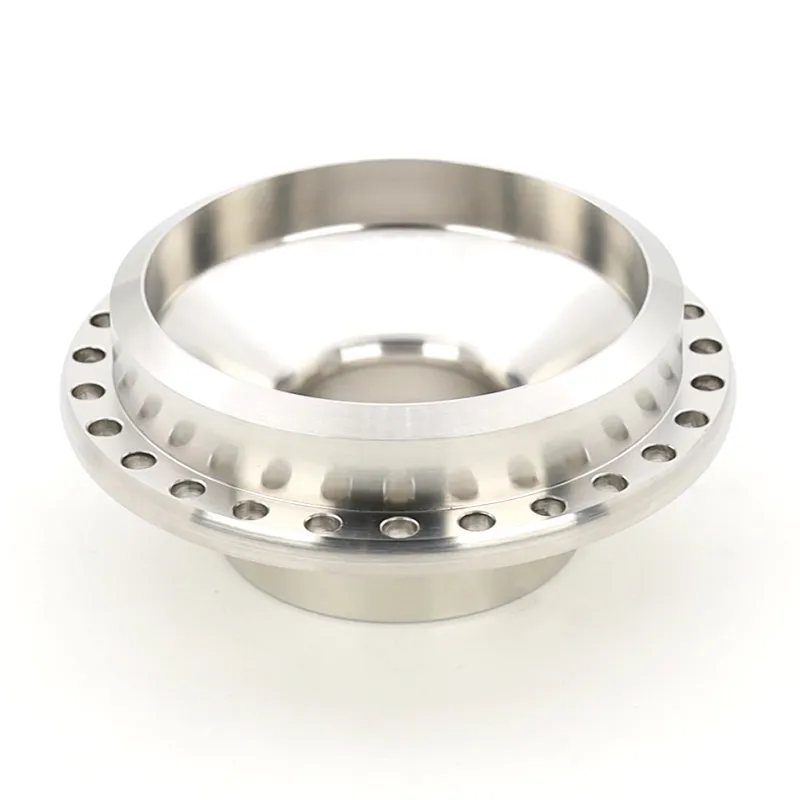
When most people hear 'machining precision,' they picture a shiny spec sheet with tight tolerances like ±0.005mm. That's part of it, sure, but in the shop, it's a living, breathing beast. It's the gap between what the CAD model demands and what the machine, the tool, the material, and frankly, the operator's experience on that Tuesday morning can actually deliver. A lot of clients, especially those new to sourcing parts, get hung up on that single number without understanding the ecosystem required to achieve it consistently. They'll ask for insane tolerances on a large cast iron housing, not realizing the thermal dynamics and stress relief in the part itself will fight you every step of the way. That's where the real work begins.
The Foundation: It Starts Before the Machine Even Spins
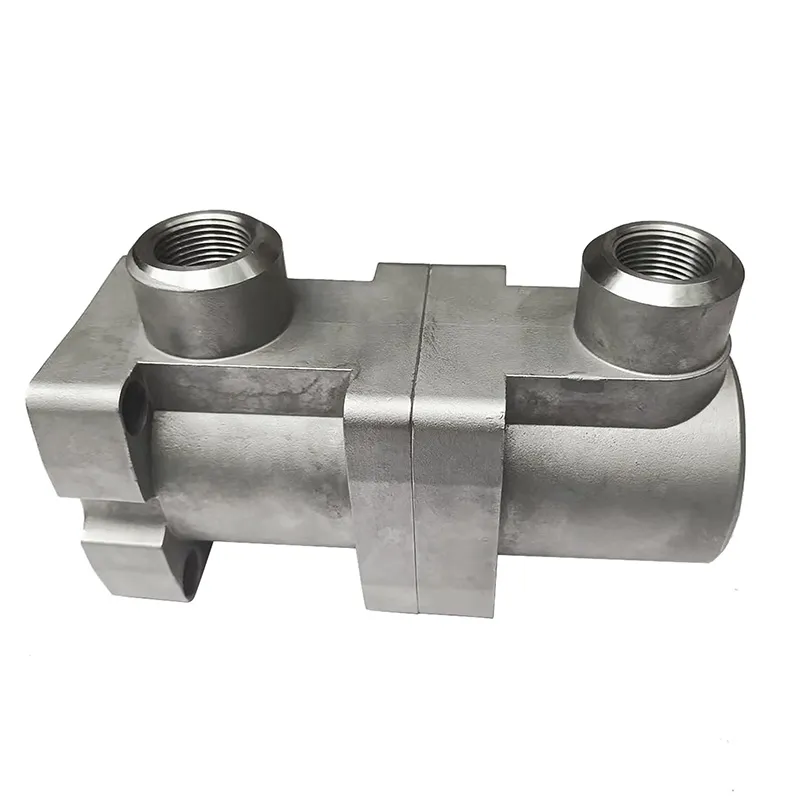
You can't talk about precision machining without first talking about what you're machining. This is a hill I'll die on. I've seen too many projects go sideways because the incoming material or casting was treated as an afterthought. For instance, we work regularly with Qingdao Qiangsenyuan Technology Co., Ltd. (QSY). Their long history in shell and investment casting is crucial. When they supply a nickel-based alloy investment casting for a turbine component, the consistency of that raw part—its internal soundness, minimal residual stress, and predictable metallurgy—sets the ceiling for the machining precision we can achieve later. If the casting has hidden porosity or inconsistent wall thickness, no amount of fancy CNC programming will save you. You're not machining a perfect billet; you're navigating a pre-formed landscape. The partnership, knowing their process at https://www.tsingtaocnc.com focuses on these specialized alloys, means we start from a known, stable baseline. That's half the battle won before the first fixture is even designed.
Material memory is another silent killer. Take stainless steel. It's notorious for moving during and after machining as internal stresses are released by the cutting action. You might hold a ±0.01mm tolerance during the first op, only to find the part has warped beyond salvage after sitting overnight. The precision here isn't just about the machine's repeatability; it's about process design. Sometimes, you have to rough it, let it sit, stress relieve it, then come back for the finish passes. It's slow, it's not glamorous, and you can't bill for the waiting time in a straightforward way, but it's the only way to get real, stable precision. Skipping that step is just building in future failure.
Fixture design is its own dark art. For high-precision work, the fixture isn't just holding the part; it's becoming part of the kinematic chain. You're battling clamping forces that can distort thin walls, thermal expansion from both the part and the fixture material, and ensuring locational repeatability across a batch. I recall a job machining intricate features on a cobalt-based alloy seal provided by a partner like QSY. The part was a nightmare to hold without distortion. We ended up designing a custom fixture with low-stress, diaphragm clamping and had to factor in the different thermal expansion rates between the fixture's steel and the cobalt alloy. The CAD model's perfect geometry meant nothing until we solved that physical interface. The machine's precision is useless if the part is floating a micron off where you think it is.
The Machine Tool: A Capable, but Temperant Partner
Everyone obsesses over machine brand and linear scale resolution. And yes, a high-end 5-axis machining center with thermal compensation is a beautiful thing. But the machine is just a platform. Its inherent precision can be easily squandered. Tool deflection is the most common thief. You program a 10mm endmill to take a 0.5mm finish cut in 17-4 PH stainless steel. The tool looks rigid, but at that scale, it's bending. You might be getting a 0.03mm taper over a 50mm wall. The machine's positional feedback says it's perfect, but the physical cut isn't. So, you learn to program against the deflection, or you move to a stubby, carbide tool with a different helix angle, sacrificing ideal chip load for rigidity. The choice isn't in the manual; it's in the operator's head after a dozen scrapped parts.
Thermal growth is the ghost in the machine. That ±0.002mm repeatability spec? That's usually in a 20°C controlled environment after a 4-hour warm-up cycle. In a real shop, doors open, ambient temperature shifts, coolant temperature changes. The spindle grows, the ballscrews expand. We learned this the hard way on a long-run job for precision sensor housings. Parts machined first thing in the morning measured differently than those done after lunch until we implemented a strict warm-up protocol and started monitoring the machine's thermal sensors. The precision wasn't a setting; it was a discipline.
Then there's the tooling itself. Not all precision tool holders are created equal. The runout in a standard collet chuck versus a hydraulic shrink-fit holder can be the difference between a mirror finish and chatter marks. For true high-precision work, you measure the runout at the tool tip, not assume the spec sheet is gospel. And tool wear isn't linear. In superalloys like the nickel-based ones QSY often casts, wear can accelerate rapidly after a certain point. If you're chasing micron-level tolerances, you're not running tools to failure; you're replacing them on a conservative schedule based on material volume removed, not just time. It feels wasteful until you scrap a $5,000 casting in the final operation.
The Human Factor: The Unquantifiable Variable
CNC is automated, but precision machining is not. The programmer's intent versus the machine's interpretation leaves gaps. Take corner rounding. You program a sharp internal corner. The machine's path smoothing and the finite radius of the tool will always create a fillet. The programmer needs to understand this, model it, and sometimes design the part to accept it. I've had arguments with designers who insisted on physically impossible geometries. Explaining the interplay between tool diameter, stepover, and surface finish isn't a CAD function; it's a conversation.
Measurement is another layer. Having a CMM is great, but how is the part fixtured on the CMM? Is it in the same stress state as it was in the machining fixture? What's the temperature of the part? Is the CMM operator probing with consistent force? I trust a skilled machinist with a well-calibrated micrometer and a feel for the part sometimes more than a rushed automated report. The data from the CMM is only as good as the measurement plan. You need to know what to measure, and where, to tell the true story of the part's precision. Is that bore's diameter more critical, or its cylindricity and position relative to the mounting face? The drawing might not tell you; experience does.
Finally, there's the feel. It sounds unscientific, but after years in the shop, you develop an intuition. The sound of the cut changing slightly, the look of the chip stream, the way coolant flows over the part. These can signal a tool going dull or a part coming loose long before the tolerance check fails. This isn't something you can code into the machine. It's why, despite all the automation, a seasoned machinist hovering over a critical first-article run is still the best insurance policy for achieving true machining precision.
Case in Point: Where Theory Meets the Floor
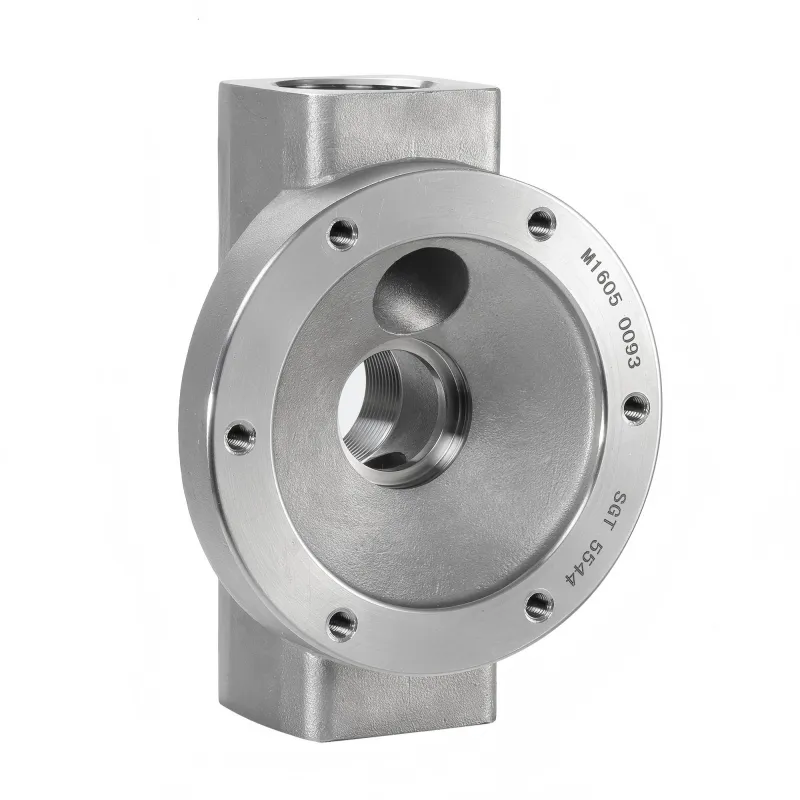
Let me walk through a condensed example. We received a batch of 316L stainless steel valve bodies from a casting partner. The spec called for a critical seal face flatness within 0.01mm and a perpendicularity to the main bore within 0.015mm. The material was good, but as-cast, the faces were nowhere near flat. Step one was establishing a reliable datum. We couldn't just chuck it and face it off; the casting was uneven. We spent a day setting up on a faceplate, indicating and shimming to find the average center of the main bore and one face, then we machined just enough off that first face to create a true, clean datum surface. All subsequent setups referenced that machined face. It was a slow, manual process. Skipping it would have compounded error through every operation.
The finish machining of the seal face was done on a vertical machining center with a freshly dressed fly cutter. We used a vacuum chuck to pull the part flat against our master datum surface, eliminating clamping pressure distortion. Coolant temperature was monitored. The final passes were taken at minimal depth of cut, high speed, and slow feed. It was inefficient as hell for cycle time, but it was the only way to achieve the required flatness without inducing stress or heat. The machining precision here was the result of a method, not just a machine capability.
The part passed inspection. But here's the kicker: the client's assembly team later reported some issues with seal alignment. It turned out our precision was too perfect for their gasket specification. Their assembly process assumed a tiny amount of compliance that our part didn't provide. It was a lesson in system-level precision. We met the print, but the print didn't capture the full functional requirement. Now, we ask more questions. What does this interface with? How is it assembled? Sometimes, the optimal precision isn't the tightest possible, but the most appropriate for the system. That's a judgment call no machine can make.
Wrapping It Up: Precision as a Process, Not a Product
So, after all this, what is machining precision? It's a holistic outcome. It's the chain that links a stable, well-understood raw component from a specialist like QSY, to a thoughtful process design that respects material behavior, to a machine that is known and cared for, to tooling that is selected and maintained for the task, and finally, to human oversight that bridges the digital and physical worlds. It's expensive, not because of the machine's price tag, but because of the time, expertise, and discipline it consumes.
You can't buy it off the shelf from a catalog. You can't outsource it to a shop that just quotes based on part volume and a tolerance column. It requires a dialogue, a shared understanding of intent, and often, a willingness to pay for the non-value-added but essential steps—the stress relieving, the multiple setups, the conservative tooling policies. When you look at a complex, high-performance component, the precision you see is the residue of hundreds of small, correct decisions and a few painful lessons learned. It's never just a number.
For companies that need this level of control, especially with challenging materials like special alloys, the relationship with the foundry is the first critical link. A partner whose focus, like the one described at https://www.tsingtaocnc.com, is on controlled casting processes for high-performance alloys, effectively raises that initial ceiling. It gives the machining side a fighting chance to deliver something truly reliable. Without that, you're building on sand, no matter how good your mills and lathes are. That's the unspoken truth of this whole precision game.