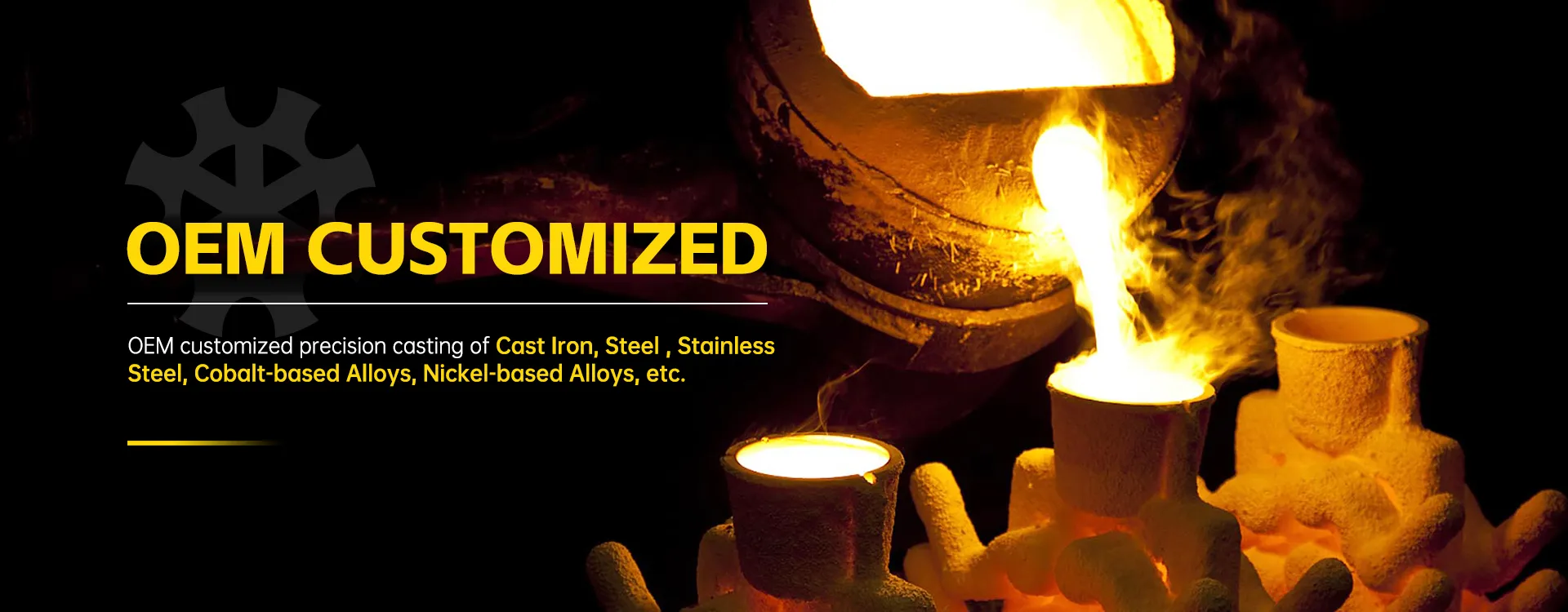
When most people hear 'metal casting foundry,' they picture the dramatic pour—molten metal flowing into a mold. That's the showy part, sure, but it's maybe 5% of the actual battle. The real work, the expertise that separates a functional part from a scrap pile, happens in the hundred steps before and after that moment. It's in the pattern design, the gating system, the alloy control, and the post-cleanup. A lot of shops get fixated on the melt, only to have their profit margins eaten alive by grinding and rework downstream.
The Mold is the Blueprint
You can't pour good castings from a bad mold. This seems obvious, but I've seen too many projects fail because the pattern or mold-making was treated as an afterthought. In shell molding, which Qingdao Qiangsenyuan Technology Co., Ltd.(QSY) specializes in, the consistency of the resin-sand mixture and the curing process is everything. A slight deviation in temperature or time, and your shell strength is off. Then you get mold wall movement during the pour, or worse, a breakout. It's not just about making a shape; it's about making a shape that can withstand the thermal shock and metallostatic pressure of liquid metal.
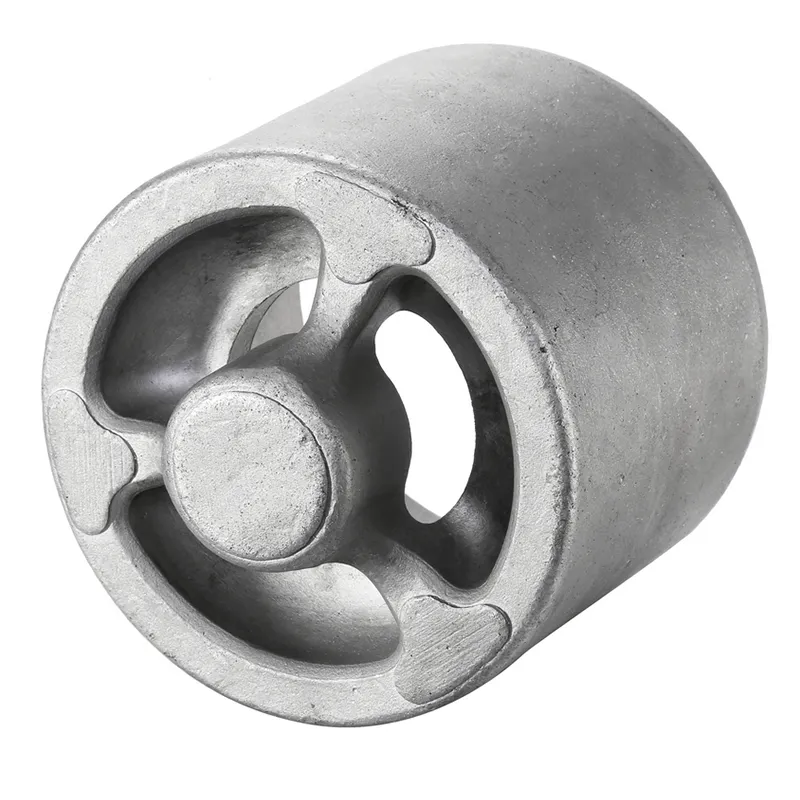
Investment casting is another beast. The wax pattern itself has to be perfect because every flaw gets replicated. Then you're building up those ceramic layers, each one needing precise viscosity and drying conditions. It's a slower, more meticulous process than shell molding, justified when you need complex geometries and superb surface finish. The choice between these methods at a foundry like QSY isn't arbitrary; it's a calculated decision based on part complexity, volume, alloy, and tolerance requirements. Picking the wrong one from the start is a guaranteed path to extra cost.
I recall a job for a pump housing, a relatively simple shape but with some internal channels. We initially thought shell mold would be fine—faster cycle time. But the core assembly for those channels became a nightmare, leading to mismatch and core shift in the first batch. We switched to a solid investment casting process for the core-less design. It was more expensive per mold, but the yield rate skyrocketed, and we saved a fortune on not having to machine those internal passages. The mold isn't just a container; it's the first and most critical step of manufacturing.
Alloy Isn't Just a Spec Sheet
Clients send a material spec: ASTM A216 WCB or 304 Stainless. That's the starting line. The foundry's job is to hit that chemistry, but also to manage the melt to achieve the required microstructure and mechanical properties. Pouring steel isn't like filling a glass with water. You have deoxidation practices, inoculation for gray iron to control graphite formation, and for the special alloys QSY works with—like nickel-based or cobalt-based ones—the control is even tighter.
These high-performance alloys are sensitive. Trace elements can drastically alter their high-temperature strength or corrosion resistance. The melt often has to happen under protective atmosphere or even vacuum to prevent oxidation of reactive elements. You're not just melting; you're actively metallurgically engineering the liquid metal before it ever sees a mold. Getting the chemistry right on the spectrometer is one thing; ensuring that chemistry translates to the right crystal structure in the final casting is where the experience comes in.
We had a failure once with a cobalt-chrome alloy part for a wear application. Chemistry was perfect, mechanical tests on coupons were good, but the actual parts were failing prematurely in the field. After a lot of head-scratching and sectioning parts, we found minor micro-porosity and carbide segregation that didn't show up in standard test bars. The issue was the pouring temperature and cooling rate in the specific mold configuration. We adjusted the gating to promote directional solidification. The spec sheet didn't change, but how we achieved it from the metal casting foundry floor did.
The Handoff to Machining
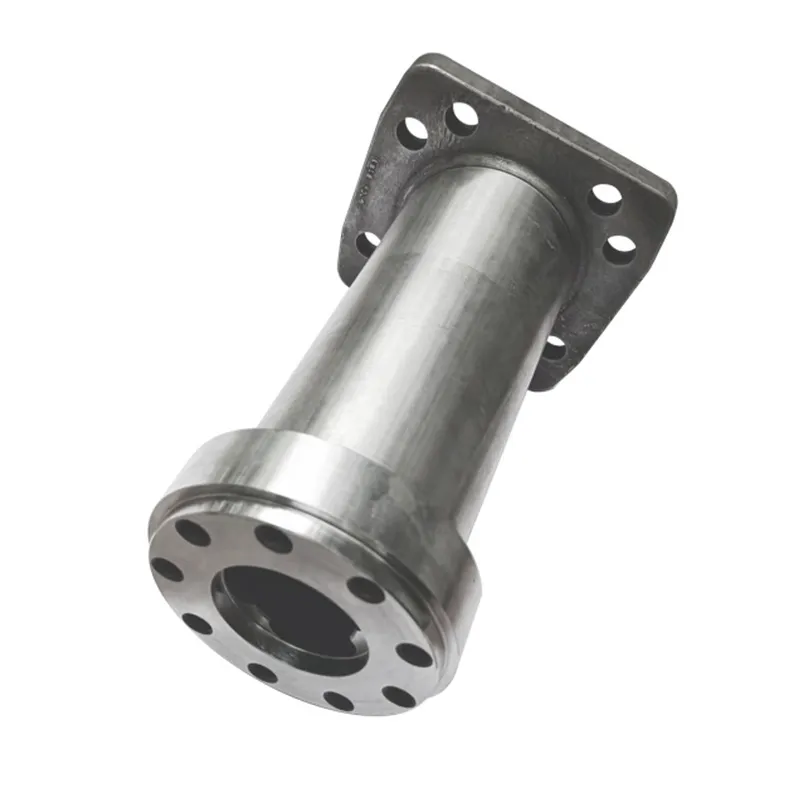
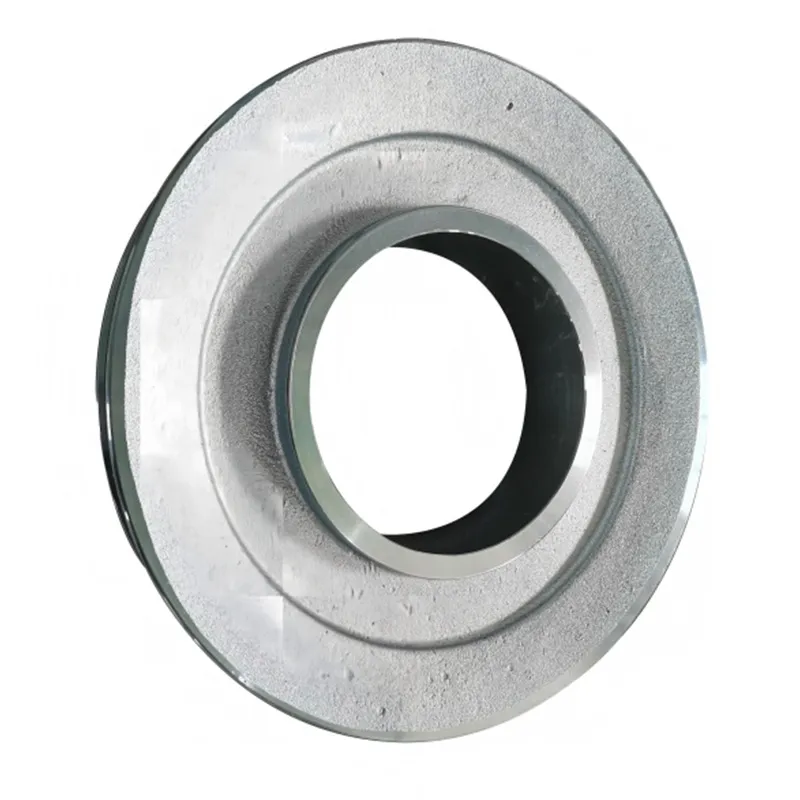
This is where many integrated foundries fall down. Casting and machining are often separate kingdoms, even under one roof. A perfect as-cast part can be ruined on the first CNC clamp. The key is communication during the design phase. A good foundry engineer thinks like a machinist: Where will the datum surfaces be? Is there enough stock allowance? Are there features that can be cast to near-net shape to save machining time?
At QSY, having both casting and CNC machining in-house is a massive advantage, but only if the teams talk. We implement a shared process review for new parts. The machinists might point out that a particular wall is too thin to withstand cutting forces without chatter, so we add a temporary reinforcing rib in the casting to be removed later. Or we might adjust a draft angle slightly to allow for a more secure fixturing setup on the CNC bed.
The goal is to see the part as a continuum from molten metal to finished component. A decision in the metal casting foundry stage to add a machining lug might cost a little extra sand, but it saves hours of fixture design and setup time downstream. It's about total cost per finished part, not just the lowest casting price. I've seen projects get awarded to the cheapest casting bid, only for the client to spend double on machining trying to hold tolerances on a poorly designed casting.
When Things Go Wrong (They Do)
Scrap happens. Anyone in this business who says otherwise is lying. The mark of a professional foundry isn't a zero-defect rate—that's economically impossible for most jobs—but in how they diagnose and prevent recurrence. Is it a shrinkage cavity? That points to feeding and risering issues. Is it a cold shut? Likely a gating problem causing turbulent flow. Is it a crack? Could be a mold constraint issue or incorrect alloy ductility for the part geometry.
We keep a physical scrap museum of typical defects with cross-sections polished and etched. It's the best training tool for new engineers. There's no substitute for looking at the grain flow around a tear or the dendritic structure near a pore. It turns a theoretical defect into a tangible, understandable thing. This forensic approach is crucial. You fix the process, not just the single bad part.
A common mistake is to immediately blame the melting department for any internal defect. Sometimes the problem originates much earlier. A case in point: persistent slag inclusions in a series of steel castings. We checked the melt practice, the ladle lining, everything. The culprit turned out to be a new batch of sand for the shell molds with a slightly different refractory coating that was breaking down too early during the pour. The problem wasn't in the metal; it was in the mold that was supposed to contain it.
The Real Value of a Foundry Partner
So what are you really buying when you contract with a metal casting foundry? You're not just buying a service that turns drawings into metal objects. You're buying judgment. You're buying the accumulated, often hard-won experience of knowing which alloy behaves which way in a thick section versus a thin wall. You're buying the intuition to look at a CAD model and flag a potential hot spot that will cause shrinkage. You're buying a partner who understands that the design might be perfect for machining from billet, but a nightmare for casting, and will suggest a tweak that makes it castable without compromising function.
That's the operational history behind a company like Qingdao Qiangsenyuan Technology Co., Ltd.(QSY). The 30 years they cite isn't just a marketing line; it's a database of thousands of pours, alloys, molds, and mistakes that have been internalized into their process standards. It's what lets them reliably handle materials from ductile iron to superalloys. Their website, https://www.tsingtaocnc.com, shows the capabilities, but the real asset is the unwritten knowledge of how to navigate from that capability to a successful, cost-effective part.
In the end, the foundry process is a chain of a hundred links. The flashy pour is just one. Strength comes from paying obsessive attention to all the others—the pattern, the mold, the alloy prep, the solidification control, and the handoff to finishing. When that chain holds, you get more than a casting. You get a solid foundation for whatever machine it's going into. And that's the whole point.