When clients ask about 'metal injection molding cost', they're usually hoping for a simple per-part number. That's the first misconception. The cost isn't a sticker price; it's a conversation that starts with the CAD model and ends with the final inspection report. It's about the total cost of ownership for a functional component, not just the purchase order. I've seen too many projects stall because the initial quote looked good, but the hidden costs of secondary operations, quality issues, and lead time delays weren't factored in. Let's break down what really moves the needle.
It Starts with the Feedstock and Geometry
The raw material cost for MIM feedstock—that powdered metal mixed with binder—is just the entry ticket. But the alloy choice immediately splits the path. Going for a standard 17-4PH stainless? Fairly predictable. But when the application calls for a nickel-based or cobalt-based alloy for high-temperature resistance, like in some turbine components, the powder cost can jump by a factor of five or more. This isn't an area to cheap out on if the part needs to perform.
Then there's the part design. A complex, compact geometry with internal threads, thin walls, and undercuts is where MIM shines. But 'complex' has degrees. A tiny, intricate surgical instrument component might only use 5 grams of material, but if it requires fragile tooling details and a 99.5% density spec, the metal injection molding cost is dominated by tooling precision and process control, not the raw grams. The tooling for such parts is an art form itself.
I recall a project for a sensor housing that needed to be hermetic. The design had a continuous, thin-walled shell. In theory, perfect for MIM. But the initial runs showed microscopic porosity in specific sections, failing the pressure test. We had to adjust the gate design and sintering profile, which added several cycles of trial and cost. The client's original per-part quote was meaningless at that stage. The real cost included that iterative development.
The Hidden Sinkhole: Secondary Operations
This is where budgets often get blown. The dream is net-shape, but the reality for many components involves some post-sintering work. If you need a true CNC-machined surface finish on a sealing face, or a precise drilled hole with a tighter tolerance than the sintering process can reliably hold, you're adding steps. A company that handles both MIM and CNC machining in-house, like Qingdao Qiangsenyuan Technology Co., Ltd. (QSY), has an advantage here. They can streamline the workflow from sintered blank to finished part under one roof, which often controls cost better than shipping parts to a third-party machine shop.
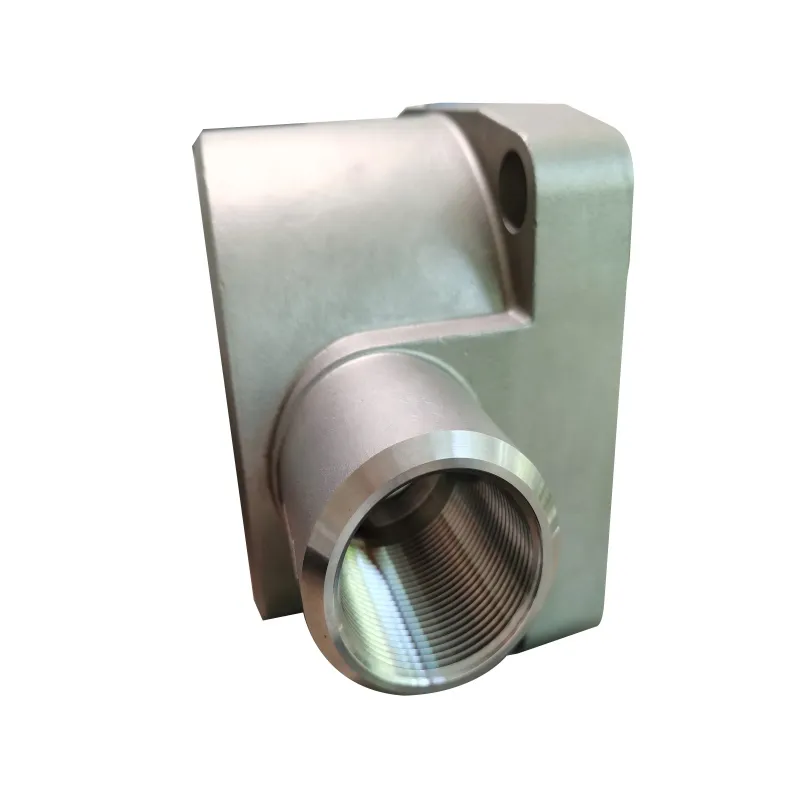
Consider a valve body made via MIM. The main form and internal channels are molded, but the flange face might need milling and the port threads need tapping. If the MIM vendor has to subcontract the machining, you get markup and logistics lag. An integrated supplier can optimize the process sequence—sometimes even performing machining before the final sintering shrink is fully calculated—to reduce waste and handling. Their long history in casting and machining, as noted on their site tsingtaocnc.com, suggests they understand these hybrid manufacturing cost dynamics.
Debinding and sintering cycles themselves are energy hogs. Running a furnace for a high-temperature alloy like a cobalt-chrome mix isn't the same as for standard steel. The cycle time is longer, the atmosphere control more critical, and the furnace wear is higher. This utility and capital equipment depreciation cost gets baked into the part price, especially for lower volumes.
Volume is a Curve, Not a Switch
The classic line is MIM is for high volume. That's only partially true. It's for sufficient volume to amortize the upfront tooling cost, which is typically higher than for simple die casting but lower than for precision investment casting. The sweet spot often starts around 10,000 parts per year, but I've seen it make sense for 5,000 parts if the geometry eliminates $20 worth of CNC machining on each piece.
The cost reduction from volume 10k to 100k isn't linear. Most savings are captured by the first 50k. After that, you're mainly squeezing margins and optimizing feedstock procurement. The real volume benefit is in process stability. At higher runs, the operators dial in the parameters, the tooling settles, and the defect rate drops. This consistent yield is a massive, often unquantified, cost saver. Scrap and rework can kill the profitability of a low-cost part.
A failure we learned from: a bracket for a consumer device. We got the volume quote for 100k pieces, tooled up, and started production. The part worked, but the cosmetic spec was tighter than we'd fully appreciated. Slight discoloration variations in batches, acceptable for an industrial part, became a reject reason. We ended up adding a vibratory finishing step we hadn't costed, erasing the projected margin. The metal injection molding cost model failed to account for a non-functional requirement.
Supplier Selection: Capability Over Quote
Choosing a vendor on the lowest per-part price is the fastest way to lose money. You need to audit their process control. How do they monitor and compensate for feedstock lot variations? What's their statistical process control (SPC) on critical dimensions? For a firm like QSY, with over 30 years in casting and machining, the question is how that metallurgical and dimensional control knowledge transfers to their MIM operations. That experience in investment casting and shell mold casting of special alloys is directly relevant to understanding sintering behavior and final material properties.
Lead time is a cost factor, too. A supplier with a flexible furnace schedule can accommodate urgent batches or engineering tests without a 50% surcharge. This agility saves projects. I'd rather pay a 10% premium to a supplier who can turn around a design-of-experiment batch in two weeks than wait eight weeks for a cheaper shop.
Ask about their scrap protocol. Do they just recycle the sintered scrap as low-grade material, or can they reintroduce it into the feedstock stream under controlled ratios? This affects your material cost in the long run. Transparency here separates the job shops from the technical partners.
The Total Cost Equation: Bringing It Back
So, when we circle back to metal injection molding cost, we're really talking about a sum: Tooling Amortization + (Feedstock Cost per Shot + Process Cost per Cycle) / Yield Rate + Cost of Secondary Operations + Logistics/Overhead. Miss one variable, and your business case wobbles.
The most cost-effective MIM projects are those designed for the process from day one, with the engineer working alongside a seasoned manufacturer. It's about specifying the right alloy for the function, tolerancing only the critical features, and understanding the trade-offs. A supplier that offers the full suite—from material advice to molding, sintering, and final CNC machining—can often find efficiencies a fragmented supply chain cannot.
In the end, the cost is justified by the part's performance and integration savings. If you're replacing an assembly of five machined parts with one MIM component, the metal injection molding cost is almost irrelevant compared to the assembly labor, inventory, and reliability gains. That's the perspective shift. It's not a commodity purchase; it's a value-engineering partnership. The final number on the invoice is just one data point in that much larger calculation.