When most people hear 'metal injection molding equipment', they immediately picture the big, shiny metal injection molding machine itself—the one with the impressive clamping force tonnage on the spec sheet. That's the first mistake. In reality, that press is just the start, and arguably not even the most critical piece for consistent, profitable production. The real game is played in the supporting cast: the debinding lines, the sintering furnaces, and the atmosphere control systems that most suppliers gloss over in their sales pitches. If your furnace profile has a 20-degree hot spot, or your solvent debinding setup can't handle the part geometry, that state-of-the-art molding press is just an expensive paperweight.
The Molding Press Isn't the Hero
Let's talk about the molding press itself. Yes, you need precision, good shot control, and a robust clamp. But the obsession with ultra-high injection speeds? Often overrated for MIM. You're pushing a highly filled, viscous feedstock, not plastic. I've seen shops waste money on servo-driven injection units capable of ludicrous speeds, only to run them at 30% capacity to avoid jetting and separation issues. The sweet spot is a machine with excellent pressure profiling and temperature control across the barrel. A common pitfall is underestimating material changeover time. If you're running 17-4PH one week and 316L the next, you need a system that can be purged cleanly and efficiently. Residual cross-contamination in the screw or check valve will haunt you in the sintering stage, showing up as mysterious discoloration or weak spots.
The clamp end matters too, but not for the reasons you might think. It's less about sheer tonnage and more about parallelism and platen rigidity. A slight deflection during injection can cause minor but critical variations in part density, which amplifies into major distortion during sintering. We learned this the hard way on a high-volume gear component project. The parts met all green-state dimensions, but post-sintering, the tooth profile was out of spec. The root cause? A barely measurable non-parallel condition in the mold during injection, traced back to a slightly worn tie-bar on an older press. The fix wasn't buying a new 500-ton machine; it was rebuilding the clamp unit on the existing 250-ton press.
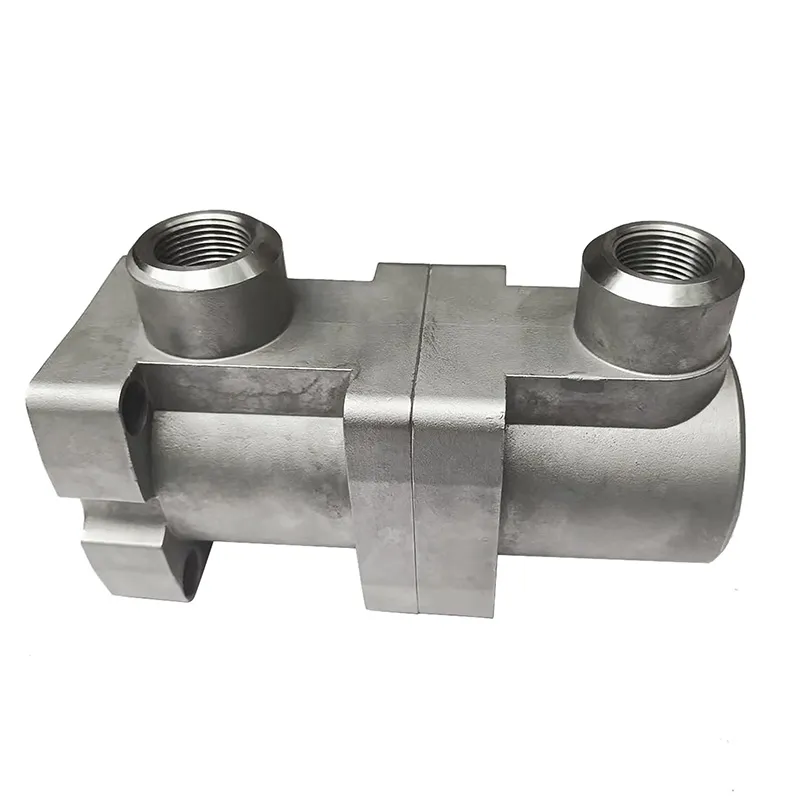
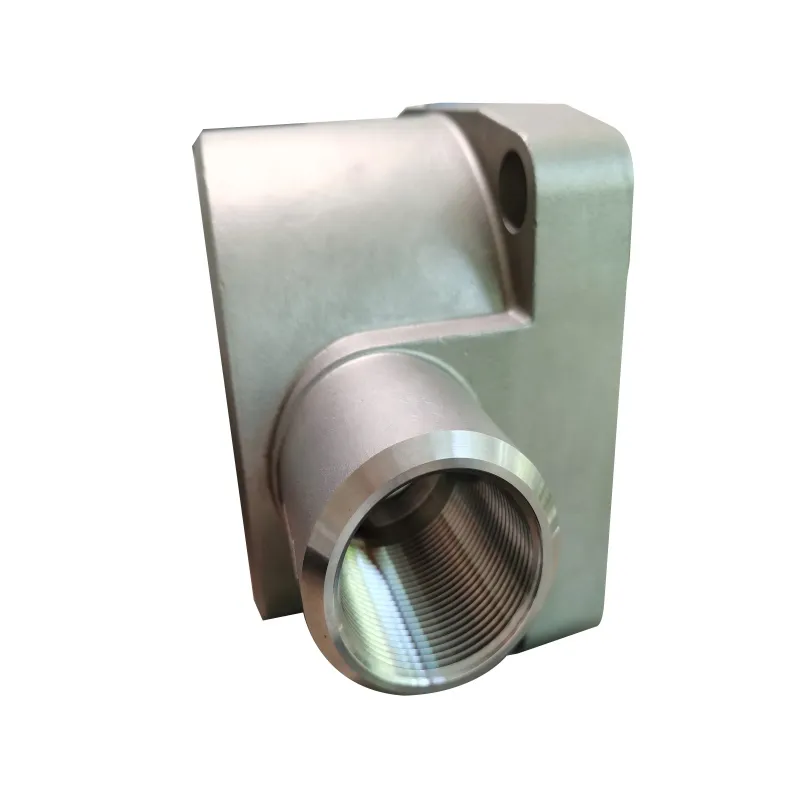
This is where partnering with a foundry that understands the entire chain is invaluable. A company like Qingdao Qiangsenyuan Technology Co., Ltd. (QSY), with their deep background in investment casting and CNC machining, gets this intuitively. They view the molding press not as a standalone unit but as the first step in a dimensional journey that ends with a precision-machined component. Their experience with complex alloys tells them what the green part needs to look like to survive and thrive through debinding and sintering. It's a holistic view many pure-play MIM equipment vendors lack.
The Real Bottleneck: Debinding & Sintering
This is where projects live or die. Catalytic debinding, solvent debinding, thermal debinding—each has its place, and choosing wrong is costly. Solvent systems, for instance, are great for thick sections, but the solvent recovery and handling add a layer of operational complexity and cost that isn't always in the initial ROI calculation. I remember a job where we used a solvent system for a part with a 15mm thick hub. The cycle time was fine, but the solvent consumption and the required N? blanket for safety made the per-part cost untenable. We switched to a tailored thermal debind cycle on a different line, which required a slower ramp rate and precise gas flow, but ended up being more economical overall.
The sintering furnace is the heart. Atmosphere control is everything. A few ppm of oxygen or moisture at 1300°C can ruin a batch. The difference between a good furnace and a great one isn't just the heating elements; it's the gas inlet design, the muffle integrity, and the real-time monitoring. You need to see the dew point, the oxygen level, and the temperature in multiple zones, not just at the thermocouple. We once had a batch of stainless steel parts come out with a carbon-enriched, brittle surface. The furnace logs showed perfect temperature and atmosphere. It took weeks to find the issue: a tiny, almost invisible crack in the muffle behind the heating elements, allowing air ingress only during specific cooling cycles. The data looked clean, but the parts told the real story.
For a multi-process manufacturer like QSY (https://www.tsingtaocnc.com), the sintering stage is particularly critical. Their work with cobalt and nickel-based superalloys means they're dealing with sintering profiles that are unforgiving. The equipment must handle high temperatures with exceptional atmosphere purity. Any deviation doesn't just cause a dimensional scrap; it can fundamentally alter the metallurgical properties they've been hired to achieve. Their decades in casting and machining mean they approach furnace specs with a material scientist's eye, not just a production manager's checklist.
Tooling & Feedstock: The Unsung Partnership
You can't talk about metal injection molding equipment without acknowledging the tooling. The mold is where the feedstock meets the machine. A common error is designing MIM molds like plastic injection molds. The shrink rates are higher and less predictable, and the gates and runners need to account for the abrasive nature of the feedstock. I've seen beautiful, hardened steel molds wear out prematurely because the gate was too small, causing excessive shear and abrasion. The tool steel grade matters immensely. It's not just about hardness; it's about wear resistance and thermal conductivity.
Then there's the feedstock. It's a partnership between the molding machine and the material. The machine must be tuned to the specific viscosity and shear sensitivity of the feedstock lot. A 5% variation in binder content can require a complete re-profiling of the injection parameters. Good equipment allows for this fine-tuning—multiple injection speed/pressure profiles, precise barrel zone control, and a screw design that provides good mixing without degrading the binder. The goal is a homogeneous, defect-free green part with uniform density. If you're fighting sink marks or voids in the green state, you've already lost the battle for dimensional stability later on.
This interplay is why integrated manufacturers have an edge. At QSY, their expertise isn't siloed. The team that machines the final sintered part likely provides feedback to the team that designs the MIM tool, knowing where critical tolerances are held in the CNC process. This closed-loop feedback between molding, sintering, and machining is something you rarely get from a shop that only does MIM. It leads to smarter tooling designs that are optimized for the entire manufacturing chain, not just the first step.
Integration and the Dark Art of Process Control
Buying individual pieces of best-in-class equipment doesn't guarantee a best-in-class process. The integration is the dark art. How does the robot handle the delicate green part from the mold? How is the atmosphere maintained during transfer from the debinding oven to the sintering furnace? These are the mundane, unglamorous details that dictate yield. A slight vibration during robotic transfer can create micro-cracks in a thermally debound part that only reveal themselves as catastrophic fractures in sintering. The material handling systems are as vital as the primary machines.
Process control software is another area where promises often outpace reality. The ideal is a seamless digital thread from feedstock lot number through to final sintered part properties. In practice, most shops are patching together data from different machines with different protocols. The key is to identify the critical control points—the injection peak pressure, the debinding weight loss curve, the sintering shrinkage—and build robust SPC around those. It's better to have three perfectly controlled and correlated data points than a dashboard full of meaningless numbers.
Looking at a company's broader capabilities often hints at their approach to integration. QSY's long history in shell mold and investment casting suggests they understand controlled, multi-stage thermal processes and the criticality of atmosphere. Applying that rigorous, metallurgy-focused mindset to MIM equipment selection and integration is a significant advantage. They're likely to prioritize furnace atmosphere consistency over a molding press with flashy digital screens, because they know which factor truly drives final material properties.
Conclusion: Thinking in Systems, Not Machines
So, when evaluating metal injection molding equipment, the shift in thinking is from buying machines to building a system. It's a chain of interdependent processes. The strength of the chain is determined by its weakest link, which is rarely the molding press. It's usually in debinding uniformity, furnace atmosphere integrity, or the handoffs between stages.
The most successful operations I've seen are those where the equipment is selected by people who have to live with the parts it produces all the way to the customer's assembly line. They value robustness, control, and serviceability over headline specifications. They ask the equipment vendor not just about cycle times, but about maintenance schedules for the furnace muffle, the availability of critical spare parts, and the logic behind the safety interlocks on the debinding line.
In the end, good MIM equipment enables repeatability. It turns a process notorious for its black art reputation into a reliable, industrialized manufacturing method. And that reliability is what allows a company to not just make a part, but to guarantee its performance in the field—whether it's a stainless steel surgical tool or a nickel-alloy turbine component. That's the real benchmark, far beyond the specs on the brochure.