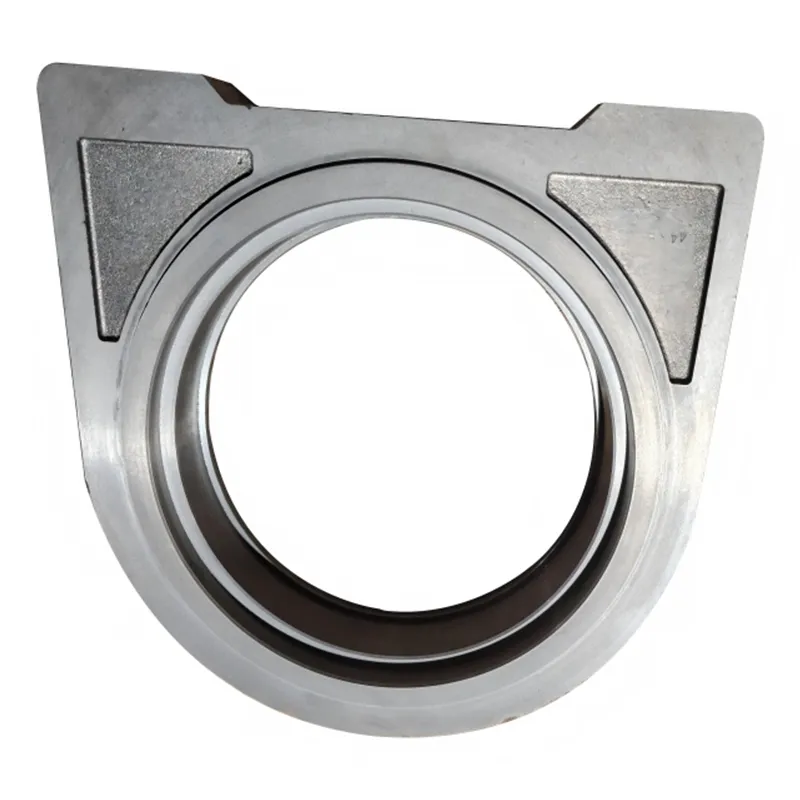
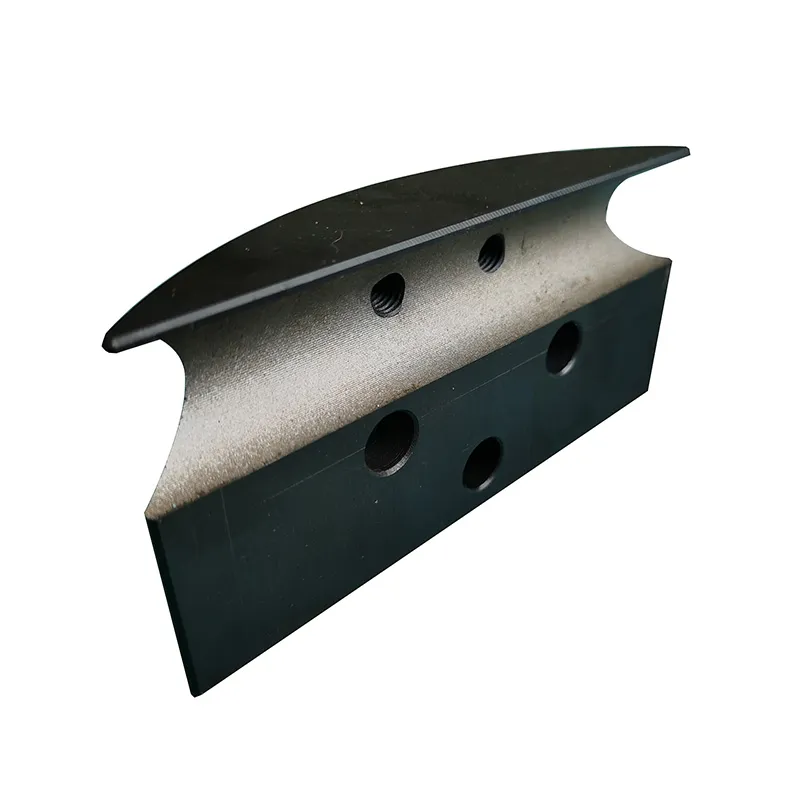
When you hear 'metal injection molding manufacturer', most minds jump straight to high-volume, tiny, complex parts. That's true, but it's also where the first big misconception lives. People think it's just a cheaper alternative to machining for thousands of pieces. In reality, the value isn't just in volume; it's in geometries that are outright impossible or prohibitively expensive to machine or cast conventionally. The gatekeeper isn't the press, it's the feedstock, the debinding cycle, and the sintering know-how. I've seen too many projects fail because someone sourced a metal injection molding manufacturer based on a brochure quote without understanding the material shrinkage behavior or the tooling nuances for undercuts.
The Core Dance: It's Not Just Molding
The MIM process is a marathon, not a sprint. You start with that granular feedstock—metal powder suspended in a polymer binder. The molding itself feels familiar if you know plastics injection molding. But that's the easy part. You've just made a 'green part' that's mostly binder. Then comes debinding, a slow, critical step to remove that binder without causing defects. Too fast, and the part blisters or cracks. This is where a manufacturer's experience screams. A shop like Qingdao Qiangsenyuan Technology Co., Ltd. (QSY), with its deep background in investment casting, actually has a leg up here. The mindset for managing thermal processes and material transformation in sintering is adjacent. Their long history in shell mold casting and investment casting means they're not strangers to complex, near-net-shape processes with stringent dimensional control post-sintering.
Sintering is the magic step. The part goes into a furnace, and the remaining metal particles fuse together, densifying. The part shrinks—predictably, you hope. This predictable shrinkage is the holy grail. A seasoned manufacturer has built sintering profiles for different materials—stainless steels, special alloys—through trial, error, and a lot of metrology. It's not a standard recipe you pull from a book. For instance, a part with varying wall thickness will sinter unevenly if the furnace profile isn't tuned for it. You learn that by ruining batches, not by reading spec sheets.
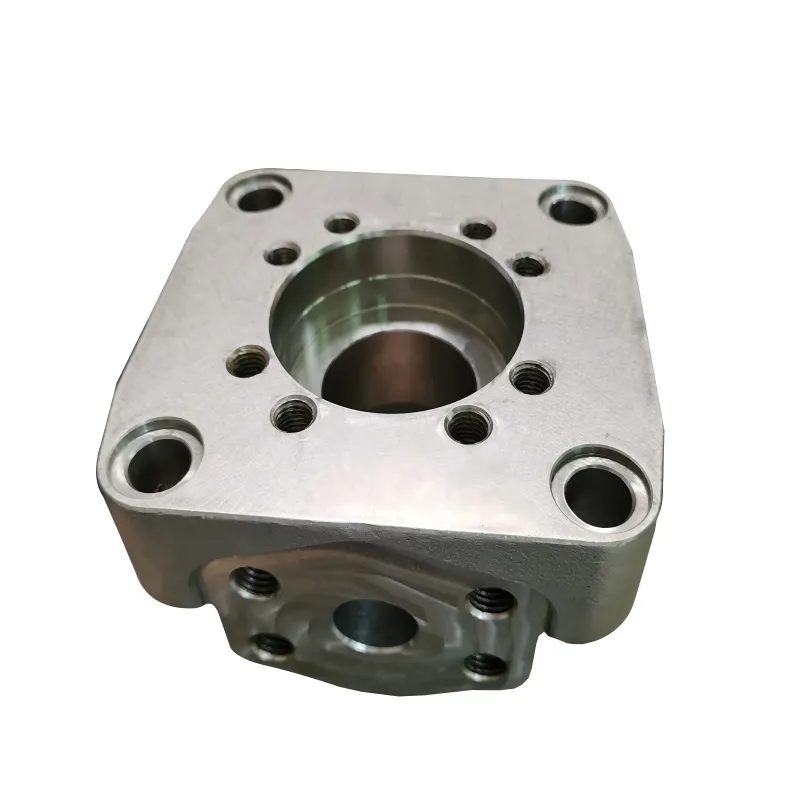
That's why the post-sintering CNC machining they offer isn't an afterthought; it's often a necessity. Even with the best process control, some features—like threads with ultra-tight tolerances or mating surfaces—might need a final clean-up. Having CNC machining in-house, as QSY does, is a massive advantage. It allows for integrated process control. You're not shipping a sintered part to another vendor, risking alignment issues. You can design the part for MIM, knowing that critical datum features can be machined post-sintering to hit that +/- 0.05mm callout. It turns a limitation into a hybrid manufacturing strength.
Material Choices: Where Alloys Get Real
Talk of materials in MIM often starts with 17-4PH stainless. It's the workhorse. But the real interesting work happens with the difficult alloys. This is where a manufacturer's metallurgical chops are tested. Nickel-based or cobalt-based superalloys for aerospace or medical implants behave very differently during sintering. Their shrinkage factors are different, their sensitivity to furnace atmosphere (hydrogen, argon, vacuum) is critical.
A company that lists experience with cobalt-based alloys and nickel-based alloys in their casting work, like you see on their site at https://www.tsingtaocnc.com, is signaling capability beyond simple steels. Handling these materials requires rigorous powder handling (oxygen control), sophisticated furnace setups, and a deep understanding of how final mechanical properties are achieved through the sinter cycle. It's not a side business; it's a specialization. I recall a project for a surgical guide component that needed a nickel-chromium alloy. The first few sintering runs yielded parts that met spec but had marginal ductility. The fix wasn't obvious—it was a slight adjustment to the peak temperature hold time and cooling rate, something learned from their investment casting background with similar alloys.
The pitfall here is assuming all manufacturers can handle all materials listed. The question isn't Can you do it? but Show me a production part you've done in this specific alloy, and let's see the material certs and mechanical test data. The material on the certificate of conformity needs to trace back to a controlled, repeatable process, not a lucky batch.
Tooling: The Silent Cost Driver
Tooling for MIM is another beast. Because of the abrasive nature of the feedstock, molds are typically made from hardened tool steels. The design philosophy is different from plastic injection molds. You're designing for a part that will shrink uniformly (ideally) by 15-20%. So, the mold cavity is oversized accordingly. Draft angles are crucial for ejection of the green part, which is relatively fragile.
The complexity comes with internal features and undercuts. In plastic molding, you'd use side-actions or lifters. In MIM, you try to avoid them like the plague in the tooling because they add cost and can complicate ejection of the soft green part. Often, the design choice is to mold a through-hole and then use a secondary operation to create the undercut, or to accept a simpler design. I've been in design review meetings where we spent an hour debating a 0.5mm undercut—whether to tool for it, machine it later, or eliminate it entirely. The right metal injection molding manufacturer will have these conversations early, pushing back on unrealistic designs not because they can't try, but because they know the yield and cost implications from past failures.
This is where integrated engineering support matters. A manufacturer that just takes a CAD file and quotes is dangerous. One that asks for a call to discuss wall thickness transitions, gate locations, and potential sink marks is bringing their shop-floor experience to your design process. It saves months of grief.
The Integration Edge: From Mold to Finished Part
This is perhaps the most under-discussed advantage. MIM is rarely the absolute final step. There's often deburring, tumbling, heat treatment, plating, or that final precision machining. When these steps are fragmented across different suppliers, you lose control. Dimensional tolerances stack up. Lead times balloon. Quality disputes become a nightmare of finger-pointing.
An operation that combines MIM with secondary processes under one roof creates a coherent workflow. Take the example from QSY's model: they handle the casting (MIM is a cousin to investment casting in philosophy), the sintering, and then have the CNC machining capability on-site. For a high-precision component, this means the sintered part can be moved directly to a CNC machine, fixtured using sintered datum features, and finished. The feedback loop is tight. If a sintering batch runs slightly large, the machining program can be adjusted minutely to compensate. This level of control is invisible to the client but shows up in consistently good parts and fewer rejected lots.
I've managed supply chains where the MIM part was made in one city, shipped for machining in another, then shipped again for plating. The logistics cost and quality risk often erased the per-part savings of MIM. The integrated model mitigates that. It turns the manufacturer from a commodity processor into a solutions partner for complex mechanical components.
So, What Are You Really Looking For?
Choosing a metal injection molding manufacturer isn't about finding the cheapest price per thousand pieces. It's about finding technical depth. You need to vet their material mastery, especially if you're moving beyond 316L stainless. You need to understand their approach to tooling design and their willingness to collaborate on DFM (Design for Manufacturability). Most critically, you need to assess their control over the entire value chain—from feedstock to finished, inspected part.
A company's background, like QSY's 30 years in precision casting and machining, isn't just a marketing line. It's a proxy for accumulated, tacit knowledge in managing metal in near-net-shape processes. That history suggests they understand thermal cycles, material grain structure, and dimensional stability in a way a new, dedicated-only-to-MIM shop might still be learning through painful trial and error.
The final test is always in the parts. Ask for samples from a production run, not perfect prototypes. Put them under a microscope, measure them, test them. The story of a manufacturer is written in the consistency of their sintered density and the sharpness of their final machined edges. That's the real search result that matters.