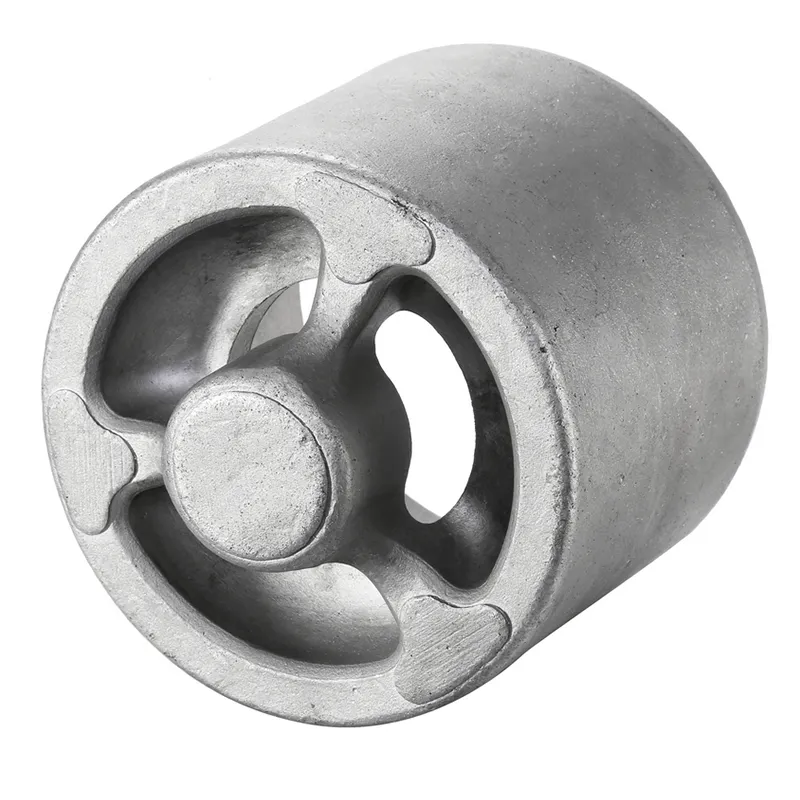
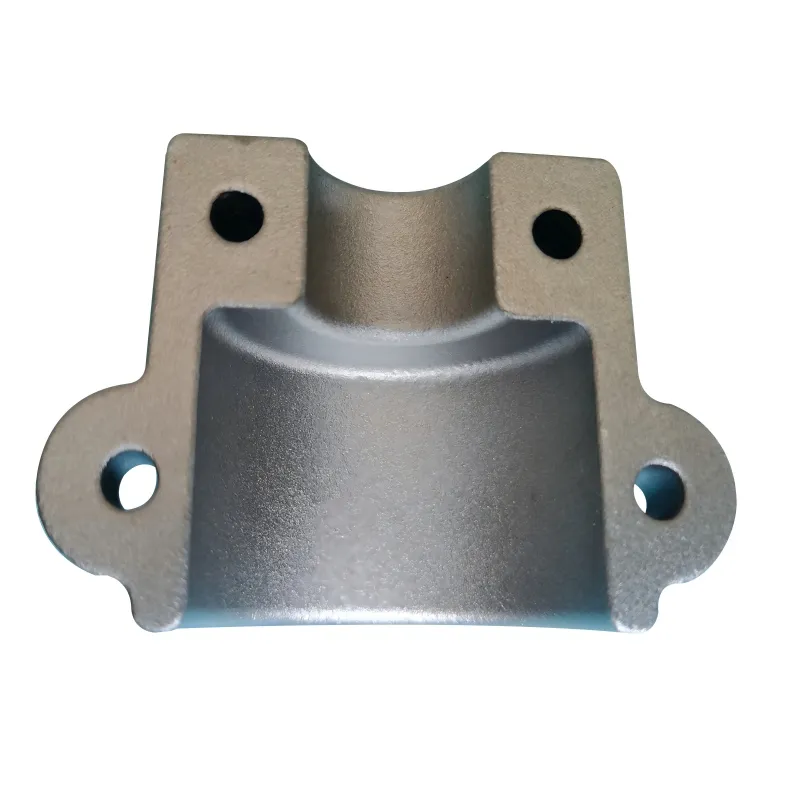
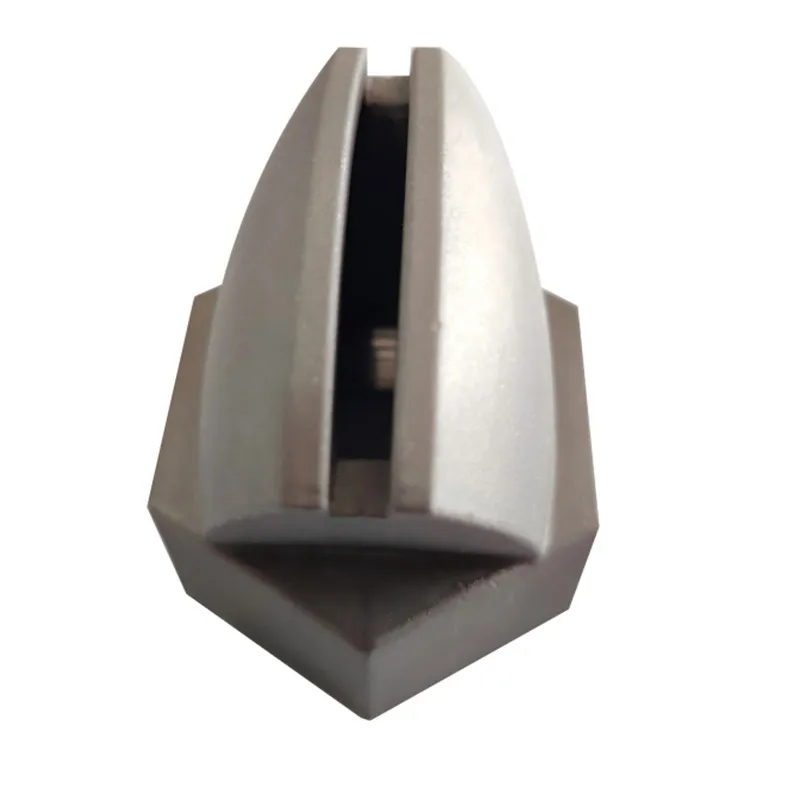
You see 'MIM' tossed around a lot these days, often as a buzzword for 'complex, cheap parts.' That's the first misconception. It's not magic, and it's certainly not always cheap. The real story of metal injection molding process starts long before the mold closes, in the messy, critical stage of feedstock. Get that wrong, and nothing else matters.
The Feedstock Dance: More Art Than Science
Everyone talks about the molding or sintering, but the heart of a reliable MIM operation is feedstock homogeneity. We're not just mixing metal powder and binder; we're creating a uniform, flowable compound. The ratio is everything. Too much binder? You get slumping and distortion during debinding. Too little? You can't fill thin sections. I've seen batches from different suppliers, even with the same specs, behave wildly differently. It's not just about the powder's D50; it's the particle shape distribution. Spherical powders from gas atomization flow better, sure, but that rounded shape can sometimes hurt final density if you're not careful with sintering profiles.
Early on, we had a project for a small surgical instrument lever, a part with a cross-section that went from 2mm to 0.5mm. We used a standard 316L feedstock. The parts looked perfect out of the mold. Then came catalytic debinding. The thin sections just... vanished. Not melted, but structurally failed. The binder removal rate was too aggressive for that mass differential. The lesson? Your feedstock formulation must be tailored not just to the material, but to the part's geometry. A one-size-fits-all powder/binder blend is a recipe for heartache. You need a partner who understands this at a granular level, someone like Qingdao Qiangsenyuan Technology Co., Ltd. (QSY). With their decades in precision casting, they grasp the importance of material behavior under thermal stress, a mindset that translates directly to managing MIM feedstock and sintering.
And the binder system itself—that's a whole other world. Wax-polymer, water-soluble, catalytic—each leaves its fingerprint on the part. Catalytic (using nitric acid vapor) is fast but can attack certain alloys. Thermal debinding is slow but gentle. The choice here dictates your furnace schedule, your part handling, and your defect rate. It's a foundational choice you make before you even design the tool.
Sintering: Where the Magic (and Shrinkage) Actually Happens
This is the make-or-break phase. You've got your 'brown part'—fragile, all binder and powder skeleton. The furnace cycle is where it becomes metal. The shrinkage is predictable, usually around 15-20%, but it's never perfectly isotropic. A long, flat part might warp if not supported correctly on the setters. We once ran a batch of connector plates. Dimensional tolerance was tight on the mounting holes. We hit the theoretical sintered density, but the holes ovalized by a few microns. Why? The furnace atmosphere had a slight gradient. The parts on the left side of the belt saw a different temperature profile than those on the right.
Atmosphere control is everything. Hydrogen, argon, vacuum, or cracked ammonia. For stainless steels, you need a perfectly reducing atmosphere to get that clean surface without carburization. A tiny leak, a bit of oxygen ingress, and you get a crusty, sintered part that's brittle. It's not always visible to the naked eye either. We had a batch of 17-4 PH parts that passed visual inspection and even basic dimensional checks. But in application, they were failing under fatigue. Metallography showed oxide inclusions along grain boundaries—traces of air during the critical mid-stage of sintering.
This is where the experience of a foundry really shows. A company like QSY, which has operated for over 30 years in shell and investment casting with alloys ranging from standard steels to nickel-based superalloys, understands thermal processing in their bones. That knowledge of how special alloys behave at high temperatures, how to manage atmospheres to prevent contamination, is directly transferable and invaluable for the metal injection molding process. They know that sintering isn't just 'heating it up'; it's a controlled metamorphosis.
The Tooling Trap and Secondary Operations
People think MIM eliminates machining. It minimizes it. You still almost always need secondary ops. EDM for features that can't be molded, like undercuts or perfectly square internal corners. Light CNC machining for critical sealing surfaces or threads. Sometimes, a coining operation post-sinter to true up a dimension. The trap is designing the MIM part as if it will be the final net-shape part. You must design for the process. Generous radii, uniform wall thickness where possible, draft angles—these aren't suggestions.
I recall a tool for a camera housing component. The designer wanted a beautiful, sharp aesthetic edge. Zero radius. We tried it. The feedstock wouldn't fill it consistently, and the corners would chip during ejection or handling in the brown state. We had to go back, add a 0.1mm radius. It was invisible in the final product but made the part manufacturable. The tooling itself is another beast. It's injection molding tooling, so it needs polish, good vents, proper gating. But you're abrading it with metal powder. Wear on corners and gates is higher than with plastic. You need to plan for that maintenance.
And this is the synergy with a full-service provider. If you look at QSY's capabilities, they list CNC machining right alongside their casting specialties. That's key. They can take the sintered MIM part and in-house, machine the critical datum surfaces or drill a cross-hole that was impossible to mold. That vertical integration controls quality and cost. You're not shipping a fragile sintered part to another machine shop, risking damage.
Material Realities: It's Not Just for Stainless
The brochure materials are 316L, 17-4PH, plain carbon steel. But the interesting applications are in the exotic stuff. We've done work with tungsten heavy alloys for balancing weights and even some trials with titanium. Ti MIM is a nightmare of its own—you're sintering in a high vacuum, and the powder is expensive and pyrophoric to handle. The payoff is complex, lightweight biomedical implants. But the yield rate... that's the challenge.
This aligns perfectly with the material portfolio of a specialist like the one mentioned earlier. Their experience with cobalt-based and nickel-based alloys in investment casting is a huge asset. These alloys have their own sintering quirks—liquid phase sintering, activated sintering—and knowing their general metallurgy from another process gives a head start. The metal injection molding process for a superalloy component isn't just a different material setting; it's a completely different philosophy of densification and microstructure development.
You also can't ignore soft magnetic alloys, like Fe-Si or Fe-Ni. Sintering these to achieve both high density and the correct magnetic properties is a tightrope walk. Too high a temperature, you lose the properties; too low, you have porosity. It's these niche applications where MIM truly shines, not in making another generic gear that could be stamped.
When MIM Isn't the Answer
This might be the most important section. MIM is fantastic for high-volume, complex geometry, moderate-tolerance parts. But if your part is simple—a basic spacer, a straight rod—go with machining or stamping. If you need ultra-high tensile strength or impact toughness as-cast, look at investment casting. If you need a one-off prototype, 3D metal printing might be better, despite the surface finish issues.
The crossover with investment casting is particularly interesting. For larger parts (say, over 100-150 grams) or parts that need absolutely no porosity in a critical section, a well-executed investment casting might be more reliable and cost-effective. A company that offers both, like QSY, can give you an unbiased recommendation. They're not trying to force a process; they can look at your print and say, For this feature set and volume, MIM will save you 30% on unit cost, or This internal cavity is too deep, let's look at shell mold casting instead.
We learned this the hard way. A client insisted on MIM for a large, relatively simple bracket. The tool was massive and expensive, the sintering distortion was a battle, and the part cost was higher than a fabricated alternative. We should have pushed back. The process is a tool, not a religion. Its beauty is in its specific sweet spot: taking dozens of machined components and consolidating them into one, deburred, ready-to-use piece of metal that comes out of a furnace looking like it was grown, not made. When it works, it's brilliant engineering. When it's forced, it's just an expensive problem.