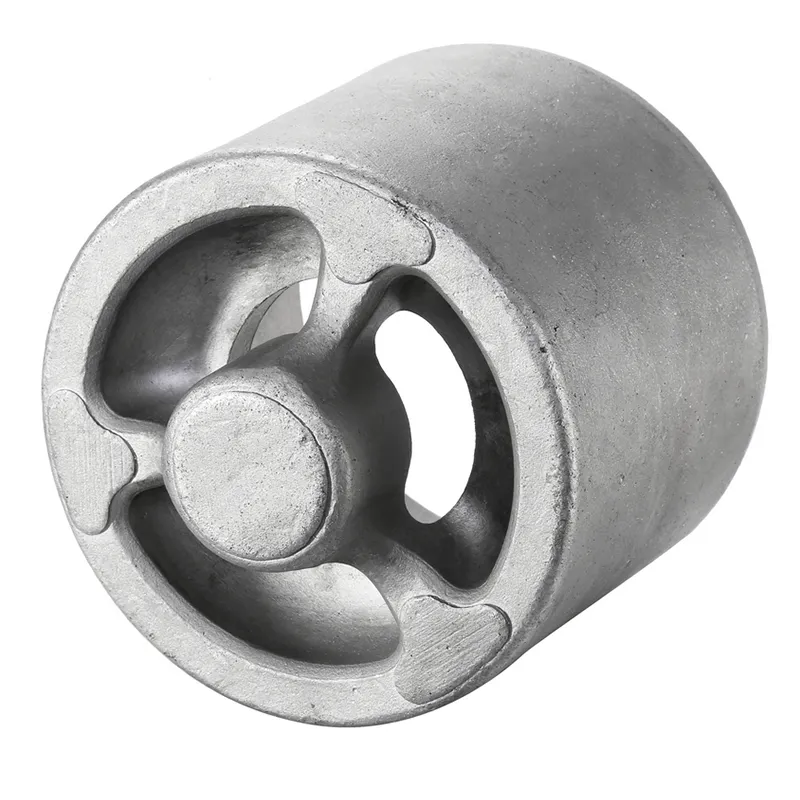
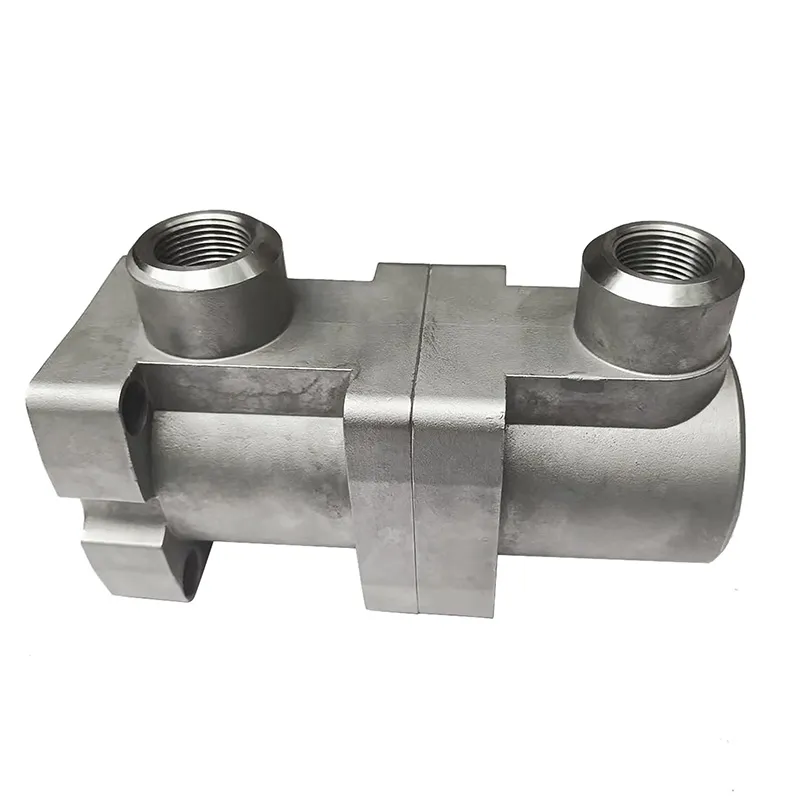
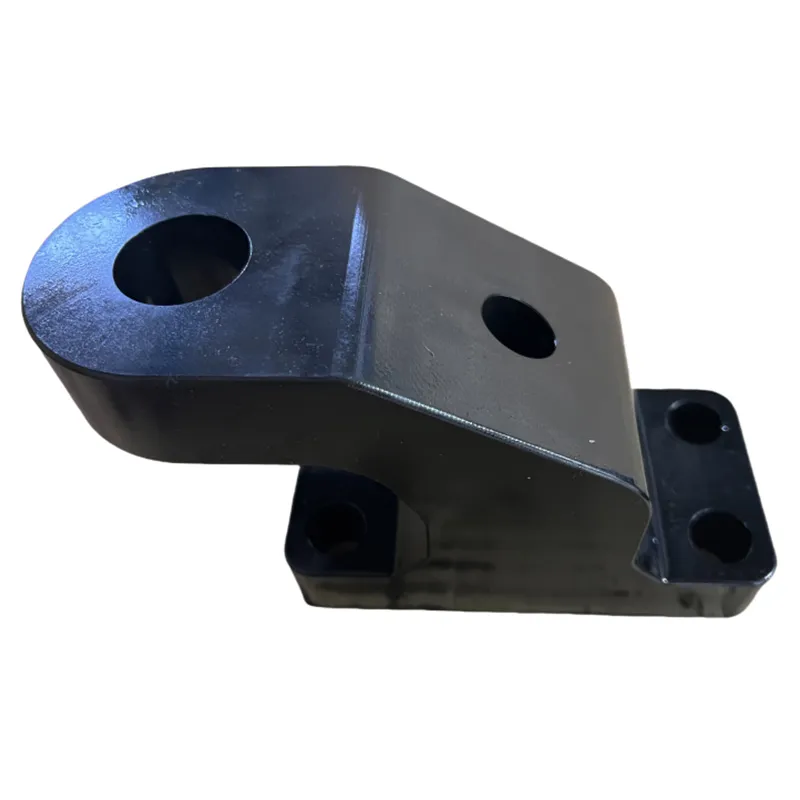
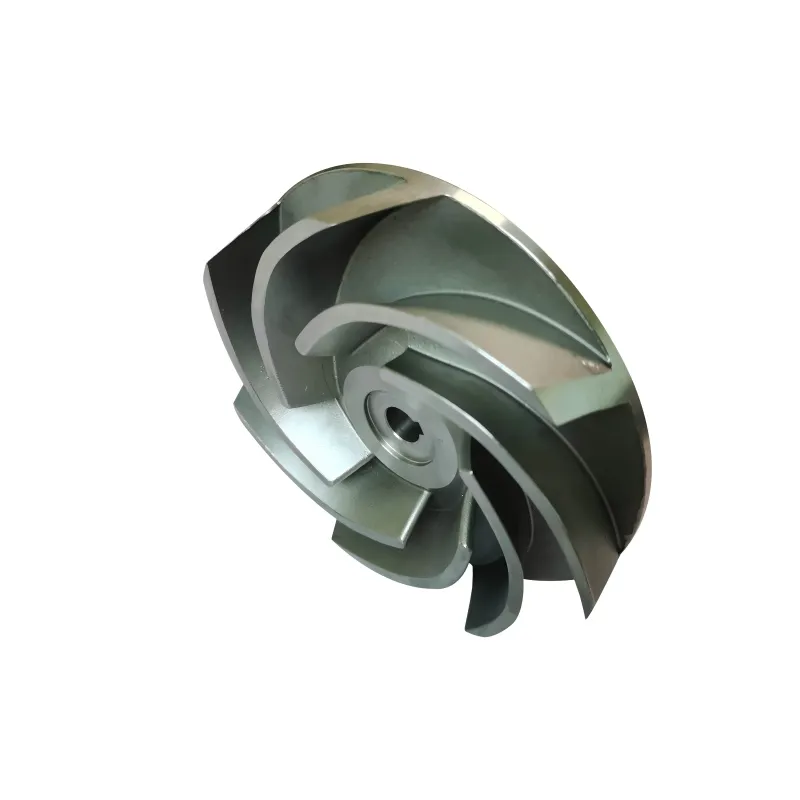
When you hear 'metal injection molding stainless steel', the immediate image is often a perfect, net-shape miracle part. That's the sales pitch. The reality, especially with grades like 316L or 17-4 PH, is a constant negotiation between geometry, properties, and cost. Many assume it's just plastic injection molding with metal powder—that's where the first major misconception lies. The debinding and sintering stages are where the real process lives or dies, and where most failures, if they're going to happen, quietly unfold.
The Allure and the Reality of MIM for Stainless
The appeal is obvious. You get to produce complex, small-to-medium sized stainless steel components with good detail and decent mechanical properties, often eliminating secondary machining. Think surgical instrument jaws, firearm components, or intricate fasteners. But 'decent' is the operative word. It's not forged or wrought material. The microstructure from MIM is inherently different—more homogeneous, but with characteristic residual porosity. For many applications, it's perfectly suitable, but you can't just spec 'stainless steel' on a drawing and assume MIM is a drop-in replacement. The choice of feedstock, powder particle size distribution, and sintering atmosphere (hydrogen, argon, vacuum) directly dictates the final corrosion resistance and strength. I've seen projects stall because the spec called for ASTM F138 (implant-grade 316L) corrosion performance but the shop ran a standard industrial sintering cycle, leading to unacceptable carbide precipitation at grain boundaries.
One specific headache with stainless in MIM is carbon control. During debinding, if the thermal cycle isn't meticulously managed, carbon can be left behind, which in stainless steel can lead to chromium carbide formation, robbing the matrix of chromium and killing corrosion resistance. It's a silent failure—the part looks fine, passes a basic dimension check, but fails in the field. You need a supplier who understands metallurgy, not just molding. This is where a background in investment casting, like what you see at a firm such as Qingdao Qiangsenyuan Technology Co., Ltd.(QSY), becomes relevant. They've been in precision metal forming for decades. While their core is shell mold casting and investment casting, that depth in metallurgical processing—knowing how heat affects stainless steel and special alloys—is a foundational skill that translates well to overseeing quality in MIM processes. It's about controlling phase transformations.
Another practical observation: dimensional predictability. Shrinkage is factored in, but it's not always isotropic. A long, thin feature might shrink differently than a thick hub. We once made a prototype for a lock mechanism—a small stainless lever with a precise pin hole. The molding was flawless, but post-sintering, the hole was elliptical, not round, due to non-uniform density in the green part. The fix wasn't in the sintering furnace; it was back in the mold design and gating, ensuring more uniform powder flow during injection. This is the kind of iterative, hands-on problem-solving that separates a parts vendor from a manufacturing partner.
Sintering: The Make-or-Break Phase
This is the heart of it. The molded 'brown' part is fragile, full of polymer binder. Debinding removes that binder slowly, carefully, to avoid part slumping or creating defects. Then sintering fuses the metal particles. For stainless, the atmosphere is critical. A pure hydrogen atmosphere can be excellent for reducing surface oxides and achieving high density, but it's an operational hazard and cost. Vacuum sintering with partial pressure of argon is more common. The temperature profile—ramp rates, peak temperature (often just below the solidus line), and hold time—directly controls final density.
Aiming for near-theoretical density (say, 96%+) is common, but it's a trade-off. Higher density usually means better ductility and corrosion resistance, but also greater shrinkage and more risk of part warping or distorting. Sometimes, for a purely structural part with no fluid exposure, accepting 93-94% density is a valid cost/performance decision. I recall a bracket made from 17-4 PH where the customer insisted on maximum density. We achieved it, but the part warped slightly, requiring a coining (sizing) operation in a die after sintering, which added cost. Was it necessary? Probably not, but the spec sheet demanded it. It highlights the need for early dialogue between design and manufacturing.
Post-sintering, parts often need some finishing. Tumbling for deburring, shot peening for stress relief, or even light CNC machining for critical features. This is where a supplier with integrated CNC machining capabilities, like QSY, has an advantage. They can handle the entire value chain—MIM, sintering, and then precision machining a key datum surface or thread—under one roof. It streamlines logistics and, more importantly, ensures accountability. If a machined feature is off, you don't get a debate between the MIM house and the machine shop blaming each other.
Material Nuances Beyond 316L
While 316L is the workhorse, other stainless grades and alloys are increasingly used. 17-4 PH is popular because it can be precipitation hardened after sintering. But here's a nuance: the sintering cycle for 17-4 PH must be tailored to avoid forming delta ferrite, which can mess with the subsequent aging response and final hardness. You can't use the same furnace profile as for 316L.
Then there are the more exotic materials. I've been involved with projects using MIM for cobalt-based alloys (like CoCrMo for dental implants) and nickel-based alloys. These are a different beast entirely. The powder is expensive, the sintering temperatures are higher, and the process windows are narrower. Contamination is a huge concern. You can't run a nickel alloy after a stainless batch without a thorough furnace purge and cleaning. This isn't a process for a general job shop; it requires dedicated lines and serious process control protocols. A company with a history in special alloys, again as indicated in QSY's scope, is more likely to have the foundational discipline for such work, even if they are applying it to a different forming technique like MIM.
Material selection also ties into feedstock. The binder/powder mixture must be homogeneous. A poor feedstock can lead to 'binder pooling' during injection, causing areas with different powder density, which then sinters unevenly. It's a defect that's nearly impossible to correct later. Sourcing consistent, high-quality feedstock is half the battle.
When MIM Isn't the Answer
It's crucial to know the limits. MIM isn't great for very large parts (generally, think under 250 grams for stainless). It's poor for parts with extremely thick cross-sections, as they can hold binder and sinter poorly in the core. It's also not ideal if you need the absolute highest mechanical properties—for a critical aerospace bolt subject to high shear, you'd still look to machining from bar stock.
I've steered clients toward other processes. Sometimes, for a moderately complex stainless part, investment casting is actually more economical, especially at lower volumes or if the wall thicknesses vary wildly. The tooling (wax molds) is cheaper than hardened steel MIM molds. Other times, if the part is relatively simple but small, precision stamping and then brazing or welding might win. The decision matrix involves volume, geometry, material specs, and budget. A good manufacturing partner should be able to have that conversation objectively, not just push their primary process. The fact that a company like QSY offers multiple routes—casting, machining, and by extension, likely an understanding of processes like MIM—suggests they can provide that kind of consultative approach rather than a one-size-fits-all pitch.
One failed attempt that comes to mind was a client wanting a thin-walled stainless tube with intricate internal lattice structures—a perfect MIM candidate on paper. We prototyped it, but the lattice members were so fine that during debinding, they'd sag. We tweaked support structures in the mold, adjusted debinding rates, but the yield was abysmal. The project was shelved. It was a geometry that pushed beyond the current limits of the technology for that specific material. You have to know when to walk away.
Looking at the Supply Chain
Finally, consider the source. The MIM industry has players ranging from highly automated, vertically integrated giants to smaller specialty shops. For prototyping and lower-volume production runs, a smaller, technically adept shop can be more responsive. They're often where you find the real process experts who will tweak a furnace profile by hand for your job.
When evaluating a partner, don't just ask for a capability brochure. Ask for their standard operating procedure for sintering 316L. Ask to see their density reports and micrographs for a similar part. Ask how they qualify a new feedstock lot. Their answers will tell you more than any website. A long-standing company in the metal parts business, such as the one mentioned earlier with its over 30 years in casting and machining, brings a culture of process stability and quality systems that is invaluable, even as they might adopt newer technologies like MIM. You can find more about their foundational capabilities at their site, https://www.tsingtaocnc.com.
In the end, metal injection molding stainless steel is a powerful tool, but it's just one tool. Its success hinges on a deep, practical understanding of the entire chain—from powder to sintered part—and an honest assessment of whether the part on the drawing is truly a good fit for the process. There's no magic, just a lot of controlled science and a fair bit of accumulated, sometimes hard-won, shop floor wisdom.