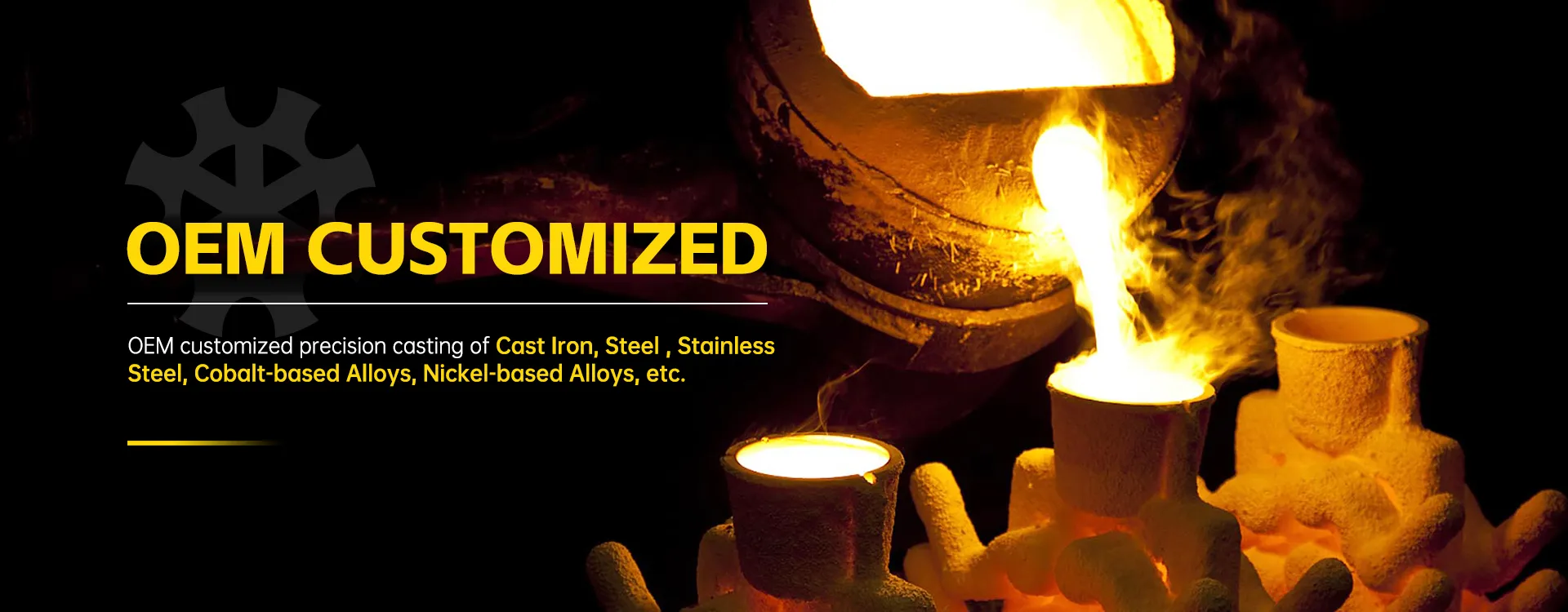
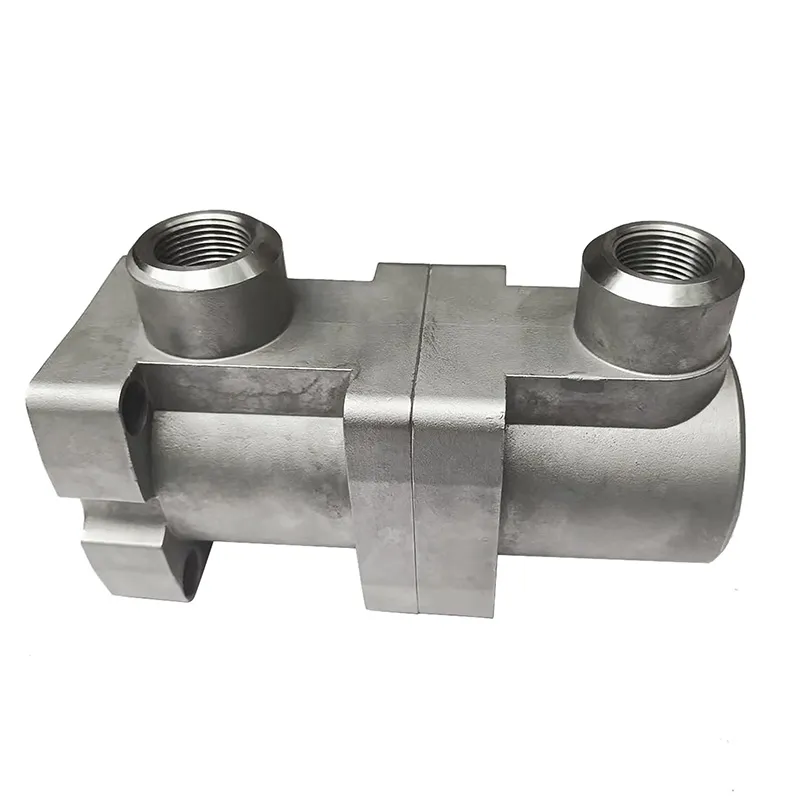
When most people hear 'metal investment casting', they picture a straightforward, almost ancient process: make a wax pattern, dip it in ceramic, melt out the wax, pour in metal. Done. But that's where the first big misconception lies. The real challenge isn't in understanding the basic steps—it's in controlling the thousand variables within each one to get a part that isn't just a shape, but a functional, reliable component. I've seen too many projects stumble because someone thought it was just a 'pour and go' operation. The truth is, the gap between a usable casting and a high-integrity one is vast, and it's filled with details most spec sheets never mention.
The Shell Game: It's Never Just a Mold
Let's start with the shell, the literal foundation. The industry term 'shell mold casting' often gets used interchangeably, but in precision investment casting, the shell is a multi-layered engineering product in itself. It's not a single dip. A typical shell for a high-alloy steel part might involve 7 to 9 coats: a primary face coat with ultra-fine zircon flour to capture detail, followed by intermediate backup coats with coarser silica sand for strength, and often a final seal coat. The drying environment between each dip—humidity, temperature, airflow—is critical. I recall a batch of stainless steel valve bodies we ran where the shell looked perfect, but we had a rash of surface pitting. After days of head-scratching, we traced it back to a seasonal spike in ambient humidity during the drying of the 3rd and 4th coats. The shell hadn't cured properly, leading to micro-cracking and gas evolution during the pour. The fix wasn't in the furnace; it was in dehumidifying the drying room.
This is where a foundry's experience shows. A company like Qingdao Qiangsenyuan Technology (QSY), with their 30-year track record, would have institutional memory for these kinds of environmental nuances. Their website, tsingtaocnc.com, lists their work with shell mold and investment casting, and that combination is key. It implies they understand the spectrum from simpler shell processes to the full precision ceramic shell method. For a buyer, that depth means they're less likely to be blindsided by these process-sensitive failures.
Material choice for the shell directly interacts with the metal being poured. Pouring a superalloy like a nickel-based alloy at over 1500°C demands a shell with high refractoriness and thermal shock resistance. Using a standard slurry formulation meant for carbon steel would be a disaster—the shell could slump or crack. The selection of binders (colloidal silica vs. ethyl silicate) and stucco materials is a chemistry project in itself.
Alloys: Where the Spec Meets Reality
Speaking of materials, the alloy list is another area full of subtle traps. Yes, stainless steel is common, but 'stainless' covers 304, 316, 17-4 PH, and others, each with vastly different casting and solidification behaviors. 316 shrinks more than carbon steel and is prone to hot tearing if the gating system isn't designed to accommodate that. We learned this the hard way on an early project for marine fittings. The prints called for 316, and we gated it like we would for mild steel. The yield rate was abysmal, with cracks radiating from the gate junctions. It was a classic case of following the spec without applying the process knowledge for that specific alloy.
The special alloys—cobalt-based and nickel-based alloys—are a whole different beast. They're not just 'harder to melt.' Their fluidity is often poorer, they're susceptible to elemental segregation, and they have a nasty habit of reacting with the shell if the chemistry isn't right. Success here is less about brute force and more about finesse: precise pre-heat temperatures for the mold, tighter control over pouring speed and temperature, and often, post-casting heat treatment is not an option but an integral part of achieving the required microstructure. When I see a foundry like QSY explicitly listing these alloys, it signals they've likely invested in the metallurgical expertise and controlled processes needed to handle them, not just the furnace capacity.
Cast iron, while seemingly more forgiving, has its own quirks in investment casting. Achieving consistent graphite formation in thin sections is tricky. The rapid cooling inherent in the ceramic shell process can lead to chilled edges (white iron), making the part unmachinable. This often requires adjustments to the inoculant or a slight redesign of the section thickness.
The CNC Handshake: Why Machining Isn't an Afterthought
This leads to a crucial point often overlooked: the handoff from casting to machining. A perfect-as-cast part is useless if it can't be held securely in a CNC vise or if critical datum surfaces are unreliable. This is why the integration of casting and CNC machining under one roof, as QSY does, is a massive operational advantage. The casting engineers can design the wax tree and include machining allowances based on the actual shrinkage and distortion patterns they see for a given alloy. They can add casting lugs in non-critical areas specifically for the machinist to use as fixtures.
I've been on the machining side trying to hold a complex investment-cast turbine blade with no coherent fixturing points. It's a nightmare. You end up designing expensive soft jaws or even building a custom fixture, which kills the cost benefit of near-net-shape casting. When the casting and machining teams communicate from the design phase, they can agree on things like adding small parallel flats on a flange or ensuring a bore is round enough to be used as a primary datum. It turns a sequential process into a concurrent one.
The machining of the cast parts also serves as the ultimate quality feedback loop. The machinist is the first to see subsurface porosity, hard spots, or inclusions. If casting and machining are separate entities, this feedback is slow and often adversarial (your bad casting broke my tool). When it's one shop, the information flows directly back to the foundry floor for immediate process adjustment.
Gating and Feeding: The Invisible Architecture
Back to the pure casting process. The design of the gating and feeding system—the channels that deliver metal and the reservoirs that feed shrinkage—is where the art and science merge. Software simulation helps now, but it still requires experienced interpretation. The goal is to achieve directional solidification, where the part solidifies from the farthest point back toward the feeder, which should be the last thing to solidify.
A common failure in metal investment casting is misjudging this. We once had a thick-walled pump housing in duplex stainless steel. The simulation looked clean, but we had a shrinkage cavity in a critical load-bearing web. The simulation had assumed perfect thermal properties for the shell. In reality, a slight local variation in shell thickness created a hot spot that disrupted the solidification front. The solution was to add a small, judiciously placed chill—a piece of copper inserted into the shell—to locally accelerate cooling. It's these little tactical fixes that come from years of doing and seeing.
Another subtlety is the pour itself. With many alloys, you can't just dump the metal in. There are techniques like tilt pouring to reduce turbulence and avoid entrapping air or slag. For some reactive alloys, you might even pour under a protective atmosphere. It's these procedural details that separate a commodity caster from a technical one.
The Real Measure: Consistency Over Time
So, what defines a capable investment casting supplier? It's not the ability to make one perfect prototype. It's the ability to run batch 001 and batch 100 with the same dimensional stability, surface finish, and mechanical properties. This is where the 30 years of operation for a firm like Qingdao Qiangsenyuan Technology becomes a tangible asset. It means they've likely stabilized their process variables—slurry viscosity, stucco application, dewaxing autoclave cycles, furnace ramp rates—through relentless monitoring and adjustment.
Consistency is also about managing the wax patterns. Injection parameters for the wax, the wax blend itself (which can be proprietary), and the storage conditions of the wax assemblies all affect final dimensions. A shop with long-term experience has a database of shrinkage factors for different alloys and part geometries that goes beyond textbook values, refined by their own measurement history.
Ultimately, successful metal investment casting is a discipline of interconnected controls. It's understanding that a decision in the wax room echoes in the heat treat furnace, and that a saving on shell material can cost a fortune in machining scrap. The process reveals its secrets slowly, through patient observation and sometimes painful failure. When it's done right, it produces components that are incredibly strong, complex, and efficient—but getting there is anything but simple. It's this deep, practical chain of cause and effect that you're really investing in when you choose a partner for your castings.