When people hear 'micro metal injection molding', or MIM on a tiny scale, the immediate thought is often about impossibly small, intricate parts. That's true, but it's also where the first misconception sits. It's not just about making things small; it's about making small things that actually work in the real world, consistently, and without breaking the bank. The gap between a prototype that wows on a microscope slide and a production run of 500,000 pieces that survive assembly and function is where the real story is. I've seen too many projects stumble by treating it as just a scaled-down version of standard MIM. The physics, the material behavior, the tooling mindset—it all shifts.
The Material Dance at Micro Scale
Working with feedstocks for micro MIM is a different ball game. You're dealing with fine powders, often below 10 microns, and the binder system becomes critical. It's not just about holding the powder together; it's about how it flows through gates and runners that might be only 0.15mm wide. We once had a project for a surgical device component using 316L stainless steel. The standard feedstock just wouldn't fill the thin-walled section reliably. We had to work closely with the material supplier to tweak the rheology—more of a wax-polymer binder adjustment—to get that steady, laminar flow. It's this kind of hands-on material fiddling that separates successful projects from failed ones.
Debinding and sintering become high-wire acts. With such small cross-sections, the risk of distortion or slumping during thermal cycles is huge. The temperature profiles in the furnace need to be incredibly precise. I recall a batch of cobalt-chrome orthodontic brackets where we saw slight ovalization in the mounting holes after sintering. The culprit? An uneven thermal mass in the part layout on the sintering tray creating micro-variations in heat exposure. It forced us to redesign the tray fixtures, not the part. It's these secondary process details that consume the engineering hours.
This is where experience with special alloys, like what you see from a long-time processor such as Qingdao Qiangsenyuan Technology Co., Ltd. (QSY), becomes relevant. They've been in casting and machining for decades. That deep material knowledge—how nickel-based or cobalt-based alloys behave under heat and stress—translates surprisingly well when you move into micro MIM with those same alloys. It's not a direct transfer, but that metallurgical instinct is invaluable. You can check their approach to material integrity at their site, https://www.tsingtaocnc.com. For micro parts, starting with a supplier that gets the base material science is half the battle.
Tooling: Where Precision Meets Pragmatism
The mold is everything. For micro parts, you're often using hardened tool steels or even tungsten carbide inserts. The polish, the venting design, the cooling channels—all executed on a scale that demands EDM and ultra-precision milling. But here's a practical headache: maintenance. A speck of dust, a tiny bit of carbonized binder buildup in a micro-cavity, and your yield plummets. We implemented a high-frequency ultrasonic cleaning regimen for tools between runs, which sounds obvious, but finding the right frequency and solution that cleans without eroding the polished surface was a trial-and-error process.
Another lesson learned the hard way: don't overcomplicate the tool for the sake of it. Early on, we designed a multi-cavity mold with 64 cavities for a tiny gear. The idea was to boost output. But filling consistency across all cavities was a nightmare; slight variations in runner length became significant. We scaled back to a 16-cavity design with a balanced, symmetric runner system. The throughput per tool was lower, but the yield and part consistency shot up, making the overall economics better. Sometimes, in micro MIM, less is more.
Venting is another subtle art. With such small volumes of air to displace, inadequate venting doesn't always cause obvious short shots. It can cause minor burning of the binder (creating defects visible only after sintering) or slight hesitation marks that affect surface finish. We started using porous metal inserts for venting in critical areas, which was a game-changer for parts with complex thin ribs.
The Bridge to Secondary Operations
Rarely does a micro MIM part come off the sintering boat ready to ship. Almost always, there's secondary work. This is a key point often underestimated in project planning. A company like QSY, with its integrated CNC machining capability, has a distinct advantage here. Imagine a micro MIM part that needs a critical bore held to a tolerance of +/- 0.005mm, or a face that requires an ultra-fine surface finish. The sintering process alone won't achieve that.
We had a component for a miniature sensor where the sintered part needed a flatness spec that was just beyond the process capability. Trying to achieve it through sintering alone led to massive scrap rates. The solution was to design the MIM part with a small machining allowance on that face and then use a precision micro-milling process post-sintering. Having machining expertise in-house, as QSY does, streamlines this conversation. The MIM and machining teams can collaborate from the design phase, deciding which features to form via MIM and which to finish via machining, optimizing for cost and precision.
This synergy is crucial. It avoids the finger-pointing that can happen when MIM is done at one shop and precision machining at another. Your part distorted during sintering, so we can't hold the tolerance. No, your machining fixture is applying too much stress. An integrated supplier cuts through that noise. For high-value, high-precision micro components, this end-to-end control is not a luxury; it's a necessity.
Real-World Failures and Pivots
Not every story is a success, and those are the ones you learn from most. We once quoted on a project for a complex micro-latch mechanism in 17-4PH stainless. The part had intersecting thin walls and a small, fragile living hinge feature. We were confident. We got the prototype approved, but in pilot production, the hinge area showed intermittent brittleness. The root cause? Trace oxygen pickup during sintering, which embrittled that specific, thin geometry. The standard sintering atmosphere wasn't pure enough for this particular feature at that scale.
The fix was expensive: moving to a vacuum furnace with a partial pressure of highly purified hydrogen for that specific sintering step. It killed the project's margin, but it saved the part. Now, for any design with ultra-thin, load-bearing features, we do a much more rigorous analysis of the sintering atmosphere and its interaction with the specific alloy chemistry. It's a checkpoint that got added to our DFM (Design for Manufacturability) checklist because of that failure.
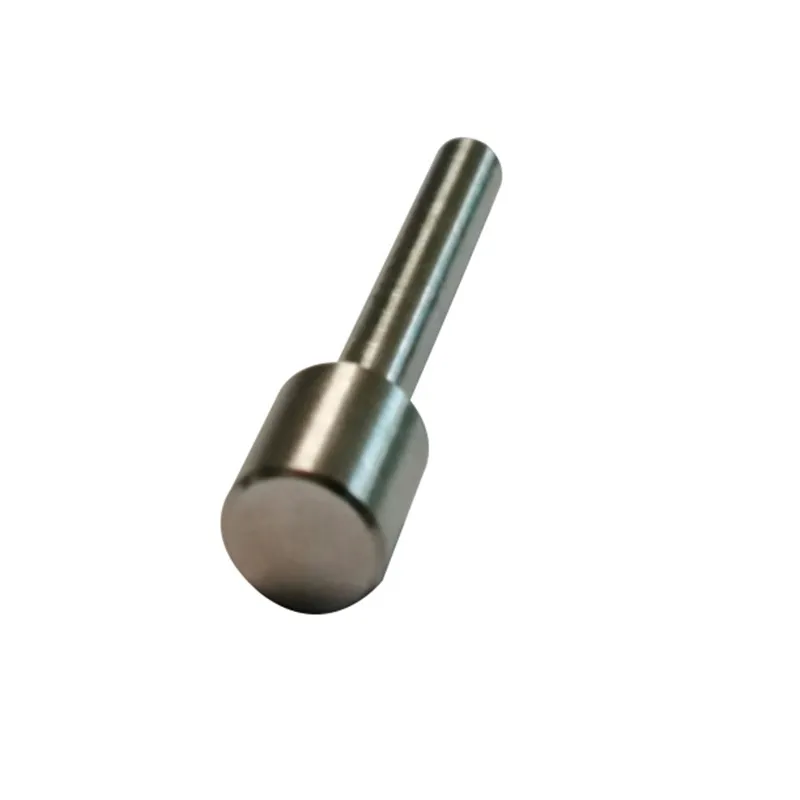
Another failure was really a misapplication. A client wanted micro MIM for a simple, tiny pin. It was a basic cylindrical shape. We did it, but in the post-mortem, it was clear that micro turning or even precision grinding would have been more cost-effective for that geometry. Micro MIM's strength is complexity, not just size. We learned to push back more, to guide customers to the right process, even if it meant losing a quote. It builds longer-term credibility.
Looking Ahead: The Integration Mindset
Where is this all heading? The future, I think, lies in deeper process integration and smarter design. We're seeing more interest in combining micro MIM with other micro-forming techniques or in-mold assembly. But the foundation remains material and process mastery. It's about having the full picture, from powder to finished, assembled part.
This is why the model of a vertically integrated manufacturer is compelling. A company that understands investment casting and shell mold casting for larger, complex parts brings a holistic understanding of metal flow and solidification to the table. When they also operate in micro MIM and precision CNC machining, like the operations outlined by QSY, they can objectively recommend the best process for a given component. Is this part better suited for micro investment casting or micro MIM? Having both capabilities under one roof means the answer is driven by technical merit, not by what single process that particular shop offers.
For anyone diving into micro metal injection molding, my unsolicited advice is this: look beyond the machine and the mold. Look at the entire ecosystem—the material science support, the secondary processing capability, and most importantly, the problem-solving history of the team you're working with. The technology is amazing, but it's the accumulated, hard-won experience around it that turns a cool micro-part into a reliable, mass-produced component. That's the grind behind the glamour.