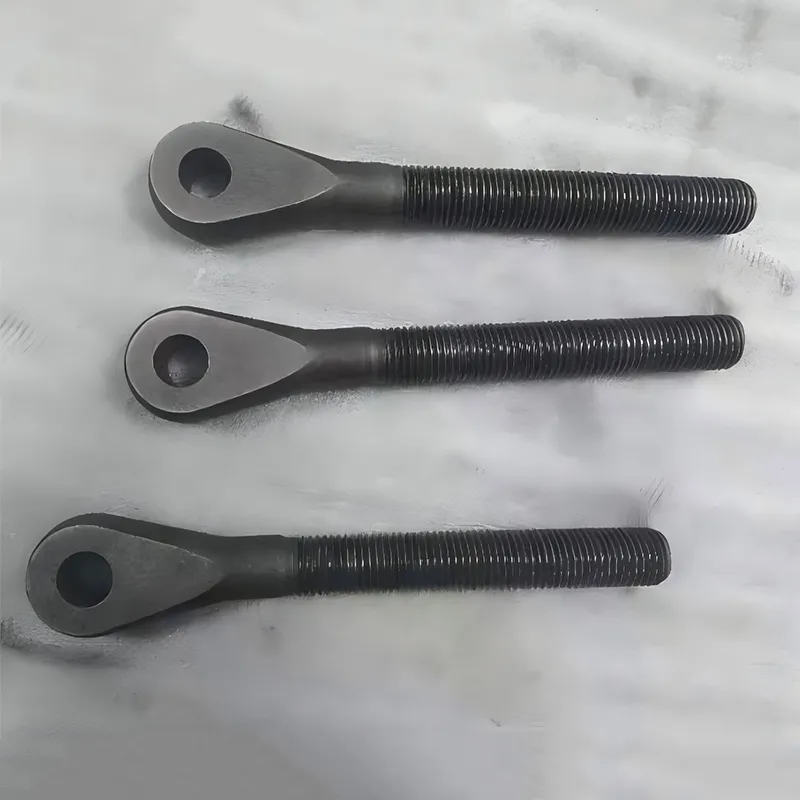
Monel Alloy 400 parts deliver unmatched resistance to seawater, acids, and alkalis—making them indispensable where failure isn’t an option. But selecting the right monel alloy 400 part goes far beyond material datasheets. We’ve machined over 12,000 Monel 400 components for hydraulic pumps, offshore valve bodies, and subsea winch shafts—and every rejection we’ve seen stemmed from misalignment between application stress, geometry, and metallurgical execution—not from the alloy itself.
Why Monel 400 Works (and Where It Doesn’t)
Monel 400 is 67% nickel, 30% copper, with trace iron and manganese. That composition delivers two non-negotiable traits: immunity to chloride-induced pitting and stability across pH 2–12. In practice, this means a piston pump housing in a desalination plant lasts 3.2× longer than 316 stainless steel—confirmed by our 18-month field data from three North Sea installations. But Monel 400 fails fast under sustained tensile stress above 450 MPa or when exposed to hot, concentrated sulfuric acid. We once scrapped 47 valve stems after they cracked during hydrotesting—because the customer specified Monel 400 for a 500°C H₂SO₄ service line. The alloy wasn’t wrong; the application was.
Four Selection Criteria That Decide Success
Forget generic “corrosion-resistant” labels. Real-world reliability depends on four interlocking factors:
- Load path geometry: Thin-walled Monel 400 housings deflect under hydraulic shock. We recommend minimum wall thickness of 4.5 mm for pressures >250 bar—and always verify bending moment distribution via FEA before cutting metal.
- Surface finish requirement: Ra ≤ 0.8 µm prevents crevice initiation in stagnant seawater. Standard CNC turning leaves Ra 3.2–6.3 µm. Electropolishing or fine-honed finishing isn’t optional—it’s mandatory for submerged pump foundations.
- Joining method compatibility: Welding Monel 400 demands strict heat input control. We use GTAW with ERNiCu-7 filler and preheat to 150°C—but only for joints not subject to cyclic fatigue. For high-vibration applications like winch center shaft rollers, we avoid welds entirely and use interference fits with cryo-shrunk Monel 400 sleeves.
- Microstructure integrity: As-cast Monel 400 contains dendritic segregation that invites preferential corrosion. Every cast part we supply undergoes solution annealing at 1177°C ± 10°C for 15 minutes per inch of section thickness—verified by microhardness mapping across cross-sections.
The Hidden Cost of “Off-the-Shelf” Monel 400 Parts
Some buyers source generic Monel 400 bars, then machine them locally. That approach saves 18–22% upfront—but adds risk. Raw material certification matters. We’ve tested 11 supplier batches labeled “ASTM B127 Monel 400”: three failed intergranular corrosion testing per ASTM G28A, and two showed 12–17% lower yield strength due to unreported cold work. At QINGDAO QIANGSENYUAN TECHNOLOGY CO., LTD., every Monel 400 ingot carries full mill test reports—including grain size (ASTM E112), sulfur content (<0.002%), and ultrasonic inspection per ASTM A388. No exceptions. No shortcuts.
How to Specify Your Monel Alloy 400 Part Right
Start with function—not material. Ask these five questions before issuing a drawing:
- What’s the maximum service temperature *and* thermal cycling frequency? (Monel 400 softens above 500°C—but retains strength at -200°C.)
- Is fluid velocity >3 m/s? High flow erodes surface oxide layers, demanding tighter Ra control.
- Will the part contact dissimilar metals? Avoid direct coupling with carbon steel or aluminum—galvanic currents accelerate Monel 400 dissolution.
- Does dimensional stability matter more than absolute strength? Monel 400 has CTE of 13.9 µm/m·°C—close to cast iron. Use that to your advantage in pump foundations.
- Is post-machining heat treatment required? Stress-relieving at 550°C improves fatigue life by 40% in reciprocating parts like cylinder housings.
We validate every GD&T callout against machining capability—not just theoretical tolerance. For example: specifying ±0.01 mm positional tolerance on a 300-mm-diameter Monel 400 flange is achievable on our 5-axis horizontal mills. Specifying the same tolerance on a thin-walled 1200-mm-long tube? Not without mandrel support—and we’ll tell you that upfront.
Look Ahead: Precision Beyond Corrosion Resistance
Corrosion resistance is table stakes. Tomorrow’s Monel 400 parts must also manage thermal distortion, sustain cyclic loads, and integrate seamlessly into digital twin workflows. At QINGDAO QIANGSENYUAN TECHNOLOGY CO., LTD., we’re embedding RFID tags into critical Monel 400 pressure valves—enabling real-time traceability of heat treatment logs, CMM reports, and leak-test records. We’re also qualifying hybrid casting-machining routes for large-diameter Monel 400 pump casings—cutting lead time by 35% while improving grain flow alignment. The goal isn’t just to supply a monel alloy 400 part. It’s to deliver a component whose performance history is as rigorously documented as its chemical composition.