When you hear N08825, or Alloy 825, the immediate thought is often 'corrosion-resistant nickel-iron-chromium alloy'. That's textbook. But in the foundry and machining world, that label barely scratches the surface. The real story isn't just in the spec sheet; it's in the pour, the cut, the heat treat, and the countless small decisions that separate a successful component from a costly scrap pile. I've seen too many projects stumble by treating it like just another stainless. It's not.
The Foundry Floor Reality with 825
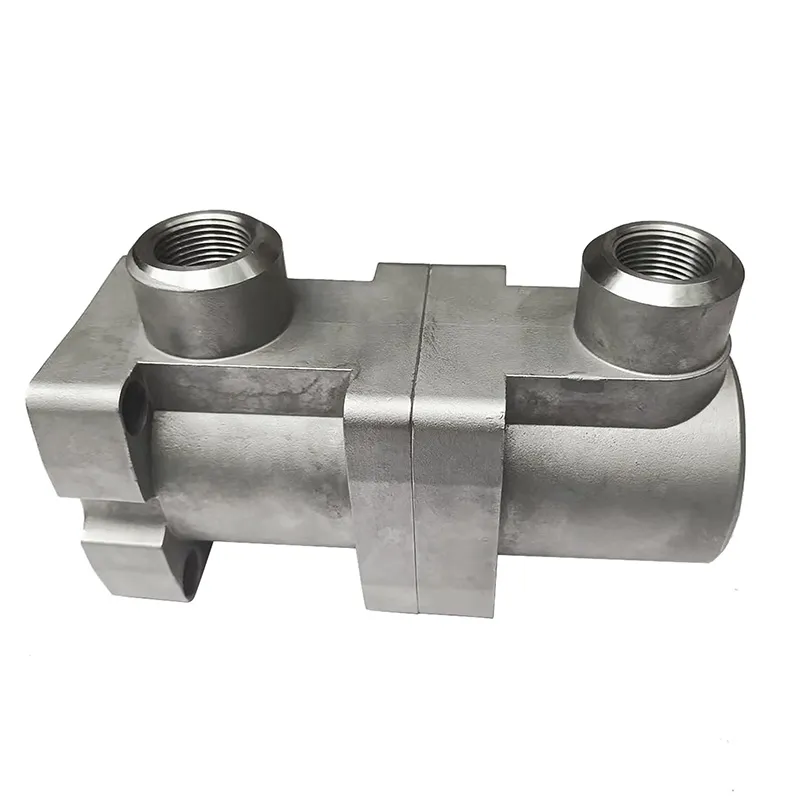
Casting N08825 is where the theory meets the fire, literally. The high nickel content gives it that fantastic resistance to reducing acids and stress-corrosion cracking, but it also makes it a beast for shell or investment casting. The solidification pattern is... finicky. You can't just use the same gating and risering system you'd use for a 316 stainless part and hope for the best. The shrinkage is different, the fluidity feels different. Early on, we had a batch for some valve bodies that kept showing micro-porosity in thick sections. The chemistry was perfect per the cert, but the structure wasn't sound.
The issue traced back to the pouring temperature and the mold pre-heat. We were running it too cool, trying to reduce metal loss and oxidation, but with 825, that just traps gases and creates shrinkage issues. You need the heat high enough to keep it running thin, but not so high you burn out the alloying elements or attack the ceramic shell aggressively. It's a narrow window. A partner like Qingdao Qiangsenyuan Technology Co., Ltd.(QSY), with their three decades in shell and investment casting, gets this. They've likely seen the same dance. Their experience across special alloys means they probably have established protocols for the pour curve and mold prep specific to these nickel-based grades, which is half the battle won.
Post-cast heat treatment is non-negotiable. As-cast 825 has carbides and intermetallics that wreck its corrosion properties. You need that solution annealing at around °F followed by a rapid quench to get everything back into solid solution. Skip it or mess up the quench rate, and the part might pass a dimensional check but will fail in the field, in a chloride-rich environment for instance. It's a critical step that adds cost and time, and you can't cut corners.
Machining: Where Tooling Goes to Die (If You're Not Careful)
If casting it is tricky, machining N08825 is where you earn your stripes. Calling it 'gummy' is an understatement. It doesn't chip; it forms these long, stringy, tough swarf that can wrap around everything and wreak havoc. The work-hardening rate is phenomenal. A slightly dull insert or an overly light cut will just glaze the surface, hardening it and making the next pass even harder, leading to rapid tool failure and potential subsurface damage to the part.
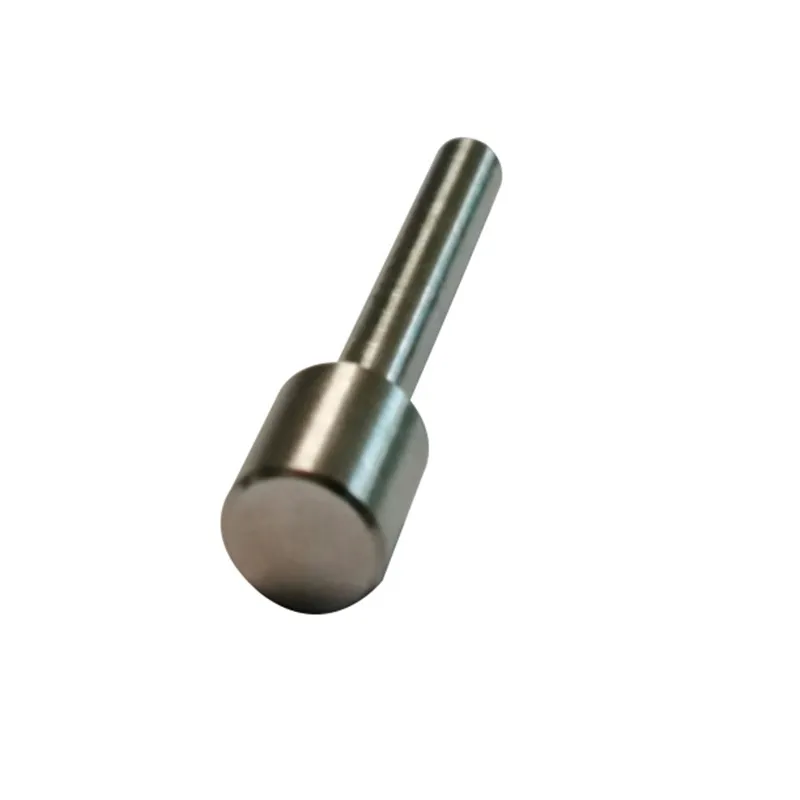
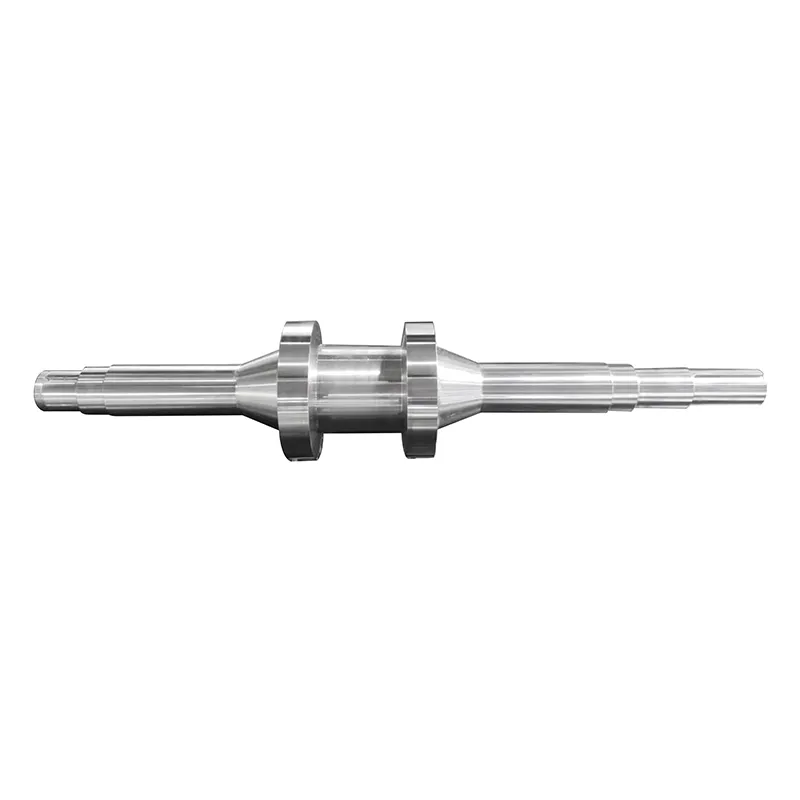
We learned the hard way on a pump shaft job. Using standard carbide grades for stainless? Disaster. Tool life was measured in minutes, not hours. The surface finish was poor, and we were constantly fighting tolerance drift due to heat and pressure. The breakthrough came from switching to dedicated grades—tough, sharp-edged carbides with specialized coatings, and rigid tool holders with minimal overhang. Coolant isn't just for cooling here; it's for lubrication and breaking that chip. High pressure, through-tool coolant is almost mandatory for any serious volume.
This is where a full-service shop's integration matters. A company that handles both the casting and the CNC machining in-house, like the services outlined on https://www.tsingtaocnc.com, has a distinct advantage. The machinists there aren't seeing a raw, annealed billet; they're dealing with their own foundry's castings. They know the as-cast skin condition, the likely hardness variation, and can tailor their machining strategy from the first roughing pass. This closed-loop knowledge prevents a lot of the guesswork and tooling carnage that happens when a machining shop gets a 'black box' casting from an unknown source.
The Alloy Selection Trap: When 825 Isn't the Answer
Here's a common pitfall: specifying N08825 because it's a well-known 'corrosion-resistant alloy' on a list, without fully analyzing the environment. It's excellent for sulfuric and phosphoric acid environments, good for seawater. But if you're dealing with hot, concentrated chlorides or certain oxidizing acid mixtures, there might be better options like higher-molybdenum alloys or even titanium. I recall a project for a chemical processing scrubber where the client insisted on 825 based on an old spec. A review of the actual process stream, which had traces of ferric and cupric chlorides, showed we were flirting with pitting corrosion. We had to push back and propose an alternative.
This is why material competency is key. A supplier that lists experience with a range of nickel-based alloys and cobalt-based alloys isn't just showing off a menu. It means they (or their metallurgists) have likely been involved in these discussions before. They can look at a print and ask the right questions about temperature, pH, contaminant ions, and stress levels. That consultative approach saves everyone from a field failure down the line.
It also affects manufacturability. Sometimes, a slight tweak to the design—a more generous radius, a change in wall thickness transition—can make casting and machining 825 significantly easier without compromising function. A shop that only makes parts to print won't offer that. One that engineers the manufacturing process from the material up might.
Welding and Fabrication: The Hidden Stress Point
Components are rarely just cast and machined. They often need to be welded to other pieces, or have nozzles welded on. N08825 is considered weldable, and it is, but 'weldable' doesn't mean 'forgiving'. You need matching filler metal (like INCO-Weld 825 or similar), and strict control over interpass temperature and heat input. Too much heat, and you can precipitate those carbides in the heat-affected zone (HAZ), creating a narrow band of material that's lost its corrosion resistance and become brittle.
We fabricated a large tank lining once, and after hydrotesting, fine cracks appeared in the HAZ near several seams. Post-mortem showed it was a combination of slightly off filler metal chemistry and letting the interpass temp creep up. The weld metal itself was fine, but the zone beside it was compromised. It's a subtle failure that doesn't show up until it's under stress or in service. Now, the rule is full procedure qualification and, for critical parts, possibly a post-weld heat treatment to re-solutionize the HAZ, though that's often impractical on large fabrications.
This is another argument for consolidated manufacturing. If the same vendor doing the casting and machining also handles the fabrication, they own the entire thermal history of the part. They know exactly what condition the material is in before the welder touches it, which is a huge variable removed from the equation.
Quality Verification: Trust, but Verify Relentlessly
With an alloy like this, paperwork (Certs of Conformity) is the starting line, not the finish line. A melt cert tells you the chemistry was right at the ladle. It doesn't tell you about the integrity of the final casting or the effects of machining. Positive Material Identification (PMI) at receiving, and again on the finished part, is cheap insurance. I've seen mix-ups where a similar-looking stainless grade was used by mistake.
For critical service parts, especially for corrosion, you often need more. This might include intergranular corrosion testing per ASTM G28 Method A for the HAZ of welds, or ferrite content checks. Dye penetrant or radiographic testing for castings is almost a given. The cost of these tests needs to be baked in from the start; they're not 'extras'. A supplier accustomed to working with these special alloys will have these testing protocols in their standard workflow and won't balk at them. Their website mentions materials like these, which implies a quality system built to handle them.
The final takeaway? N08825 is a phenomenal material when applied correctly. But its performance is inextricably linked to the craftsmanship applied at every step—from the foundry furnace to the final QC stamp. It rewards expertise and punishes shortcuts. That's the real difference between a part that's just made of Alloy 825 and one that truly performs as Alloy 825 should.