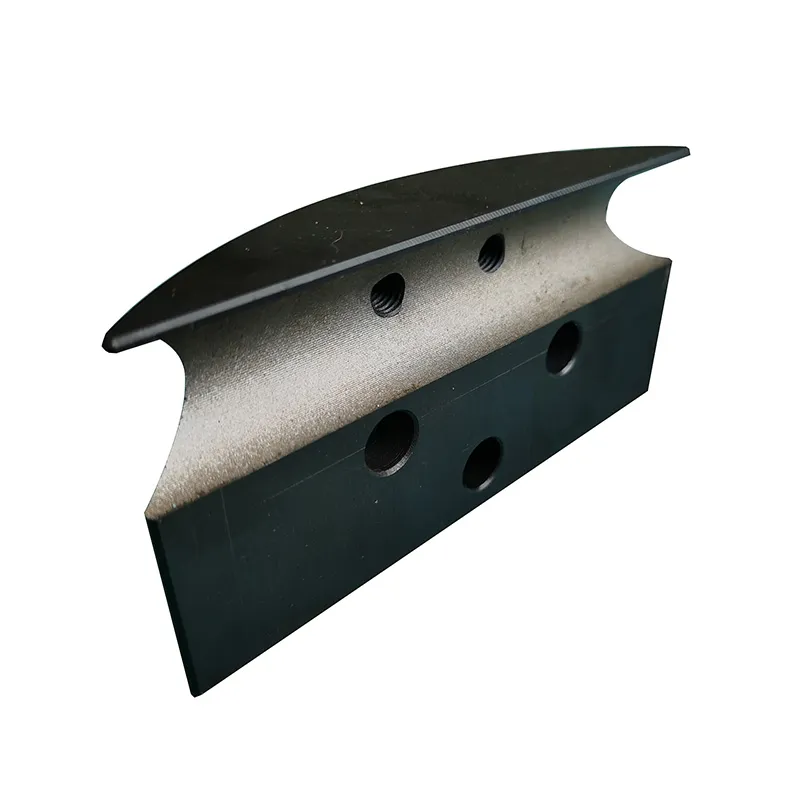
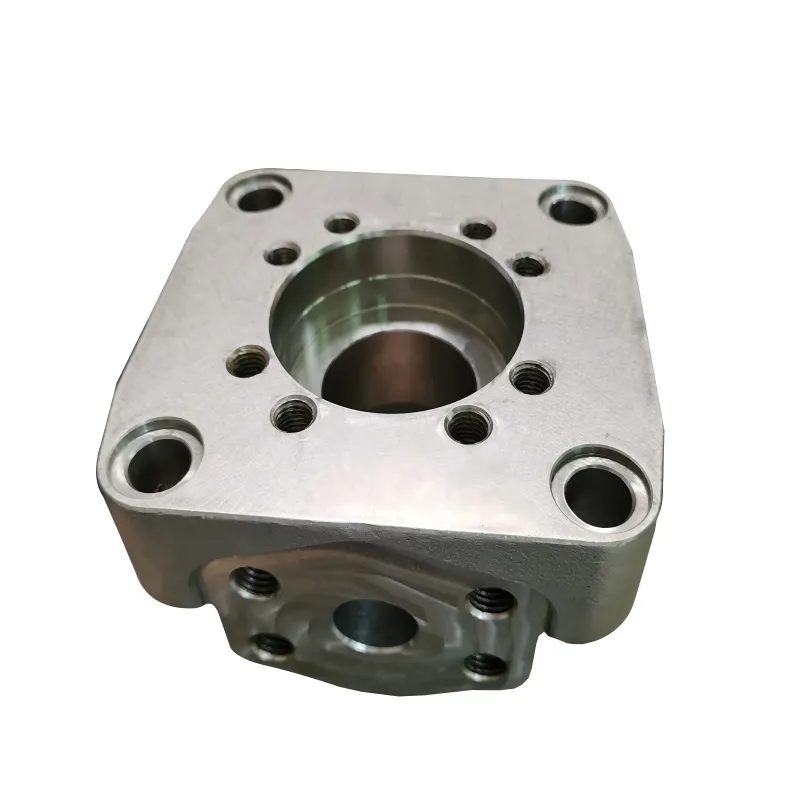
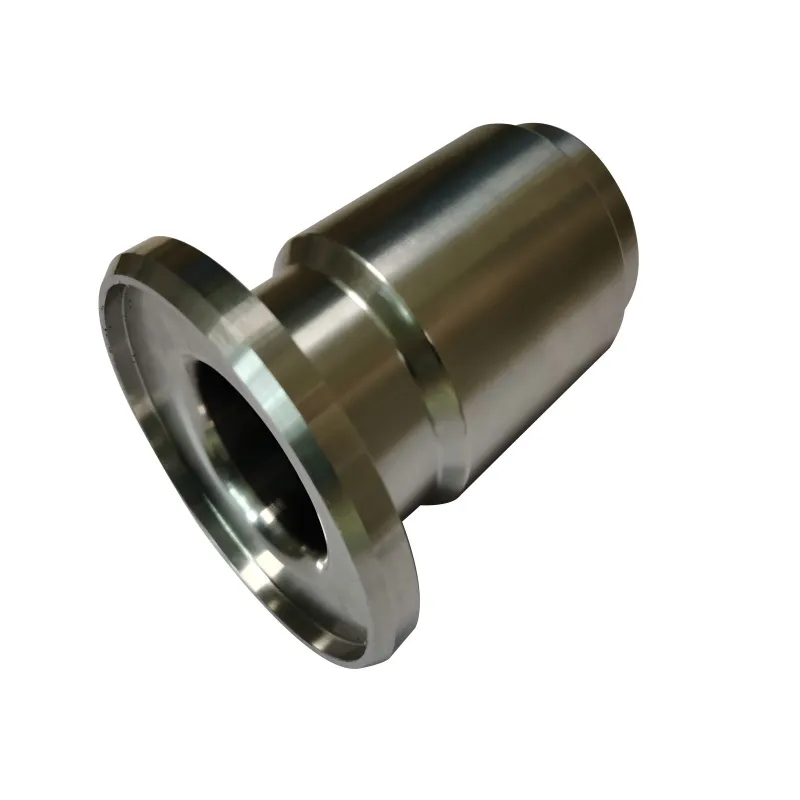
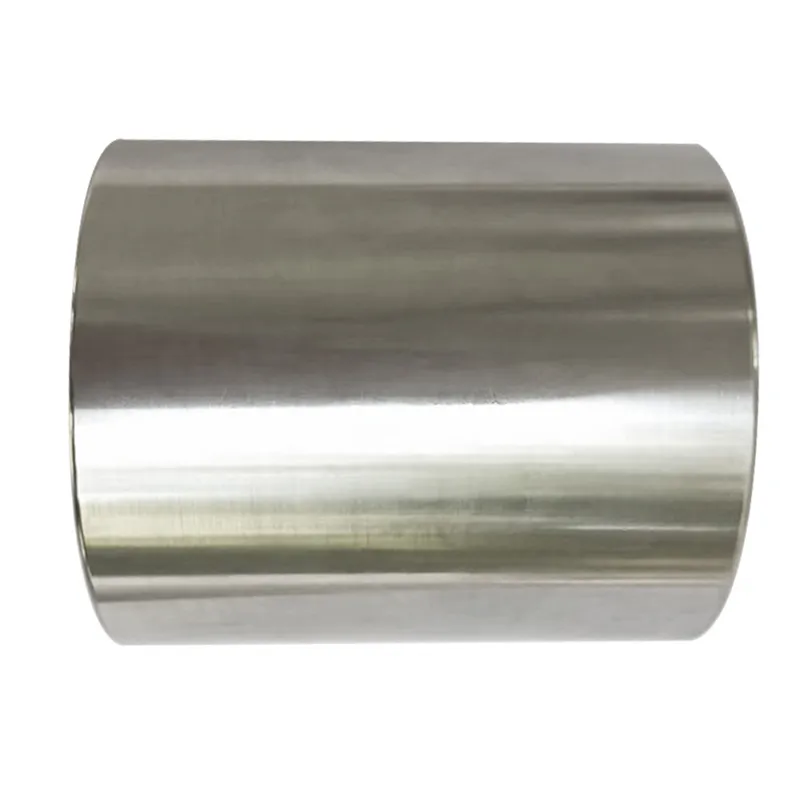
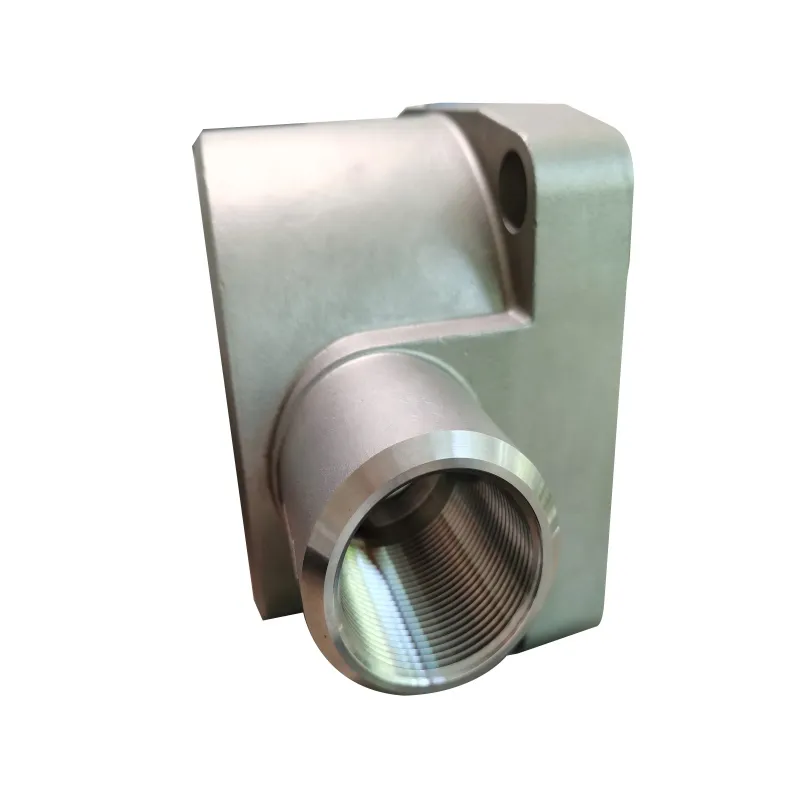
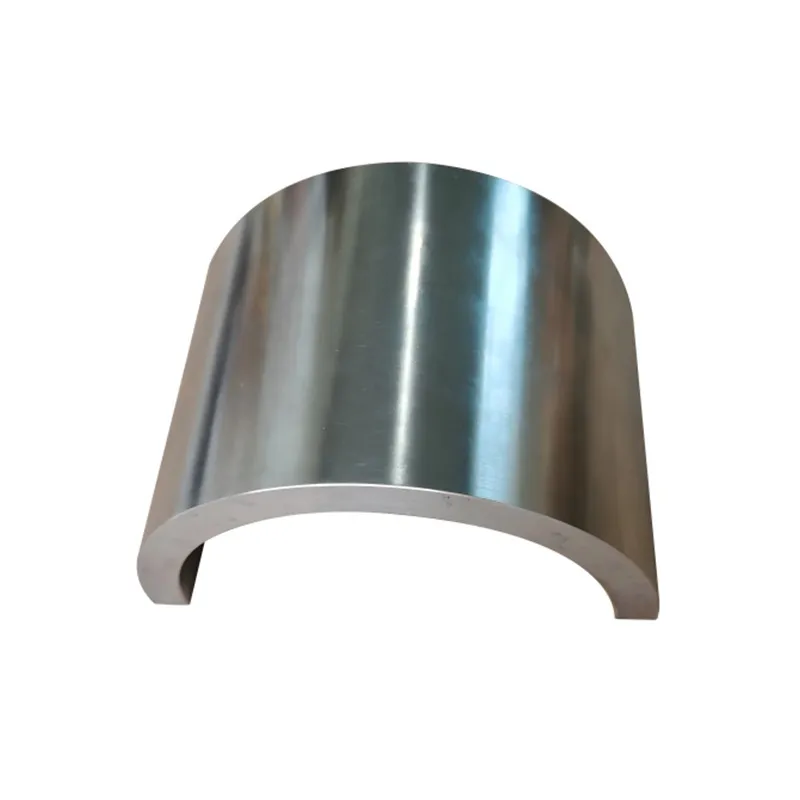
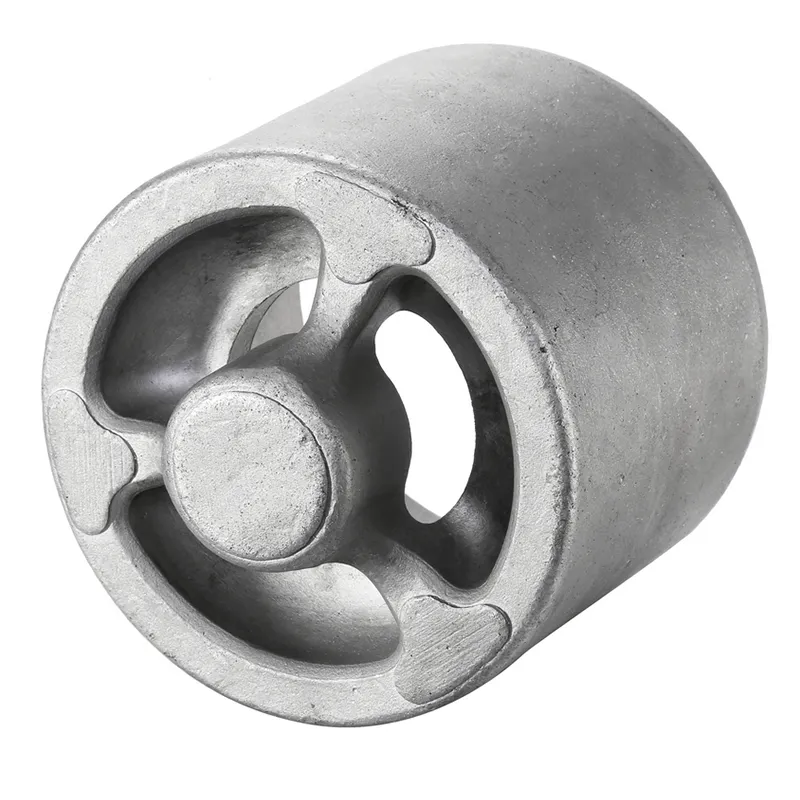
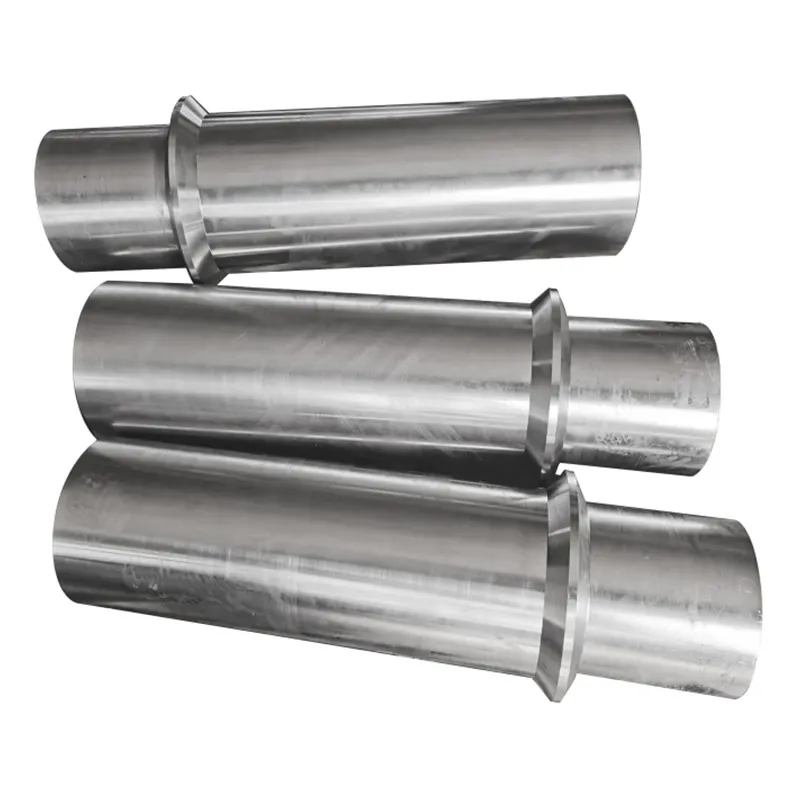
If you ask most people, even some engineers fresh out of school, what a nozzle is, they'll describe a simple tapered tube. A hole that speeds up fluid. That's the biggest misconception. In our world—precision casting and machining—a nozzle is a functional interface. It's where system energy gets translated into a controlled action: spraying, cooling, cutting, injecting. Get its internal contour, surface finish, or material wrong by a few microns, and your entire process efficiency can drop by double-digit percentages. I've seen it happen too often, where a project stumbles not on the main actuator or pump, but on this seemingly minor component.
The Devil's in the Geometry: More Than Just a Profile
Take a fuel injector nozzle for a diesel engine. The CAD model looks straightforward, but the real challenge is the transition from the sac to the orifices. That's not just a sharp edge; it needs a specific hydrodynamic rounding, achieved through precise abrasive flow machining. We once worked on a batch for a client, machining them from a pre-cast stainless steel blank. The prints called for a surface finish of Ra 0.2μm. We hit it on the CMM, but the flow test bench showed inconsistent spray patterns. The issue? While the Ra was fine, we had overlooked the nozzle lead-in angle's consistency. Tiny variations from one orifice to another, maybe 0.5 degrees off, caused the fuel to sheet rather than atomize. The CMM couldn't catch that subtlety—it took a dedicated optical comparator setup and a lot of trial on the bench.
That's where the 30 years of background at a place like Qingdao Qiangsenyuan Technology Co., Ltd.(QSY) comes into play. You develop a feel for which tolerances are cosmetic on the drawing and which are truly functional. For nozzle work, especially in investment casting, the as-cast surface of the internal passage is critical. Do you finish it with CNC boring, or EDM, or honing? The choice depends on the alloy's behavior. With nickel-based alloys, which we handle regularly, they work-harden like crazy. A standard carbide tool might last for two parts before the tip degrades, affecting the diameter consistency. We often switch to a slower, more controlled EDM process for the final sizing to avoid inducing stress and altering the material properties at the surface layer.
Material selection is another rabbit hole. The default is often 316 stainless. But for high-temperature applications like in a gas turbine combustor, that's a recipe for rapid erosion. We've moved to cobalt-based alloys like Stellite 6 for such parts. The catch? Machining it. Its abrasiveness and toughness mean tool wear is exponential. You can't just run a standard CNC program; you need to adjust feeds, speeds, and use specialized tool coatings. Sometimes, it's more economical to get the shape as close as possible via investment casting at their facility—their shell mold process is decent for complex internal geometries—and then only machine the critical sealing faces and the orifice itself.
From Print to Part: The Machining Nuances
CNC machining a nozzle isn't like milling a bracket. The priority is concentricity and the integrity of the internal features. We once had a job for a set of spray nozzles used in chemical scrubbing. The material was duplex stainless steel. The problem emerged during deep-hole drilling for the inlet channel. Even with high-pressure coolant, chip evacuation was poor, leading to scoring on the bore wall. That scoring created turbulence points that later caused cavitation and premature failure in the field. The solution wasn't a fancier machine, but a different drill geometry and a pecking cycle that seemed inefficient on paper but saved the entire batch from scrap.
Fixturing is 80% of the battle. How do you hold a small, often irregularly shaped nozzle body without distorting it? For high-precision orifices, even a few Newtons of clamping force can spring the part. We've moved to using custom ceramic soft jaws and in-process probing to map the datum before the final finishing cut. It adds time, but it's the only way to guarantee that the orifice is truly perpendicular to the seat face. I recall a project detailed on their portal at tsingtaocnc.com, where they showcased a multi-axis setup for machining fuel atomizers. The key takeaway wasn't the machine itself, but the sequence of operations: roughing the exterior, then stress-relieving the part, then finishing the interior contours, and finally cutting the exterior threads. That intermediate stress relief is a step many shops skip to save cost, but it's vital for stability.
Deburring is the silent killer. After drilling or EDMing an orifice, you get a microscopic burr on the exit side. If it's not removed—and I mean completely removed—it detaches in operation, becoming FOD (Foreign Object Damage). Abrasive flow machining (AFM) is excellent for this, but it requires fine-tuning the media viscosity and pressure for each nozzle size. For tiny orifices under 0.3mm, AFM media can clog. We've resorted to using electrochemical deburring for those, which is a whole other process control challenge. It's these gritty, unglamorous details that separate a part that works from one that lasts.
Failure Modes and What They Teach You
The most instructive moments come from failures. Early in my time, we produced a run of copper nozzles for water jet cutting. The client reported rapid wear, widening the orifice diameter within 50 hours. We checked our machining: all to spec. The failure analysis pointed to erosion-corrosion. Pure copper was too soft. We switched to a beryllium copper alloy and added a final hardening heat treatment. The wear life increased tenfold. The lesson? The material on the drawing is a starting point. Understanding the actual service environment—fluid, pressure, contaminants, cycle frequency—is mandatory. This aligns with QSY's approach of offering a range from cast iron to special alloys; you need that breadth to match the material to the actual job, not just the initial spec.
Another classic failure is thermal fatigue. Seen in injection molding nozzles. They're cycled from room temp to 300°C constantly. A through-hardened tool steel might have great wear resistance but poor thermal shock resistance. We moved to using H13 steel, hardened and tempered, but with a focus on achieving a very uniform microstructure through controlled heat treatment. Even then, the design of the heater band groove matters—sharp corners become crack initiation points. Sometimes, you have to argue with the designer to allow for a larger fillet radius, sacrificing a bit of heating efficiency for a massive gain in service life.
Corrosion is insidious, especially in stainless steels. Passivation is supposed to protect it, but if the machining or welding process introduces embedded iron particles or creates heat-tint zones, you create localized galvanic cells. I've seen a beautifully machined 304 stainless nozzle for a food processing line fail due to pitting corrosion because the shop used a steel wire brush for cleanup. Now, we enforce strict tool segregation and post-process passivation in nitric acid for all stainless parts, no exceptions. It's a non-negotiable step, much like the quality protocols you'd expect from a long-standing specialist.
The Casting Foundation: Getting the Shape Right First
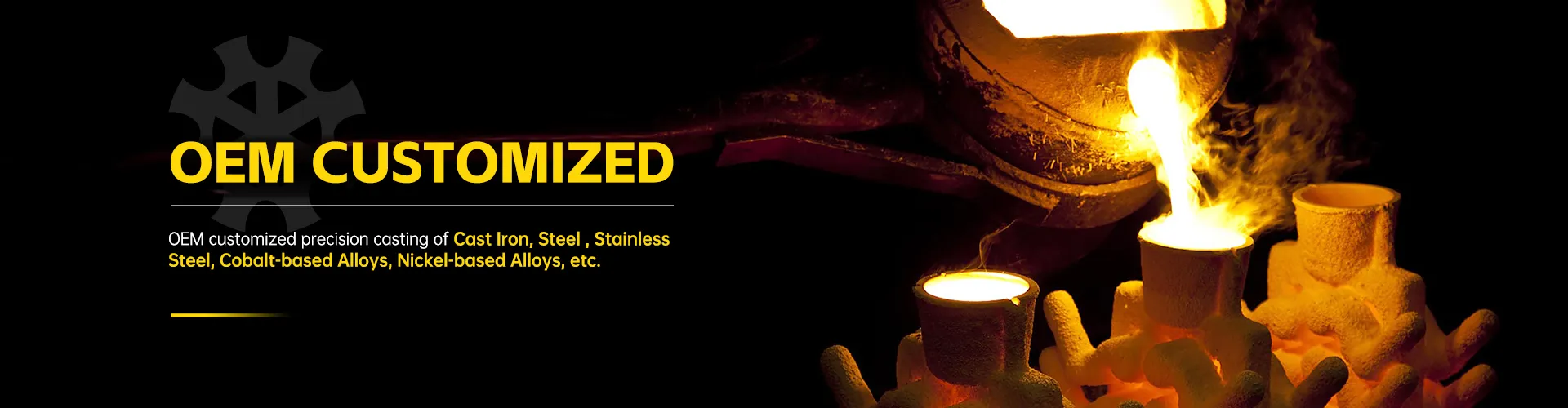
For complex nozzles with internal cooling channels or multi-port designs, machining from solid bar stock is wasteful and sometimes impossible. That's where investment casting shines. The ability to form the basic internal passage as a ceramic core within the shell mold is a game-changer. At QSY, with their focus on shell and investment casting, this is a core competency. The trick is the core. Its composition, its thermal expansion coefficient relative to the metal being poured, and how cleanly it gets removed afterward.
We had a project for a turbine nozzle guide vane (a type of nozzle, really) in Inconel 718. The internal cooling passages were serpentine. Machining? No chance. It had to be cast. The challenge was core shift during pouring. Even a slight misalignment would make some cooling walls too thin, leading to a burn-through in testing. The solution involved sophisticated core anchoring within the wax assembly and simulation of the solidification to place chill spots strategically. It's a blend of old-school foundry craft and modern simulation software. The takeaway is that for the most demanding nozzle applications, the manufacturing process starts not at the CNC machine, but in the foundry pattern shop.
Surface finish from casting is another consideration. An as-cast surface inside a passage has a certain roughness that can be beneficial for heat transfer in cooling applications but detrimental for flow efficiency in fuel injectors. Sometimes, you specify a cast-to-size interior and only machine the critical orifices. This requires incredible control over the casting process to ensure the core surface is smooth and dimensionally stable. It's a cost versus performance trade-off that we navigate constantly with clients. The goal is always to add machining only where it adds value.
Convergence: Where Experience Trumps Theory
In the end, producing a reliable nozzle isn't about following a textbook or a single perfect process. It's about understanding the chain of dependencies: material grade affects castability, which affects machinability, which affects final performance. A minor change in the fluid's pH might force a material change from 316L to a super duplex stainless, which then forces you to re-evaluate every cutting parameter and tool in your CNC program.
The real value of a partner like Qingdao Qiangsenyuan Technology Co., Ltd. isn't just that they have both casting and machining under one roof. It's that their long history likely means they've seen these interconnected problems before. They've probably run a job where a slight tweak to the gating system in the shell mold solved a porosity issue that would have ruined the finish on a critical nozzle seat later in machining. That institutional memory is what you're paying for.
So, the next time you look at a nozzle drawing, don't just see a fancy hole. See the entire journey from molten metal to a validated flow test report. Every decision along that path—alloy, casting method, machining sequence, finishing technique—leaves a fingerprint on the part's function. And getting it right requires a mindset that respects the nozzle not as a simple component, but as a precision-engineered interface where physics meets practicality. That's where the real work is.