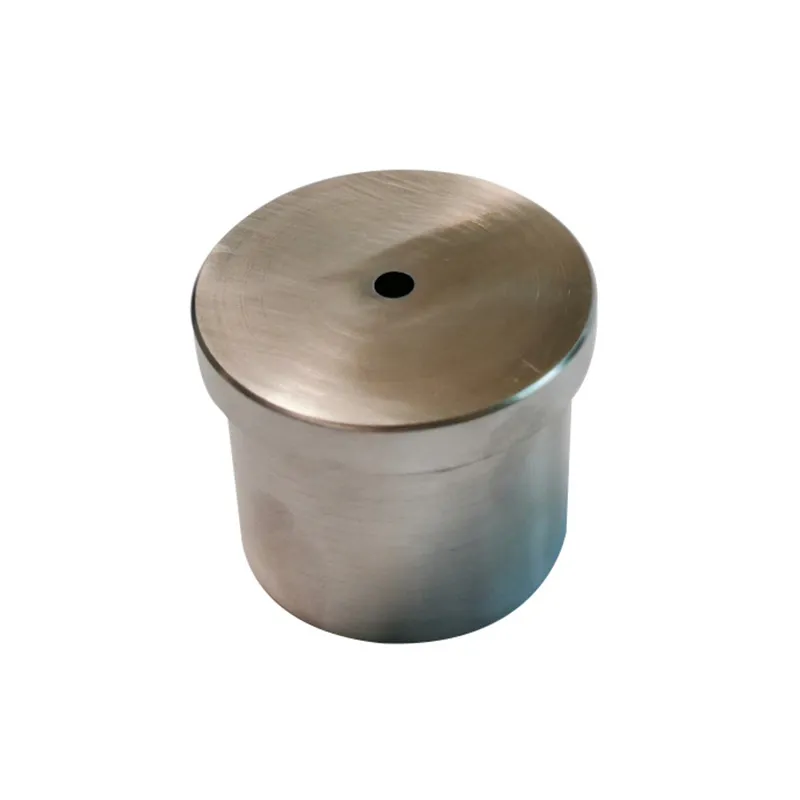
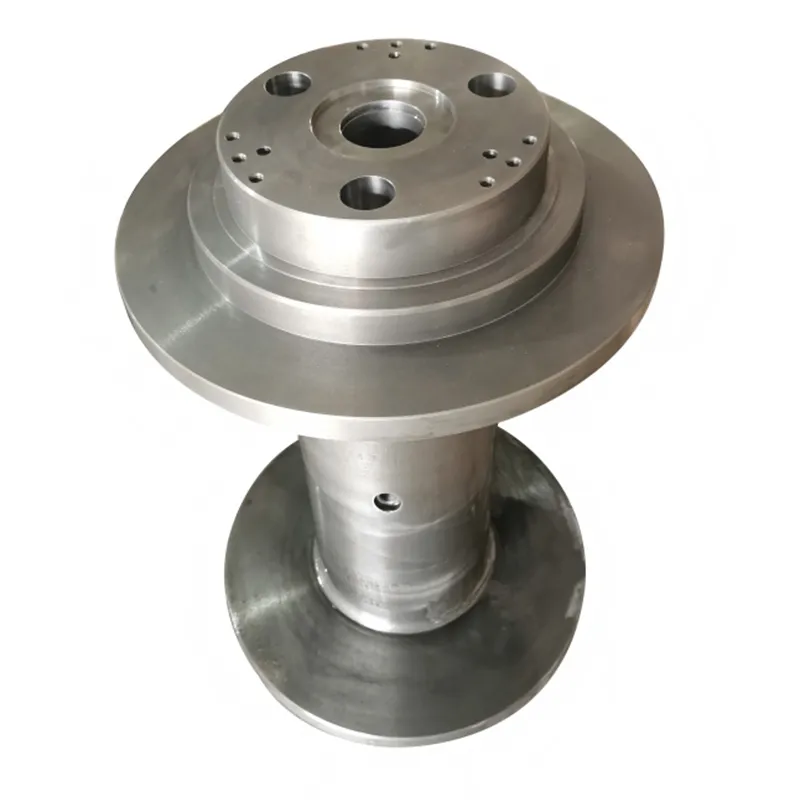
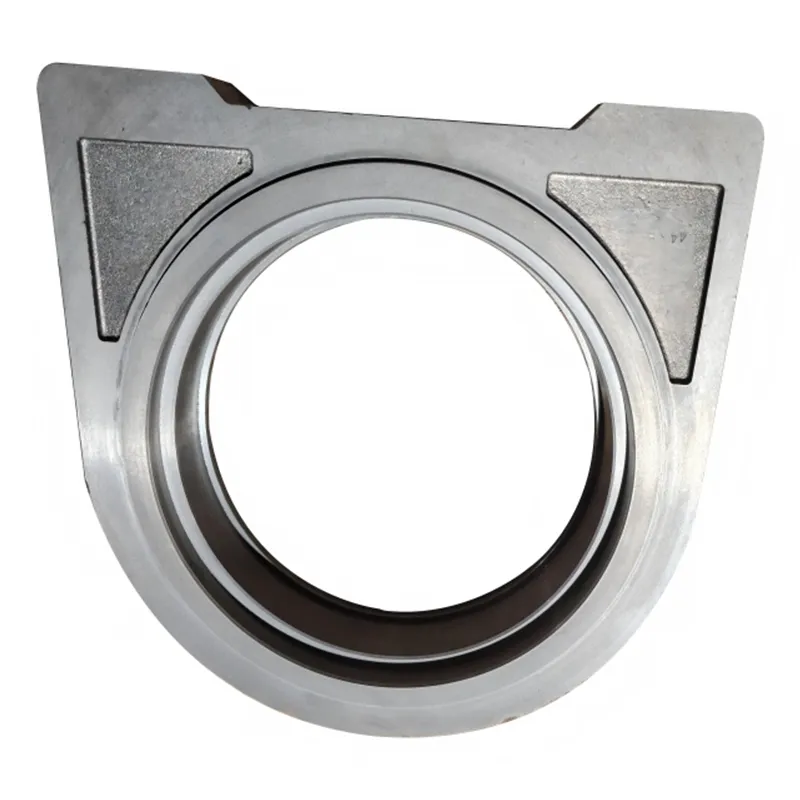
When you hear 'OEM investment casting,' the immediate image is often one of flawless, net-shape components rolling off a pristine line. That's the marketing ideal. The reality, the one you only learn by holding a hot shell or arguing over a CMM report, is messier. It's a process defined as much by its potential for precision as by its stubborn, practical constraints—gating design that looks perfect on simulation but causes shrinkage in the corner, alloy inconsistencies from heat to heat, or the simple, brutal economics of tooling amortization for a short-run OEM project. Many buyers, even experienced ones, fixate on the material certs and the dimensional report, which are crucial, don't get me wrong. But they sometimes miss the process expertise that bridges the gap between a CAD model and a box of good parts. That's where the real work happens.
The Foundation: It Starts (and Often Stumbles) with the Pattern
Everyone knows you need a good pattern. The OEM investment casting process is literally built around it. But 'good' is a deceptively simple word. For a prototype or a run of fifty pieces, a machined wax or SLA resin pattern might be the quick ticket. It's what we did for a client developing a bespoke hydraulic manifold block last year. The CAD was approved, we machined the wax, and the first prototypes looked beautiful. The issue surfaced later: the machined wax had subtle tooling marks that transferred to the ceramic shell, creating stress risers. For a production run of thousands, that approach is financially and technically insane. You need a hardened steel die, and that's where the partnership truly begins.
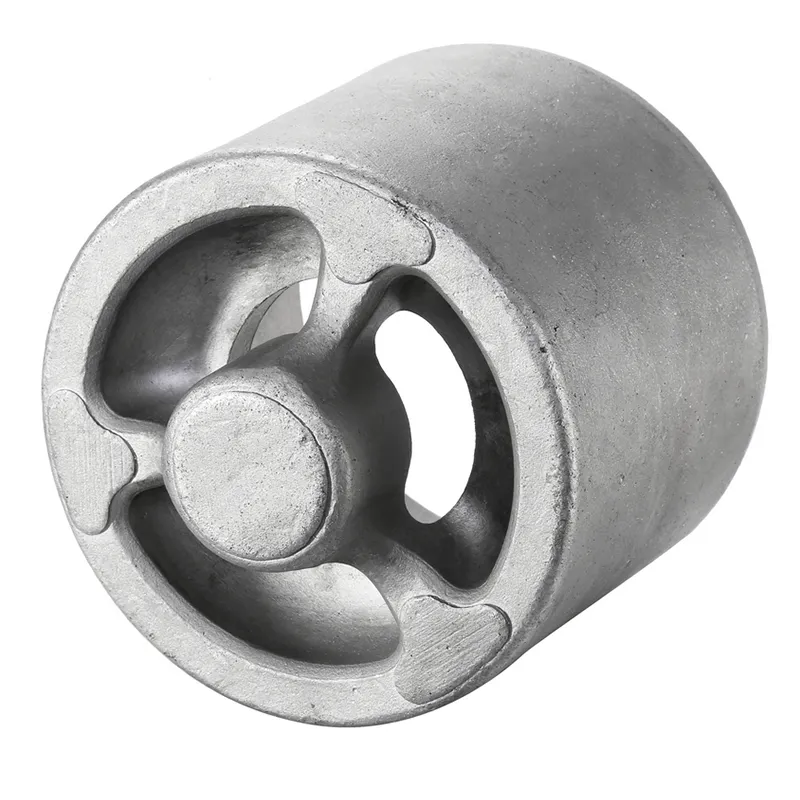
I recall working with the engineering team at Qingdao Qiangsenyuan Technology (QSY) on a stainless steel impeller. Their suggestion, born from decades in shell mold casting and investment casting, was to modify our draft angles by just half a degree more than standard. It seemed minor, almost pedantic. But their point was about the life of the die and the consistency of wax pattern ejection. That half-degree reduced wax sticking and minimized die wear over 100,000 cycles, preventing a gradual drift in critical blade dimensions. It was a lesson in designing for the process, not just the function.
This phase is where the first major filter is applied to an OEM project. If the annual volume doesn't justify a five-figure tooling investment, you're already in a different cost and quality paradigm. You're trading optimal process stability for flexibility. It's a valid choice, but it must be a conscious one, with expectations set accordingly for slightly higher dimensional variance or post-casting cleanup.
The Alloy Maze: Specs, Reality, and the Special in Special Alloys
Material selection sheets are a starting point, not a guarantee. 316L stainless is 316L, right? Not exactly. The melt practice, the deoxidation process, the trace element control—these define the real-world performance. For most commercial applications, a standard melt from a reputable foundry is fine. But we've had projects, like a sensor housing for a high-temperature chemical process, where the standard 316L from the mill failed prematurely due to intergranular corrosion.
This is where a partner with metallurgical depth becomes critical. QSY's experience with special alloys like nickel-based and cobalt-based alloys came into play. They didn't just pour the spec; they suggested a modified 316L with tighter control on carbon and added nitrogen. The cost per kilo went up, but the part life multiplied. The flip side is the nightmare of specifying an overly exotic alloy for a benign environment because it sounds robust. I've seen engineers specify Inconel 718 for a part seeing 400°C and mild stress—a massive overkill that tripled the piece price. The casting process can handle it, but your budget probably can't.
The challenge with these high-performance alloys in investment casting is their behavior during solidification. They're often prone to hot tearing or micro-porosity. It forces a collaboration on part geometry. You might need to add small, sacrificial ribs or alter section transitions to ensure directional solidification, which the machining department will later remove. It blurs the line between casting design and CNC machining planning, which is how it should be.
The Shell: Where Ceramics Meet Craft
The shell building process is the heart of the method, and it's the least automatable part. It's a series of dips, stuccos, and dries. The theory is simple; the consistency is hard. Humidity on the day affects drying rates. The slurry viscosity needs constant monitoring. A weak shell will crack during dewaxing (the infamous shell explosion), while an overly thick one can resist metal filling or cause shrinkage defects.
We learned this through a failure. A batch of complex ductile iron brackets had persistent surface pitting. The dimensional specs were hit, but the finish was unacceptable. The culprit? An inconsistency in the primary slurry coat's thickness over intricate internal features. The shell mold casting expertise at the foundry, in this case not QSY but another vendor we used earlier, wasn't deep enough for the part's complexity. The solution involved redesigning the wax assembly tree to present those surfaces at a better angle for coating and adjusting the stucco material size for the first coat. It added a day to the shell-building cycle but saved the whole batch.
This is an area where you judge a foundry not by its brochure, but by the cleanliness of its slurry room and the data logs for its drying chambers. Control here is everything.
From Rough Casting to Finished Part: The Machining Handshake
No OEM investment casting part is truly net-shape in the final sense. You always have gate removal, grinding, shot blasting, and almost always, some CNC machining of critical features. This is the most critical handoff. A casting delivered with inconsistent stock allowance or poor datum consistency turns a precision casting into a machining nightmare, wiping out all the cost savings.
The ideal, which companies like QSY embody by offering integrated casting and machining, is to have the machining team involved from the initial fixture design. Where will the casting be clamped? Which surfaces are machined and which are left as-cast? The gating should be designed not only for sound metal flow but also to be located on a surface that will be machined off later, leaving no witness mark. I've seen projects where the foundry and the machine shop were separate entities, pointing fingers over a 0.5mm misalignment. The integrated model prevents that. Their machinists can feedback to their pattern shop: Add 0.2mm stock here because our tool tends to deflect, creating a virtuous cycle of improvement.
For a high-volume automotive component we worked on, this integration allowed them to design a combined casting and machining fixture. The casting solidified in a way that created natural locators for the first CNC op, reducing setup time by 70%. That's where the real OEM value is unlocked—in the total cost per ready-to-install part, not just the cost per raw casting.
The Commercial Reality: Partnership vs. Transaction
Finally, the biggest misconception is treating OEM investment casting as a simple procurement transaction. It's a technical partnership, often lasting the lifecycle of a product. The RFQ that simply asks for a price per piece based on a 3D model is asking for trouble, or at least for hidden costs and delays later. The meaningful quote comes after a DFM (Design for Manufacturability) review.
A good partner, one with long-term operation like the 30-year history cited by QSY, will ask questions that may be inconvenient: Can we radius this sharp internal corner? Can this wall be made uniformly thicker? Would a different, more castable grade of stainless steel meet your needs? They're not trying to make their job easier; they're trying to make the part producible, reliable, and cost-effective. Pushing back on every suggestion to keep the design pure often leads to a part that is either uncastable or requires heroic and expensive efforts to produce.
The most successful projects I've managed started with a joint workshop—designers, foundry engineers, and machinists in a room (or on a long video call), arguing over the model. It's messy, it's iterative, but it front-loads the problems. That process, more than any single piece of technology, is what defines a successful OEM investment casting supply chain. It turns a drawing into a physical part that works, batch after batch, which is, in the end, the only thing that really matters.